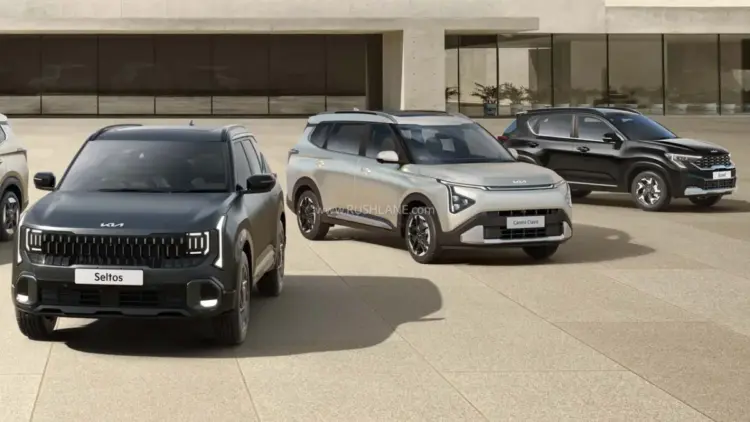
New Delhi, India – In a move aimed at optimizing its product portfolio and simplifying the consumer purchase journey, Kia India has announced a significant restructuring of its variant lineup for three of its cornerstone models: the Seltos mid-size SUV, the Carens Clavis MPV, and the Sonet compact SUV. This strategic "rejig," reflected in the company’s latest official digital brochures and website updates, involves the discontinuation of several niche variants, particularly those featuring the Intelligent Manual Transmission (iMT) and certain entry-level or mid-tier trims.
While the South Korean automaker has not issued a formal press statement regarding the specific motivations behind these deletions, industry analysts suggest the move is a response to evolving consumer preferences, a need to reduce manufacturing complexity, and a drive to promote higher-margin, feature-rich trims equipped with Advanced Driver Assistance Systems (ADAS).
1. Main Facts: The Scope of the Portfolio Rationalization
The updates for the 2026 model year signify a pivot in Kia’s transmission and safety strategy. The primary focus of the discontinuation lies in three areas: the phasing out of iMT (Intelligent Manual Transmission) in specific high-performance engine pairings, the consolidation of the "X Line" flagship trims, and the adjustment of entry-level diesel accessibility.
Key Discontinuations at a Glance:
- Kia Seltos: The 1.5L Turbo Petrol engine is no longer available with the iMT gearbox. Furthermore, the "Standard" X Line trims—those lacking the comprehensive ADAS suite—have been entirely removed.
- Kia Carens Clavis: The entry-level HTE Diesel Manual variant has been axed, effectively raising the starting price for diesel buyers. Additionally, the HTX (O) A variant, previously the most affordable entry point for ADAS, has been discontinued.
- Kia Sonet: The 1.0L Turbo Petrol engine has seen a reduction in its iMT offerings, with the mid-spec HTK+ and HTX iMT variants being removed from the catalog.
By pruning these specific branches of its extensive variant tree, Kia is effectively steering customers toward either the convenience of the 7-speed Dual-Clutch Transmission (DCT) or the traditional reliability of the Manual Transmission (MT), while making ADAS a more exclusive hallmark of its top-tier trims.
2. Chronology: The Evolution of Kia’s Variant Strategy
Since its entry into the Indian market in 2019 with the Seltos, Kia India has been known for offering an "spoilt for choice" approach. At one point, the Seltos alone offered over 20 different permutations of engines, transmissions, and trim levels.

- August 2023 – March 2026: Kia aggressively expanded its lineup, introducing the 1.5L Turbo Petrol engine to replace the older 1.4L unit and launching the refreshed Sonet and Carens Clavis. During this period, the iMT was championed as a "best of both worlds" solution—offering the control of a manual without the fatigue of a clutch pedal.
- March 2026: Kia launched the GT Line and X Line versions of the Carens Clavis ICE (Internal Combustion Engine) model. This launch included the introduction of the HTX (O) A trim, designed to democratize ADAS technology.
- November 2026: Real-time updates to Kia India’s web configurator reveal the sudden disappearance of several iMT and non-ADAS high-end trims. This marks a shift from "expansion" to "optimization."
This timeline suggests that after nearly three years of monitoring sales data for the 1.5L Turbo-iMT and 1.0L Turbo-iMT combinations, Kia has identified a clear consumer preference for fully automatic DCTs in the performance segments.
3. Supporting Data: Model-Specific Breakdown
The Kia Seltos: A Focus on Performance and Safety
The Seltos has always been the "tech-forward" SUV for Kia. The latest changes suggest that buyers of the 160PS 1.5L Turbo Petrol engine are opting for the 7-speed DCT almost exclusively, leading to the death of the iMT in this category.
| Discontinued Seltos Variant | Engine/Transmission | Key Feature Lost |
|---|---|---|
| HTE (O) (Convenience Pack) | 1.5L Turbo Petrol iMT | Entry-level Turbo access |
| HTK | 1.5L Turbo Petrol iMT | Mid-range Turbo access |
| HTK (O) (Premium Pack) | 1.5L Turbo Petrol iMT | Semi-premium Turbo access |
| Standard X Line (NA/Turbo/Diesel) | Various | Non-ADAS Flagship aesthetics |
The removal of the "Standard" X Line is particularly telling. It indicates that customers willing to pay the premium for the matte-finish X Line styling are almost always opting for the "X Line (S)" or "X Line (O)" versions that include the Level 2 ADAS suite.
The Kia Carens Clavis: Shifting the Value Proposition
In the MPV segment, the Carens Clavis has had to balance utility with premium features. The discontinuation of the HTE Diesel MT means the "barrier to entry" for diesel enthusiasts has moved up to the HTE (O) trim.
- The ADAS Gap: The loss of the HTX (O) A (1.5L Turbo Petrol DCT) is significant. As the most affordable ADAS-equipped variant, its removal suggests that Kia may be repositioning ADAS as a feature reserved for the luxury-oriented GT Line and X Line trims.
- iMT Consolidation: The 1.5L Turbo Petrol iMT is now only available in the HTX+ trim, removing it from the standard HTX level.
The Kia Sonet: Streamlining the Turbo-Petrol Choice
The Sonet remains a volume driver, but the complexity of its 1.0L Turbo Petrol lineup has been reduced. By removing the HTK+ and HTX iMT variants, Kia is focusing its iMT inventory on the HTK (O) and HTK+ (O) trims, which likely represent the "sweet spot" for buyers seeking that specific transmission.

4. Official Responses and Manufacturer Intent
While Kia India has not released an official "Why" regarding these changes, the move aligns with broader industry trends observed in the Indian automotive sector.
Internal Rationalization:
Sources close to dealership networks suggest that "variant fatigue" was becoming a hurdle for sales consultants. By streamlining the lineup, Kia reduces the burden on its supply chain and manufacturing plants at Anantapur. Producing fewer variations allows for better economies of scale and faster delivery times for the most popular models.
The "Premiumization" Push:
Kia has consistently branded itself as a "premium mass-market" player. By removing lower-tier turbo-petrol variants and non-ADAS flagship trims, the brand reinforces the idea that high performance (Turbo) and high luxury (X Line) must go hand-in-hand with high technology (DCT/ADAS).
5. Implications: What This Means for the Market
The restructuring of Kia’s lineup has several far-reaching implications for current prospective buyers and the competitive landscape of the Indian SUV and MPV markets.
For the Consumer
- Increased Entry Prices: Buyers looking for the 1.5L Turbo engine in the Seltos or a Diesel engine in the Carens Clavis will now face a higher starting price, as the absolute base variants for these configurations have been retired.
- Clarity in Choice: The removal of niche "middle-ground" trims (like a high-end trim without ADAS) makes the decision-making process faster. A buyer now chooses between a "Core" trim and a "Tech/Safety" trim without the confusion of minor overlaps.
- Resale Value: Owners of the now-discontinued iMT variants may see a shift in their vehicle’s resale value. While these cars become "rare," the lack of continued production might affect long-term perceived reliability or parts availability for the specialized iMT actuator systems.
For the Competition
Kia’s chief rivals—Hyundai (with the Creta and Alcazar), Maruti Suzuki (Grand Vitara), and Tata Motors (Nexon and Safari)—will be watching closely.

- The Transmission War: If Kia is moving away from iMT in higher segments, it signals a belief that the Indian consumer is now fully ready to embrace proper automatics (DCT/TC) over semi-automatic solutions.
- ADAS Democratization vs. Exclusivity: While brands like MG and Tata are trying to bring ADAS to lower price points, Kia seems to be moving in the opposite direction, keeping ADAS as a premium "reward" for top-end buyers.
Strategic Outlook
This rejig is likely a precursor to Kia India’s next big phase, which includes the full-scale launch of the Syros and the company’s intensified focus on Electric Vehicles (EVs). By cleaning up the internal combustion engine (ICE) portfolio now, Kia ensures its dealership infrastructure is not cluttered as it prepares to integrate new energy vehicles into the same showroom floors.
In conclusion, Kia India’s variant consolidation is a masterclass in "less is more." While it may disappoint a small segment of buyers looking for very specific, niche combinations, the overall effect is a leaner, more efficient, and more clearly defined product range that reflects the maturing tastes of the Indian car buyer.