New Delhi, India – Yamaha Motor India has reported a robust performance for the month of October 2026, marking a significant milestone in its journey within the highly competitive Indian two-wheeler market. According to the latest industry data, the Japanese manufacturer recorded domestic sales of 91,151 units, representing a substantial 33.29% year-on-year (YoY) growth compared to the 68,384 units sold in October 2025. This surge of 22,767 units highlights the brand’s strengthening grip on the premium and performance segments, even as it navigates a complex landscape dominated by mass-market giants.
Beyond the annual gains, Yamaha also witnessed a healthy month-on-month (MoM) improvement. Sales rose by 12.84% from the 80,782 units recorded in September 2026. This sequential growth was largely driven by the FZ series and the MT-15, which together accounted for nearly the entirety of the monthly volume increase. Despite these gains, Yamaha remains the seventh-largest two-wheeler brand in India, trailing behind industry leaders Honda, Hero MotoCorp, TVS Motor Company, Bajaj Auto, Suzuki, and Royal Enfield.
Chronology of Performance: From September Lull to October Surge
The transition from September to October 2026 was a critical period for Yamaha India. September is traditionally a month of inventory building and strategic positioning ahead of the peak festive season in India, which often includes major festivals like Dussehra and Diwali.
In September 2026, Yamaha posted a respectable 80,782 units. However, as the festive fervor took hold in October, the company’s "Call of the Blue" marketing strategy appeared to yield significant dividends. The momentum built throughout the month, culminating in the 91,151-unit finish. This trajectory suggests a well-managed supply chain and effective dealer-level activations that capitalized on the increased consumer footfall during the holiday period.
The month started with a focus on the entry-premium FZ series and the street-naked MT-15. By mid-month, the demand for the R15 supersport reached a fever pitch, while the scooter segment—led by the RayZR and Fascino—maintained a steady rhythm. The addition of the XSR volumes provided an extra cushion, ensuring that Yamaha stayed ahead of its 2025 benchmarks by a wide margin.
Detailed Sales Breakup: Analyzing the Product Portfolio
Yamaha’s success in October 2026 was not uniform across its portfolio; rather, it was a tale of individual models performing specific roles within the company’s broader strategy.
1. The Scooter Segment: RayZR and Fascino
The Yamaha RayZR continued its reign as the brand’s highest-selling model, recording 22,265 units in October. This accounted for 24.43% of Yamaha’s total domestic sales. However, it wasn’t all positive for the RayZR; the model saw a 2.08% YoY decline from the 22,738 units sold in October 2025. On a MoM basis, it grew marginally by 0.80%.
In contrast, the Yamaha Fascino emerged as a growth superstar. Recording 11,613 units, the Fascino more than doubled its sales from the 5,361 units sold in the same month last year—a staggering 116.62% YoY growth. This massive jump suggests that Yamaha’s push for "classic-chic" styling and fuel-efficient hybrid technology is resonating more deeply with urban commuters.

2. The Performance Street Segment: FZ and MT-15
The FZ series occupied the second spot in the lineup with 18,370 units. This was a 13.05% increase over the 16,250 units sold in October 2025. More impressively, the FZ saw a 35.24% MoM growth, adding 4,787 units to the tally compared to September. The FZ remains the "bread and butter" of Yamaha’s motorcycle portfolio, providing a balance of economy and style.
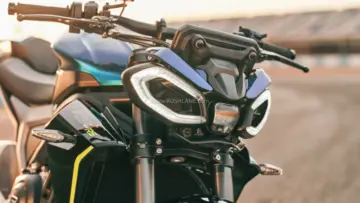
The MT-15 followed closely with 16,227 units, posting a 23.18% YoY growth. The MT-15 was the biggest monthly volume gainer for Yamaha, adding 5,139 units over September’s 11,088 units—a 46.35% MoM increase. The "Dark Side of Japan" branding continues to attract young riders looking for an aggressive, high-tech streetfighter.
3. The Supersport Legend: R15
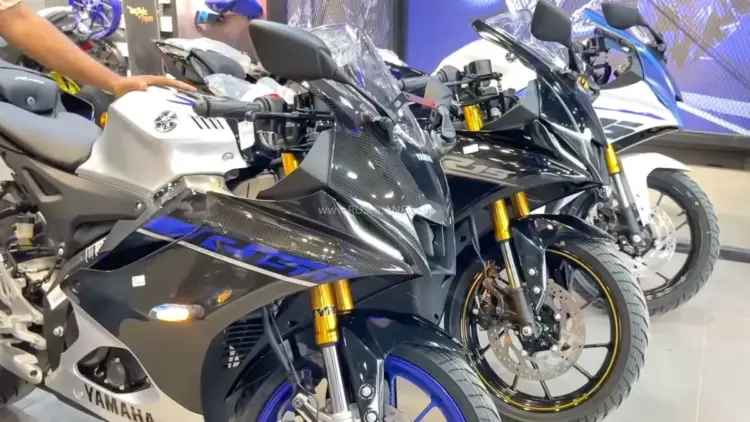
The Yamaha R15 remains the aspirational heart of the brand. In October 2026, it recorded 14,835 units, an 86.63% increase over the 7,949 units sold in October 2025. The R15 was the largest contributor to Yamaha’s annual volume increase, adding 6,886 units YoY. Its consistent performance, even at a premium price point, underscores the lack of direct competition in the 150-160cc fully-faired segment that can match its legacy and tech specs.
4. The Niche and Newcomers
The XSR series registered 5,218 units, contributing 5.72% to the total. While it saw a 5.28% MoM decline from September, its presence provides Yamaha with a foothold in the growing neo-retro segment.
On the declining end, the Aerox 155 maxi-scooter recorded 2,166 units, down 25.03% YoY and 10.35% MoM. This suggests that the niche maxi-scooter market may be reaching a saturation point or facing internal competition from Yamaha’s own performance motorcycles. Meanwhile, the EC06 electric scooter registered 457 units, a small but significant step in Yamaha’s slow-burn EV strategy, though it did see a 7.30% MoM dip.
Supporting Data: The Share of the Pie
To understand Yamaha’s current market position, one must look at the concentration of its sales. The trio of the RayZR, FZ, and MT-15 contributed a combined 56,862 units, representing approximately 62.38% of Yamaha’s domestic total.
The R15 and Fascino together added 13,138 units to the YoY growth, accounting for nearly 57.71% of the company’s overall annual volume gain. This data indicates that Yamaha’s growth is being driven by its most expensive and high-margin products, a healthy sign for the company’s profitability even if it remains 7th in total volume.
| Model | Oct 2026 Sales | Oct 2025 Sales | YoY Growth (%) | MoM Growth (%) |
|---|---|---|---|---|
| RayZR | 22,265 | 22,738 | -2.08% | 0.80% |
| FZ | 18,370 | 16,250 | 13.05% | 35.24% |
| MT-15 | 16,227 | 13,173 | 23.18% | 46.35% |
| R15 | 14,835 | 7,949 | 86.63% | 4.06% |
| Fascino | 11,613 | 5,361 | 116.62% | 2.33% |
| XSR | 5,218 | – | – | -5.28% |
| Aerox | 2,166 | 2,889 | -25.03% | -10.35% |
Official Strategy and Market Positioning
While Yamaha has not released a formal statement regarding the October figures, industry analysts point to the company’s "Premiumization Strategy" as the primary driver. Unlike Hero or Honda, which focus on high-volume 100-110cc commuters, Yamaha has consciously pivoted away from the mass market to focus on the 150cc+ segment and lifestyle scooters.

The "Blue Square" showrooms—Yamaha’s premium retail outlets—have played a pivotal role in this. By providing a more upscale buying experience, Yamaha has been able to justify the higher price tags of the R15 and MT-15. Sources close to the company suggest that the focus for the remainder of the 2026-27 fiscal year will be on consolidating the gains made by the Fascino and exploring further opportunities in the EV space with the EC06 platform.
Furthermore, the absence of sales for the R3 and MT-03 in October 2026 (down from 24 units in October 2025) indicates a potential shift in the CBU (Completely Built Unit) or CKD (Completely Knocked Down) strategy. Yamaha may be clearing old stock or preparing for a refresh of its multi-cylinder lineup to better compete with the likes of the Aprilia RS457 and the Kawasaki Ninja series.
Implications for the Indian Two-Wheeler Industry
Yamaha’s 33% growth is a bellwether for the "aspirational" Indian consumer. The fact that a ₹2-lakh motorcycle like the R15 is growing faster than a budget scooter like the RayZR suggests a significant shift in consumer spending power.
- Shift to Performance: The Indian buyer is no longer just looking for "mileage." The surge in MT-15 and R15 sales proves that tech features like Traction Control, Quickshifters, and VVA (Variable Valve Actuation) are now major selling points.
- The Premium Ceiling: Yamaha’s 7th place ranking shows that while premium products offer better margins, they have a natural ceiling in a price-sensitive market like India. To break into the top five, Yamaha would likely need a more aggressive push into the mid-size (300-500cc) segment, which is currently dominated by Royal Enfield.
- The EV Transition: With only 457 units for the EC06, Yamaha is trailing behind TVS (iQube) and Bajaj (Chetak) in the electric race. If Yamaha does not accelerate its "Blue Link" EV ecosystem, it risks losing the urban commuter base it has built with the RayZR and Fascino.
Future Outlook
Looking ahead to the final quarter of the 2026 calendar year, Yamaha is expected to maintain its momentum, though perhaps at a slightly moderated pace as the post-festive cooling period begins. The company’s ability to turn the Fascino into a high-volume player is a major victory, providing a much-needed second pillar to its scooter business alongside the RayZR.
However, the decline in Aerox sales and the stagnation of the RayZR YoY suggest that the scooter portfolio needs a fresh infusion of excitement—perhaps through new color ways, limited editions, or performance upgrades. In the motorcycle segment, the FZ and MT-15 remain the dual engines of growth, and as long as Yamaha continues to update these platforms with relevant technology, their market share appears secure.
As the Indian automotive industry moves toward 2027, Yamaha’s performance in October 2026 will be remembered as the moment the brand successfully transitioned from a "niche enthusiast choice" to a "premium volume player," proving that there is indeed plenty of room for growth at the top end of the market.