Dhaka, Bangladesh – November 20, 2026 – A major cricketing controversy has erupted following the conclusion of the Men’s Blind Cricket Asia Cup 2026 in Dhaka, Bangladesh, with the Indian national team boycotting the presentation ceremony after Pakistan was declared the sole winner despite the final match being washed out due to incessant rain. The Cricket Association for the Blind in India (CABI) has vehemently condemned the decision, asserting that both teams should have been declared joint champions and alleging serious procedural irregularities and an unprecedented overruling of technical committee decisions.
The dramatic turn of events has cast a shadow over the tournament, highlighting critical questions about sportsmanship, governance, and the integrity of decision-making bodies within visually impaired cricket. India’s strong protest underscores a deep-seated belief that the outcome was manipulated, denying their players a rightful share of the glory in a contest that could not be completed on the field.

A Stormy Conclusion to the Blind Asia Cup 2026
The Blind Asia Cup is a pivotal tournament for visually impaired cricketers across the continent, offering a platform for athletes to showcase their exceptional skills, determination, and passion for the sport. Hosted in Dhaka, Bangladesh, the 2026 edition had drawn considerable attention, culminating in a highly anticipated final between arch-rivals India and Pakistan. Both teams had demonstrated exceptional form throughout the tournament, battling through gruelling group stages and knockout matches to reach the summit clash, fueling excitement among fans and players alike.
The sport of blind cricket itself is a testament to human resilience and adaptation. Played with a slightly larger, harder ball that contains ball bearings to make noise, and with rules adapted to different levels of visual impairment (B1 for totally blind, B2 for partially blind, B3 for partially sighted), it demands unique skills, acute hearing, and precise teamwork. For these athletes, who overcome significant daily challenges, participation in international tournaments represents the pinnacle of their sporting ambitions.
The final, scheduled for November 20, 2026, was eagerly awaited, promising a thrilling spectacle. However, persistent and heavy rainfall in Dhaka ultimately rendered the playing conditions unplayable, forcing the match to be abandoned without a single ball being bowled. This scenario, while unfortunate, is not uncommon in cricket, and established protocols typically exist to address such situations, particularly in tournament finals. It was the subsequent decision-making process that plunged the event into a maelstrom of controversy.
The Disputed Decision: Pakistan Declared Sole Winners
Following the washout, the match officials convened to determine the outcome. To the astonishment and immediate protest of the Indian contingent, Pakistan was declared the sole winner of the Men’s Blind Cricket Asia Cup 2026. The stated reason for this decision was Pakistan’s superior run-rate accumulated during the league stages of the tournament.

The announcement triggered an immediate and resolute response from the Indian team. Believing the decision to be fundamentally unfair and a violation of established cricketing norms for finals, the Indian players collectively decided to boycott the presentation ceremony. This act of defiance was not taken lightly; it was a powerful statement of protest, signifying their profound disagreement with the ruling and their conviction that justice had not been served.
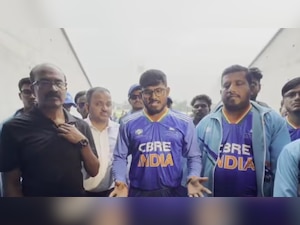
Indian captain T Durga Rao, speaking in a video issued by CABI, articulated the team’s shock and disappointment. "In the final, the referee called us and informed us that based on the run-rate, they are declaring Pakistan as the winners and us as the runners-up," Rao explained. "We opposed it because this has never happened before. Whenever such situations have arisen, the teams have been declared joint winners. This is completely against the rules. That is what we are opposing." His words encapsulated the team’s sense of injustice, highlighting a perceived departure from standard practices in rain-affected finals. The team felt that their hard work and dedication throughout the tournament were undermined by a decision they viewed as arbitrary and unjust.

CABI’s Stern Rejection and Allegations of Procedural Irregularities
The Cricket Association for the Blind in India (CABI) swiftly backed its team’s stance, issuing a strong official condemnation of the decision. CABI categorically rejected the outcome, demanding that India and Pakistan be recognized as joint winners of the prestigious tournament. Their protest was not merely an emotional reaction but was rooted in what they asserted were clear violations of the tournament’s own technical regulations.
At the heart of CABI’s argument lies Section 27 of the tournament’s technical regulations, which, according to their interpretation, deals specifically with a tied final. While the precise wording of Section 27 has not been publicly detailed by the tournament organizers, CABI asserts that "both sentences referring to that situation" imply a provision for joint winners in the event of an unplayed final. In mainstream cricket, and indeed in many other sporting events, when a final cannot be completed due to unforeseen circumstances like rain, common outcomes include rescheduling (if a reserve day is available), declaring both teams joint winners, or applying specific, pre-defined tie-breaking criteria that are clearly communicated beforehand for finals. Crucially, determining a winner based solely on league-stage run-rate in a completely washed-out final is highly unusual and often goes against the spirit of a championship match, which is meant to be decided on its own merits. This method is typically reserved for breaking ties in group standings or for progressing from league stages, not for awarding a trophy in a final that never commenced.

CABI’s allegations, however, extend beyond a simple dispute over rule interpretation. They have raised serious concerns about the integrity of the decision-making process itself, alleging that external influence led to the overturning of an initial agreement. According to CABI, they had initially raised their interpretation of Section 27 with the World Blind Cricket Council (WBCC) Technical Committee, which, after deliberation, agreed that both teams should be declared joint winners. This initial consensus among the technical experts suggested a recognition of the fairness principle in such an unprecedented washout.
However, CABI alleges a subsequent and concerning development: "WBCC President and Pakistan Blind Cricket Council President Sultan Shah overruled the WBCC Technical Committee’s decision to declare joint winners, forcing the match referee to announce the same decision," CABI stated on social media. This accusation implies a direct intervention from a high-ranking official, allegedly compelling match officials to reverse an earlier, more equitable decision. Such an act, if proven true, would represent a severe breach of protocol and a direct challenge to the autonomy and impartiality of the technical committee and match officials.

CABI explicitly called this an "unacceptable attempt to manipulate the outcome of an international championship" and publicly questioned "the credibility, impartiality and integrity of the decision-making process." These are grave accusations, suggesting a fundamental breakdown in governance and fair play at the highest levels of blind cricket administration.
Unpacking the Allegations: Conflict of Interest and Governance Concerns
The core of CABI’s allegations points towards a potential conflict of interest involving Sultan Shah, who holds the dual roles of President of the World Blind Cricket Council (WBCC) and President of the Pakistan Blind Cricket Council (PBCC). While it is not uncommon for individuals to hold positions within both international and national sports federations, such dual roles demand an unwavering commitment to impartiality, especially when decisions directly impact their respective national teams.

In this instance, the allegation is that Shah, in his capacity as WBCC President, intervened to overturn a technical committee’s decision that would have resulted in his own national team (Pakistan) sharing the trophy, instead pushing for a decision that favored Pakistan exclusively. This perceived conflict of interest raises significant ethical questions. For an official to hold a position of ultimate authority in the global governing body while simultaneously leading one of the competing national bodies creates an inherent tension, particularly when contentious decisions involving that national team arise. The integrity of any sporting competition hinges on the belief that decisions are made fairly, objectively, and free from any nationalistic bias or undue influence.
The allegations, if substantiated, would severely compromise the credibility of the WBCC itself. A governing body’s primary responsibility is to ensure fair play, uphold rules, and provide transparent governance. When a member board (CABI) openly questions the "credibility, impartiality and integrity" of the decision-making process and accuses the WBCC President of manipulation, it necessitates a thorough and independent investigation. Such accusations erode trust among member nations and players, potentially deterring future participation and investment in the sport.

Historically, in mainstream cricket, major finals affected by rain are typically handled with utmost care to ensure a fair outcome. The International Cricket Council (ICC), for example, often incorporates reserve days for major tournament finals. If a match cannot be completed even then, a trophy might be shared (as seen in the 2002 ICC Champions Trophy between India and Sri Lanka). While the Duckworth-Lewis-Stern (DLS) method is used for rain-interrupted matches, it applies when a significant portion of play has occurred and targets are revised, not for a completely washed-out final where no play has been possible. The decision to award the trophy based on league-stage run-rate in a final that never began is virtually unprecedented in major cricketing tournaments, further strengthening India’s argument that an anomalous and unfair ruling was made.
The Broader Impact: A Setback for Blind Cricket and Regional Sportsmanship
The controversy surrounding the Blind Asia Cup 2026 extends far beyond the immediate disappointment of the Indian team. It has significant implications for the morale of visually impaired athletes, the reputation of blind cricket as a legitimate and respected sport, and the delicate balance of sports diplomacy in the region.

For the Indian players, who dedicate countless hours to training and overcome unique challenges to compete at an international level, the feeling of being "robbed" of a deserved shared victory is profoundly demoralizing. Such experiences can lead to disillusionment, questioning the value of their efforts if the outcomes are perceived as being determined by administrative whims rather than fair play. The emotional toll on these athletes, who represent their nation with immense pride, cannot be overstated. Their journey to the final was a testament to their skill and perseverance, and to have it conclude under such controversial circumstances is a severe blow.
The incident also risks eroding public trust and interest in blind cricket. If controversies regarding fairness and governance become commonplace, it can deter fans, sponsors, and media from engaging with the sport. This is particularly damaging for a discipline that relies heavily on advocacy and support to gain recognition and resources. Blind cricket has made significant strides in recent years, gaining popularity and showcasing the incredible abilities of its athletes. A controversy of this magnitude threatens to undo some of that progress, painting the sport with a brush of administrative disarray.

Furthermore, the India-Pakistan sporting rivalry, while intense, is often characterized by mutual respect. Such contentious decisions, especially those involving allegations of manipulation, can strain sports relations between the two nations. In a region where sports often serve as a bridge, incidents that fuel resentment can have broader negative implications for regional sports diplomacy.
Ultimately, the controversy brings into sharp focus the critical importance of robust and transparent governance in all forms of sports, but especially in disabled sports. Athletes with disabilities often face systemic barriers and discrimination; ensuring fair play and upholding the highest ethical standards in their competitions is paramount to fostering inclusivity and inspiring future generations. Any perception of impropriety undermines the very spirit of empowerment that disabled sports seek to champion.

Call for Resolution and Future Implications
In the immediate aftermath, CABI continues to maintain its unwavering stance that India and Pakistan should be declared joint winners of the Blind Asia Cup 2026. The association is likely to explore all available avenues for redressal, which could include lodging a formal complaint with the WBCC, appealing to independent arbitration bodies, or even considering their future participation in WBCC-sanctioned events if the matter is not resolved satisfactorily.
The ball is now firmly in the court of the World Blind Cricket Council. To restore confidence and address the serious allegations levied against its leadership and decision-making processes, the WBCC must initiate a transparent and independent inquiry into the events surrounding the final. This inquiry should thoroughly investigate CABI’s claims, particularly the alleged overruling of the Technical Committee’s initial decision. A clear explanation of the rules applied, why Section 27 was interpreted as it was (or why it was allegedly ignored), and the roles played by all officials involved is essential.

Beyond this specific incident, the controversy highlights a critical need for clearer, unambiguous rules regarding tournament finals, especially those susceptible to weather disruptions. Establishing universally accepted protocols for rain-affected finals, including provisions for reserve days, joint winners, or clearly defined tie-breaking mechanisms that are equitable and pre-communicated, is vital for preventing similar disputes in the future.
The long-term consequences of this dispute could be significant. Should CABI’s allegations be left unaddressed, or if the resolution is perceived as unsatisfactory, it could lead to a deeper rift within the global blind cricket community. India, a significant cricketing nation with a strong blind cricket program, plays a crucial role in the sport’s development. Alienating such a key member could impact the sport’s unity and growth.

In conclusion, the Blind Asia Cup 2026, which promised to be a celebration of skill and perseverance, has instead become a symbol of controversy and mistrust. The core principles of fairness, transparency, and integrity are currently under scrutiny. As the cricketing world watches, the manner in which the World Blind Cricket Council addresses these serious allegations will determine not only the fate of the 2026 tournament’s outcome but also the future credibility and direction of blind cricket globally. The integrity of the sport, and the respect due to its extraordinary athletes, demands a just and equitable resolution.