The Indian automotive landscape in late 2026 continues to be defined by a singular, overwhelming trend: the relentless ascent of the Sport Utility Vehicle (SUV). As consumer preferences shift decisively away from traditional sedans and hatchbacks, the premium "D-segment"—specifically SUVs measuring between 4.5 and 5.0 meters—has emerged as the primary battleground for domestic and international manufacturers.
In October 2026, this category recorded a staggering 53,618 units in sales, representing a robust 24.96% year-on-year (YoY) growth compared to the 42,907 units sold in October 2025. This volume increase of 10,711 units underscores a maturing market where buyers are increasingly willing to spend upwards of INR 20–40 lakhs for size, safety, and road presence. On a month-on-month (MoM) basis, the segment grew by 16.45% from September 2026’s 46,045 units, signaling a strong festive season performance.
Main Facts: A Market Under One Crown
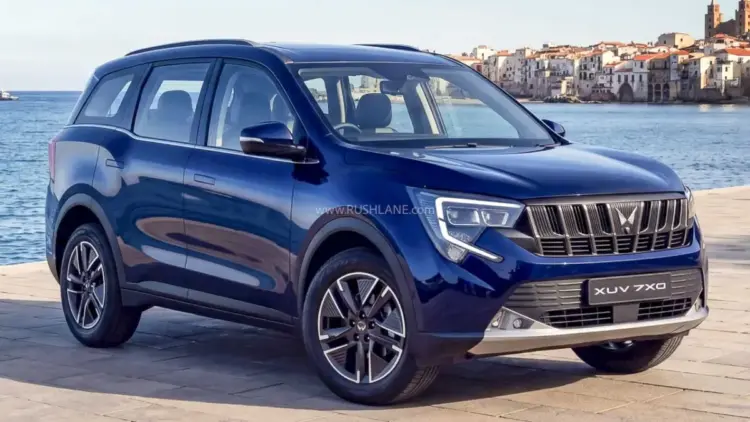
The most striking takeaway from the October 2026 data is the absolute hegemony of Mahindra & Mahindra. The homegrown utility vehicle specialist has not just led the segment; it has effectively colonized it. Mahindra currently occupies the top three spots on the sales chart with the Scorpio/N, XUV 7XO, and the XEV 9S.
Collectively, Mahindra’s four entries in this category (including the XEV 9e) accounted for 36,413 units. This translates to a dominant 67.91% market share. Essentially, two out of every three premium SUVs sold in India today bear the "Twin Peaks" logo.
While Mahindra thrives, other legacy players like Tata Motors and Toyota are fighting to maintain their foothold. Tata’s Harrier and Safari duo remain strong contenders but have faced YoY declines, while the Toyota Fortuner continues to prove its "bulletproof" status, maintaining growth despite its premium price point. Furthermore, the entry of new players like VinFast and the introduction of MG’s Tomahawk suggest that while Mahindra is the current king, the walls of the fortress are being tested by global competition.

Chronology of Market Evolution (2025–2026)
To understand the October 2026 figures, one must look at the trajectory of the segment over the last twelve months.
October 2025: The Baseline
A year ago, the segment was healthy but less crowded. The Mahindra Scorpio/N and XUV700 (the predecessor to the 7XO) were already leaders, but the electric transition was in its infancy. Total sales hovered around 42,907 units. At this time, VinFast was a marginal player, and several of the current top-ten models had not yet reached full production capacity.
September 2026: The Pre-Festive Build-up
Leading into the 2026 festive season, manufacturers ramped up inventory. Sales reached 46,045 units. We began to see the impact of Mahindra’s "XEV" electric sub-brand, which started cannibalizing some internal combustion engine (ICE) sales while expanding the overall "green" footprint of the brand.
October 2026: The Festive Peak
The 16.45% MoM jump in October is attributed to the peak festive period in India, where vehicle deliveries are considered auspicious. Mahindra capitalized on this by ensuring high production efficiency, while Tata Motors utilized the period to clear existing stock of the Harrier and Safari ahead of the highly anticipated Safari EV launch.
Supporting Data: A Model-by-Model Breakdown
The Mahindra Powerhouse
- Mahindra Scorpio/N: The undisputed king of the segment. With 19,353 units sold, it captured 36.09% of the market share. It grew 8.24% YoY and 11.78% MoM. Its appeal remains rooted in its rugged body-on-frame construction combined with modern tech.
- Mahindra XUV 7XO: Formerly known as the XUV700, the rebranded 7XO moved 10,254 units. While its YoY growth was a modest 1.13%, its MoM growth of 12.72% shows that the mid-cycle refresh and rebranding have resonated well with urban buyers.
- XEV 9S & XEV 9e: Mahindra’s electric offensive is paying dividends. The XEV 9S secured third place with 4,865 units. Meanwhile, the XEV 9e, despite a slight MoM dip of 1.72%, contributed nearly 2,000 units, proving that the premium buyer is ready for large-format EVs.
The Challenged Titans: Tata and Toyota
- Toyota Fortuner: Despite being one of the most expensive vehicles in this bracket, the Fortuner grew 36.16% YoY, selling 3,976 units. Its reputation for reliability and resale value keeps it ahead of more modern rivals.
- Tata Harrier & Safari: The Harrier recorded 3,895 units (including EV variants), while the Safari managed 2,287 units. While both saw MoM recoveries (26.38% and 11.83% respectively), they suffered YoY declines of 13.12% and 8.88%. Analysts suggest buyers may be deferring purchases in anticipation of the dedicated Safari EV platform launch scheduled for early 2027.
The New Guard and Niche Players
- VinFast VF7: The Vietnamese EV maker is the surprise story of 2026. Growing from a negligible base of 153 units last year to 1,120 units in October 2026, it represents a 632% growth. Its aggressive pricing and futuristic design are attracting tech-savvy millennials.
- MG Tomahawk: MG’s latest entrant hit the ground running with 1,089 units in its debut phase, securing a 2.03% market share.
- The Bottom of the Table: Brands like Jeep and Volkswagen continue to struggle for volume. The Jeep Compass (158 units) and Skoda Kodiaq (116 units) remain niche choices for enthusiasts, failing to break into the mass-premium consciousness.
Official Responses and Industry Sentiment
While official press releases from the "Big Three" (Mahindra, Tata, Toyota) emphasize different priorities, the underlying sentiment is one of cautious optimism tempered by supply chain realities.

Mahindra & Mahindra spokespersons have highlighted their "Twin Strategy" of dominating both the ICE and EV spaces simultaneously. A senior executive recently noted, "The Scorpio and XUV brands are the pillars of our SUV DNA. The transition to XEV is not about replacing them, but about offering the Mahindra experience in a sustainable format."
Tata Motors has been more focused on the "EV-First" narrative. Sources within the company suggest that the slight decline in Harrier/Safari ICE sales is a calculated risk as the company pivots toward its ‘Acti.ev’ architecture. "We are building an ecosystem, not just selling cars. The upcoming Safari EV will redefine the 4.5m+ segment," a company representative stated during a recent dealer meet.
Industry Analysts at major automotive consultancies point out that the 24.96% YoY growth is a sign of "up-trading." Consumers who previously bought mid-size SUVs (like the Creta or Seltos) are now moving up to the 4.5m+ category, driven by easier financing options and a desire for more cabin real estate.
Implications for the Future Indian Auto Market
The October 2026 sales data carries several long-term implications for the Indian automotive industry:
1. The Death of the "Niche" European SUV?
The dismal numbers for the Jeep Compass, Volkswagen Tiguan, and Citroen C5 Aircross suggest that European brands are failing to localize their value propositions effectively. In a market where Mahindra and Tata offer "more car per rupee" alongside global-standard safety ratings, the premium price tag of European imports is becoming harder to justify.

2. Electrification is No Longer Optional
With nearly 15% of the top-ten sales in this segment now coming from electric or electrified powertrains (XEV series, Harrier EV, VinFast), the 4.5m+ segment is leading India’s EV charge. Because these vehicles are priced higher, the cost of batteries is more easily absorbed into the final MSRP, making them the ideal "test beds" for EV technology.
3. The "Seven-Seater" Standard
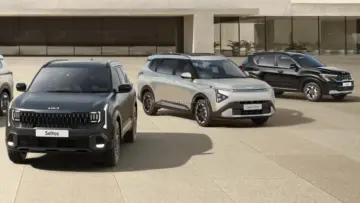
The dominance of the Scorpio/N, XUV 7XO, and Safari indicates that for an SUV to succeed in the 4.5m to 5.0m range, it must offer a third row of seating. This is no longer a luxury but a baseline expectation. Even Hyundai is reportedly working on a new 7-seater hybrid SUV to challenge Mahindra’s grip on this specific demographic.
4. The Rise of the Hybrids
While the current data focuses on ICE and EV, the mention of upcoming hybrid models from Hyundai suggests that the next phase of growth in the 4.5m+ segment will involve a three-way battle between pure petrol/diesel, battery electric (BEV), and strong hybrids.
Conclusion
The October 2026 sales figures confirm that the Indian SUV market is not just growing; it is evolving. Mahindra & Mahindra’s 68% market share is a testament to their deep understanding of the Indian consumer’s psyche—combining size, status, and increasingly, sophisticated technology. However, with Tata’s EV roadmap and the aggressive expansion of global players like VinFast, the "King of the Hill" will need to keep innovating to maintain its lead. For the Indian consumer, this competition is a win, resulting in safer, more technologically advanced, and more diverse options in the premium SUV space than ever before.