The Indian two-wheeler market, particularly the entry-level performance segment, is witnessing a strategic resurgence of "familiarity." Bajaj Auto, a pioneer in the sports-commuter category, appears to be doubling down on its most successful legacy designs. Recent sightings of the Bajaj Pulsar 125 Neon at dealerships across the country have confirmed that the Pune-based manufacturer is bringing back the classic twin-shock variant of its smallest Pulsar.
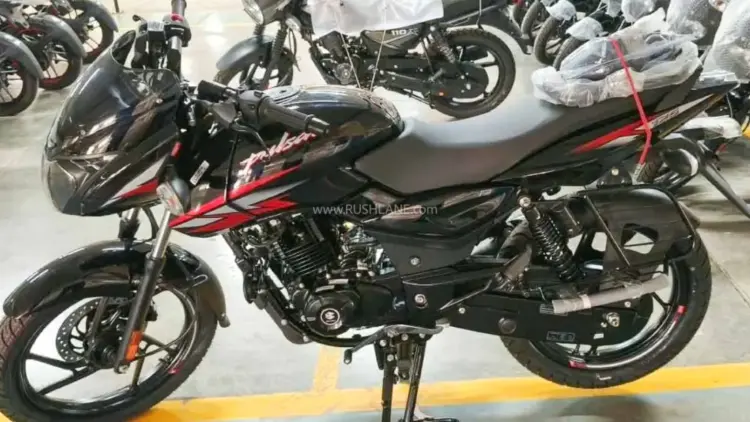
Images shared by Tarun Bajaj from a dealership in Krishnagiri, Tamil Nadu, showcase the motorcycle in a refreshed avatar, sporting updated graphics while retaining the iconic silhouette that has defined the Pulsar brand for over two decades. This move signals Bajaj’s intent to cater to a price-sensitive demographic that values the rugged, time-tested appeal of the original Pulsar over the sharper, more expensive modern iterations.
Main Facts: A Familiar Face with a Fresh Coat of Paint
The spied images reveal that the Bajaj Pulsar 125 Neon remains true to its roots. It features the quintessential "wolf-eyed" headlamp cowl, a muscular 11.5-liter fuel tank, and the signature twin-strip LED tail lamps. However, Bajaj has introduced a more elaborate graphics package to differentiate the 2024-25 model from its predecessors.
Key Visual and Structural Highlights:
- Color Schemes: The motorcycles were spotted in two primary colorways: a Glossy Black base with vibrant Red and Silver accents, and a Glossy Black base with Blue and Silver highlights.
- Graphic Treatment: Unlike the older "Neon" editions which featured subtle color hits on the badges and grab rails, the new version incorporates expansive decals on the tank extensions, rear cowl, and even color-coordinated rim tapes on the alloy wheels.
- Ergonomics: The bike features a long, single-piece contoured seat designed for rider and pillion comfort, a standard functional grab rail, and mid-set footpegs for an upright commuting posture.
- Missing Elements: Notably, the underbelly engine cowl seen on the higher-spec Pulsar 125 (Carbon Fibre edition) is absent here, reinforcing the Neon’s position as a more affordable, "no-frills" variant.
Chronology: The Evolution of the Pulsar 125
To understand the significance of the Neon’s return, one must look at the timeline of the Pulsar 125’s journey in the Indian market.
- August 2019: Bajaj launched the Pulsar 125 Neon as the most affordable entry point into the Pulsar family. It was a strategic move to bypass the high insurance costs associated with 150cc+ motorcycles while offering the same "big bike" feel.
- 2020 – 2022: The Pulsar 125 saw various iterations, including the "Split Seat" and "Carbon Fibre" editions, which introduced sportier aesthetics and belly pans.
- 2023: Bajaj introduced the next-generation Pulsar N125 and updated the existing Pulsar 125 with monoshock suspension and digital consoles to compete with the TVS Raider and Honda SP 125.
- Late 2024: Following feedback from rural and semi-urban markets where the classic twin-shock setup is preferred for its load-bearing capacity and ease of maintenance, the "Neon" variant with the traditional chassis makes its comeback.
Supporting Data: Technical Specifications and Market Positioning
While Bajaj has not officially released the spec sheet for this specific unit, it is widely expected to utilize the proven 124.4cc powertrain.

Engine and Performance (Projected)
| Feature | Specification |
|---|---|
| Engine Type | Single-cylinder, 4-stroke, 2-valve, Air-cooled, DTS-i |
| Displacement | 124.4 cc |
| Max Power | 11.8 PS @ 8,500 rpm |
| Max Torque | 10.8 Nm @ 6,500 rpm |
| Transmission | 5-speed Constant Mesh |
| Fuel System | Electronic Injection (OBD-2 Compliant) |
Chassis and Hardware
The primary differentiator for the Neon variant is its cycle parts. While the premium Pulsar 125 variants have moved toward monoshock units, the Neon retains:
- Front Suspension: Conventional 31mm telescopic forks.
- Rear Suspension: Twin gas-charged "Nitrox" shock absorbers. This setup is often preferred by commuters who carry heavy pillions or luggage, as twin shocks provide better lateral stability under load.
- Braking: A 240mm ventilated front disc brake and a 130mm rear drum brake. It will feature a Combi-Braking System (CBS) as mandated by safety regulations for motorcycles under 125cc.
- Wheels/Tires: 17-inch six-spoke alloy wheels shod with tubeless tires, likely 80/100-17 at the front and 100/90-17 at the rear.
Competitive Benchmarking
The Pulsar 125 Neon enters a crowded segment. Bajaj’s strategy is to offer a "full-sized" motorcycle experience at a price point where competitors often offer smaller, more "commuter-ish" designs.
- Honda SP 125: Offers high refinement and a fully digital console but lacks the muscular "road presence" of the Pulsar.
- TVS Raider 125: Highly tech-laden with a monoshock and TFT display, but priced significantly higher.
- Hero Glamour XTEC: A direct rival in the "rugged commuter" space, though the Pulsar brand carries higher aspirational value for younger buyers.
Official Responses and Availability
While Bajaj Auto has remained tight-lipped regarding an official "launch event," the arrival of stock at dealerships usually precedes a formal price announcement by 7 to 10 days.
Sources within the dealership network suggest that the re-introduction of the Neon variant is a response to the "segmentation" strategy. By offering the Pulsar 125 in multiple trims—Neon (Basic/Twin-shock), Carbon Fibre (Premium/Twin-shock), and the N125 (Modern/Monoshock)—Bajaj ensures that it does not lose customers at any price bracket between ₹85,000 and ₹1,05,000 (ex-showroom).
The motorcycle is expected to be priced competitively, likely starting around ₹88,000 to ₹92,000, making it one of the most accessible "sporty" 125cc bikes on the market.

Implications: Why This Move Matters
The return of the Pulsar 125 Neon carries several implications for the manufacturer and the Indian automotive landscape.
1. Countering Inflation and Input Costs
Over the last three years, the price of 125cc motorcycles has increased by nearly 20-25% due to BS6 Phase 2 norms, mandatory insurance hikes, and rising raw material costs. By stripping away non-essential features like the engine cowl, split seats, and complex digital displays, Bajaj can offer a "Pulsar" experience at a psychological price point that remains attractive to the middle-class buyer.
2. The Longevity of the "Pulsar Classic" Platform
This sighting confirms that Bajaj is not yet ready to retire the aging Pulsar platform. Much like the Pulsar 150 "Classic," the 125 Neon proves that there is a massive market for "legacy" designs. For many Indian buyers, the Pulsar 125 isn’t just a bike; it’s a symbol of a specific era of Indian motorcycling that remains relevant due to its durability and easy availability of spare parts.
3. Rural vs. Urban Dynamics
In urban centers, buyers are gravitating toward the Pulsar N125 or the NS125 for their sharp handling and modern features. However, in rural and Tier-3 markets, the "Neon" with its twin-shock absorbers and simple halogen lighting is easier to repair and more capable of handling rougher terrain. Bajaj’s ability to sell both platforms simultaneously is a masterclass in market segmentation.
4. Brand Loyalty
By keeping the entry-level Pulsar affordable, Bajaj creates a funnel for brand loyalty. A young buyer entering the family with a Pulsar 125 Neon today is a potential candidate for a Pulsar N250 or the Dominar 400 five years down the line.

Conclusion
The spied Bajaj Pulsar 125 Neon is more than just a minor update; it is a strategic repositioning of a legendary brand. By blending the classic "Pulsar" DNA with refreshed graphics and a cost-effective hardware package, Bajaj is poised to reclaim lost ground in the budget 125cc segment.
For the consumer, the Neon represents a value-for-money proposition that offers the prestige of the Pulsar nameplate without the premium price tag of modern-day streetfighters. As these units begin to roll out of showrooms in the coming weeks, the 125cc segment is set to become one of the most fiercely contested battlegrounds in the Indian motorcycle industry.