LONDON — In a strategic move that signals a paradigm shift in the global mid-size motorcycling segment, Royal Enfield UK (REUK) has officially announced the launch of its "Service Activated Warranty" program. Effective November 20, 2026, the initiative provides owners in Great Britain and Northern Ireland with up to 10 years or 70,000 miles (approximately 1,12,654 km) of factory-backed coverage.
This unprecedented move positions Royal Enfield as a pioneer in the industry, offering one of the longest warranty durations available for motorcycles today. By removing the upfront costs typically associated with extended warranties, the Chennai-headquartered manufacturer is betting on long-term brand loyalty and a revitalized dealership service ecosystem.
1. Main Facts: A Decade of Peace of Mind
The core of the new Royal Enfield UK scheme is its "service-activated" nature. Unlike traditional extended warranties that require a lump-sum payment at the point of sale, this program is integrated into the motorcycle’s regular maintenance schedule.
The Mechanism of Coverage
The program begins after the standard 3-year factory warranty expires. To maintain coverage for the subsequent seven years, owners are required to have their motorcycles serviced annually at an authorized Royal Enfield UK dealership.
- Annual Renewal: Each qualifying scheduled service automatically triggers a 12-month warranty extension.
- Cap Limits: The cycle can be repeated until the motorcycle reaches its tenth anniversary from the date of first registration or hits the 70,000-mile odometer mark, whichever occurs first.
- Cost Structure: There is no "buy-in" fee for the warranty itself; the "cost" to the consumer is simply the price of the standard periodic maintenance as prescribed in the owner’s manual.
Geographic and Platform Scope
The program is currently exclusive to the United Kingdom, covering Great Britain and Northern Ireland. It encompasses almost the entire modern portfolio of Royal Enfield, specifically focusing on the new-generation engine platforms that have defined the brand’s global resurgence over the last five years.
2. Chronology: The Evolution of Royal Enfield’s Reliability Journey
To understand the significance of a 10-year warranty, one must look at the trajectory of Royal Enfield over the past decade.
- 2014–2018: The Transition Era: Royal Enfield began moving away from its aging Unit Construction Engine (UCE) 350cc and 500cc platforms. While beloved for their "thump," these engines were often criticized for vibration and maintenance intensity.
- 2018: The Twin Revolution: The launch of the Interceptor 650 and Continental GT 650 marked a turning point. These motorcycles introduced a robust parallel-twin engine that proved Royal Enfield could compete on a global stage regarding build quality and reliability.
- 2020–2022: The J-Series and Sherpa 450: The introduction of the J-Series engine (Meteor, Classic, Hunter) brought refinement to the 350cc class, while the Himalayan 450’s "Sherpa" engine introduced liquid cooling—a first for the brand.
- November 20, 2026: The Warranty Milestone: Following years of testing and data collection on these modern platforms, REUK launched the Service Activated Warranty, signaling the brand’s ultimate confidence in its current engineering standards.
3. Supporting Data and Eligible Models
The program is meticulously structured to include motorcycles built on modern manufacturing lines while excluding legacy models that utilize older technology.
Eligible Engine Platforms
The warranty applies to the following modern architectures:
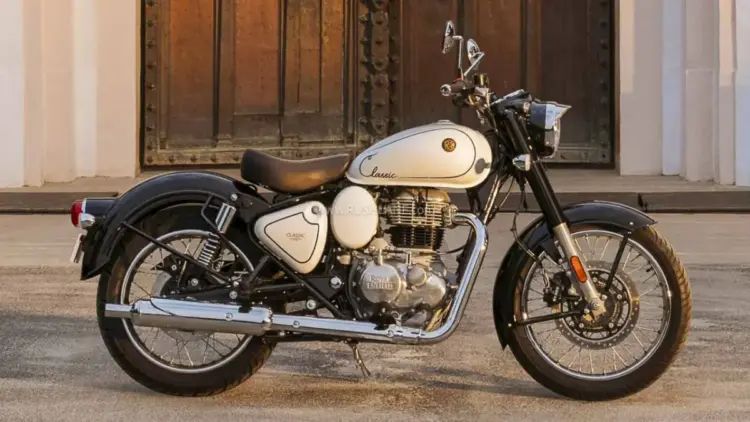
- 350cc J-Series: This includes the best-selling Classic 350, the urban-focused Hunter 350, the cruiser Meteor 350, and the iconic Bullet 350.
- 450cc Sherpa Platform: Covering the Himalayan 450 adventure tourer and the Guerrilla 450 roadster.
- 650cc Twin Platform: Encompassing the Interceptor 650, Continental GT 650, Super Meteor 650, Shotgun 650, the recently launched Bear 650, and the Classic 650.
- 750cc Platform: The program also includes the upcoming 750cc models currently in development, ensuring future-proofing for the brand’s move into higher displacement categories.
The "Exclusion List"
Royal Enfield has been transparent about which models do not qualify. Legacy platforms, which require more frequent mechanical interventions or utilize older casting methods, are excluded:
- UCE 500cc models: (Classic 500, Bullet 500).
- 411cc LS Engine: (Himalayan 411, Scram 411).
Re-Entry for Lapsed Service Histories
In a move designed to capture the "used bike" market, Royal Enfield is allowing owners of eligible bikes who have previously used independent garages to "re-enter" the official warranty net. To do so, the owner must:
- Book a full scheduled service at an authorized dealer.
- Pass a comprehensive "Vehicle Health Check."
- Observe a 30-day "no-claim" waiting period to ensure no pre-existing issues are immediately offloaded onto the warranty provider.
4. Official Responses and Industry Context
While official statements emphasize "customer-centricity," industry analysts view this move as a sophisticated dual-purpose strategy: boosting resale value and securing dealership revenue.

Royal Enfield UK Leadership Perspective:
Sources close to the UK operations suggest that the brand wants to eliminate the "reliability stigma" that occasionally haunts heritage brands. By offering 10 years of coverage, Royal Enfield is making a public declaration that their motorcycles are no longer just "lifestyle purchases" but durable, long-term assets.
The "Car Industry" Influence:
The model mirrors successful programs in the automotive world. Toyota and Lexus offer "Relax" warranties in Europe, and Renault recently introduced a similar "service-activated" scheme for the new Duster. By adopting this, Royal Enfield is moving toward a "Motorcycle-as-a-Service" mindset where the manufacturer maintains a relationship with the machine throughout its entire lifecycle.
Dealer Network Feedback:
Authorized dealers have reportedly welcomed the move. In an era where many riders turn to "DIY" maintenance or independent shops after the initial 3-year period, this program provides a powerful incentive for customers to return to official workshops. This ensures a steady stream of service revenue and allows dealers to maintain a database of high-quality, manufacturer-certified used motorcycles.
5. Implications: Market Impact and Global Strategy
The introduction of a 10-year warranty has far-reaching implications for the UK motorcycling landscape and potentially the global market.
Impact on Resale Value
One of the primary hurdles for mid-size motorcycles is depreciation. A Royal Enfield with five years of age would typically see a significant drop in value. However, under this new scheme, a five-year-old Classic 350 can be sold with five years of remaining factory warranty. This makes the secondary market for Royal Enfields significantly more attractive, likely stabilizing residual values across the board.
Competitive Pressure
The UK market is highly competitive, with brands like Triumph, Honda, and BMW vying for the "A2" license and mid-size commuter segments. Most competitors offer 2-year or 3-year warranties, with paid extensions reaching up to 5 years. Royal Enfield’s jump to 10 years creates a massive "value gap" that competitors may struggle to close without significantly altering their service pricing or manufacturing cost structures.
The Question of India: The Elephant in the Room
India remains Royal Enfield’s largest market, accounting for over 90% of its global sales volume. Currently, Indian customers receive a 3-year standard warranty and can purchase the "Ride Sure" extended warranty, which caps out at 7 years or 70,000 km.
The UK program is significantly more generous than the Indian offering. Analysts suggest that Royal Enfield is using the UK as a "test bed" for this program. Implementing a 10-year service-activated warranty in India would be a logistical Herculean task given the sheer volume of motorcycles and the pressure it would place on the existing service infrastructure. However, if the UK pilot proves successful in increasing dealership retention, a modified version of this scheme could eventually make its way to the Indian market to counter the rising competition from the Triumph-Bajaj and Hero-Harley partnerships.
Conclusion: A Bold Bet on Engineering
The Royal Enfield 10-year Service Activated Warranty is more than just a marketing gimmick; it is a structural change in how motorcycle warranties are perceived. By rewarding loyalty to authorized service centers with long-term protection, Royal Enfield is attempting to build a "closed-loop" ecosystem.
For the rider, the message is clear: as long as you take care of the bike according to the manufacturer’s standards, the manufacturer will stand behind the machine for a decade. In an age of "disposable" consumer goods, Royal Enfield is leaning into its heritage of longevity, backed by modern engineering and a disruptive after-sales strategy. Whether this will trigger a warranty "arms race" among other manufacturers remains to be seen, but for now, Royal Enfield holds the crown for the most extensive protection plan in the UK motorcycling industry.