NEW DELHI, India – November 26, 2026 – In a dynamic global economic landscape, the allure of precious metals continues to captivate investors and consumers alike. Today, November 26, 2026, India’s gold and silver markets reflect a complex interplay of international trends, robust domestic demand, and fluctuating currency valuations. Both gold and silver have registered a modest uptick, signaling persistent inflationary concerns and their enduring role as safe-haven assets. This comprehensive report delves into the current market scenario, historical context, underlying economic drivers, expert analyses, and the broader implications for the Indian economy and its citizens.
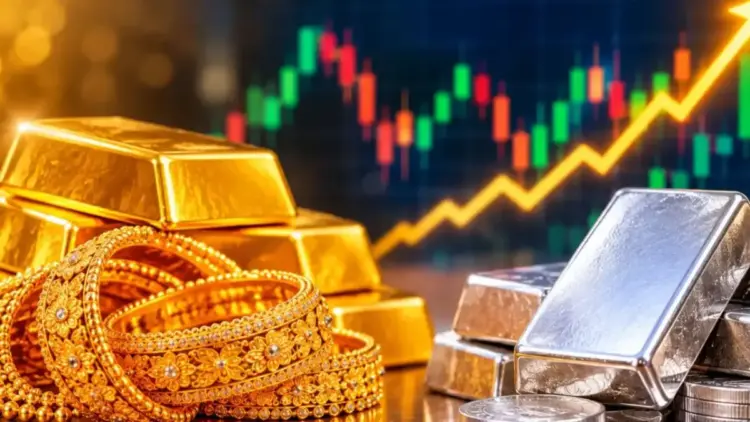
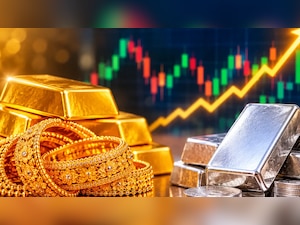
(Image: A gleaming display of gold bars and silver coins, symbolizing wealth and stability amidst economic fluctuations.)
Current Market Snapshot: Gold and Silver Prices on November 26, 2026
As the global economy navigates a period of sustained uncertainty, the prices of gold and silver in India have demonstrated resilience, recording a slight upward movement today. This trend underscores the metals’ traditional role as hedges against inflation and economic volatility.
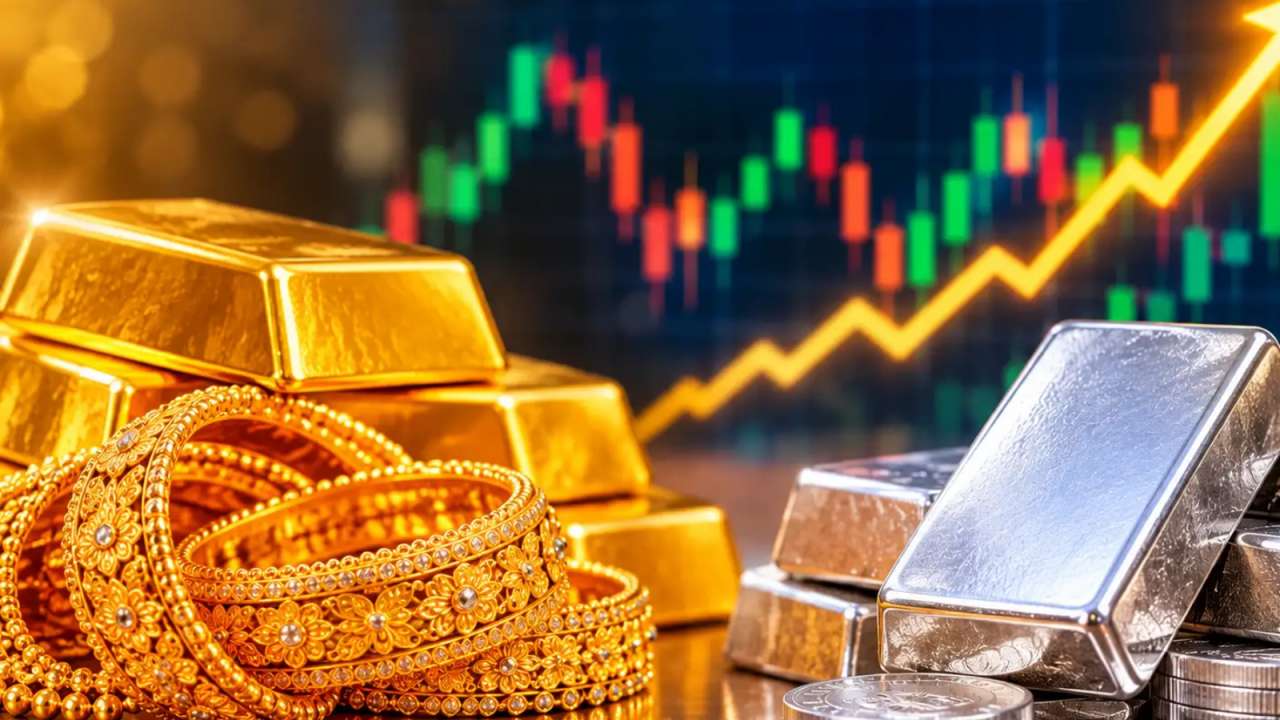
Gold Prices: The benchmark 24K gold (999 purity) is trading at an average of Rs 12,781 per gram across major Indian cities. For 22K gold, commonly preferred for jewellery, the price stands at Rs 11,716 per gram. The slight increase is primarily attributed to heightened global demand and persistent inflationary pressures observed in key international economies.
Silver Prices: Silver, often considered the ‘poor man’s gold’ but with significant industrial applications, is priced at approximately Rs 1,74,900 per kilogram for 999 purity. Sterling silver (925 purity) is valued at Rs 1,74,400 per kilogram. The white metal’s price stability, coupled with its industrial demand, continues to make it an attractive investment and ornamental choice.
These prices are a critical indicator for millions of Indian households, impacting everything from wedding preparations to investment portfolios, particularly as the nation heads into a traditionally active buying season.
Chronology of Market Dynamics Leading to Today’s Rates
The current pricing of gold and silver on November 26, 2026, is not an isolated event but rather the culmination of several months of intricate market movements, global economic shifts, and domestic factors. Understanding this chronology provides crucial context for today’s slight price increase.
The Build-Up: A Volatile Quarter for Precious Metals
The preceding quarter has been marked by significant volatility in the global commodity markets. Following an initial period of consolidation earlier in the year, precious metals experienced renewed interest from investors starting late Q3 2026. This resurgence was largely triggered by escalating geopolitical tensions in Eastern Europe and the Middle East, which traditionally bolster demand for safe-haven assets like gold. Fears of a potential global economic slowdown, coupled with persistent inflationary readings from major economies, further fueled this sentiment.
Central banks globally, including the US Federal Reserve and the European Central Bank, have adopted a cautious stance on monetary policy. While some analysts anticipated interest rate cuts by late 2026, persistent inflation has kept rates relatively high, influencing the opportunity cost of holding non-yielding assets like gold. However, the underlying fear of currency debasement due to high public debt and continued government spending has maintained gold’s appeal as a store of value.

Domestic Catalysts: Festive and Wedding Season Demand
In India, the festive season, which typically commences around Dussehra and extends through Diwali and the subsequent wedding season, plays a pivotal role in shaping domestic gold and silver demand. While the international factors set the baseline, local demand acts as a significant amplifier. Leading up to November, jewellers reported robust pre-Diwali sales, indicating strong consumer confidence despite prevailing high prices. This sustained demand, driven by cultural traditions and gifting practices, has prevented any substantial downward correction in prices, even when global cues might have suggested otherwise.
Furthermore, the Indian rupee’s performance against the US dollar has been another critical determinant. A weakening rupee makes imported gold more expensive in local currency terms. Over the past few weeks, the rupee has shown minor fluctuations, but generally maintained a level that has contributed to the elevated domestic prices of precious metals.
Year-to-Date Performance and Future Expectations
Looking at the year-to-date performance, both gold and silver have delivered respectable returns, outperforming several other asset classes that have grappled with economic uncertainties. Gold, in particular, has seen its value steadily appreciate, reflecting its role as a hedge against global economic instability. Silver, benefiting from both its investment appeal and growing industrial applications (especially in green technologies like solar panels), has also shown a healthy trajectory.

The slight increase observed today, November 26, 2026, can therefore be seen as a continuation of this broader trend, underpinned by a cautious global economic outlook and unwavering domestic consumer sentiment. Analysts suggest that unless there is a dramatic shift in geopolitical stability or a significant tightening of global monetary policies, the upward pressure on precious metal prices is likely to persist in the short to medium term.
Supporting Data: A Deep Dive into Price Drivers and Purity
To fully grasp the current market dynamics, it’s essential to examine the specific price points and the multifaceted factors that influence them. The intrinsic value of gold and silver, combined with extrinsic economic forces, creates the complex pricing structure observed today.
Detailed Price Breakdown: City-Wise Rates
The price of gold and silver can vary marginally across different Indian cities due to local taxes, transportation costs, and specific market dynamics. As of November 26, 2026, Good Returns provides the following city-wise rates:

Gold Prices Today (November 26, 2026):
| City | 24K Gold (999 Purity) Per Gram | 22K Gold (91.67% Purity) Per Gram |
|---|---|---|
| India Average | Rs 12,781 | Rs 11,716 |
| Delhi | Rs 12,791 | Rs 11,716 |
| Mumbai | Rs 12,781 | Rs 11,716 |
| Kolkata | Rs 12,781 | Rs 11,716 |
| Chennai | Rs 12,781 | Rs 11,716 |
Note: 24K gold is considered the purest form (99.9% pure), often used in bars and coins for investment. 22K gold contains 91.67% pure gold, alloyed with other metals like copper or silver to increase durability, making it ideal for jewellery.
Silver Prices Today (November 26, 2026):

| City | Silver 999 Purity Per 10 Grams | Silver 925 Purity Per Kilogram |
|---|---|---|
| India Average | Rs 1,749 | Rs 1,74,400 |
| Delhi | Rs 1,749 | N/A |
| Mumbai | Rs 1,749 | N/A |
| Kolkata | Rs 1,749 | N/A |
| Chennai | Rs 1,749 | N/A |
Note: Silver 999 is 99.9% pure, primarily for investment and industrial use. Silver 925, or sterling silver, is 92.5% pure, commonly used for jewellery and silverware due to its durability.
Driving Factors Analysis: Unpacking the Influences
The prices of gold and silver are a complex mosaic, painted by a multitude of interdependent global and local factors.
-
Global Market Trends: The international price of gold, typically denominated in US dollars, is the primary benchmark. Factors such as the US Federal Reserve’s monetary policy, bond yields, and the strength of the US dollar significantly impact global gold prices. When the dollar weakens, gold becomes cheaper for holders of other currencies, potentially increasing demand. Conversely, higher interest rates make non-yielding assets like gold less attractive compared to interest-bearing instruments. Geopolitical instability, global economic growth forecasts, and central bank gold purchases also exert considerable influence.

-
Local Demand: India’s love affair with gold is legendary. Domestic demand, especially during the extensive festive and wedding seasons, is a major driver. Gold is not just an ornament but a crucial part of cultural traditions, an auspicious gift, and a traditional form of savings and wealth transfer. The current period, post-Diwali and heading into peak wedding season, ensures a strong underlying demand base. For silver, while its cultural significance is also present, its industrial demand, particularly from the electronics, solar panel, and medical sectors, plays an increasingly vital role in price determination.
-
Currency Rates: The exchange rate between the Indian Rupee (INR) and the US Dollar (USD) directly impacts the landed cost of gold and silver in India, as the country is a net importer of these metals. A weaker rupee means that Indian buyers have to pay more rupees for the same quantity of dollar-denominated gold, leading to higher domestic prices.
-
Inflationary Pressures: Gold is widely considered an excellent hedge against inflation. When inflation rises, the purchasing power of fiat currencies erodes, making tangible assets like gold more appealing as a store of value. The current global economic environment, characterized by persistent inflation in many major economies, has strengthened gold’s appeal.

-
Government Policies and Import Duties: Indian government policies, including import duties on gold and silver, can also influence domestic prices. Any changes in these duties can directly impact the cost structure for importers and, subsequently, the retail prices.
Historical Context and Comparisons
While today’s prices represent a snapshot, comparing them to historical data offers perspective. Over the past decade, gold prices have seen substantial appreciation, often touching new record highs during periods of heightened economic uncertainty. For instance, comparing today’s price of Rs 12,781 per gram (24K) to prices from five years ago, it’s evident that the precious metal has delivered significant returns, solidifying its reputation as a long-term investment. Similarly, silver has also witnessed considerable growth, albeit with higher volatility due to its dual role as an investment and industrial commodity. The current levels suggest a continuation of the upward trajectory observed in recent years, driven by similar underlying macroeconomic and geopolitical factors.
Official Responses and Expert Opinions
The movements in gold and silver prices are closely monitored by industry bodies, financial analysts, and economists who offer valuable insights into the current trends and future outlook.

Jewellery Industry Perspective
Mr. Rajesh Mehta, President of the All India Gems and Jewellery Association (AIGJA), commented on the prevailing market conditions: "The current stability and slight upward trend in gold and silver prices are largely in line with our expectations for the post-Diwali and pre-wedding season period. Consumer sentiment remains robust, especially for gold, which is deeply ingrained in our culture. While high prices can sometimes deter impulse buying, the underlying demand for ceremonial purposes and long-term savings continues unabated. We anticipate healthy sales volumes in the coming months, provided there are no drastic global economic shocks."
He added, "The slight premium in Delhi compared to other metros for 24K gold reflects regional demand dynamics and distribution costs, which are typical market variations."
Financial Analysts and Economic Outlook
Dr. Priya Sharma, a Senior Economist at Stratagem Analytics, offered a macroeconomic perspective: "The persistent inflationary environment globally, particularly the sticky core inflation figures in the US and Europe, is a significant tailwind for gold. Investors are increasingly diversifying into tangible assets as a hedge against currency devaluation. The slight increase today is indicative of this broader trend rather than a sudden surge. Furthermore, the Indian Rupee’s relatively stable but slightly depreciatory trend against the US Dollar means that imported gold naturally becomes more expensive for domestic buyers."

Mr. Vikram Singh, Head of Commodity Research at BullionPulse India, emphasized the role of central banks: "Central banks around the world have been consistent net buyers of gold for several quarters now, signaling a strategic shift towards de-dollarization and diversification of reserves. This institutional buying provides a strong floor for gold prices. For silver, its dual nature as an investment metal and an industrial commodity means its price is also influenced by the outlook for global manufacturing and green energy initiatives. The robust demand for solar panels, for instance, provides a structural tailwind for silver prices."
Government’s Stance (Implicit)
While government bodies typically do not comment on daily price fluctuations, their broader economic policies and statements often provide context. The Reserve Bank of India (RBI) focuses on maintaining monetary stability and controlling inflation. Any measures taken to manage inflation or currency stability indirectly impact the precious metals market. The government’s emphasis on fiscal prudence and promoting economic growth aims to create a stable environment, which can influence investor confidence in traditional assets like gold and silver. High gold imports, however, remain a concern for the current account deficit, a factor the government continuously monitors.
Implications: Beyond the Price Tag
The current prices and market trends for gold and silver on November 26, 2026, carry significant implications for various stakeholders, from individual consumers and investors to the broader Indian economy and global financial markets.

For Consumers: Navigating the Festive and Investment Landscape
For millions of Indian consumers, the rising prices of gold and silver directly impact their purchasing power, especially during the ongoing wedding and festive seasons. While cultural traditions often mandate gold purchases, higher prices mean either reducing the quantity bought or stretching budgets further.
- Jewellery Buyers: Consumers planning weddings or festive gifting may opt for lighter jewellery designs, prioritize 22K gold for its balance of purity and affordability, or consider silver jewellery as an attractive alternative. The increasing sophistication of digital gold platforms might also draw buyers looking for investment without the immediate need for physical ornaments.
- Small Savers: Gold and silver remain a traditional form of savings, particularly in rural India. The consistent appreciation provides a sense of security and wealth preservation, acting as an informal social security net for many. However, the entry barrier for new physical purchases might increase for lower-income households.
For Investors: A Safe Haven in Stormy Seas
For both retail and institutional investors, gold and silver continue to play a crucial role in portfolio diversification.
- Portfolio Diversification: In an environment characterized by equity market volatility and bond market uncertainties, precious metals offer a crucial hedge. Their low correlation with traditional assets makes them an effective tool for risk management.
- Inflation Hedge: As inflationary pressures persist globally, gold’s role as a hedge against inflation becomes even more pronounced. Investors seeking to preserve capital in real terms are increasingly turning to gold.
- Future Outlook: Analysts generally maintain a bullish to neutral outlook for precious metals in the short to medium term. Sustained global uncertainties, potential for further geopolitical events, and continued central bank buying are expected to support prices. However, a sudden resolution of global conflicts or aggressive monetary tightening by major central banks could introduce headwinds. Investors are advised to monitor these factors closely and consider staggered investments.
For the Indian Economy: A Double-Edged Sword
The dynamics of gold and silver prices have multifaceted implications for the Indian economy.

- Current Account Deficit: India is one of the largest importers of gold. Higher global gold prices and robust domestic demand lead to increased import bills, which can widen the nation’s current account deficit (CAD). This puts pressure on the Indian Rupee and can affect the country’s overall macroeconomic stability.
- Household Savings: Gold represents a significant portion of household savings in India. Its appreciation contributes to household wealth, though it’s largely held in physical form and not always liquid.
- Smuggling Concerns: Historically, significant price differentials between international and domestic markets, combined with high import duties, have fueled gold smuggling. While the government has taken measures to curb this, sustained high prices could potentially re-energize illicit trade.
- Jewellery Sector Growth: A thriving precious metals market supports India’s vast jewellery manufacturing and retail sector, which is a significant employer and contributor to GDP. However, extreme price volatility can pose challenges for businesses in managing inventory and pricing.
Global Outlook: India’s Role
India’s massive appetite for gold makes it a key player in the global bullion market. Trends in Indian demand can influence international prices and trading volumes. As a major consumer, India’s market dynamics reflect global economic sentiment and simultaneously contribute to it. The sustained demand from India, alongside that from China and central banks, forms a critical pillar of support for the global gold market.
Conclusion
As of November 26, 2026, the Indian gold and silver markets stand at a fascinating juncture. The slight increase in prices reflects a complex interplay of global economic anxieties, persistent inflationary pressures, and India’s deeply ingrained cultural affinity for precious metals. While these metals continue to offer a safe haven for investors and embody tradition for consumers, their future trajectory will largely depend on the evolving geopolitical landscape, central bank policies, and the domestic economic health. Monitoring these factors will be crucial for anyone navigating the precious metals market in the coming months.
Find your daily dose of All Latest News including Sports News, Entertainment News, Lifestyle News, explainers & more. Stay updated, Stay informed- Follow DNA on WhatsApp.