
BUSINESS
Mumbai, India – November 25, 2026 – The Indian stock market experienced a spectacular resurgence in early trade on Wednesday, with benchmark indices Sensex and Nifty50 soaring to unprecedented levels. The Sensex dramatically surged by 1,372.72 points, or 1.67%, to touch 83,808.71 by 9:39 AM, while the Nifty50 mirrored this robust performance, gaining over 412 points, or 1.63%, to reach 25,761.65 by 9:40 AM. This dramatic upward trajectory on Dalal Street has ignited widespread optimism, prompting market participants and observers alike to question the underlying forces driving this sudden and significant celebration.

The powerful rally comes after a brief hiatus that saw a day of profit-taking followed by a market closure for Guru Purab. This week’s opening has been nothing short of electrifying, with investor confidence visibly returning, fueled by a confluence of factors ranging from a significant return of foreign capital to a perceived shift in global investment paradigms away from over-hyped technology sectors.
The Day’s Dramatic Opening: A Chronicle of Resurgence
The trading day on Wednesday commenced with an air of anticipation, quickly transforming into euphoria as the opening bell signaled a powerful upward momentum. After a period characterized by cautious profit-taking and a holiday-induced pause, the Indian indices launched into a rally that underscored a renewed appetite for Indian equities. The Bombay Stock Exchange (BSE) and the National Stock Exchange (NSE) immediately reflected this invigorated sentiment, pushing both the Sensex and Nifty50 into record-breaking territory within minutes of market open.
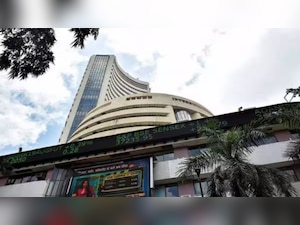
The 1,372.72-point jump in the Sensex, translating to a 1.67% increase, and the Nifty50’s equally impressive 412-point, or 1.63%, gain, were not merely statistical upticks but a clear indication of a fundamental shift in market dynamics. This immediate and strong reaction is a testament to the pent-up demand and positive triggers that had been brewing beneath the surface. Analysts swiftly moved to identify the primary catalysts behind this surge, pointing towards a trifecta of influential factors: the robust return of Foreign Portfolio Investors (FPIs), a global re-evaluation of the burgeoning Artificial Intelligence (AI) sector, and unexpectedly strong corporate earnings reported by Indian companies.
For many months, institutional investors had shown a degree of caution towards Indian markets, often diverting capital towards high-growth, technology-driven economies, particularly those at the forefront of the AI revolution. India, while boasting a strong domestic economy, was often perceived as lagging in the cutting-edge AI space, leading to a temporary withdrawal of foreign funds. However, the tables have now turned, as the very factors that once led to capital outflow are ironically contributing to India’s current appeal. The present rally signifies not just a bounce-back, but potentially a re-calibration of global investment strategies, positioning India as a stable and attractive destination amidst evolving international market sentiments.

Supporting Data: The Pillars of Dalal Street’s Ascent
The jubilation on Dalal Street is underpinned by concrete data and significant shifts in investor behavior, both domestic and international. The current rally is not an isolated event but a culmination of specific market dynamics and fundamental economic strengths.
Foreign Inflows: A Flood of Capital Re-enters India
One of the most compelling narratives driving the current market surge is the dramatic return of foreign capital. After several months of a relatively muted presence, Foreign Portfolio Investors (FPIs) and Foreign Institutional Investors (FIIs) have re-engaged with the Indian market in an unprecedented manner. November 2026 has emerged as a landmark month, witnessing the largest-ever monthly inflow of foreign money into Indian companies. FPIs have injected a staggering Rs 1.22 lakh crore, equivalent to approximately $12 billion, into the Indian equity markets within this month alone.

This massive infusion of capital has had an immediate and palpable impact on key indices. The blue-chip Nifty 50 index, often considered a barometer of the Indian economy, has climbed over 11% in November, directly attributable to this substantial foreign investment. This performance stands in stark contrast to global tech-heavy markets that had previously attracted significant FPI interest. For instance, AI benchmark firms in South Korea and Taiwan have seen their indices decline by more than 15% during the same period, while the tech-laden Nasdaq index in the US has fallen by 6%. This divergence clearly illustrates a strategic reallocation of capital away from what investors now perceive as potentially overvalued or risky tech sectors and towards more stable, growth-oriented economies like India. The sheer volume and speed of these inflows highlight a profound change in global investor sentiment, recognizing India’s growing economic resilience and potential for sustained returns.
The Shifting AI Narrative: From Bubble to Correction
A critical component of this global rebalancing act is the evolving perception surrounding the "AI bubble." For the past year, significant capital was aggressively pumped into equities with heavy AI bets, driving valuations of technology companies, particularly those involved in AI infrastructure, software, and development, to dizzying heights. This intense speculative interest meant that countries perceived as leaders in AI innovation, such as the US, South Korea, and Taiwan, saw their stock markets outperform significantly, often at the expense of markets like India, which lacked comparable AI-centric companies with significant global performance.

However, market sentiment has begun to sour. Analysts and investors are increasingly "doubting the potential returns on massive debts for AI-related infrastructure and software." The initial euphoria, driven by speculative excitement, is giving way to a more pragmatic assessment of the long-term profitability and sustainable growth of these AI investments. Concerns are mounting over the sheer capital expenditure required for AI development, the highly competitive landscape, and the uncertain timelines for substantial returns. This skepticism has led to a cooling off in these tech-heavy markets, causing stock prices to crash in some instances.
Ironically, India’s relative lack of a dominant AI sector has now become its strength. As investors seek to diversify their portfolios away from these perceived "risk-prone AI stocks" and move out of tech-heavy markets, India has emerged as an attractive "haven." Its economy, while not at the forefront of the global AI race, offers stability, a large domestic market, and diverse industrial bases, making it an ideal choice for investors looking for less volatile, long-term growth opportunities. The flight of capital from speculative tech to fundamental stability has inadvertently positioned India as a preferred destination.

Corporate Earnings: A Foundation of Domestic Strength
Beyond global capital flows and sector-specific re-evaluations, the robust performance of Indian corporations provides a strong domestic pillar for the market rally. Corporate results for the second quarter of financial year 2026-27 have been overwhelmingly positive, playing a crucial role in attracting and retaining investor confidence. Reuters has reported that the largest 50 Indian companies have collectively recorded their strongest quarterly profit growth in more than four years. This impressive earnings season signals healthy underlying economic activity and efficient corporate management.
The strong profitability across a broad spectrum of sectors underscores the resilience and growth potential of the Indian economy. Foreign investors, in particular, are keenly observing these corporate results. Their objective is not just to escape risk elsewhere but also to invest in companies that demonstrate strong earning potential. The positive earnings reports from Indian companies provide tangible evidence of value creation and future growth prospects, making them highly attractive to FPIs who are seeking both diversification and profitable avenues for their capital. Sectors such as banking, automotive, consumer discretionary, and select manufacturing industries have shown particularly strong results, contributing significantly to the overall positive sentiment. This fundamental strength acts as a powerful magnet, reassuring investors that their capital is being deployed in a productive and financially sound environment.

Official Responses and Expert Commentary: Gauging Market Sentiment
The recent surge on Dalal Street has naturally drawn significant attention from market analysts, economists, and fund managers, who are providing varied yet largely optimistic perspectives on the sustainability and implications of this rally.
"This is more than just a momentary bounce; it reflects a significant recalibration of global investment strategies," states Dr. Anjali Sharma, a veteran market strategist at a leading investment bank. "Foreign investors are actively seeking alternatives to overvalued tech sectors, and India, with its robust domestic consumption, stable macroeconomic environment, and now, strong corporate earnings, presents a compelling case. The sheer volume of FPI inflows in November is a clear testament to this shift."

Economists largely concur with the sentiment that India’s fundamental economic strengths are finally being recognized on a global scale. "India’s growth trajectory remains strong, often defying global headwinds," notes Mr. Rajesh Kumar, Chief Economist at a prominent financial institution. "The government’s continued focus on infrastructure development, manufacturing incentives, and fiscal prudence has created an environment conducive to corporate profitability. The Q2 FY2026-27 results are proof that Indian companies are not just surviving but thriving, which is a massive draw for institutional investors."
However, some analysts also inject a note of caution, advising against unchecked exuberance. "While the current momentum is strong, we must remember that market dynamics can change swiftly," advises Ms. Priya Singh, a senior fund manager. "The ‘AI bubble’ might be deflating, but technology remains a crucial sector. This could be a tactical rotation rather than a permanent paradigm shift. Investors should monitor global inflation trends, interest rate movements by major central banks, and any geopolitical developments closely, as these can quickly alter FPI sentiment."

There is a general consensus that India’s current position as a "haven" is a temporary advantage stemming from global tech sector corrections. "India’s appeal right now is partly due to its relative insulation from the speculative froth in the AI space," explains Mr. Vivek Jain, an independent market commentator. "However, for sustained long-term growth, India will also need to foster its own technological innovation and competitiveness. The current inflows are a fantastic opportunity to build upon this momentum, but relying solely on global diversification trends might not be sufficient in the long run."
Official responses from regulatory bodies like SEBI or the government typically refrain from commenting on daily market movements. However, policymakers often highlight the importance of foreign investment for economic growth and stability. The increased FPI activity is likely to be viewed positively by the government as it reinforces India’s image as an attractive and stable investment destination, potentially leading to further policy measures aimed at easing foreign investment regulations and improving ease of doing business.

Implications: A Glimpse into India’s Market Future
The significant market surge and the underlying factors driving it carry profound implications for India’s economy, its corporate landscape, and its standing in the global investment community.
Short-Term Market Dynamics
In the immediate term, the strong momentum is likely to attract further retail and domestic institutional investor participation, creating a positive feedback loop. The confidence exuded by FPIs often cascades down to local investors, encouraging more capital deployment into equities. This could lead to continued upward pressure on indices, though intermittent profit-taking phases are always to be expected. Sectors that have shown strong Q2 FY2026-27 results, particularly those benefiting from domestic consumption and infrastructure spending, are likely to remain in focus.

Medium-Term Economic Impact
Over the medium term, sustained FPI inflows can have several beneficial effects. A stronger influx of foreign capital typically leads to an appreciation of the Indian Rupee, making imports cheaper and potentially helping to curb imported inflation. It also provides companies with easier access to capital, fostering expansion, job creation, and economic growth. The enhanced liquidity in the market can also make it easier for companies to raise funds through public offerings, supporting further business development. This sustained confidence can also bolster India’s position in global supply chains, attracting more direct foreign investment (FDI) in manufacturing and services.
India as a Global Investment Destination
The current market rebalancing acts as a powerful endorsement of India’s macroeconomic stability and growth prospects. By becoming a "haven" amidst global tech volatility, India solidifies its reputation as a reliable and attractive investment destination. This perception could have long-lasting effects, drawing a more diverse set of foreign investors, including sovereign wealth funds and pension funds, who prioritize stability and consistent returns over high-risk speculative growth. This diversification of the investor base can make Indian markets more resilient to future global shocks.

Potential Challenges and Risks
Despite the current optimism, several challenges and risks warrant careful consideration.
- Global Economic Slowdown: A significant deceleration in global economic growth or a recession in major economies could impact India’s export sector and overall investor sentiment, potentially leading to capital outflows.
- Inflationary Pressures: While current corporate earnings are strong, persistent domestic inflation could erode consumer purchasing power and impact future profitability. The Reserve Bank of India’s (RBI) monetary policy decisions will be crucial in managing this.
- Geopolitical Risks: Any escalation of geopolitical tensions globally or regionally could trigger risk aversion among international investors, diverting capital away from emerging markets.
- Sustainability of AI Bubble Burst: The "AI bubble" may not have burst completely but could merely be undergoing a correction. A renewed surge in tech stocks, driven by new innovations or more realistic valuations, could see capital flowing back to those markets, potentially dampening FPI interest in India.
- Domestic Policy Continuity: Any perceived instability in domestic policy or regulatory frameworks could also deter foreign investors, who prioritize predictability and ease of doing business.
In conclusion, Wednesday’s spectacular market rally is a potent indicator of shifting global investment trends and India’s growing economic prowess. Fueled by a massive return of foreign capital, a re-evaluation of the global tech sector, and robust domestic corporate earnings, Dalal Street is celebrating a newfound optimism. While challenges remain, the current environment presents a unique opportunity for India to cement its position as a leading and stable investment destination on the global stage, paving the way for sustained economic growth and prosperity. The coming months will be crucial in determining whether this celebratory surge marks the beginning of a long-term re-rating of Indian equities or a more tactical allocation by global investors.