The arrival of the monsoon in the Darjeeling Himalayas is marked by more than just the rhythmic patter of rain on tea leaves; it signals the awakening of a creature that has remained largely unchanged for millions of years. As the parched earth drinks its fill, the forest floor comes alive with the slow, deliberate movements of the Himalayan salamander. This elusive amphibian, often described as a "living fossil," emerges from its subterranean retreat to find the ephemeral ponds, or pokhris, that are essential for its survival.
However, the survival of India’s only two species of salamanders—the Himalayan salamander (Tylototriton himalayanus) and the newly described Manipuri newt (Tylototriton zaimeng)—is increasingly under threat. As India’s biodiversity faces the dual pressures of rapid infrastructure development and climate change, these secretive amphibians have become symbols of the fragile ecosystems of the Eastern Himalayas and the Indo-Burma biodiversity hotspot.
Main Facts: India’s Unique Salamander Heritage
While North America and Europe are home to the vast majority of the world’s 830 salamander species, India is home to only two. Both belong to the genus Tylototriton, commonly known as "crocodile newts" due to their rugged, wart-covered skin and primitive appearance.
The Himalayan Salamander (Tylototriton himalayanus)
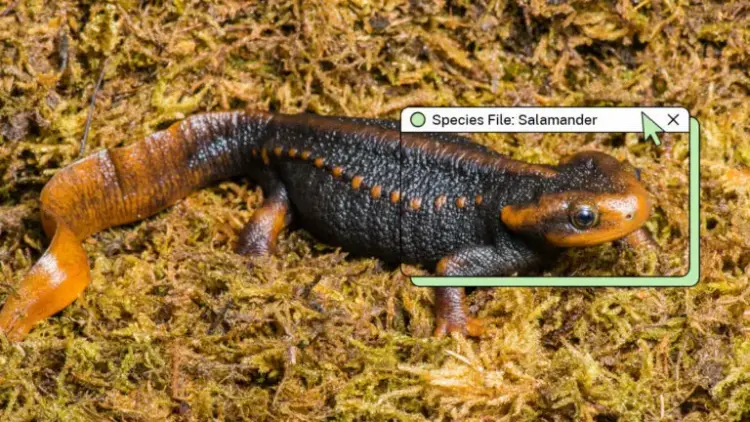
Once thought to be the only salamander species in India, the Himalayan salamander is found across a narrow corridor spanning eastern Nepal, the Darjeeling and Kalimpong hills of West Bengal, and western Bhutan. It is characterized by its dark brown, almost black, body and a series of prominent, knobby warts along its dorsal side. These warts are not merely aesthetic; they house parotoid glands that can secrete potent toxins when the animal is threatened, serving as a primary defense mechanism against predators.
The Manipuri Newt (Tylototriton zaimeng)
The scientific community was electrified in 2023 when researchers officially described a second species: the Manipuri or Zaimeng newt. Restricted to the Khongtheng mountain range in Manipur, this species is visually distinct, sporting vibrant orange-yellow markings on its head, back, and limbs. Its discovery highlighted the critical importance of the Northeast Indian highlands as a reservoir of undiscovered biological wealth.
Conservation Status and Legal Protection
Both species are currently recognized as being at high risk of extinction. The Himalayan salamander is listed as "Vulnerable" on the IUCN Red List, and experts have proposed the same status for the Manipuri newt due to its extremely limited geographical range. Recognizing their ecological importance, the Indian government has accorded both species the highest level of legal protection under Schedule I of the Wildlife (Protection) Act, 1972—placing them on the same legal footing as the Bengal tiger and the Asian elephant.
Chronology: From Evolutionary Persistence to Modern Discovery
The story of salamanders in India is one of deep time meeting modern science.
- Ancient Origins: Salamanders represent a lineage of amphibians that branched off from other tetrapods roughly 250 million years ago. Their physiology, which includes the ability to regenerate lost limbs and a dual life cycle (aquatic and terrestrial), offers scientists a window into the evolutionary transition from water to land.
- Early Recognition: For decades, the Himalayan salamander was known to local communities in Darjeeling and Nepal, but it was often confused with other Asian species. It wasn’t until detailed morphological and genetic studies were conducted that the specific identity of Tylototriton himalayanus was solidified.
- 2023: The Zaimeng Discovery: The description of Tylototriton zaimeng was a landmark event. Found at Zaimeng Lake—a high-altitude wetland in Manipur—the species had been known to the local Liangmai Naga tribe for generations, but its formal scientific classification only came after rigorous genetic sequencing proved it was a distinct lineage from its Himalayan cousin.
- 2026: Recognition of Conservation Efforts: In April 2026, the global conservation community celebrated the work of Barkha Subba, a scientist who has dedicated her career to the Himalayan salamander. Subba was awarded the prestigious Whitley Award (often called the "Green Oscars") for her grassroots work in protecting the pokhris of Darjeeling, signaling a new era of visibility for these "forgotten" amphibians.
Supporting Data: Biology, Habitat, and the "Pokhri" Ecosystem
To understand why these species are disappearing, one must understand their highly specialized life cycle.
The Breeding Cycle
The Himalayan salamander’s life is governed by the monsoon. From late April to early October, adults migrate to shallow, slow-moving or stagnant water bodies. These pokhris are often seasonal, formed by rainwater accumulation.
- Courtship: Unlike many other amphibians, salamanders engage in a complex "courtship dance" where the male leads the female before depositing a spermatophore.
- Egg-Laying: The female attaches fertilized eggs to submerged vegetation or rocks.
- Metamorphosis: Larvae hatch within two weeks, possessing external gills. Over several months, they develop lungs and limbs, eventually leaving the water to live a terrestrial life under logs, rocks, and leaf litter.
The Geography of Risk
A significant challenge for conservation is that the majority of salamander habitats do not fall within the boundaries of National Parks or Wildlife Sanctuaries.

- Private Lands: In Darjeeling, a large percentage of breeding ponds are located within private tea estates or on community-owned land.
- The Tourism Factor: Many high-altitude lakes, such as Zaimeng Lake in Manipur, are becoming popular tourist destinations. Increased foot traffic leads to soil compaction and water pollution.
- Infrastructure Barriers: Research indicates that roads cutting through the hills are "death traps" for salamanders. During the breeding season, as adults migrate toward ponds, they must often cross highways, leading to high rates of roadkill.
Habitat Loss Statistics
While precise national data on salamander populations is still being gathered, local surveys in Darjeeling suggest a steady decline in the number of active breeding ponds. Scientists estimate that over 40% of small, seasonal wetlands in the Eastern Himalayas have been lost or degraded over the last two decades due to drainage for housing and agricultural expansion.
Official Responses and Conservation Measures
The Indian government and various NGOs have begun to take the plight of the salamander more seriously, though many argue that the response is still in its infancy.
Legal Enforcement
The inclusion of salamanders in Schedule I of the Wildlife (Protection) Act is a double-edged sword. While it provides a legal framework to prosecute those who harm the animals or trade in them, it also places heavy bureaucratic hurdles on researchers trying to study the species. Experts are calling for a more nuanced approach that balances strict protection with the need for active field research.
The Role of Community-Based Conservation
The work of Barkha Subba represents the gold standard for modern conservation in India. Rather than advocating for the exclusion of people from salamander habitats, her approach focuses on:
- Pokhri Restoration: Working with tea estate managers to ensure that small ponds are not filled in or treated with pesticides.
- Public Awareness: Educating local communities about the ecological role of the "crocodile newt" as a controller of insect populations.
- Citizen Science: Encouraging locals to report sightings and help map breeding sites, which has been instrumental in identifying critical habitats outside protected zones.
Government Initiatives
In Manipur, the state government has expressed interest in declaring Zaimeng Lake a "Biodiversity Heritage Site." This designation would allow for community-managed conservation while providing state funds for habitat restoration. However, implementation remains slow, hampered by regional instability and competing development interests.
Implications: The Salamander as an Ecological Sentinel
The decline of the Himalayan salamander and the Manipuri newt is a warning sign for the broader health of the Himalayan and Indo-Burmese ecosystems.
Indicators of Water Quality
Salamanders have highly permeable skin, making them exceptionally sensitive to pollutants. When a salamander population disappears from a pond, it is often the first sign that the water is contaminated with heavy metals or agricultural runoff. Their presence is a certificate of a healthy, functioning wetland ecosystem.
Climate Change Vulnerability
As global temperatures rise, the timing of the monsoon is becoming increasingly erratic. Since the salamanders’ breeding cycle is tied to the first rains, "false starts" to the monsoon can lead to mass mortality if ponds dry up before the larvae have fully metamorphosed. The loss of these species would mean the loss of an ancient lineage that has survived multiple mass extinctions, only to be threatened by human-induced climate shifts.
The "Deep Time" Connection
As Barkha Subba eloquently noted upon receiving her Whitley Award, encountering a salamander is akin to meeting a "messenger from deep evolutionary time." Their loss would not just be a biological tragedy, but a cultural one, as they are part of the folk history and natural heritage of the mountain tribes.
The future of India’s secretive salamanders now rests on a delicate balance. It requires a shift in how we view "wastelands"—understanding that a small, muddy pond in a tea garden may be the most important breeding ground for a species found nowhere else on Earth. If conservation efforts can bridge the gap between scientific research, government policy, and community action, there is hope that these ancient messengers will continue to emerge from the forest floor for millions of years to come.