

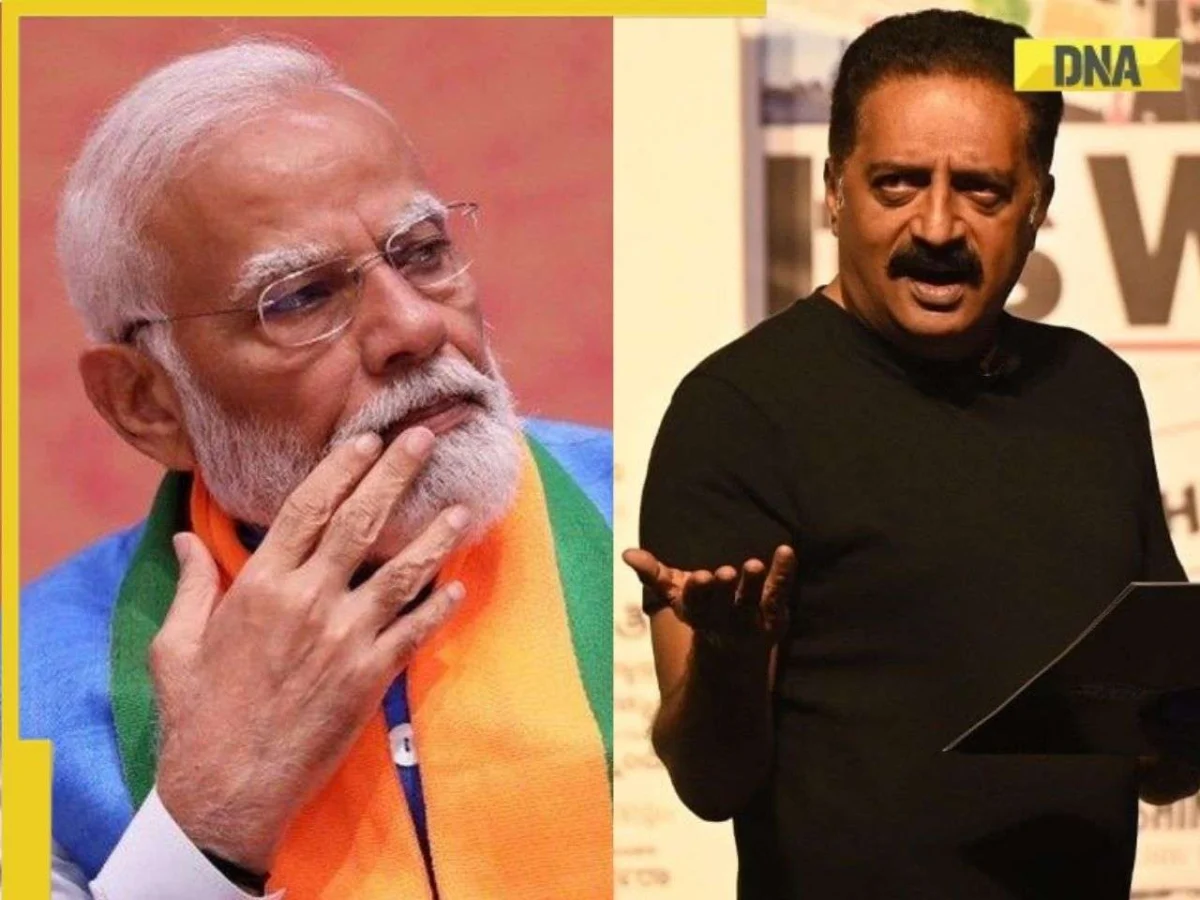
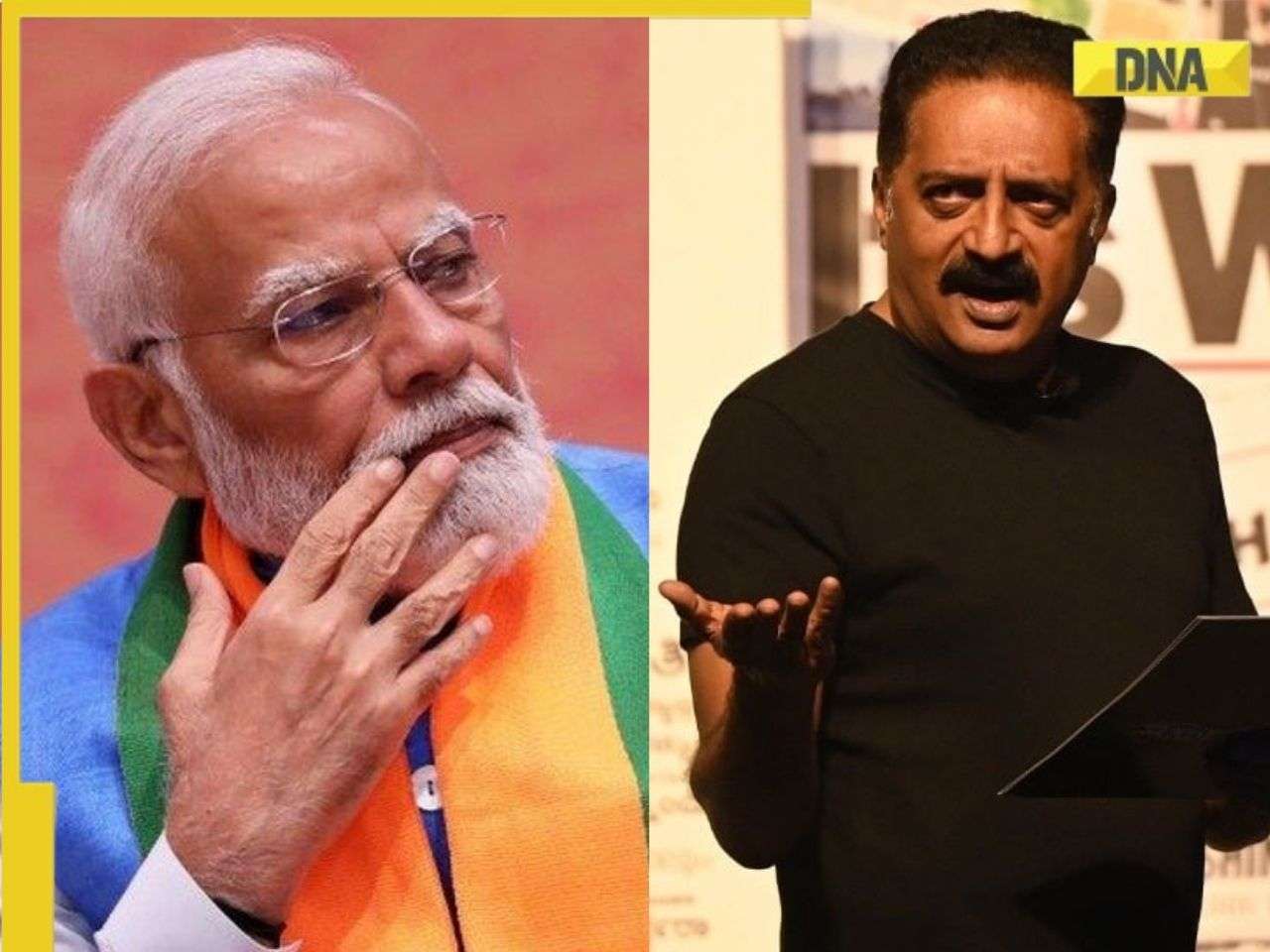
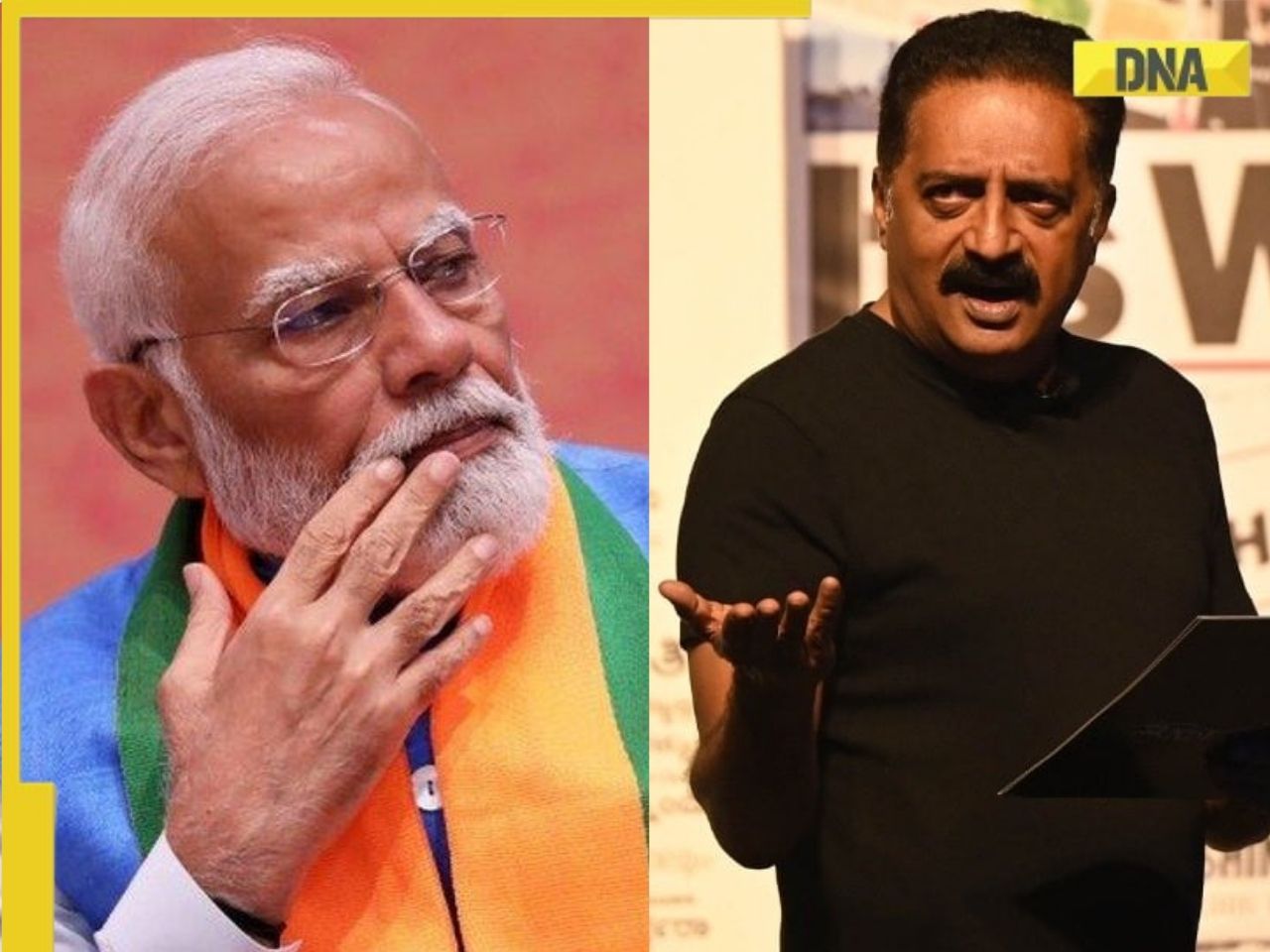
Bengaluru, India – May 10, 2026 – The political landscape of Tamil Nadu, already a vibrant theatre of shifting alliances and electoral strategies, has become the focal point of a sharp verbal exchange between Prime Minister Narendra Modi and veteran actor-turned-activist Prakash Raj. The controversy ignited following Prime Minister Modi’s recent criticism of the Congress party for allegedly abandoning its long-standing alliance with the Dravida Munnetra Kazhagam (DMK) to forge a new partnership with actor Thalapathy Vijay’s Tamilaga Vettri Kazhagam (TVK). In response, Prakash Raj launched a blistering tirade against the Prime Minister and his Bharatiya Janata Party (BJP), accusing them of hypocrisy and moral bankruptcy.
The exchange, amplified across social media platforms, has underscored the deep ideological chasm and the often-heated rhetoric that characterizes Indian politics, particularly in the lead-up to significant electoral battles. This article delves into the specifics of the political commentary, traces the chronology of events, examines supporting data and context, explores potential official responses, and analyzes the broader implications of this public confrontation.
The Genesis of the Controversy: Modi’s Accusation and Raj’s Retort
The political dust-up began when Prime Minister Narendra Modi, addressing a rally in Bengaluru, pointedly criticized the Congress party’s electoral maneuvering in Tamil Nadu. He highlighted the Congress’s historical association with the DMK, a prominent regional party in the state, and contrasted it with their perceived shift towards an alliance with TVK, led by the popular actor Vijay, especially during a crucial electoral juncture. The Prime Minister articulated his critique with a pithy remark, "Aisa koi saga nahi, jisko Congress ne thaga nahi," which loosely translates to, "There is no relative whom the Congress has not cheated." This statement was intended to portray the Congress as an unreliable ally, prone to abandoning its partners for political expediency.
The video of Prime Minister Modi’s speech quickly gained traction online. It was this particular segment that caught the attention of Prakash Raj, a vocal critic of the current government and its policies. Known for his uninhibited expression of political opinions, Raj did not hesitate to respond, taking to the social media platform X (formerly Twitter) to share the ANI video of Modi’s speech.
)
His rejoinder was nothing short of a frontal assault on the Prime Minister and the BJP’s core political narrative. Raj did not just defend the Congress or critique Modi’s statement in isolation. Instead, he broadened the scope of his criticism, turning the Prime Minister’s own words back on him and his party. In his widely shared post, Raj wrote, "Will you please also just look at your party…destroying.. back stabbing…dividing regional parties…dethroning constitutionally elected governments.. rebranding all corrupt leaders in your washing machine…garlanding rapists and murderers."
Raj’s statement was a deliberate counter-accusation, painting the BJP not as a party of integrity but as one that engaged in similar, if not more egregious, political tactics. The use of terms like "backstabbing," "dividing regional parties," and "rebranding all corrupt leaders in your washing machine" directly challenged the BJP’s self-proclaimed image as a force for national progress and ethical governance. The reference to "garlanding rapists and murderers" was a particularly strong indictment, implying the induction of individuals with serious criminal backgrounds into the party fold.
)
A Chronology of Political Alignments and Criticisms
To understand the full context of this exchange, it’s essential to trace the political developments that led to this point:
-
Historical Context of Tamil Nadu Alliances: Tamil Nadu’s political arena has long been dominated by regional parties like the DMK and the All India Anna Dravida Munnetra Kazhagam (AIADMK). National parties, including the Congress and the BJP, have often found it strategically advantageous to forge alliances with these regional powerhouses to gain a foothold or secure electoral victories. The Congress, in particular, has had a long and often complex relationship with the DMK, with periods of alliance and opposition.

-
Emergence of Thalapathy Vijay’s TVK: The political landscape of Tamil Nadu has recently seen the emergence of new political forces. Thalapathy Vijay, a hugely popular film star, launched his political party, the Tamilaga Vettri Kazhagam (TVK), signaling his intent to contest elections. The entry of a prominent film personality into politics often stirs considerable interest and can potentially disrupt existing electoral equations.
-
Prime Minister Modi’s Observation: In his Bengaluru speech, Prime Minister Modi was specifically commenting on the Congress’s electoral strategy in the context of the upcoming Tamil Nadu polls. His statement implied that the Congress, by distancing itself from the DMK and potentially aligning with TVK, was demonstrating a lack of loyalty and consistent political partnership. His idiom, "Aisa koi saga nahi, jisko Congress ne thaga nahi," has been historically used to critique political parties that are perceived as opportunistic and untrustworthy allies.
)
-
Prakash Raj’s Intervention: Prakash Raj, a known critic of the Modi government, seized upon the Prime Minister’s statement as an opportunity to launch a counter-offensive. His response was not merely a defense of the Congress but a comprehensive critique of the BJP’s alleged political practices. He leveraged the Prime Minister’s own words to highlight what he perceived as hypocrisies within the ruling party.
-
Social Media Amplification: The rapid dissemination of both Prime Minister Modi’s speech and Prakash Raj’s response via social media platforms like X (formerly Twitter) and other news outlets played a crucial role in amplifying the controversy. This digital amplification ensured that the political debate reached a wider audience, sparking discussions and drawing reactions from various sections of society.
)
Supporting Data and Political Commentary
The statements made by both Prime Minister Modi and Prakash Raj are deeply embedded in the ongoing political discourse and electoral strategies of the parties involved.
Prime Minister Modi’s Allegations:
)
The Prime Minister’s critique of the Congress is rooted in the party’s historical alliances and its electoral performance in various states. The Congress has indeed experienced shifts in its partnerships over the years, leading to accusations of opportunism from political rivals. The specific reference to the DMK in Tamil Nadu highlights a long-standing alliance that has been a significant factor in state politics. The Prime Minister’s statement, while framed as a critique of Congress, also serves to position the BJP as a stable and reliable alternative, capable of forging strong alliances and offering consistent governance.
Prakash Raj’s Counter-Allegations:
)
Prakash Raj’s accusations against the BJP, particularly the phrase "rebranding all corrupt leaders in your washing machine," is a direct jab at the BJP’s strategy of inducting leaders from opposition parties, often those facing corruption charges. This tactic has been a recurring point of criticism against the BJP. Critics argue that by welcoming such leaders, the BJP essentially legitimizes their past actions and undermines its own anti-corruption narrative.
The reference to "garlanding rapists and murderers" likely alludes to instances where individuals accused or convicted of serious crimes have been fielded as candidates or have joined the party. Such instances, when they occur, inevitably draw sharp criticism and raise questions about the party’s vetting process and its commitment to upholding ethical standards in public life.
)
The phrase "dethroning constitutionally elected governments" is a severe accusation, suggesting undemocratic practices aimed at destabilizing or overthrowing governments not aligned with the ruling party’s agenda. This often refers to allegations of political maneuvering, such as encouraging defections or using central investigative agencies to exert pressure on state governments.
Netizens’ Reactions: A Divided Opinion
As anticipated, Prakash Raj’s strong statement on social media generated a significant and polarized reaction from netizens. The digital sphere, often a reflection of broader societal opinions, showcased a clear divide in how his critique was received.
)
A substantial portion of netizens strongly condemned Prakash Raj’s remarks, viewing them as an unwarranted attack on the Prime Minister and the BJP. Comments such as "Crying wolf. Earlier asking and asking for Vijay, and without understanding, keep on smearing campaign on BJP, what happened now, TVK Vijay sworn in. Don’t believe this guy, a useless fellow," indicate a perception that Raj is driven by personal animosity rather than objective political analysis. This group often defends the BJP’s actions and views criticisms as politically motivated attempts to undermine the government.
Another segment of netizens engaged with Raj’s points, albeit with their own interpretations. The comment, "Not dividing regional party bro, he is eradicating or making them extinct, look at your condition," suggests a belief that the BJP’s strategy is not about division but about absorbing or diminishing regional parties. This perspective, while critical of the BJP’s methods, frames it as a strategy of political dominance rather than mere alliance-building or breaking.
)
A more critical perspective emerged from another user who stated, "All are thinking. BJP is fighting for every individual in the country, but I think what I see during their tenure. BJP politicians’ sons and Big Corporate companies are the real beneficiaries. We are all only there to vote for them, so they can rule and enjoy royal life, that’s democracy." This comment reflects a deeper skepticism about the BJP’s governance, suggesting that the benefits of their policies accrue to a select few, while the general populace is merely a means to electoral success. This sentiment echoes broader concerns about economic inequality and the influence of corporate interests in politics.
The varied reactions highlight the deep polarization in public opinion regarding the ruling party and its political strategies. While supporters often view criticisms as politically motivated attacks, detractors see them as valid observations of perceived flaws and hypocrisies.
)
Official Responses and Political Implications
As of the latest reports, there has been no direct official response from the Prime Minister’s Office or the BJP to Prakash Raj’s specific accusations. This is not uncommon in Indian politics, where political figures often choose to address criticism through spokespersons or by continuing with their own political agendas rather than engaging in direct verbal duels with actors or activists. However, the silence does not diminish the impact of the statement.
The political implications of this exchange are multifaceted:
)
-
Reinforcing Political Divides: The controversy serves to further entrench the existing political divides in India. Prakash Raj’s strong stance appeals to the opposition and those critical of the BJP, while the Prime Minister’s original statement is likely to resonate with his supporters who view the Congress as an unreliable political entity.
-
Amplifying the Tamil Nadu Political Narrative: The debate brings the political dynamics of Tamil Nadu into sharper national focus. The roles of the DMK, Congress, and the newly emerging TVK are being scrutinized, and the alliances being formed or broken are being interpreted through the lens of national political strategies.
)
-
The Role of Celebrity Endorsement in Politics: The involvement of a popular actor like Thalapathy Vijay in politics, and the subsequent commentary on political alliances involving his party, underscores the significant influence that film stars can wield in Indian electoral politics. Their entry often garners widespread attention and can reshape traditional voting patterns.
-
The Power of Social Media Discourse: This incident exemplifies the critical role of social media in shaping political narratives and public opinion. The rapid spread of information, opinions, and counter-opinions on platforms like X can significantly influence the perception of political events and figures.
)
-
Scrutiny of Political Ethics: Prakash Raj’s pointed accusations—about "rebranding corrupt leaders" and "garlanding rapists and murderers"—force a continued public conversation about the ethical standards of political parties and the vetting processes for candidates. While such criticisms may be dismissed by some as partisan attacks, they also serve to hold political actors accountable to public scrutiny.
Conclusion: A Microcosm of India’s Political Arena
The verbal sparring between Prime Minister Narendra Modi and Prakash Raj over political alliances in Tamil Nadu is more than just a celebrity’s critique of a political leader. It is a microcosm of the broader political discourse in India, characterized by sharp rhetoric, ideological confrontations, and the strategic use of alliances. Prime Minister Modi’s attempt to critique the Congress’s alliance strategy, by invoking a common idiom, inadvertently provided Prakash Raj with an opening to launch a sweeping indictment of the BJP’s own political practices.
)
The polarized reactions from netizens highlight the deeply divided nature of public opinion and the intense partisan loyalties that often define political discussions in the digital age. As the political landscape continues to evolve, particularly in key states like Tamil Nadu, such exchanges will undoubtedly continue to shape public perception and influence electoral outcomes. The debate serves as a stark reminder of the often-turbulent nature of Indian politics, where alliances are fluid, criticisms are sharp, and public opinion is fiercely contested.
