

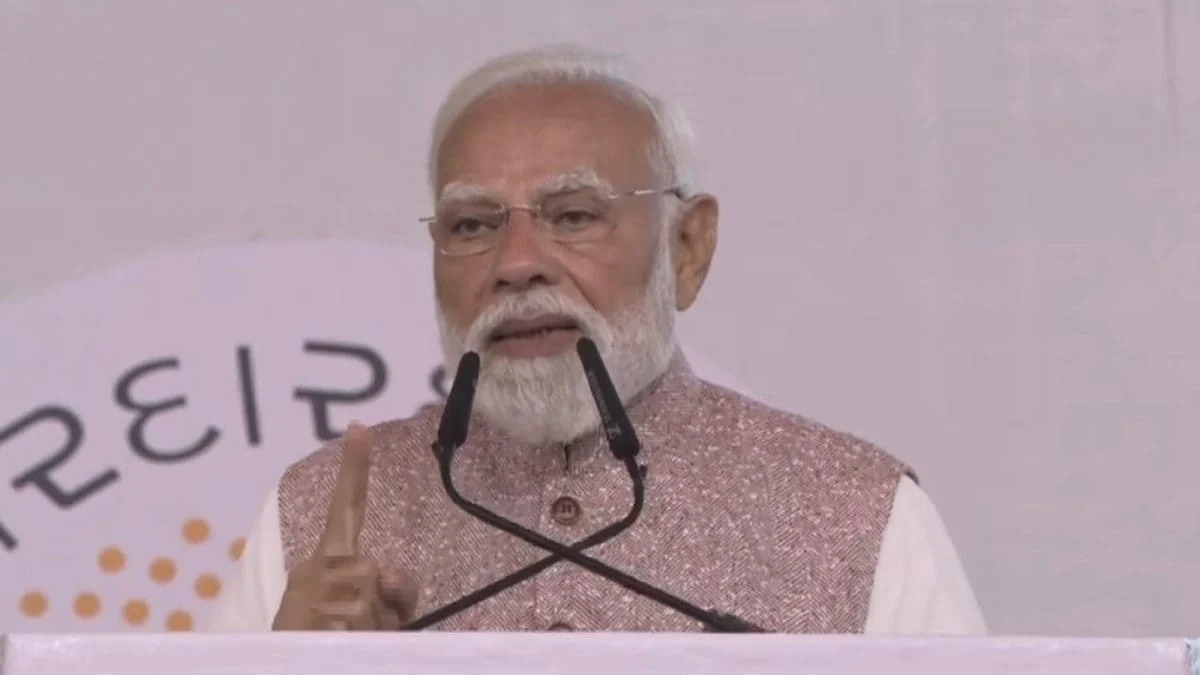
Vadodara, India – May 11, 2026 – In a stark warning about the escalating economic challenges stemming from the protracted US-Iran conflict, Prime Minister Narendra Modi on Monday reiterated an urgent appeal to the nation for widespread cost-cutting and austerity measures. Speaking in Vadodara, Gujarat, the Prime Minister called upon citizens and institutions alike to significantly reduce fuel consumption, embrace widespread work-from-home arrangements, and temporarily curb non-essential imports, including gold, until global stability is restored. The address underscored the gravity of the international geopolitical situation and its tangible impact on India’s economic resilience, sending ripples through domestic financial markets.
The Prime Minister’s fervent appeal, delivered at the inauguration of the Sardardham Hostel, emphasized collective national participation in mitigating the severe strain on India’s foreign exchange reserves and reducing its critical import dependence. With supply chains increasingly fractured and global commodity prices, particularly crude oil, soaring amidst the ongoing conflict, Modi’s message highlighted the imperative for prudence and self-reliance. His recommendations included a concerted shift towards public transportation, electric vehicles, and carpooling, alongside a strong endorsement of virtual meetings and remote work policies for both government and private sectors. The call signals a broader governmental concern over a potentially prolonged period of global instability, urging the nation to adapt to a new economic reality.
The Unfolding Crisis: A Chronology of Escalation and Economic Response
India, a rapidly developing economy heavily reliant on imports for its energy needs and certain critical raw materials, has always been vulnerable to global geopolitical tremors. However, the current US-Iran conflict, now entering its third brutal month, presents an unprecedented challenge, threatening to derail the nation’s ambitious growth trajectory.
Pre-Conflict Vulnerabilities (Early 2026): Even before the current conflagration, India’s economy faced a delicate balancing act. While domestic demand remained robust, the nation grappled with persistent challenges related to its current account deficit, largely driven by significant crude oil and gold imports. The government had initiated various schemes to boost domestic manufacturing and reduce import dependence, but these were long-term strategies. Foreign exchange reserves, though substantial, were under constant pressure to fund essential imports and maintain currency stability.
Outbreak of Hostilities (February 2026): The initial skirmishes between the United States and Iran, sparked by escalating tensions in the Strait of Hormuz, quickly intensified into a full-blown conflict by early February 2026. Global oil markets reacted instantly, with crude prices spiking dramatically as fears of supply disruptions from the critical Middle East region mounted. Shipping lanes became hazardous, leading to increased insurance premiums and logistical bottlenecks for international trade.
Initial Governmental Advisories (March-April 2026): Recognizing the immediate economic fallout, Prime Minister Modi had made preliminary calls for caution in late March, urging industries to explore domestic alternatives and advising citizens to conserve resources. These initial advisories, however, were relatively mild compared to the explicit and comprehensive measures outlined in his latest address. The Ministry of Petroleum and Natural Gas had, at that time, begun dialogues with alternative energy suppliers, while the Ministry of Finance started assessing the potential impact on India’s fiscal deficit.
Failed Peace Efforts and Escalation (Late April-Early May 2026): Hopes for a swift resolution were dashed in late April when US President Donald Trump publicly rejected Iran’s response to a proposed peace agreement, terming it "totally unacceptable." This development signaled a hardening of positions and the likelihood of a prolonged conflict, pushing global oil prices to new highs and exacerbating supply chain woes. The failure of diplomatic efforts intensified the economic uncertainty, prompting a more forceful and direct intervention from the Indian leadership.
Modi’s Vadodara Address (May 11, 2026): It was against this backdrop of persistent geopolitical instability and worsening economic indicators that Prime Minister Modi delivered his latest, more urgent appeal from Vadodara. His address was not merely a reiteration but an amplification of previous calls, emphasizing the critical need for collective sacrifice and strategic adjustments in daily life. "Until conditions return to normal," Modi stated, "all of us will have to take small yet meaningful resolutions in our daily lives for the larger interest of the nation." He specifically targeted the consumption of petrol and diesel, advocating for a significant shift towards public transport, electric vehicles, and carpooling, while also strongly endorsing virtual meetings and work-from-home models for both public and private sectors. Furthermore, he reiterated the need to temporarily halt gold purchases and vigorously promote "Vocal For Local" initiatives.
Supporting Data: The Economic Imperative Behind the Appeal
The Prime Minister’s call is not without a robust economic rationale, rooted in India’s structural vulnerabilities and the immediate impact of the US-Iran conflict.
Crude Oil Dependency and its Fiscal Drain: India imports over 85% of its crude oil requirements, making it one of the world’s largest oil importers. The Middle East, particularly the Persian Gulf region, has historically been a primary source. The conflict has sent global crude oil benchmarks like Brent surging past $110 a barrel, with analysts projecting further increases if hostilities persist. Every $10 increase in oil prices typically adds billions of dollars to India’s annual import bill, widening the current account deficit (CAD) and placing immense pressure on the rupee. The ripple effect is felt across the economy: higher fuel prices translate to increased transportation costs, directly contributing to inflationary pressures across all goods and services. The government also faces a dilemma of either absorbing some of the cost through subsidies (straining the fiscal deficit) or passing it on to consumers (fueling inflation and potentially dampening demand). For instance, economists at ICRA have estimated that a sustained $10/barrel rise in crude oil prices could expand India’s CAD by approximately 0.4% of GDP.
Depleting Foreign Exchange Reserves: The surging import bill, particularly for oil, rapidly depletes India’s crucial foreign exchange reserves. These reserves are vital for maintaining the stability of the Indian rupee, financing essential imports, and servicing external debt. A significant drawdown of forex reserves can trigger investor panic, lead to capital flight, and undermine overall economic confidence. While India’s reserves stood at a healthy level prior to the conflict, a prolonged period of high import costs could quickly erode this buffer, leaving the economy more susceptible to external shocks.
The Gold Import Conundrum: India’s cultural affinity for gold has historically made it one of the world’s largest consumers of the precious metal. Gold imports, while catering to domestic demand and cultural practices, are a non-essential drain on foreign exchange. In the fiscal year preceding the conflict (FY2025-26), gold imports accounted for roughly $40-50 billion, a substantial portion of the overall import bill. Temporarily halting these purchases, as suggested by PM Modi, could free up significant foreign exchange for more critical imports and ease pressure on the rupee. Previous attempts by the government to curb gold imports through duties have yielded mixed results, but a direct appeal for voluntary restraint in a national crisis could prove more effective.
Disrupted Supply Chains and Inflationary Pressures: Beyond crude oil, the conflict has severely impacted global supply chains. Shipping routes through the Middle East, including the crucial Strait of Hormuz, are vital arteries for international trade. Increased risks in these areas have led to delays, rerouting, and significantly higher freight and insurance costs. This affects not only energy imports but also other critical commodities like fertilizers, industrial raw materials, and even consumer goods. The cumulative effect is higher input costs for domestic industries, which are inevitably passed on to consumers, further stoking inflation. The Reserve Bank of India, in its recent monetary policy review, had already highlighted global supply chain disruptions as a key upside risk to inflation forecasts.
Market Reaction: A Barometer of Concern: The immediate aftermath of PM Modi’s address saw a sharp decline in Indian equity markets, reflecting investor apprehension. The BSE Sensex plummeted by 1,312 points (1.70%) to close at 76,015, while the Nifty 50 shed 360 points (1.49%) to settle at 23,815. Consumption-linked sectors bore the brunt of the selling pressure. Automobile companies, consumer durables, and aviation stocks witnessed heavy losses as the call to curb fuel consumption, avoid unnecessary foreign travel, and reduce dependence on imported commodities raised serious concerns over FY27 demand growth forecasts. Analysts pointed to a clear signal that the government anticipates a slowdown in discretionary spending and a pivot towards essentialism, which could dampen corporate earnings in the short to medium term.
Official Responses and Stakeholder Perspectives
The Prime Minister’s directives have elicited varied responses from government ministries, industry bodies, and economic experts, all grappling with the implications of this new economic reality.
Government Ministries:
- Ministry of Finance: Officials within the Ministry of Finance have echoed the Prime Minister’s call for fiscal prudence and responsible consumption. A senior official, speaking on condition of anonymity, stated, "The Prime Minister’s message is clear: national interest takes precedence. We are exploring all avenues to manage the current account deficit and ensure macro-economic stability. The voluntary participation of citizens and industries is paramount." The Ministry is reportedly preparing a detailed economic assessment of the conflict’s impact and potential mitigation strategies.
- Ministry of Petroleum and Natural Gas: The Ministry has been actively engaged in diversifying India’s energy import basket, engaging with non-traditional suppliers, and accelerating domestic exploration. They have also highlighted efforts to promote cleaner fuels and electric mobility, aligning with the PM’s vision.
- Ministry of External Affairs: Diplomats are reportedly working overtime to engage with international partners to de-escalate the conflict and ensure the security of shipping lanes. India has consistently advocated for peaceful resolutions and multilateral dialogue in international forums.
Industry Bodies:
- Confederation of Indian Industry (CII): CII President, Mr. Rohan Sharma, acknowledged the severity of the situation. "Industry understands the challenges posed by the geopolitical situation. While the call for reduced consumption might impact certain sectors in the short term, the long-term goal of national economic stability is crucial. We will work with our members to implement WFH where feasible and explore sustainable business practices."
- NASSCOM (National Association of Software and Service Companies): The IT sector, already a pioneer in remote work, largely welcomed the WFH directive. Ms. Priya Singh, a NASSCOM executive, noted, "The IT industry has successfully transitioned to hybrid and WFH models. This move can potentially reduce operational costs for companies and improve employee flexibility, though it also brings challenges for infrastructure and cybersecurity."
- Federation of Indian Chambers of Commerce & Industry (FICCI): FICCI raised concerns about the potential impact on consumer demand and job creation in sectors heavily reliant on discretionary spending. They urged the government to consider targeted support measures for affected industries and small businesses.
Economists and Analysts:
- Dr. Anjali Verma, a leading economist, commented, "The Prime Minister’s appeal is a pragmatic response to an unprecedented crisis. While the measures like WFH and reduced fuel use might appear restrictive, they are essential to conserve foreign exchange and insulate the economy from external shocks. However, the government must also ensure these measures don’t disproportionately burden the vulnerable sections of society."
- Financial analysts from brokerage houses have begun revising their corporate earnings forecasts, particularly for consumer durables, aviation, and hospitality sectors, anticipating a slowdown in demand. "The market correction reflects the realization that this isn’t a transient shock but potentially a prolonged period of economic adjustment," stated Mr. Vivek Kumar, Head of Research at Equitas Securities.
Public Reaction:
The public’s reaction has been mixed. While many citizens understand the gravity of the situation and the need for national unity, practical challenges remain. For instance, the original article highlighted Bengaluru’s response to WFH, with many already advocating for it due to traffic woes. However, for a vast segment of the population, especially those in the informal sector or requiring physical presence for work, WFH is not an option. The viability of public transport also depends heavily on its availability, efficiency, and last-mile connectivity in various parts of the country.
Implications: Navigating a New Economic Landscape
The Prime Minister’s urgent call heralds a period of significant economic and social adjustment for India, with both short-term challenges and long-term implications.
Short-Term Economic Outlook:
- Economic Slowdown: Analysts widely anticipate a deceleration in India’s GDP growth for the current fiscal year (FY2026-27). The combined effect of high oil prices, disrupted supply chains, and reduced consumer spending is likely to shave off at least 0.5-1.0 percentage points from growth projections.
- Inflationary Pressures: Despite efforts to curb demand, imported inflation (due to higher oil and commodity prices) will likely keep overall inflation elevated, potentially forcing the Reserve Bank of India to maintain a tighter monetary policy stance, further impacting credit growth.
- Fiscal Strain: The government’s fiscal deficit could widen if it is compelled to increase subsidies to cushion consumers from fuel price hikes or to provide support to struggling industries. Revenue collection might also be impacted by a slowdown in economic activity.
Long-Term Economic and Social Transformations:
- Energy Security: The crisis will undoubtedly accelerate India’s transition towards renewable energy sources and electric mobility. Investments in green infrastructure, charging networks, and domestic EV manufacturing are expected to receive a significant boost. The government may also intensify its efforts to explore and exploit domestic hydrocarbon reserves.
- Digital Transformation: The widespread adoption of WFH and virtual meetings will further drive digital infrastructure development, cybersecurity enhancements, and digital literacy initiatives across the country. This could foster greater efficiency and flexibility in the workforce.
- Self-Reliance and "Vocal For Local": The renewed emphasis on "Vocal For Local" and reducing import dependence could provide a powerful impetus to domestic manufacturing, innovation, and local supply chains. This aligns with the ‘Atmanirbhar Bharat’ (Self-Reliant India) vision, encouraging indigenous production and consumption across various sectors, from consumer goods to advanced technologies. While challenging to implement across the board, the crisis might create the necessary urgency for this paradigm shift.
- Changes in Consumer Behavior: The appeal for austerity and reduced consumption could lead to a fundamental shift in consumer behavior, prioritizing needs over wants, and fostering a culture of savings and responsible spending. This could have long-term positive effects on household financial resilience.
- Geopolitical Realignments: The conflict could prompt India to further diversify its strategic partnerships and energy sourcing, reducing over-reliance on any single region. India’s diplomatic efforts will likely intensify to protect its economic interests and contribute to global peace and stability.
Conclusion:
Prime Minister Modi’s address from Vadodara is more than just a call for economic measures; it is a profound appeal for national unity and collective sacrifice in the face of an evolving global crisis. The US-Iran conflict has thrust India into a challenging economic environment, marked by high oil prices, supply chain disruptions, and inflationary pressures. The proposed measures—from working from home and reduced fuel consumption to curbing gold imports and promoting local products—are designed to build economic resilience and conserve vital national resources.
While the immediate market reaction signals investor apprehension, the long-term implications point towards an accelerated transition towards a more sustainable, self-reliant, and digitally advanced economy. The path ahead will be arduous, demanding adaptability from citizens and strategic foresight from policymakers. As the conflict shows no signs of abating, India’s ability to navigate these turbulent waters will depend significantly on the collective resolve and prudent actions of its 1.4 billion people, proving that even small, individual resolutions can contribute to the larger interest of the nation.
