

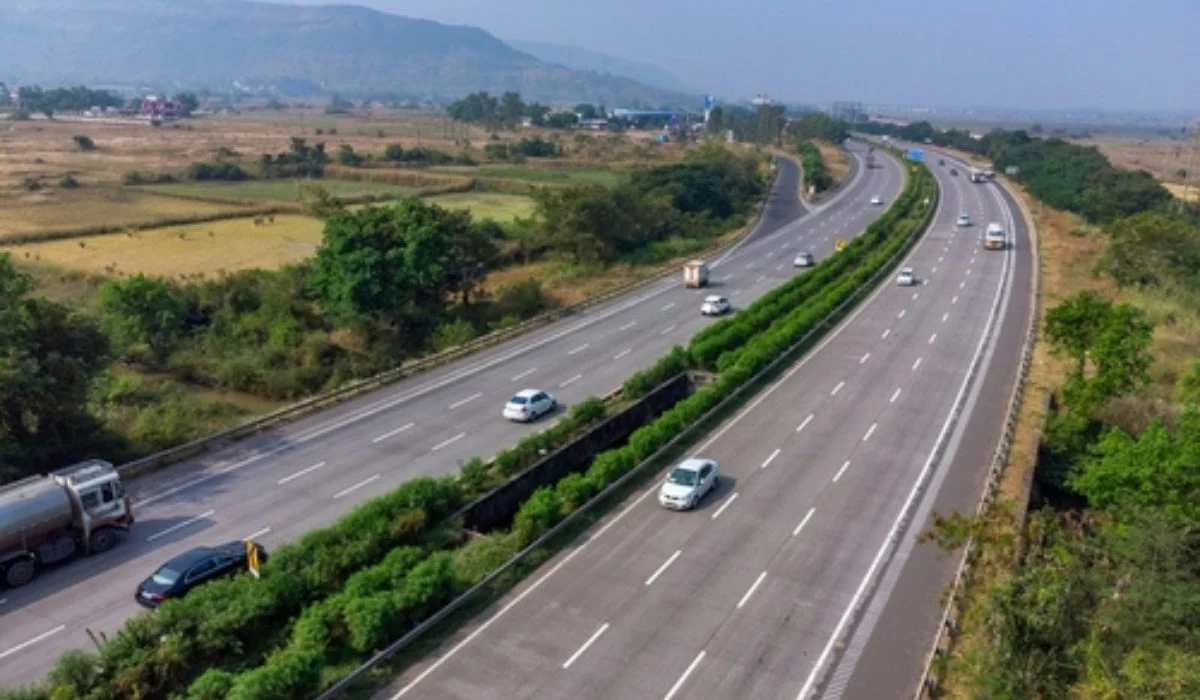
The landscape of Northern India’s infrastructure is undergoing a seismic shift with the development of the Delhi-Saharanpur-Dehradun Economic Corridor. Spanning 212 kilometers, the Delhi-Dehradun Expressway is not merely a road project but a multi-modal lifeline designed to integrate the National Capital Region (NCR) with the Himalayan foothills of Uttarakhand. Once completed, this ambitious ₹13,000-crore project will slash travel time between Delhi and Dehradun from a grueling six to seven hours to a mere 2.5 hours, fundamentally altering the region’s economic, social, and environmental dynamics.
Main Facts and Project Overview
The Delhi-Dehradun Expressway is being developed under the Engineering, Procurement, and Construction (EPC) mode by the National Highways Authority of India (NHAI). Designed as an access-controlled highway, it aims to facilitate a minimum operating speed of 100 km/h, catering to an estimated 20,000 to 30,000 passenger vehicles daily.
Quick Facts: Delhi-Dehradun Expressway
| Feature | Details |
|---|---|
| Project Name | Delhi-Saharanpur-Dehradun Economic Corridor |
| Total Length | 212 km |
| Total Project Cost | Approx. ₹13,000 crore |
| Lanes | 12 lanes (Phase 1); 6 lanes (Phases 2, 3, & 4) |
| Key Cities Covered | Delhi, Baghpat, Shamli, Saharanpur, Dehradun |
| Key Infrastructure | 110 vehicle underpasses, 76 km of service roads, 29 km of elevated sections |
| Wildlife Feature | 12-km elevated wildlife corridor (Asia’s longest) |
| Projected Completion | February 2026 |
The route begins at the Akshardham Temple in Delhi and traverses through several critical districts in Uttar Pradesh—including Baghpat, Shamli, and Saharanpur—before terminating at Asharodi in Dehradun. The project is strategically divided into four distinct phases to streamline construction and land acquisition.
Chronology of Development
The journey of the Delhi-Dehradun Expressway began as a vision to decongest existing highways and provide a direct link to Uttarakhand’s capital.
- 2020: Initial Approval: The central government granted the primary approval for the project, identifying it as a priority corridor under the Bharatmala Pariyojana.
- February 2021: Foundation Stone: The Minister of Road Transport and Highways officially inaugurated the construction by laying the foundation stone, signaling the start of Phase 1 and 2 works.
- 2022-2023: Construction Acceleration: NHAI awarded various packages to infrastructure majors. Work on the 12-km elevated wildlife corridor in the Shivalik range commenced, marking a major engineering challenge.
- Early 2024: Partial Openings: A 3.5-km section from Daat Kali to Asharodi was opened to traffic, replacing an old three-lane setup with a modern six-lane facility.
- April 2024: Phase 1 Progress: Reports indicated that the Akshardham-to-Baghpat stretch was nearing completion, though land disputes in certain pockets like Mandola caused minor delays.
- 2025-2026: The Final Push: Following a directive from the Prime Minister’s Office (PMO), the Ministry of Road Transport and Highways (MoRTH) shifted the final inauguration date to February 2026 to ensure all phases—including safety and finishing works—are completed simultaneously for a seamless experience.
Supporting Data and Technical Specifications
Phase-Wise Breakdown
The expressway’s construction is a marvel of civil engineering, divided into four segments with varying technical requirements:
- Phase 1 (Delhi to Baghpat): This 32-km stretch is perhaps the most complex due to its urban setting. It features 12 lanes—six for high-speed transit and six for local service roads. Notably, 18 km of this section is elevated, passing through densely populated areas like Geeta Colony and Sonia Vihar to minimize land acquisition issues and local traffic interference.
- Phase 2 (Baghpat to Saharanpur): Spanning 118 km, this greenfield section bypasses major towns to ensure high speeds. It includes four major interchanges and over 60 underpasses to maintain local connectivity without compromising the expressway’s access-controlled nature.
- Phase 3 (Saharanpur to Ganeshpur): A 40-km brownfield expansion, this phase involves widening the existing highway network to six lanes and adding pedestrian crossings and auxiliary lanes for safety.
- Phase 4 (Ganeshpur to Dehradun): The final 20-km stretch is the most scenic and environmentally sensitive. It includes a 12-km elevated corridor through the Rajaji National Park and the Shivalik Hills, ensuring that wildlife migration is not hindered by vehicular traffic.
Travel Time Comparison
The impact on logistics and tourism is best illustrated by the reduction in travel times:
| Mode | Current Distance | New Distance | Current Time | New Time |
|---|---|---|---|---|
| Road (Delhi-Dehradun) | 249 km | 212 km | 6 – 7 hours | 2.5 hours |
| Delhi to Baghpat | – | – | 2 hours | 20 minutes |
Official Responses and Challenges
Environmental Stewardship and Legal Hurdles
The project has faced significant scrutiny from environmentalists and NGOs. The primary concern was the felling of approximately 25,000 trees and the potential disruption of the Rajaji Tiger Reserve.
Official Response: In response to Public Interest Litigations (PILs), the NHAI presented a comprehensive wildlife mitigation plan. The Supreme Court eventually allowed the project to proceed, citing the national importance of the corridor while mandating the construction of the 12-km elevated section. This ensures that elephants and tigers can move freely underneath the highway. Additionally, two specific elephant corridors, each 200 meters long, are being built near the Daat Kali Temple.
Land Acquisition and Disputes
A critical bottleneck emerged in Mandola, Loni, involving a land parcel of over 1,600 sqm. A two-story structure situated in the middle of a planned 16-km elevated section has delayed the completion of a vital ramp.
Official Response: NHAI officials and local district administrations are currently in negotiations to resolve this land dispute. The PMO has explicitly directed MoRTH to ensure that no phase is left incomplete, emphasizing that the expressway will only be fully inaugurated once all "spurs" and ramps are functional.
Strategic Implications
1. Real Estate Boom
The "Expressway Effect" is already visible in the property markets along the route.
- NCR North-East: Localities like Mayur Vihar and Akshardham are seeing renewed interest as commute times to Western UP drop.
- Tronica City (Trans-Delhi Signature City): Once a struggling industrial/residential hub in Ghaziabad, this area is poised for a massive revival due to its direct connectivity to the new corridor.
- Saharanpur & Dehradun: Residential clusters like Vasant Vihar and Navin Nagar in Saharanpur are seeing a surge in land prices. In Dehradun, the demand for "weekend homes" and vacation rentals is expected to skyrocket as the city becomes a viable weekend getaway for Delhi residents.
2. Economic and Tourism Catalysts
The expressway serves as the backbone for the Delhi-Saharanpur-Dehradun Economic Corridor. By facilitating faster movement of goods, it reduces logistics costs for industries in Western UP and Uttarakhand.
Furthermore, the NHAI is planning a 50-60 km spur connecting the expressway to Haridwar. This will provide a high-speed link to one of India’s most important religious hubs, significantly boosting the state’s tourism revenue.
3. Decongestion of Existing Arteries
Currently, traffic between Delhi and Dehradun relies on the Delhi-Meerut Expressway or older national highways that pass through congested towns. The new corridor is expected to divert nearly 30,000 passenger cars daily, significantly reducing the carbon footprint caused by idling traffic and shortening the wear and tear on local road networks.
4. Integration with Other Projects
The expressway is not an isolated project. It will connect with the Eastern Peripheral Expressway (EPE), allowing traffic from Punjab and Haryana to bypass Delhi entirely when heading toward Uttarakhand. Additionally, the proposed 120-km greenfield spur from Shamli to Ambala will further integrate the economic zones of Haryana and Uttar Pradesh.
Housing.com News Viewpoint
The Delhi-Dehradun Expressway represents a paradigm shift in how infrastructure is balanced with environmental needs. While the delay from 2024 to 2026 might be frustrating for daily commuters, the focus on completing all phases—including the complex wildlife corridors—ensures a sustainable long-term asset. For investors, the window of opportunity is now. Areas like Baghpat, Saharanpur, and the outskirts of Dehradun are no longer "distant" towns but are becoming integrated suburbs of a larger Northern Economic Zone. As connectivity improves, the appreciation in property values and the rise in commercial activities will likely make this corridor one of the most profitable real estate stretches in India.
