

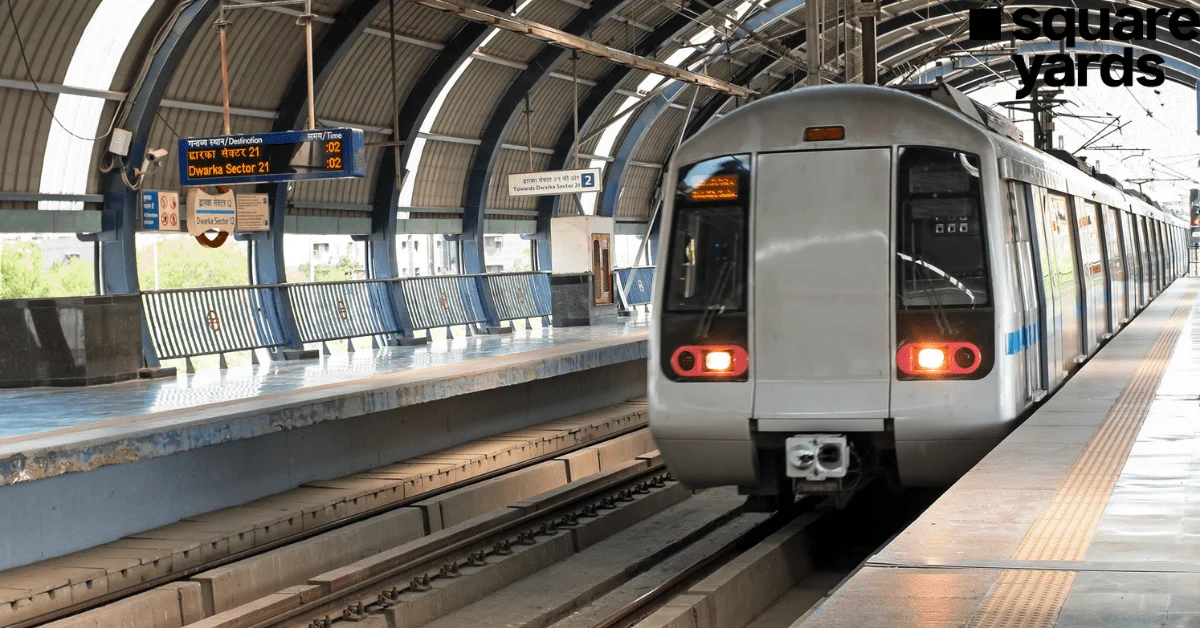
NEW DELHI — As of May 1st, 2026, the landscape of India’s capital is undergoing a profound structural metamorphosis. Following a high-level review by the Union Ministry of Housing and Urban Affairs (MoHUA) and the Delhi Metro Rail Corporation (DMRC), the city’s transit evolution has reached a critical tipping point. While the sprawling 100-kilometer Phase-IV expansion moves into its final stages of corridor completion, the ambitious Phase-V(A) has officially transitioned from blueprints to active construction sites.
This dual-phase expansion is more than a mere addition of tracks; it represents a strategic recalibration of Delhi’s urban density. By piercing through some of the world’s most crowded residential clusters and high-security administrative zones, the DMRC is attempting to solve the "last-mile" puzzle while simultaneously creating new economic gravity centers in underserved micro-markets.
1. Main Facts: The Dual-Phase Blueprint
The current momentum focuses on two distinct but integrated objectives: the completion of Phase-IV and the commencement of Phase-V(A).
Phase-IV: The Connectivity Spine
Phase-IV is a massive undertaking spanning over 103 kilometers, designed to bridge the gaps between North, West, and South Delhi. The three priority corridors—Janakpuri West to RK Ashram Marg (Magenta Line extension), Majlis Park to Maujpur (Pink Line extension), and the Aerocity to Tughlakabad (Golden Line)—are now seeing visible architectural completion.
A standout feature of this phase is the development of the RK Ashram Marg Station. Once a standard stop on the Blue Line, it is being transformed into a massive multi-level interchange. By linking the Blue Line (Dwarka–Noida/Vaishali) with the Magenta Line (Janakpuri West–RK Ashram), this hub will effectively decentralize commuter traffic that currently chokes the Rajiv Chowk station.
Phase-V(A): The Central Vista Arterial
While Phase-IV expands outward, Phase-V(A) dives deep into the historic and administrative heart of the city. Approved in the 2025–26 fiscal cycle, this phase focuses on a largely underground corridor extending from RK Ashram Marg to Indraprastha.
Key technical highlights include:
- Twin Tunneling: The use of advanced Shield Tunnel Boring Machines (TBMs) to excavate "Up" and "Down" lines between Shivaji Stadium and Central Secretariat.
- The Cut-and-Cover Method: Utilized specifically for the stretch from Central Secretariat to Kartavya Bhawan to minimize vibration in high-security zones.
- Heritage Integration: Two fully underground stations at Central Secretariat and Kartavya Bhawan are being designed to handle massive footfalls while maintaining the aesthetic integrity of the Central Vista.
2. Chronology: From Blueprint to Breakthrough
The journey to the current May 2026 status has been marked by significant engineering milestones and policy shifts:
- 2019–2021: Phase-IV receives initial approvals for three priority corridors. Early construction is hampered by the global pandemic, but the DMRC uses the period to refine underground tunneling designs.
- 2022–2024: Massive TBM deployments begin. The "Golden Line" (Aerocity–Tughlakabad) sees significant progress in South Delhi’s rocky terrain. The Magenta Line extension begins navigating the dense clusters of West Delhi.
- Late 2025: The Union Cabinet grants formal approval for Phase-V(A). This phase was conceptualized to provide direct metro access to the newly developed Bharat Mandapam and the revamped Central Vista.
- January–April 2026: Engineering teams complete the complex tunneling beneath the active Northern Railway tracks near Sabzi Mandi. This was considered one of the most dangerous stretches of Phase-IV due to the age of the overhead railway infrastructure.
- May 1, 2026: Current status update confirms that Shield TBMs have been lowered at Shivaji Stadium to commence the Phase-V(A) twin tunnels.
3. Engineering Marvels and Supporting Data
The scale of the current work involves technical complexities rarely seen in urban metro projects globally.
The Challenge of Density
In areas like Sadar Bazar and Nabi Karim, the DMRC had to operate in environments where the population density exceeds 80,000 people per square kilometer. Conventional construction was impossible. Engineers deployed "Earth Pressure Balance" TBMs to ensure that the heritage buildings and cramped wholesale markets above remained stable.
Key Data Points:
- Total Phase-IV Length: ~103.9 km.
- Projected Daily Ridership Increase: 1.5 million additional passengers by 2028.
- Tunneling Depth: In parts of Central Delhi, tunnels are being bored at depths of 20 to 25 meters to bypass existing utility lines and older foundations.
- Interchange Nodes: Phase-IV adds several new interchange points (Azadpur, Inderlok, RK Ashram Marg), bringing the total number of interchanges in the network to over 35.
Decongestion Metrics
Internal DMRC projections suggest that the completion of the RK Ashram Marg–Indraprastha stretch will reduce the daily footfall at Rajiv Chowk by approximately 15–20%. By providing an alternative route for those traveling from West Delhi to Central/East Delhi, the "Blue Line dependency" is expected to drop significantly.
4. Official Responses: The Government’s Vision
During the recent review, officials from the DMRC and the Ministry highlighted the broader socio-economic goals of these projects.
A Senior DMRC Official stated:
"Phase-IV and V(A) are not just about adding kilometers; they are about ‘stitching’ the city together. The engineering we are employing near Sabzi Mandi and Sadar Bazar is world-class. We are tunneling under active railway lines and centuries-old structures without disrupting the pulse of the city. This is the future of urban renewal."
A Representative from the Ministry of Housing and Urban Affairs (MoHUA) commented:
"The approval of Phase-V(A) was a strategic decision to align the city’s transport with its new administrative identity. With the Central Vista and Bharat Mandapam becoming global hubs for diplomacy and commerce, the metro must provide seamless, high-security, and high-capacity access. This phase fulfills that mandate."
City planners also noted that the inclusion of "subways and entry-exit structures" at Kartavya Bhawan is specifically designed to facilitate tourist movement, ensuring that the "people’s path" remains accessible without causing surface-level traffic jams.
5. Implications: Real Estate and Urban Socio-Economics
The expansion of the metro is fundamentally altering the "value map" of Delhi. Unlike earlier phases which saw a general rise in property prices across the board, the 2026 cycle shows a more surgical, corridor-specific impact.
The Rise of Transit-Oriented Development (TOD)
The DMRC is moving toward a TOD model where high-density commercial and residential hubs are encouraged within a 500-meter radius of metro stations. This is particularly visible in Janakpuri, Pitampura, and Azadpur. These areas are transitioning from pure residential suburbs into mixed-use "mini-CBDs."
Micro-Market Analysis:
- West and Northwest Delhi (Janakpuri to RK Ashram): Areas like Uttam Nagar, Prashant Vihar, and Ashok Vihar are seeing a surge in rental demand. Working professionals who previously avoided these areas due to the "Pusa Road bottleneck" are now looking at them as viable residential options, thanks to the direct link to Central Delhi.
- The Wholesale Hubs (Sadar Bazar & Karol Bagh): For decades, the lack of modern transit in Sadar Bazar and Nabi Karim hindered their growth. The new underground connectivity is expected to formalize trade. Real estate experts predict a 25% appreciation in commercial rental values as accessibility improves for laborers and bulk buyers.
- The Central Vista Effect: In Central Delhi, the property impact is institutional. The enhanced connectivity to the Central Secretariat and Indraprastha is making the surrounding commercial districts in ITO and Barakhamba Road more attractive for corporate offices that require proximity to government centers.
Socio-Economic Formalization
Perhaps the most significant implication is the "formalization" of the commute for thousands of workers. In dense pockets like Nabi Karim, where narrow lanes prevent bus entry, the metro provides a reliable, weather-proof alternative to erratic shared autos and rickshaws. This transition is expected to increase the "economic hours" available to workers, contributing to the city’s overall productivity.
Conclusion: A City in Motion
As the Shield TBMs begin their grind beneath the streets of Shivaji Stadium and the final girders are placed on the Janakpuri stretch, Delhi is cementing its status as a global leader in urban mass transit. The integration of Phase-IV’s outer-ring connectivity with Phase-V(A)’s surgical central alignment creates a "web" rather than a "star," allowing for a more equitable distribution of the city’s population and wealth.
For the residents of Delhi, May 2026 marks the beginning of the end of the "Rajiv Chowk bottleneck" era. As these corridors open over the next 24 months, the capital will not just be more connected—it will be more breathable, more efficient, and more accessible to every strata of society. The subterranean machines are not just digging tunnels; they are carving out the future of India’s most vital urban center.
