

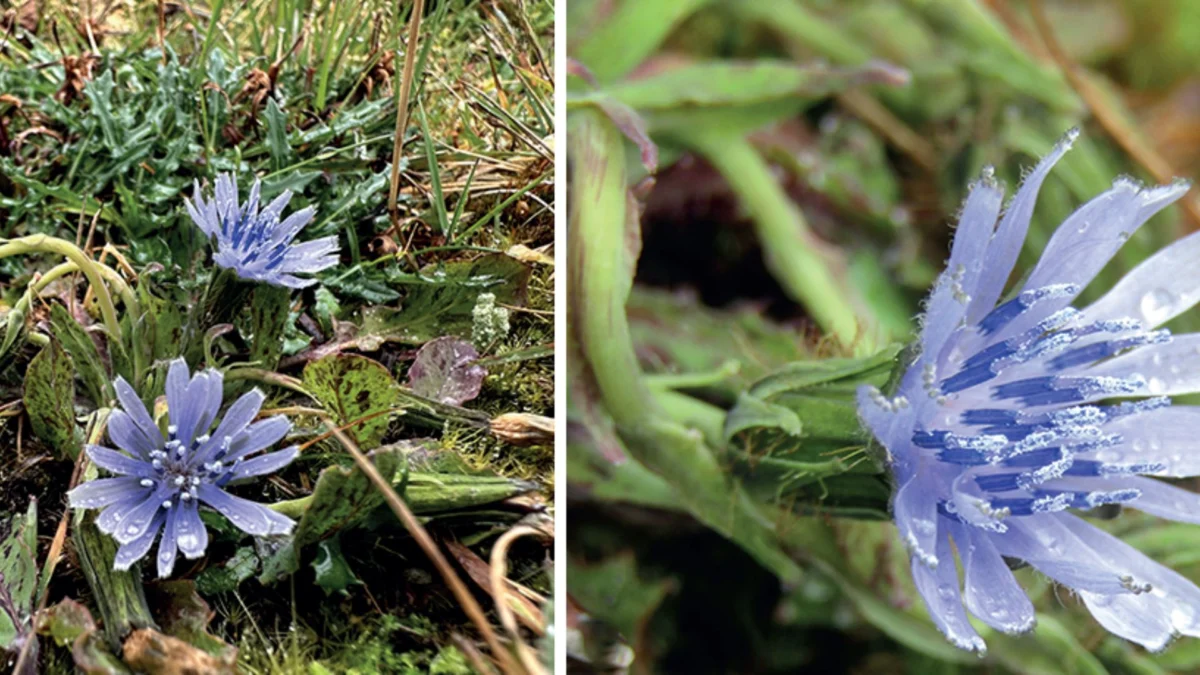
SIKKIM — In the rugged, oxygen-thin reaches of the Eastern Himalayas, where the landscape is defined by jagged peaks and unforgiving weather, a team of Indian botanists has made a discovery that highlights the hidden biological treasures of the alpine world. A new plant species, characterized by its striking lavender-colored petals and an unprecedented "hairy" texture, has been identified in the remote grasslands of Sikkim.
Named Melanoseris pendryi, this rare herb belongs to the Asteraceae family—the same family as sunflowers and daisies—but it has adapted to survive in one of the most extreme environments on Earth. The discovery, the result of a collaborative effort between the University of Calcutta, the University of Kashmir, and the Forest and Environment Department of the Government of Sikkim, serves as both a triumph for Indian taxonomy and a somber reminder of the fragility of mountain ecosystems.
Main Facts: A Botanical Breakthrough at 4,000 Meters
The discovery of Melanoseris pendryi occurred during a systematic floristic survey aimed at documenting the little-known vegetation of Sikkim’s high-altitude zones. The specimens were first spotted in the Lungthun and Thombu regions of Eastern Sikkim, areas that sit at elevations exceeding 4,000 meters (approximately 13,123 feet).
At first glance, the plant might have been mistaken for other members of the Melanoseris genus, which are known for their blue or purple florets. However, closer inspection revealed a morphological trait never before documented in this group: the presence of long, white, silky hairs on the undersides of the ligules (the strap-shaped part of the flower petal).

Beyond its "fuzzy" petals, the plant exhibits a suite of unique physical characteristics:
- Lavender Ligules: The vibrant purple hue of the flowers stands out against the muted greens and browns of the alpine tundra.
- Stout Seed Structure: The plant’s achenes (dry, one-seeded fruits) are notably thicker and more robust than those of its closest relatives.
- Dwarf Stature: To survive the high-velocity winds and freezing temperatures of the Himalayas, the plant grows close to the ground, nestled among cushion-like shrubs.
- Fleshy Root System: A deep, branching root system allows the plant to anchor itself in rocky soil and store nutrients during the long, snow-covered winters.
Chronology: From the Field to the Laboratory
The journey to identifying Melanoseris pendryi began during a recent expedition to the remote corners of the "Old Silk Route" in Eastern Sikkim. This region, while historically significant for trade, remains a difficult terrain for biological research due to its steep topography and unpredictable weather.
The Initial Sighting:
During the peak flowering season, the research team—comprising experts from the University of Calcutta and the University of Kashmir—was traversing the alpine meadows of Lungthun. Amidst the common shrubs and grasses, they noticed a peculiar herb that did not perfectly match the descriptions in existing botanical keys.
Collection and Documentation:
Samples were carefully collected, following strict ethical guidelines for rare flora. The team documented the plant’s micro-habitat, noting its preference for rocky outcrops and its proximity to specific alpine shrubs that likely provide a "nurse effect," shielding the smaller plant from the elements.
Comparative Analysis:
Upon returning to the laboratory, the researchers conducted a rigorous comparative study. They examined herbarium specimens of known Melanoseris species from across the Himalayas and Tibet. Using high-magnification microscopy, they confirmed that the hairy texture on the ligules was not an environmental anomaly but a distinct genetic trait. By comparing the new specimens with Melanoseris lessertiana and Melanoseris qinghaica—its nearest evolutionary neighbors—the team concluded that they were looking at a species new to science.

Formal Publication and Naming:
The species was formally described and named Melanoseris pendryi. The name was chosen to honor Dr. Colin Pendry, a renowned botanist at the Royal Botanic Garden Edinburgh and the editor of the Flora of Nepal. Dr. Pendry’s work has been instrumental in the modern understanding of Himalayan plant life, and this naming serves as a tribute to his decades of service to the field.
Supporting Data: Distinguishing a New Resident of the Clouds
Taxonomy is a science of precision, and the classification of Melanoseris pendryi rests on specific morphological data points. To the untrained eye, many alpine herbs look similar, but the researchers highlighted three primary differences that set this species apart:
- Indumentum (Hairiness): While many mountain plants have hairs on their stems or leaves to trap heat, M. pendryi is the only known species in its genus to have dense, long white hairs on the underside of its petals. This may serve as a protective mechanism for the reproductive organs against UV radiation or frost.
- Floral Tube Length: The reproductive tube of the flower is significantly shorter than that of M. lessertiana. This suggests a potential difference in the types of pollinators (likely specific high-altitude bees or flies) that the plant relies on.
- Seed Morphology: The achenes of M. pendryi are distinctly stout and lack the elongated "beak" found in several other species within the genus. This robust structure may be an adaptation for dispersal in high-wind environments where seeds must be heavy enough to eventually settle in viable soil.
The survey also provided vital data on the plant’s population density. The researchers were only able to locate approximately 32 mature individuals within a narrow 2.5-square-kilometer radius. This extremely low population density suggests that the species is a "narrow endemic," meaning it is found nowhere else on the planet.
Official Responses: A Call for Conservation
The discovery has prompted responses from both the academic community and government officials in Sikkim. Representatives from the Forest and Environment Department of the Government of Sikkim emphasized the importance of the find in the context of the state’s rich natural heritage.
"Sikkim is a global biodiversity hotspot, but many of its high-altitude species remain under-researched," said a spokesperson involved in the survey. "The discovery of Melanoseris pendryi underscores the need for continued investment in field botany. We cannot protect what we do not know exists."

Botanists from the University of Calcutta added that the discovery highlights the "evolutionary creativity" of the Himalayas. "Finding a unique trait like hairy ligules in a well-studied genus like Melanoseris is a reminder that nature still holds many surprises. However, our excitement is tempered by the precariousness of this plant’s existence."
Because of the extremely small population and the limited geographic range, the research team has provisionally recommended that Melanoseris pendryi be listed as Critically Endangered according to the criteria set by the International Union for Conservation of Nature (IUCN).
Implications: The Vulnerability of the Alpine Frontier
The discovery of Melanoseris pendryi is more than a botanical curiosity; it is a "canary in the coal mine" for the health of high-altitude ecosystems. The Sikkim Himalayas are currently facing a dual threat: localized human disturbance and global climate change.
Human Impact:
The Lungthun and Thombu areas have seen an increase in tourism in recent years. As more travelers seek out the "offbeat" paths of the Eastern Himalayas, the pressure on fragile alpine meadows increases. Foot traffic, litter, and the development of road infrastructure can easily wipe out a colony of 32 plants. Furthermore, the area is traditionally used for livestock grazing. Yaks and sheep, while a part of the local economy, can overgraze these rare herbs before they have a chance to go to seed.
Climate Change:
Alpine plants are among the most vulnerable to a warming planet. As temperatures rise, the "tree line" moves upward, squeezing alpine meadows into smaller and smaller areas at the very tops of mountains. Species like M. pendryi, which are already at the 4,000-meter mark, have nowhere higher to go. They are essentially "trapped" on mountain islands.

The Path Forward:
The researchers are calling for an immediate conservation strategy for the Lungthun and Thombu regions. Recommendations include:
- Site-Specific Protection: Designating the 2.5-square-kilometer area as a "Botanical Micro-Sanctuary" to restrict grazing and heavy tourism.
- Ex-situ Conservation: Collecting seeds for preservation in seed banks and attempting to grow the species in controlled botanical gardens to ensure its genetic material survives even if the wild population fails.
- Further Research: Expanding the search to neighboring valleys in Bhutan and Arunachal Pradesh to see if other undiscovered populations exist.
In conclusion, Melanoseris pendryi stands as a symbol of the immense beauty and extreme vulnerability of the Himalayan flora. Its discovery is a milestone for Indian science, but its survival will depend on whether the human world can provide the protection this tiny, purple-petaled survivor so desperately needs.
