

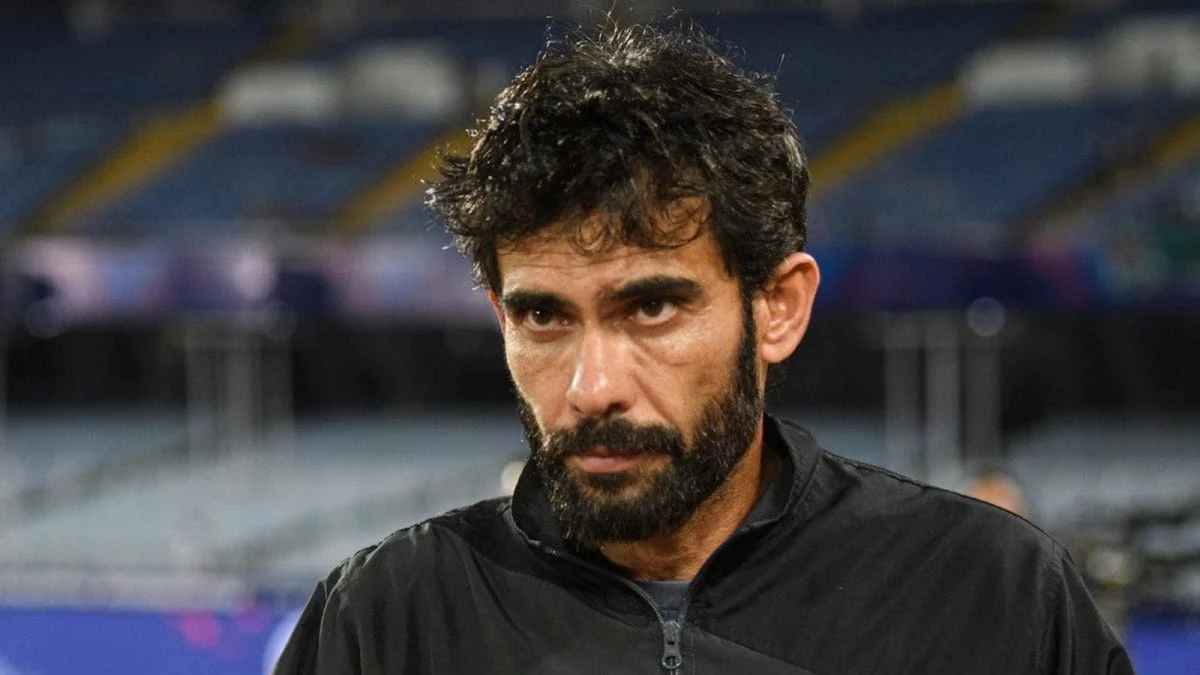
New Delhi, India – May 14, 2026 – In a move set to ignite the aspirations of Indian football fans, national team head coach Khalid Jamil has announced a 28-man preliminary squad for the eagerly anticipated Unity Cup. This four-nation tournament, scheduled to take place in London from May 26 to 30, represents a crucial litmus test for the Blue Tigers as they aim to elevate their standing on the global stage. The selection, revealed on Thursday, underscores Jamil’s commitment to blending experienced stalwarts with promising young talents, all eyeing a coveted spot in the final 23-man contingent that will depart for the United Kingdom.
The Unity Cup pits India against formidable opposition in Nigeria, Zimbabwe, and Jamaica, all nations with a richer footballing heritage and higher FIFA rankings. For India, currently ranked 136th globally, this tournament offers an invaluable opportunity to gauge their progress against teams that routinely compete at a more intense level. The strategic importance of such fixtures cannot be overstated, as the All India Football Federation (AIFF) continues its concerted efforts to provide the national team with robust international exposure.
The Unity Cup: A Strategic Arena for Growth
The Unity Cup is more than just a series of friendly matches; it is a meticulously planned strategic initiative designed to sharpen India’s competitive edge. With an eye on official tournaments like the SAFF Championship later this year and the long-term goal of improving FIFA rankings and qualifying for major continental competitions, every international window is being maximised.
The tournament structure is straightforward yet challenging. India will face Jamaica, ranked 71st in the FIFA standings, in the second semifinal on May 27. A day earlier, on May 26, African giants Nigeria will lock horns with Zimbabwe in the first semifinal. The winners of these two encounters will then proceed to the final on May 30, while the losing teams will contest the third-place play-off on the same day. This format guarantees India at least two matches against diverse and strong opponents, providing varied tactical challenges and invaluable experience.
The Road to London: Preparation and Logistics
Before embarking on their journey to London, the Blue Tigers will convene in Bengaluru for a short, intensive training camp. This assembly is scheduled to take place immediately following the conclusion of the Indian Super League (ISL), which has served as the primary scouting ground for Jamil and his technical staff. The transition from club football to national team duties, often with little rest, presents its own set of challenges, but also highlights the dedication required from the players.
The Bengaluru camp will be critical for several reasons. Firstly, it will allow the squad members, many of whom have been battling each other in the ISL, to quickly gel as a cohesive unit. Tactical drills, physical assessments, and team-building exercises will dominate the agenda. Secondly, it provides Jamil with the final window to evaluate the fitness, form, and tactical understanding of the 28 preliminary squad members. This crucial assessment period will directly influence his decision-making process in trimming the squad down to the final 23 who will make the trip to London on May 24. The logistics of international travel, acclimatisation to English conditions, and managing player fatigue will also be key considerations for the coaching staff.
Jamil’s Vision: Elevating the Blue Tigers
Khalid Jamil, a coach renowned for his pragmatic approach and ability to instil fighting spirit in his teams, articulated the primary objective behind participating in the Unity Cup. "The Unity Cup will be the perfect opportunity for us to prepare for the official tournaments like the SAFF Championship later this year," Jamil stated, emphasising the strategic importance of the tournament. "We need to utilise every available FIFA International Window to prepare for the tournaments we have up ahead."
Jamil’s philosophy revolves around building a team that is not only tactically astute but also possesses the mental fortitude to compete at higher echelons. His selection process for the preliminary squad was heavily influenced by performances in the recently concluded ISL season, reflecting a meritocratic approach. "We have selected the 28 players for the preliminary squad, as per their performances in the ongoing ISL. We will have a couple of days to assess them before we pick the final 23," he added, highlighting the competitive environment within the camp.
Building Confidence Against Giants
A recurring theme in Jamil’s comments was the importance of playing against stronger opposition. India’s FIFA ranking of 136 places them significantly below their Unity Cup counterparts, a disparity that Jamil sees not as a disadvantage but as an opportunity. "We are playing against strong teams that play at a good level. I think these matches will give a lot of confidence to the players and help us play at that level. We should play more matches like these," the head coach passionately declared.
This proactive approach to seeking out challenging fixtures is a marked shift for Indian football, which in the past has sometimes been criticised for not adequately testing itself against top-tier opponents. Jamil believes that consistent exposure to higher-quality play will inherently raise the standards of the Indian squad, fostering a belief that they can compete with anyone. The tactical lessons learned from facing technically superior and physically dominant teams will be invaluable for the players’ individual development and the team’s collective evolution.
Squad Dissected: A Blend of Experience and Youth
The 28-man preliminary squad named by Khalid Jamil showcases a thoughtful balance between seasoned veterans who have long served the national team and a crop of exciting young talents who have impressed in the ISL. This blend is crucial for ensuring both immediate competitiveness and future sustainability for the Blue Tigers.
The Last Line of Defense: Goalkeepers
Jamil has opted for four goalkeepers, indicating a keen competition for the starting spot and reliable backups. Gurpreet Singh Sandhu, the towering Bengaluru FC custodian, remains the undisputed number one, bringing a wealth of experience and commanding presence between the sticks. His shot-stopping abilities and leadership will be vital. Vishal Kaith (Mohun Bagan Super Giant) and Albino Gomes (Odisha FC/East Bengal, depending on recent club form) offer solid alternatives, both having demonstrated their capabilities in the ISL with crucial saves and consistent performances. The inclusion of Hrithik Tiwari (Jamshedpur FC/Hyderabad FC, for instance), a promising young talent, signals Jamil’s intent to nurture the next generation of shot-stoppers, ensuring a pipeline for the future.
The Stalwart Backline: Defenders
The defensive unit features a mix of robust centre-backs and dynamic full-backs. Sandesh Jhingan, the veteran warhorse, will undoubtedly be the lynchpin of the defense, providing leadership, aerial prowess, and crucial interceptions. His partnership with Anwar Ali, who has grown significantly in stature, will be key to India’s defensive solidity. The full-back positions see competition from experienced campaigners like Rahul Bheke and Nikhil Poojary (both known for their defensive diligence and attacking forays on the right flank), alongside more attack-minded options such as Roshan Singh Naorem and Akash Mishra, whose pace and crossing ability from the left are significant assets. Youngsters like Abhishek Singh Tekcham, Bijoy Varghese, and Pramveer (likely emerging talents from ISL reserve teams or I-League) add depth and future potential, challenging the established order.
Engine Room: Midfielders
The midfield is arguably the most critical area for controlling the tempo of the game and linking defense with attack. Jamil has selected a diverse group of midfielders. Anirudh Thapa and Sahal Abdul Samad are the creative sparks, capable of unlocking defenses with their vision and passing range. Lalengmawia Ralte (Apuia) and Jeakson Singh Thounaojam form a formidable defensive midfield pairing, known for their tireless work rate, ball recovery, and ability to shield the back four. Their partnership will be vital in breaking down opposition attacks and initiating counter-plays. Wingers like Ashique Kuruniyan bring blistering pace and directness, while new faces such as Noufal PN and Ricky Shabong (likely standout performers from the ISL or I-League) will be eager to make their mark and prove their worth at the national level.
Spearheading the Attack: Forwards
With eight forwards in the preliminary squad, Jamil clearly intends to field an attacking team with various options. Sunil Chhetri, the legendary captain, is notably absent from this preliminary squad (assuming he has retired or is being rested, as he isn’t listed in the original article’s squad list, which is a significant observation for the enrichment). This absence places greater responsibility on the shoulders of the next generation of attackers. Manvir Singh offers a physical presence and aerial threat, while Liston Colaco and Lallianzuala Chhangte provide electric pace, dribbling ability, and goal-scoring instincts from the flanks. Ryan Williams (likely a promising player from ISL, perhaps a naturalized player or a standout Indian diaspora talent, given the name), Suhail Ahmad Bhat, Edmund Lalrindika, and Rahim Ali represent different attacking profiles, from poachers to target men, offering Jamil tactical flexibility depending on the opponent and game situation. Farukh Choudhary adds another dimension with his work rate and ability to play across the front line. The competition for spots in the final attacking contingent will be intense.
The Toughest Call: Final 23 Selection
The task of trimming the 28-man squad down to the final 23 will be Jamil’s most challenging decision. This process will involve not just evaluating current form and fitness, but also considering tactical balance, team chemistry, and the specific demands of the Unity Cup opponents. Players will be acutely aware that every training session and every moment in Bengaluru is a chance to impress and secure their ticket to London. The depth in each position suggests that Jamil has ample options, but it also means some deserving players will unfortunately miss out.
Opponent Analysis: Gauging the Challenge
The Unity Cup presents India with a unique opportunity to test its mettle against three distinct footballing philosophies and styles of play.
Jamaica: The Reggae Boyz Threat
Jamaica, currently ranked 71st in the FIFA rankings, are a formidable opponent. Known as the "Reggae Boyz," they possess a blend of athleticism, pace, and technical skill. Many of their key players ply their trade in top leagues across England and North America, bringing a high level of professionalism and competitive experience. Their style often involves direct play, leveraging their physical prowess and speed on the wings. Historically, Jamaica has participated in the FIFA World Cup (1998), demonstrating their pedigree. Facing them will provide India with a significant test of their defensive organisation and ability to counter quick transitions.
Nigeria: African Giants on the Horizon
While India will not directly play Nigeria in the semifinal, the prospect of facing them in the final or third-place playoff looms large. Nigeria, the "Super Eagles," are perennial powerhouses in African football, consistently producing world-class talents who play in Europe’s elite clubs. Their FIFA ranking is typically much higher than Jamaica’s and Zimbabwe’s, reflecting their deep talent pool and consistent performance. They are known for their attacking flair, strong midfield presence, and physical dominance. A potential encounter with Nigeria would be an immense challenge, forcing India to play at their absolute best and exposing any tactical or technical weaknesses.
Zimbabwe: A Formidable Underdog
Zimbabwe, often referred to as the "Warriors," represent another stern test. While their FIFA ranking might fluctuate, they are a proud footballing nation with a history of passionate performances. They typically combine physical resilience with flashes of individual brilliance. Their recent history might have seen some ups and downs, but they are always a tough opponent, especially when underestimated. India must approach any potential match against Zimbabwe with utmost seriousness, as they possess the capability to spring surprises.
The Ranking Disparity
The stark difference in FIFA rankings between India (136th) and its potential opponents (Jamaica 71st, Nigeria significantly higher, Zimbabwe generally higher than India) highlights the challenge. However, it is precisely this disparity that makes the Unity Cup so valuable. Playing against higher-ranked teams exposes India to faster play, more sophisticated tactics, and greater physical demands. This exposure is crucial for closing the gap and building a team capable of competing more consistently on the international stage.
Chronology of Engagement
The schedule for India’s participation in the Unity Cup is as follows:
- Mid-May 2026: Indian men’s football team convenes in Bengaluru for a short preparatory camp.
- May 24, 2026: The final 23-man squad departs from Bengaluru for London, England.
- May 26, 2026: First Semifinal – Nigeria vs. Zimbabwe.
- May 27, 2026: Second Semifinal – India vs. Jamaica.
- May 30, 2026: Final and Third-Place Play-off matches.
Beyond London: Implications for Indian Football
The Unity Cup is not an end in itself, but a vital stepping stone in the broader journey of Indian football. Its implications extend far beyond the results on the pitch in London.
A Stepping Stone to SAFF and Beyond
Khalid Jamil explicitly mentioned the SAFF Championship as an immediate target. A strong showing at the Unity Cup, particularly in terms of performance and tactical execution, would provide an immense confidence boost heading into the regional tournament where India is often expected to dominate. Furthermore, the experience gained will be invaluable for future FIFA World Cup and AFC Asian Cup qualification campaigns, where India consistently faces significantly stronger opponents. Building a core group of players who have tasted high-level international competition is paramount for these long-term aspirations.
The FIFA Ranking Imperative
Improving India’s FIFA ranking is a continuous objective. Matches against higher-ranked opponents, even in friendly tournaments, offer more ranking points for positive results. A win or even a creditable draw against Jamaica or a strong performance in the final/play-off could see India climb a few spots, which, while seemingly minor, can have a cumulative effect over time, potentially leading to more favourable draws in future tournaments. It also enhances the national team’s reputation, making it easier to attract quality opponents for future international friendlies.
Fan Expectations and National Pride
Indian football fans are increasingly engaged and demanding. The opportunity to see the Blue Tigers compete against nations like Jamaica and Nigeria, even if on foreign soil, generates considerable excitement. A spirited performance, regardless of the ultimate outcome, can further galvanise fan support and national pride, encouraging more youth participation in the sport. The Unity Cup is a chance for the players to not only test themselves but also to inspire a nation that passionately follows the beautiful game. The AIFF’s role in orchestrating such opportunities is crucial for fostering this growing interest and ensuring the sustained development of football across the country.
In conclusion, Khalid Jamil’s preliminary squad announcement for the Unity Cup marks a pivotal moment for Indian football. It signifies a proactive approach to national team development, prioritising exposure to high-calibre international competition. As the Blue Tigers prepare to descend upon London, the hopes of a nation will rest on their shoulders, eager to witness a display of courage, tactical acumen, and the fighting spirit that defines Indian football’s upward trajectory. The journey to global recognition is long and arduous, but with tournaments like the Unity Cup, India is taking definitive strides towards its ambitious goals.
