

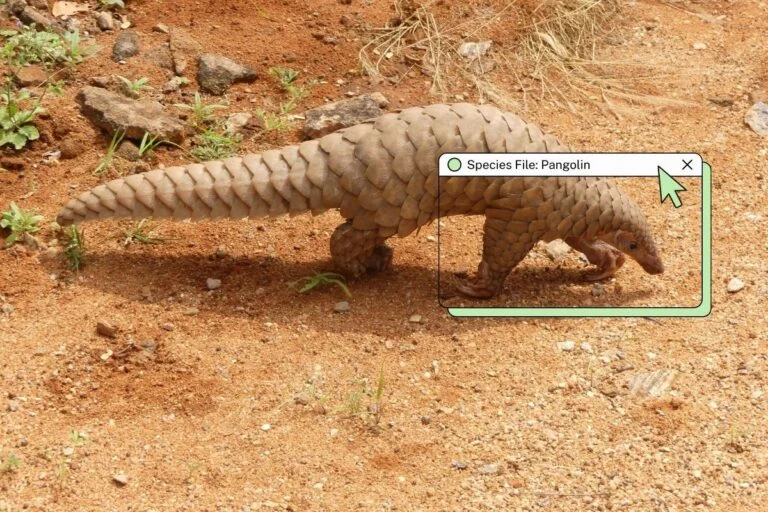
In the dense scrublands of Odisha and the humid forests of Assam, a prehistoric survivor is quietly vanishing. The pangolin—often described as a walking pinecone or a scaly anteater—is an evolutionary marvel that has existed for over 80 million years. Yet, in the span of just a few decades, this reclusive, nocturnal mammal has earned a tragic superlative: it is now the most trafficked wild mammal on Earth.
India, home to two of the world’s eight pangolin species, stands at the epicenter of a global conservation crisis. As demand for their scales and meat surges in international black markets, particularly in East and Southeast Asia, India’s pangolins are being hunted to the brink of extinction. The very scales that evolved to protect them from lions and tigers have now become their greatest curse, attracting a network of poachers, middlemen, and international syndicates.
Main Facts: The Biology and Ecology of a Living Fossil
The pangolin belongs to the order Pholidota. While they resemble reptiles due to their armor, they are full-blooded mammals. In India, the biodiversity landscape is inhabited by two distinct species: the Indian Pangolin (Manis crassicaudata) and the Chinese Pangolin (Manis pentadactyla).
Physical Characteristics and Defense Mechanisms
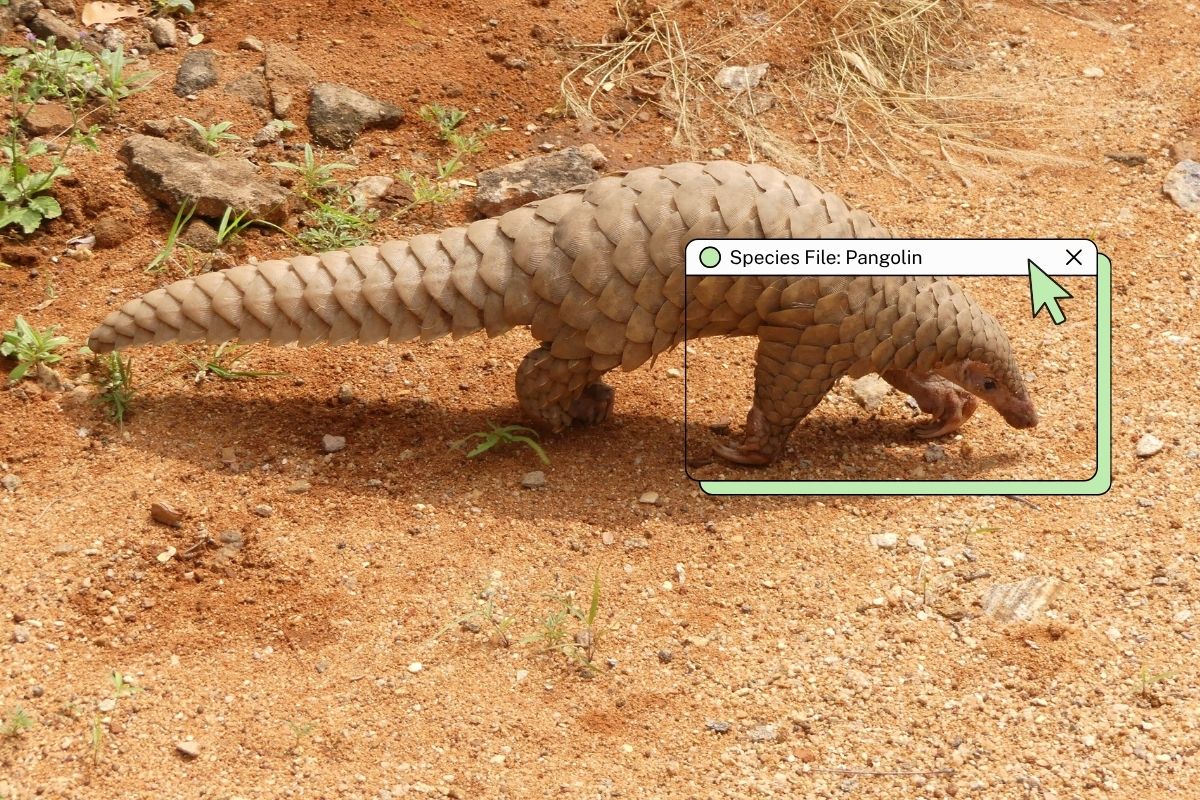
The most striking feature of the pangolin is its armor. Overlapping scales made of keratin—the same protein found in human fingernails and rhino horns—cover its entire body except for the underside. When a pangolin feels threatened, it performs its signature move: it curls into a ball so tight that even a tiger struggle to find a grip. Its tail, also armored, can be used as a lash to deter attackers.
Ecological Importance
Pangolins are nature’s pest controllers. As specialized insectivores, they use their powerful front claws to tear open termite mounds and ant nests. They lack teeth; instead, they use a remarkably long, sticky tongue—which is often longer than their entire body and anchored near the pelvis—to lap up thousands of insects a day. A single pangolin can consume an estimated 70 million insects per year. By doing so, they regulate insect populations and aerate the soil through their digging, which facilitates nutrient cycling and healthy forest growth.
Habitat and Distribution
- The Indian Pangolin: This species is widely distributed across the Indian subcontinent, found everywhere from the plains and middle-hill ranges to the arid regions of Rajasthan and the lush forests of the Western Ghats. It is generally absent from the high Himalayas and the Northeast.
- The Chinese Pangolin: Smaller and darker than its Indian cousin, this species is found in the Himalayan foothills of Eastern India, including Sikkim, Assam, and Arunachal Pradesh. It is more elusive and spends more time in burrows.
Chronology: From Local Subsistence to Global Syndicates
The history of pangolin exploitation in India has shifted dramatically over the last century, evolving from localized hunting to a high-stakes international crime.
- Pre-2000s: Traditional Hunting: For generations, pangolins were hunted by indigenous communities for local consumption. The meat was a source of protein, and the scales were occasionally used in local folk medicine or for ornamental purposes. During this era, the impact on the overall population was relatively stable.
- 2000–2010: The Rise of the Asian Market: As pangolin populations in China and Vietnam began to collapse due to over-exploitation, international trafficking syndicates turned their gaze toward South Asia and Africa. India became a primary source region.
- 2016: The CITES Turning Point: Recognizing the catastrophic decline in populations, the Convention on International Trade in Endangered Species (CITES) moved all eight species of pangolins from Appendix II to Appendix I at the CoP17 meeting in Johannesburg. This effectively banned all international commercial trade of pangolins and their parts.
- 2018: The TRAFFIC Report: A landmark report by TRAFFIC, the wildlife trade monitoring network, revealed the staggering scale of the crisis in India. It documented that at least 5,772 pangolins were seized in illegal trade between 2009 and 2017, though experts warned this was just the "tip of the iceberg," representing perhaps only 10% of actual trade volumes.
- 2020–Present: Increased Enforcement and Digital Shift: Following the COVID-19 pandemic, there was increased scrutiny on wildlife markets. However, traffickers shifted to encrypted digital platforms and social media to facilitate sales, making the task of law enforcement even more complex.
Supporting Data: The Numbers Behind the Extinction Risk
The conservation status of the pangolin reflects a species in freefall. According to the International Union for Conservation of Nature (IUCN) Red List, the Indian Pangolin is classified as Endangered, while the Chinese Pangolin is Critically Endangered.
Population Vulnerability
One of the primary biological factors contributing to their decline is their slow reproductive rate. Pangolins typically give birth to only one pup per year. This low fecundity means that populations cannot recover quickly once they are decimated by poaching. Unlike rabbits or rodents, a pangolin population takes decades to bounce back from a single season of heavy hunting.
The Scale of the Trade
While exact population counts in India are non-existent due to the animal’s elusive nature, seizure data provides a harrowing proxy:
- Seizure Volume: Between 2018 and 2022, various Indian states reported hundreds of kilograms of scales being seized. Given that one kilogram of scales requires approximately three to four pangolins, the death toll is immense.
- The Price Point: In the illegal market, pangolin scales can fetch anywhere from $500 to $1,000 per kilogram in transit hubs, with prices skyrocketing once they reach retail markets in East Asia. This high profit margin incentivizes impoverished local hunters to take the risk of poaching.
The "Medicinal" Myth
The demand is driven by the erroneous belief in Traditional Chinese Medicine (TCM) that pangolin scales can treat ailments ranging from asthma and rheumatism to lactation issues and even cancer. Scientifically, there is no evidence to support these claims, as the scales are made of keratin—chemically identical to a human toenail.
Official Responses: Legal Frameworks and Conservation Initiatives
The Indian government and various NGOs have ramped up efforts to protect the "scaly anteater" through legal and field-based interventions.
Legal Protections
In India, both the Indian and Chinese pangolins are listed under Schedule I of the Wildlife (Protection) Act, 1972. This provides them with the highest level of legal protection, equivalent to that of the Bengal tiger or the Asiatic elephant. Hunting, trading, or possessing pangolins or their parts can lead to imprisonment for up to seven years and heavy fines.
The Role of the WCCB
The Wildlife Crime Control Bureau (WCCB) is the lead agency in dismantling trafficking rings. They have launched several operations, such as Operation Wildnet and Operation Freefly, focusing on the digital trade and the physical transport of pangolins across borders. The WCCB also works closely with the Border Security Force (BSF) and Sashastra Seema Bal (SSB) to monitor the porous borders with Nepal, Bhutan, and Myanmar, which are common transit routes for pangolin scales destined for China.
State-Level Success Stories
- Odisha: The Odisha Forest Department has been a pioneer in using sniffer dogs specifically trained to detect pangolin scales. They have also initiated community-based "Pangolin Smriti" (Pangolin Memory) programs to educate villagers.
- Madhya Pradesh: The state has successfully implemented radio-tagging programs for Indian pangolins to study their movement patterns and habitat preferences, providing crucial data for conservation planning.
- Maharashtra: Collaborative efforts between the Forest Department and the Sahyadri Nisarga Mitra (SNM) have focused on involving local "Kokan" communities in monitoring and protecting nesting burrows.
Implications: Why the Loss of the Pangolin Matters
The potential extinction of the pangolin carries profound implications that extend beyond the loss of a single species.
Ecological Collapse
If pangolins disappear, the natural balance of insect populations will be disrupted. An overabundance of termites can lead to significant damage to forest trees and agricultural crops, potentially costing the economy millions in pest control and lost timber. Furthermore, the loss of their burrowing activities would affect soil aeration, impacting the health of the entire forest floor ecosystem.
Zoonotic Disease Risks
The illegal wildlife trade is a primary driver of zoonotic diseases—illnesses that jump from animals to humans. The unsanitary conditions in which trafficked pangolins are kept, often alongside other wild species, create a "melting pot" for viral mutations. While the direct link between pangolins and the COVID-19 pandemic remains a subject of scientific debate, the trade in these animals is undeniably a high-risk activity for future pandemics.
The Ethics of Biodiversity
The pangolin represents a unique branch of the mammalian tree of life. Its loss would be an "evolutionary dead end," meaning we would lose a lineage that has no close living relatives. As Aniruddha Mookerjee, a consultant wildlife advisor at WildCRU, University of Oxford, noted in a 2020 interview, the shift from opportunistic hunting to commercial exploitation has "pushed up the stakes significantly." We are no longer dealing with a local cultural practice, but a global criminal enterprise that threatens to erase a species for the sake of profit and superstition.
The Path Forward
Protecting the pangolin requires a multi-pronged approach. Enforcement is vital, but it must be coupled with demand reduction in consumer countries and economic alternatives for local communities in India. Furthermore, more investment is needed in "citizen science" and indigenous knowledge. As seen in recent initiatives in the eastern Himalayas, leveraging the tracking skills of indigenous tribes can provide the most accurate data on Chinese pangolin populations.
The story of the pangolin is a test of India’s conservation resolve. If a species with the highest legal protection and a built-in suit of armor cannot be saved, it bodes ill for the thousands of other less-protected species in the path of global trade. The survival of this silent, scaly guardian of our forests depends on our ability to see past the value of its scales and recognize its invaluable role in the web of life.
