

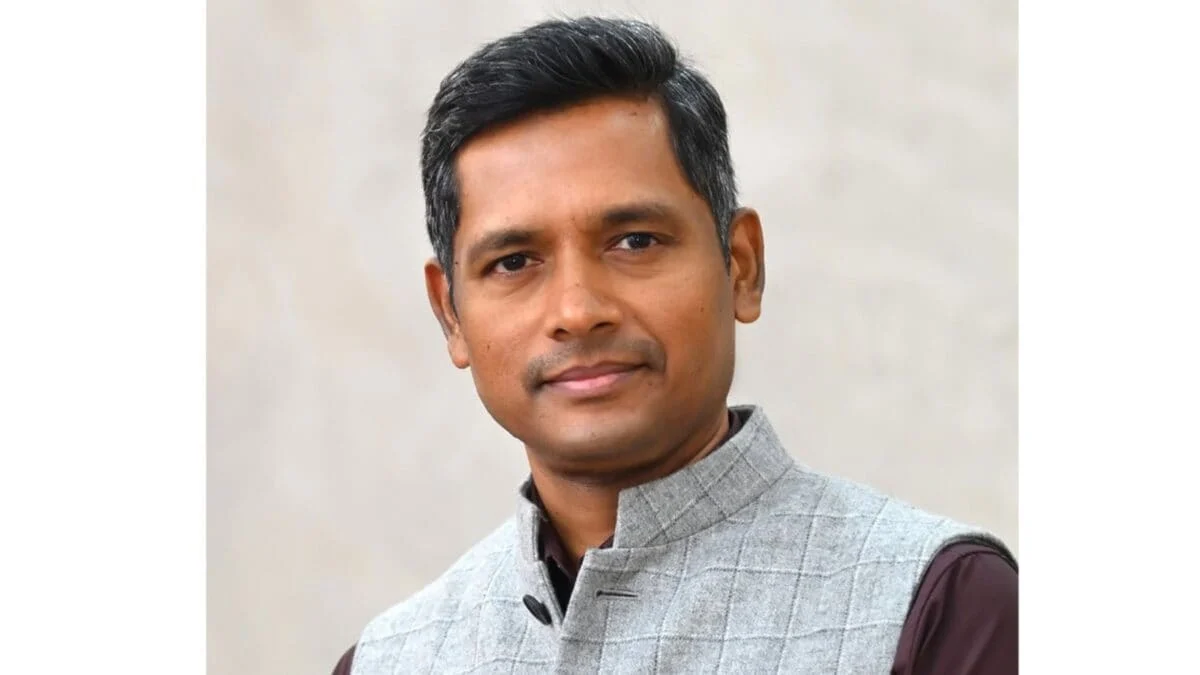
KERALA, INDIA – May 24, 2026 – The political landscape of Kerala has been rocked by a burgeoning controversy following the appointment of senior Indian Administrative Service (IAS) officer Rathan U Kelkar as Secretary to Chief Minister VD Satheesan. The move, coming just days after Kelkar concluded his tenure as the state’s Chief Electoral Officer (CEO), has ignited a firestorm of criticism from opposition parties, primarily the Communist Party of India (Marxist) [CPI(M)] and the Bharatiya Janata Party (BJP), who are vehemently accusing the ruling Congress of blatant "double standards" and hypocrisy.
Kelkar, a 2003-batch IAS officer, assumed his new charge on a Sunday, an unusual move that further fueled the speculation and criticism. The Chief Minister’s Office (CMO) promptly released photographs of Kelkar taking office, underscoring the swiftness of the transition. However, this administrative decision has quickly transcended routine governance, evolving into a sharp political exchange that questions the impartiality of institutions and the ethical standards of the new government.
The Controversial Transition: From Election Overseer to Chief Minister’s Confidante
Rathan U Kelkar’s journey from supervising the state’s recent Assembly elections to becoming a pivotal figure in the Chief Minister’s Office is at the heart of the current political imbroglio. As Chief Electoral Officer (CEO), Kelkar was entrusted with the critical responsibility of ensuring free, fair, and transparent elections across Kerala. His tenure culminated in the recent Assembly polls, which saw the Congress-led United Democratic Front (UDF) secure a decisive victory, clinching 102 out of 140 seats. This sweeping mandate brought Chief Minister VD Satheesan to power, marking a significant shift in the state’s political dynamics.
Barely had the dust settled on the electoral triumph when the state government issued orders transferring and posting Kelkar to the Chief Minister’s office. The alacrity with which the appointment was made, reportedly at the Chief Minister’s directive for Kelkar to assume charge immediately, even on a weekend, raised immediate eyebrows across the political spectrum. The Chief Minister’s Secretary is a highly influential position, acting as a crucial conduit between the Chief Minister and the state bureaucracy, shaping policy, and managing administrative affairs. The transition of an officer from a constitutionally mandated, independent role like CEO to such a politically sensitive administrative position has historically been a flashpoint for debate regarding institutional integrity and perceived conflicts of interest.
Opposition’s Barrage: Allegations of Hypocrisy and Undermining Institutions
The loudest voices of dissent have emanated from the CPI(M), the principal opposition party in Kerala, and the BJP. Both parties have launched a coordinated attack, framing the appointment as a clear instance of the Congress government’s hypocrisy and a betrayal of its stated principles.
CPI(M)’s Stance: A Clear Case of Double Standards
CPI(M) state secretary MV Govindan spearheaded the criticism, vehemently accusing the Congress of applying divergent standards based on political convenience. "The Congress has notoriously changed its position depending on political convenience," Govindan stated, intensifying the criticism. He pointed to numerous instances where Congress leaders had vociferously criticized similar appointments in BJP-ruled states, particularly those involving former election officials or members of the judiciary taking up government posts post-retirement or resignation.
Govindan articulated that the Congress, while in opposition at the national level or in other states, has consistently championed the cause of institutional independence and has been quick to denounce any perceived attempts by ruling parties to co-opt officials from independent bodies. "This is a clear double standard," he asserted, highlighting the perceived contradiction between the Congress’s national narrative and its actions in Kerala. The CPI(M) leader further escalated his attack by raising pointed questions about Kelkar’s tenure as Chief Electoral Officer, alleging "irregularities" during the recent Assembly elections. While specific details of these alleged irregularities were not immediately provided, the insinuation cast a shadow over the fairness of the electoral process that Kelkar oversaw. When pressed on whether the appointment was part of any "deal," Govindan cryptically remarked, "everything will come out in the coming days," suggesting deeper, potentially illicit, motivations behind the appointment. This veiled accusation adds another layer of intrigue and distrust to the ongoing political drama.
BJP’s Criticism: Questioning Neutrality and Favouritism
Echoing the CPI(M)’s sentiments, the BJP also weighed in heavily, accusing the Congress of hypocrisy and questioning the fundamental neutrality of the election process. Party leaders alleged that the swift appointment raised serious concerns about political favouritism and quid pro quo arrangements. The BJP’s state unit highlighted that such moves, where officers who have overseen elections are subsequently rewarded with significant administrative posts under the very government they helped elect, inevitably erode public trust in the impartiality of the Election Commission and the integrity of the democratic system. They argued that it creates an impression that independent bodies are susceptible to political influence, thereby undermining the foundational principles of a fair democracy. The party demanded a transparent explanation for the urgency and rationale behind Kelkar’s appointment, beyond mere administrative convenience.
Congress’s Counter-Narrative: An Administrative Prerogative
In response to the relentless onslaught from the opposition, the Congress has largely maintained that the appointment is purely an administrative matter, devoid of any political machinations. AICC general secretary KC Venugopal, when queried about the controversy, chose to sidestep a direct engagement with the allegations, stating, "I have no opinion on such matters. Let those in governance decide." This response, while seemingly non-committal, aimed to deflect the political heat by framing the issue as an internal governmental decision.
The Congress party, through its various spokespersons, has vehemently rejected the allegations of double standards and political favouritism. They insist that the government possesses the full authority to appoint qualified and experienced officers to key administrative positions, particularly one as crucial as the Chief Minister’s Secretary. The party’s argument hinges on the premise that Kelkar, as a seasoned IAS officer of the 2003 batch, brings a wealth of experience and administrative acumen to the role. They contend that his previous position as CEO does not disqualify him from serving the state government in another capacity, especially when his expertise can be leveraged for effective governance. The Congress maintains that connecting his past role to the present appointment with allegations of "deals" or "irregularities" is a baseless and politically motivated attempt by the opposition to destabilize a newly formed government. They argue that the focus should be on governance and development, rather than on manufacturing controversies over standard administrative appointments.
A Broader Debate: Institutional Independence and Post-Service Appointments
The controversy surrounding Rathan U Kelkar’s appointment is not an isolated incident but rather a recurring theme in India’s democratic discourse, touching upon the critical debate concerning institutional independence and post-service appointments for public officials. This issue transcends individual appointments and political parties, resonating across various sectors, including the judiciary, bureaucracy, and particularly, the Election Commission.
The fundamental concern revolves around the potential for quid pro quo arrangements, where the prospect of a lucrative or powerful post-retirement/post-service position could subtly, or even overtly, influence the decisions and actions of officials holding independent constitutional offices. For an Election Commissioner or Chief Electoral Officer, whose role demands absolute impartiality and an unquestionable commitment to fair play, the perception of political alignment can be particularly damaging. The argument is that if an officer knows that a favorable outcome for the ruling party might lead to a significant appointment after their tenure, it could compromise their neutrality, even if no explicit deal exists.
Civil society organizations, legal experts, and opposition parties across the political spectrum have long advocated for stringent cooling-off periods for officials from sensitive institutions before they can accept governmental or political appointments. While there are no specific legal bars preventing a former CEO from taking up an administrative role, the ethical and moral implications are frequently debated. Proponents of cooling-off periods argue that such measures are essential to safeguard the integrity and credibility of institutions like the Election Commission, ensuring that their independence is not merely enshrined in law but also perceived unequivocally by the public. The lack of a clear, uniformly enforced cooling-off period often leaves room for political maneuvering and public suspicion.
Conversely, arguments against overly restrictive cooling-off periods often highlight the loss of valuable expertise and experience. Highly skilled and knowledgeable individuals, after serving in crucial roles, could contribute significantly to governance in other capacities. Denying them such opportunities solely based on their previous role might be seen as an unnecessary restriction on their professional lives and a waste of national talent. However, this argument often clashes with the paramount need to maintain public faith in the impartiality of democratic institutions, especially those that are the bedrock of electoral fairness. The Kelkar appointment reignites this perennial debate, forcing a re-examination of the ethical boundaries and the need for greater transparency and stricter guidelines for post-service appointments.
The Political Landscape of Kerala: Post-Election Dynamics
This controversy unfolds against the backdrop of a significant political shift in Kerala. The Congress-led UDF’s decisive victory marked a departure from the state’s traditional alternating pattern of power, where the Left Democratic Front (LDF) and UDF typically swap turns every five years. This mandate has imbued the new Chief Minister, VD Satheesan, and his government with considerable expectations but also intense scrutiny.
For the opposition, particularly the CPI(M), challenging the legitimacy and ethical conduct of the new government from its very inception is a strategic imperative. Having just lost power, the CPI(M) is keen to establish itself as a vigilant and robust opposition. Highlighting perceived "double standards" and questioning the integrity of appointments provides them with potent ammunition to undermine the Congress government’s moral authority and public trust. The BJP, while a smaller player in Kerala, also seizes such opportunities to expand its footprint and position itself as a credible alternative by raising governance issues. The political reverberations of this incident are likely to persist, influencing future legislative sessions and public discourse.
Implications for Governance and Public Trust
The political storm surrounding Kelkar’s appointment carries significant implications for governance and public trust in Kerala. For the newly sworn-in Congress government, it presents an early challenge to its image and credibility. While they maintain the administrative nature of the decision, the sustained criticism from the opposition could tarnish the perception of transparency and ethical conduct, especially for a government that has just received a fresh mandate.
More broadly, such controversies contribute to a growing public cynicism regarding the independence of state institutions. When an officer who presided over a crucial electoral process is swiftly appointed to a high-ranking position under the very government that benefited from that election, it risks eroding faith in the non-partisanship of the bureaucracy and the fairness of democratic mechanisms. This erosion of trust can have long-term consequences, making citizens question the integrity of the system itself. Chief Minister Satheesan will need to navigate this challenge carefully, balancing the need for effective administration with the imperative to uphold the highest standards of public perception and ethical governance.
The Road Ahead: Escalation or Resolution?
As the controversy continues to simmer, the immediate future promises further political sparring. The opposition parties are unlikely to let the matter rest, potentially escalating their protests and demands for greater transparency. The CPI(M) and BJP may seek to raise the issue in the upcoming legislative assembly sessions, demanding detailed explanations and potentially calling for independent inquiries into the allegations of irregularities during Kelkar’s tenure as CEO.
The Congress government, on its part, will need to formulate a more robust defense than merely labeling it an "administrative matter." A clearer articulation of the rationale behind the appointment, perhaps supported by established precedents or best practices, might be necessary to assuage public concerns and counter the opposition’s narrative effectively. The incident underscores the perpetual tension between administrative efficiency and the critical need to maintain the unimpeachable independence of democratic institutions in India. As Kerala embarks on a new chapter under Chief Minister VD Satheesan, this early controversy serves as a poignant reminder of the constant vigilance required to uphold democratic values and public trust.
