

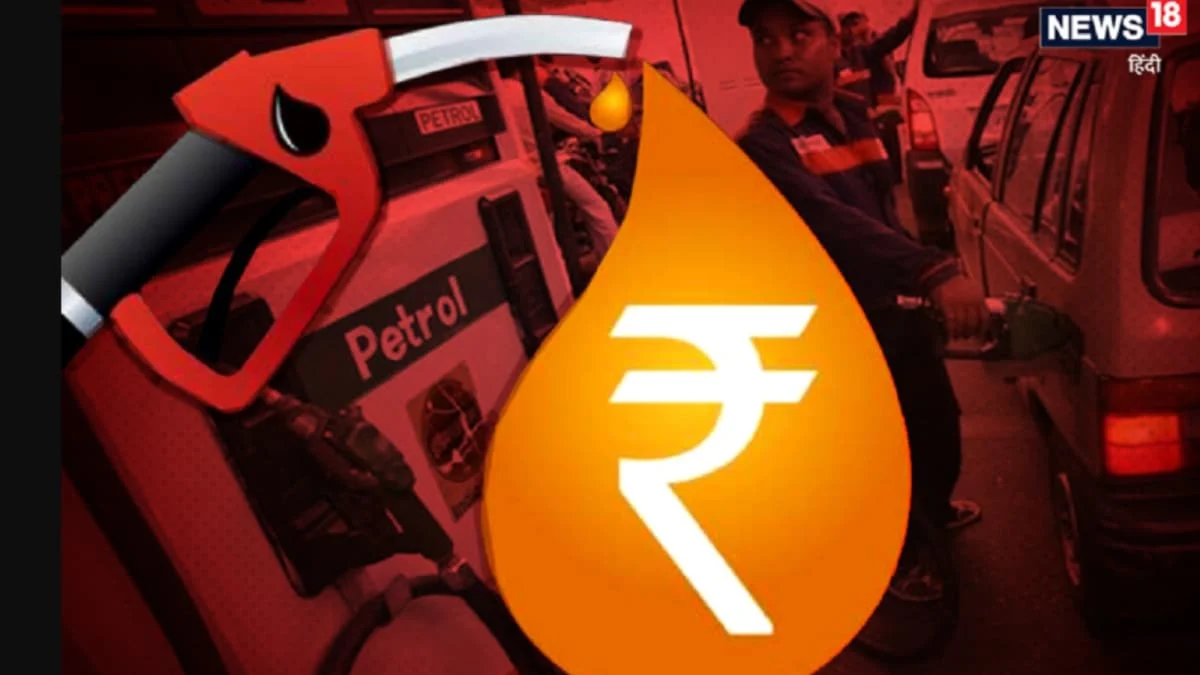
New Delhi, India – May 25, 2026: In a global energy landscape perpetually buffeted by geopolitical tremors and supply chain disruptions, India has once again demonstrated a distinctive approach to managing domestic fuel prices. Despite recent upward adjustments in petrol and diesel rates, which saw prices rise by approximately ₹5 per litre across three phases, India continues to record one of the smallest increases in retail fuel prices among major economies worldwide. This remarkable stability comes on the heels of the government successfully holding fuel prices steady for an unprecedented 76 days, even as international crude oil benchmarks soared past $120 per barrel amid heightened tensions in the Strait of Hormuz, a critical maritime chokepoint, stemming from geopolitical friction involving the US and Iran.
The phased price revisions, implemented by state-owned oil marketing companies (OMCs), mark the first significant upward adjustment in nearly four years, signaling a carefully managed recalibration rather than an immediate pass-through of global market volatility. This strategic delay, coupled with substantial fiscal interventions and the absorption of considerable losses by OMCs, underscores a deliberate policy aimed at shielding Indian consumers from the full brunt of international energy shocks. As nations grapple with inflationary pressures fueled by energy costs, India’s measured response presents a compelling case study in energy economics and governance.
The Recent Revisions: A Phased Adjustment After Prolonged Stability
The recent upward revisions in petrol and diesel prices in India, though noticeable to consumers, represent a carefully calibrated response to sustained pressures in the international crude oil market. After an extended period of price stability that lasted for 76 days, the nation’s oil marketing companies – Indian Oil Corporation, Bharat Petroleum Corporation, and Hindustan Petroleum Corporation – initiated price adjustments in three distinct phases. These revisions occurred on May 15, May 19, and May 23, 2026, cumulatively increasing petrol prices by approximately ₹4.74 per litre and diesel prices by about ₹4.82 per litre. This marked the first such upward revision in nearly four years, highlighting the government’s prolonged efforts to maintain price stability.
The Rationale Behind the Hikes
The decision to finally raise fuel prices was not taken lightly, emerging from an unsustainable situation where OMCs were absorbing massive losses. The primary driver behind this pressure was the relentless surge in international crude oil prices. During the 76-day freeze, global crude oil benchmarks, notably Brent and WTI, had consistently traded above $120 per barrel. This spike was largely attributable to significant geopolitical events, including an exacerbation of tensions around the Strait of Hormuz, a critical maritime passage through which a substantial portion of the world’s oil supply transits. Reports of geopolitical friction involving the US and Iran specifically contributed to market anxieties, tightening supply perceptions and driving up prices.
For an import-dependent nation like India, which procures over 85% of its crude oil requirements from international markets, such elevated global prices directly translate into higher input costs for OMCs. Despite the rising acquisition costs, these companies were compelled to sell petrol and diesel at retail prices that did not reflect the true market value, leading to substantial "under-recoveries." This imbalance created significant financial strain on the OMCs, impacting their profitability and operational sustainability. The phased price hikes were, therefore, a necessary measure to partially alleviate this burden and ensure the continued health of the country’s fuel supply infrastructure. The government’s strategy was not to fully pass on the burden but to distribute the impact over time, signaling a nuanced approach to energy price management.
India’s Pricing Strategy: A Deliberate Shield Against Global Shocks
India’s approach to fuel pricing during periods of global energy volatility stands in stark contrast to that of many other economies. Rather than immediately passing on the increased costs of crude oil to consumers, the Indian government, particularly under the current administration, has opted for a multi-pronged strategy involving significant fiscal interventions and the absorption of losses by state-run oil marketing companies. This deliberate policy aims to provide a buffer against inflation and protect household budgets from unpredictable international market swings.
A History of Fiscal Interventions
The recent price adjustments are not an isolated event but rather the latest chapter in a series of strategic fiscal interventions undertaken by the government. Over the past few years, the central government has repeatedly demonstrated its willingness to sacrifice a portion of its revenue to keep fuel prices in check. This strategy has involved multiple cuts in central excise duties, directly reducing the tax component on petrol and diesel.
A chronological look at these interventions reveals a consistent pattern:
- November 4, 2021: Ahead of the major disruptions caused by the Russia-Ukraine conflict, the government reduced central excise duty by ₹5 per litre on petrol and ₹10 per litre on diesel. This proactive measure aimed to stabilize prices even before a major global crisis unfolded.
- May 21, 2022: As the Russia-Ukraine crisis intensified and global crude prices surged, another round of excise duty cuts was announced – ₹8 per litre for petrol and ₹6 per litre for diesel. This was a direct response to mitigate the impact of the ongoing conflict.
- March 14, 2024: In a move spearheaded by OMCs, retail prices were cut by ₹2 per litre for both petrol and diesel, signaling a period of some stability and reduced pressure on global crude.
- April 2025: Another central excise duty cut of ₹2 per litre on both petrol and diesel was implemented, further easing the burden on consumers.
- March 27, 2026: This was perhaps the most significant intervention prior to the recent hikes. On the eve of the Strait of Hormuz disruption and the subsequent crude price rally, the Centre dramatically reduced the Special Additional Excise Duty (SAED) on petrol and diesel. The excise duty on diesel was effectively brought down to zero, while petrol also saw a substantial reduction of ₹10 per litre. This particular move, designed to fully absorb the rising crude costs rather than passing them on, came at a considerable cost to the exchequer, estimated at around ₹30,000 crore during the current fiscal year.
These repeated excise duty cuts underscore the government’s commitment to prioritizing consumer welfare over immediate revenue generation, effectively using fiscal policy as a tool for energy price stabilization.
OMCs on the Frontline: Absorbing Under-recoveries
Central to India’s fuel pricing strategy is the role of its public sector oil marketing companies. These OMCs act as a crucial buffer, absorbing significant under-recoveries when global crude prices are high but retail prices are kept low. During the peak of the crude rally triggered by the Hormuz disruption, the estimated under-recoveries reached staggering levels – approximately ₹24 per litre on petrol and ₹30 per litre on diesel.
This meant that for every litre of fuel sold, OMCs were losing a substantial amount of money. At one point, before the phased price revisions began, the cumulative daily losses for these companies had touched nearly ₹1,000 crore. Such an immense financial burden highlights the critical role these state-owned entities play in insulating the domestic market. While the recent price hikes have provided some relief, a portion of these losses continues to be absorbed by OMCs, indicating that the full cost of global crude volatility is still not being passed on to the consumer. This mechanism, though financially taxing for the OMCs in the short term, is a deliberate policy choice to maintain price stability and manage inflationary pressures within the economy.
A Contrast in Policy: NDA vs. UPA Approaches
The current government’s approach to fuel price management stands in sharp contrast to methods employed by previous administrations, particularly the UPA government. During its tenure, from 2005 to 2010, the UPA government frequently resorted to issuing "oil bonds" to public sector oil marketing companies. This mechanism involved compensating OMCs for their under-recoveries by issuing long-term bonds, effectively deferring the financial burden to future taxpayers. The UPA issued approximately ₹1.34 lakh crore in such oil bonds, creating a "deferred tax invoice" for subsequent generations of consumers.
The BJP-led NDA government, on the other hand, has largely eschewed the oil bond mechanism. Instead, its strategy has focused on direct fiscal absorption through excise duty cuts. This means that the government directly foregoes revenue in the present to keep prices stable, rather than creating future liabilities. As a senior source articulated, "The difference between the two mechanisms is not a matter of optics. It is the difference between paying for a price shock now and pretending to." This highlights a fundamental philosophical divergence in economic management, with the current government opting for immediate, transparent fiscal adjustments over deferred liabilities. While both approaches aim to stabilize prices, their long-term implications for public finance and intergenerational equity are distinct.
India’s Performance on the Global Stage
Despite being heavily dependent on imported crude oil, India’s management of retail fuel prices during recent global energy crises has been remarkably effective, resulting in some of the lowest price increases internationally. This outcome is a direct testament to the aforementioned strategic interventions and fiscal absorption policies.
Unpacking the Global Comparison
An analysis of retail fuel price changes across major economies between February 23 and May 23, 2026, reveals India’s unique position. During this three-month period, India’s petrol prices increased by approximately 5.0%, and diesel prices by 5.3%. This is significantly lower than the increases observed in many other nations, even those with developed economies or closer proximity to oil-producing regions.
Consider the stark comparisons:
- Myanmar: Experienced an astonishing nearly 90% increase in petrol prices and over 112% in diesel prices.
- Pakistan: Saw petrol prices jump by more than 54% and diesel by almost 45%.
- United States: Faced a substantial 44.5% rise in petrol prices and 48.1% in diesel.
- United Kingdom: Recorded a 19.2% increase in petrol and 34.2% in diesel.
Other significant increases were observed in:
- Malaysia: Petrol +56.3%, Diesel +71.2%
- United Arab Emirates: Petrol +52.4%, Diesel +86.1%
- Philippines: Petrol +40.6%, Diesel +53.8%
- Sri Lanka: Petrol +38.2%, Diesel +41.8%
- Nepal: Petrol +38.2%, Diesel +58.5%
- South Africa: Petrol +33.1%, Diesel +63.6%
- Canada: Petrol +31.9%, Diesel +32.8%
- New Zealand: Petrol +30.7%, Diesel +88.6%
- Thailand: Petrol +29.7%, Diesel +32.4%
- Belgium: Petrol +25.3%, Diesel +30.9%
- Vietnam: Petrol +23.8%, Diesel +50.6%
- China: Petrol +21.7%, Diesel +23.7%
- France: Petrol +20.9%, Diesel +31.0%
- South Korea: Petrol +19.0%, Diesel +26.2%
- Australia: Petrol +18.5%, Diesel +43.1%
- Bangladesh: Petrol +16.7%, Diesel +15.0%
- Italy: Petrol +15.4%, Diesel +19.8%
- Germany: Petrol +13.7%, Diesel +19.8%
- Singapore: Petrol +12.7%, Diesel +64.7%
- Japan: Petrol +9.7%, Diesel +11.2%
Notably, Saudi Arabia, a major oil producer, maintained stable prices with 0.0% change, primarily due to direct state subsidies. Excluding such Gulf economies that directly subsidize fuel, India’s 5% increase stands out as one of the smallest globally. This data, sourced from GlobalPetrolPrices.com’s weekly retail data, firmly positions India as an outlier in its ability to cushion its citizens from global energy price volatility, despite being a net importer.
The Domestic Disparity: State-Level Taxation and Consumer Impact
While the central government’s policies have largely contributed to India’s relatively low fuel price hikes on a global scale, domestic variations remain a significant aspect of the nation’s energy landscape. Retail fuel prices within India are not uniform, primarily due to the differing taxation structures imposed by individual state governments. This creates a scenario where consumers in some states pay significantly more for petrol and diesel than their counterparts in others.
The Role of State VAT
The core reason for this disparity lies in the fact that while central excise duty is uniform across the country, states levy their own Value Added Tax (VAT), along with various cesses and per-litre levies. These state-specific taxes vary widely, directly impacting the final retail price at the pump. This autonomy in taxation allows states to generate revenue but also leads to considerable price differences for the end-consumer.
According to the latest data, states such as Andhra Pradesh, Telangana, and Kerala currently report some of the highest petrol prices in the country, with rates often exceeding ₹112 per litre. This elevated pricing is a direct consequence of their comparatively higher state taxes. For instance:
- Andhra Pradesh imposes a substantial 31% VAT, in addition to a fixed charge of ₹4 per litre and a road development cess. When combined, these levies push the effective tax rate close to 35%.
- Telangana, another state governed by parties of the INDIA bloc, also levies elevated VAT rates, resulting in petrol prices nearing ₹116 per litre in some regions.
- Kerala, also under the governance of the INDIA bloc, adds a social security cess on top of its base VAT, further contributing to higher fuel costs for its citizens.
In contrast, several BJP-ruled states, which have opted for relatively lower VAT rates, offer some of the cheapest markets for petrol. States like Gujarat, Uttar Pradesh, Delhi, Haryana, Goa, and Assam maintain lower fuel prices, demonstrating the direct impact of state-level fiscal policy on consumer pockets. This divergence often becomes a point of political debate, with the central government urging states to reduce their taxes to provide further relief to consumers, particularly during periods of high inflation. The interplay between central and state taxation creates a complex and often contentious dynamic in India’s fuel pricing mechanism, directly influencing regional economic competitiveness and household expenditure.
Economic and Social Ramifications
The variations in fuel prices, both internationally and domestically, carry significant economic and social ramifications for India. On a macroeconomic level, the government’s strategy of absorbing crude oil shocks has been crucial in mitigating inflationary pressures. Fuel prices are a critical input cost for almost all goods and services, particularly transportation. By keeping these costs in check, the government aims to prevent a ripple effect across the economy that could otherwise lead to widespread price increases and erode purchasing power. This stabilization effort is particularly vital for a developing economy with a large population, where even minor price fluctuations can significantly impact household budgets, especially for lower-income groups.
However, the strategy is not without its challenges. The sustained reduction in excise duties and the absorption of losses by OMCs place a considerable strain on the central government’s fiscal health. While protecting consumers, it reduces revenue that could otherwise be used for infrastructure development, social welfare programs, or deficit reduction. The state-level variations also lead to economic distortions, potentially affecting logistics costs for businesses operating across state lines and influencing consumer migration or purchasing patterns. The ongoing public discourse and political debates surrounding fuel prices underscore their sensitivity and the constant balancing act required by policymakers – between fiscal prudence, economic stability, and public welfare. The decision to increase prices, even moderately, reflects a difficult trade-off, indicating that the limits of absorption had been reached, necessitating a partial pass-through of global costs.
Looking Ahead: Navigating Future Energy Challenges
India’s journey through the tumultuous global energy landscape has been characterized by proactive governance and a distinct focus on consumer protection. However, the future presents its own set of complex challenges, necessitating continuous strategic foresight and adaptive policy frameworks.
The Geopolitical Horizon
The global energy market remains inherently volatile, susceptible to geopolitical shifts, supply-demand imbalances, and unforeseen events. Tensions in critical oil-producing regions, trade disputes, and the ongoing transition towards renewable energy sources all contribute to an unpredictable environment. For India, a nation heavily reliant on crude oil imports, ensuring energy security will remain a paramount concern. This involves not only diversifying its crude oil sources to reduce dependence on any single region but also investing in strategic oil reserves and exploring domestic energy alternatives. The lessons learned from the US-Iran friction and the Strait of Hormuz disruption underscore the need for resilience in the face of external shocks. Future energy policy will need to account for these persistent geopolitical risks, ensuring that the country can navigate potential disruptions with minimal impact on its economy and citizens.
Sustainable Fiscal Policies
While the current government’s strategy of excise duty cuts and OMC loss absorption has proven effective in shielding consumers, its long-term sustainability is a subject of ongoing debate. Prolonged reductions in central excise duty inevitably impact government revenues, potentially limiting its capacity to fund other critical development projects or manage fiscal deficits. There is an increasing need for a long-term, sustainable fuel pricing mechanism that balances consumer protection with fiscal health. This could involve exploring more transparent and dynamic pricing formulas, potentially incorporating automatic adjustment mechanisms linked to global crude prices, albeit with built-in safeguards for extreme volatility. A gradual move towards greater market-linked pricing, coupled with targeted subsidies for vulnerable populations, could offer a more sustainable path forward, reducing the ad-hoc nature of interventions. Discussions around bringing petroleum products under the Goods and Services Tax (GST) framework also resurface periodically, promising a more uniform and transparent taxation system, though this remains a complex political and economic challenge.
In conclusion, India’s recent fuel price adjustments, though marking an end to a prolonged freeze, underscore a unique and largely successful strategy of insulating its consumers from severe global energy price shocks. By prioritizing fiscal absorption and strategically delaying price pass-through, the government has managed to keep India’s fuel price hikes among the lowest internationally. However, as the nation looks ahead, the intricate balancing act between global market realities, domestic economic imperatives, and the welfare of its vast population will continue to define its energy policy, requiring innovative and sustainable solutions to navigate an ever-evolving energy landscape.
