

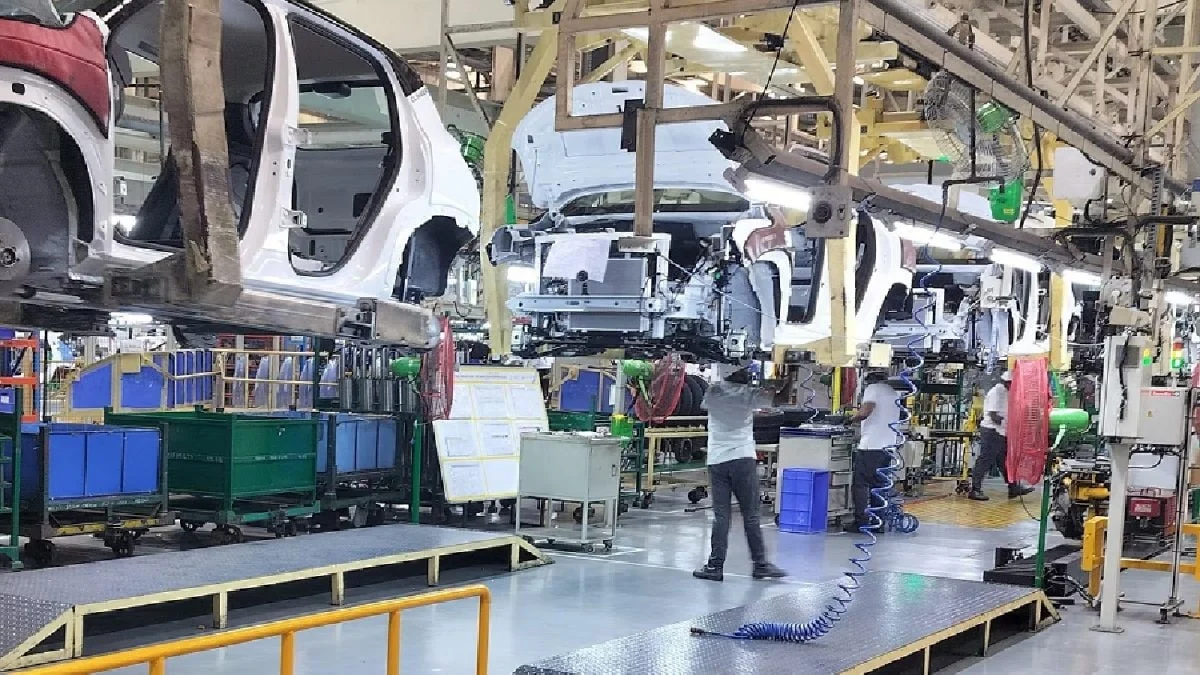
New Delhi, India – May 25, 2026 – In a significant move set to redefine how India measures its industrial growth, the central government today announced a comprehensive overhaul of the Index of Industrial Production (IIP). Effective June 1, 2026, the base year for the IIP will be revised from the current 2011-12 to a more contemporary 2022-23. This crucial update, unveiled by the Ministry of Statistics and Programme Implementation (MoSPI), goes beyond a mere base year change, dramatically widening the index’s coverage to accurately reflect the evolving landscape of India’s economy. New sectors such as minor minerals, rare earth minerals, gas supply, water supply, and sewerage & waste management are now integrated, promising a more robust and representative gauge of industrial activity.
This strategic revision comes after extensive deliberations and a thorough consultative process, aiming to capture the structural shifts, technological advancements, and emerging priorities that have characterized India’s industrial sector over the past decade. The move is expected to provide policymakers, economists, and investors with a more precise tool for understanding the nation’s economic pulse, guiding critical decisions in monetary policy, fiscal planning, and investment allocation.
A Landmark Overhaul for India’s Industrial Barometer
The Index of Industrial Production (IIP) serves as a vital short-term indicator that measures the changes in the volume of production of a basket of industrial products over a given period. It is a key component in the estimation of Gross Domestic Product (GDP) and is meticulously tracked by central banks and financial institutions worldwide. For India, a nation undergoing rapid industrialization and economic transformation, the accuracy and relevance of the IIP are paramount.
The decision to revise the base year to 2022-23 reflects the government’s commitment to ensuring that this crucial economic indicator remains contemporary and captures the true dynamics of the country’s industrial prowess. A base year revision is a standard statistical practice undertaken periodically to account for structural changes in the economy, technological advancements, and shifts in consumption patterns. The previous base year, 2011-12, while serving its purpose, no longer adequately represented the significant developments witnessed in various industrial sectors, particularly with the advent of new industries, changes in production methods, and the growing importance of infrastructure and utility services.
The Rationale Behind the Revision
The primary rationale behind this extensive revision is to enhance the IIP’s accuracy and representativeness. Over the past decade, India’s industrial sector has undergone profound changes. There has been a significant shift towards cleaner energy sources, a surge in demand for essential utilities, and a growing focus on sustainable waste management. Furthermore, the strategic importance of rare earth minerals and the expansion of gas infrastructure have become increasingly prominent. An outdated base year and a limited product basket risk misrepresenting these critical shifts, potentially leading to flawed policy decisions and an incomplete understanding of economic performance.
By updating the base year to 2022-23, MoSPI aims to:
- Reflect Current Economic Structure: Ensure the weights assigned to various sectors and products accurately mirror their current contribution to industrial output.
- Incorporate Technological Advancements: Account for new production technologies, products, and processes that have emerged.
- Capture Emerging Sectors: Include industries that have gained prominence and contribute significantly to economic activity but were previously excluded.
- Enhance Policy Relevance: Provide more granular and accurate data for targeted policy interventions and economic forecasting.
Broader Horizons: Expanding the Scope of IIP
Perhaps one of the most impactful aspects of this overhaul is the significant expansion of the IIP’s coverage. MoSPI, in its official statement, highlighted that the new series "expands its scope by including minor minerals, rare earth minerals, gas supply, water supply, and sewerage & waste management, thereby broadening the overall coverage of the index."
This expansion is particularly noteworthy:
- Minor Minerals & Rare Earth Minerals: Their inclusion acknowledges India’s growing focus on domestic resource utilization and its strategic importance in the global supply chain for critical minerals essential for high-tech industries and renewable energy technologies.
- Gas Supply, Water Supply, and Sewerage & Waste Management: These sectors, traditionally classified under infrastructure or services, are now recognized for their direct and indirect contributions to industrial activity. Reliable gas and water supply are fundamental inputs for manufacturing, while efficient sewerage and waste management are critical for sustainable industrial development and public health. Their inclusion reflects a more holistic view of the industrial ecosystem.
Chronology of the Revision Process
The monumental task of overhauling a national economic indicator like the IIP is a complex and multi-stage process, demanding meticulous planning, expert consultation, and statistical rigor. The current revision is the culmination of nearly two years of dedicated effort, commencing in late 2024.
Formation of the Technical Advisory Committee (TAC)
The journey towards the new IIP series formally began in September 2024 with the constitution of a high-powered Technical Advisory Committee (TAC). Chaired by Mridul K Saggar, a distinguished professor at IIM Kozhikode and a respected economist with a deep understanding of macroeconomic indicators, the TAC was tasked with guiding the entire revision exercise. The committee comprised a diverse group of experts, including leading economists, academicians, senior government officials from various ministries, and representatives from State Directorates of Economics and Statistics. This multi-disciplinary approach ensured that the revision process benefited from a wide range of perspectives and expertise, addressing both theoretical and practical challenges.
Over the course of its tenure, the TAC held eleven rigorous meetings, systematically deliberating on various aspects of the IIP revision. These discussions covered critical areas such as the selection of the new base year, the composition of the product basket, the methodology for assigning weights, data sources, and the alignment with national and international statistical classifications. Each meeting involved detailed presentations, robust debates, and careful consideration of alternative approaches to ensure the final recommendations were statistically sound and economically relevant.
Extensive Public and Expert Consultations
Transparency and inclusivity were hallmarks of the revision process. Recognizing the broad impact of the IIP on various stakeholders, MoSPI adopted a consultative approach, inviting feedback from the public, experts, and government departments. As part of this process, the ministry released three comprehensive discussion papers for public comment. These papers delved into crucial methodological aspects, including:
- Substitution of Factories in IIP Compilation: Addressing how to manage changes in reporting units and maintain consistency.
- Adoption of a Chain-Based IIP: Exploring the feasibility and benefits of a chain-linked index, which can offer greater flexibility and better reflect continuous changes in production structures.
- Seasonal Adjustment of the Index: Examining methods to remove seasonal fluctuations from the data, providing a clearer picture of underlying trends.
These discussion papers served as platforms for soliciting informed opinions and constructive criticism, ensuring that the final recommendations incorporated a wide array of perspectives. Beyond written submissions, the ministry also organized three dedicated stakeholder consultation workshops. These interactive sessions brought together economists, industry representatives, academic researchers, and government officials, allowing for direct engagement and real-time feedback on the proposed changes. This collaborative approach not only enhanced the robustness of the revised methodology but also fostered a sense of ownership and confidence among the users of the index.
Deeper Dive into the New IIP Series: Key Changes and Inclusions
The revised IIP series is not merely an update but a fundamental reimagining of India’s industrial measurement framework. Its core objective is to provide a more granular, accurate, and contemporary reflection of the nation’s industrial landscape.
Modernizing the Product Basket and Weighting Structure
A critical component of any index revision is the update of its "basket" of items and their assigned "weights." MoSPI explicitly stated that "The item basket and weights have been revised to add relevant commodities and remove outdated ones, ensuring that each item or sector is assigned appropriate significance."
The new IIP basket is significantly more comprehensive, now consisting of 1,042 products mapped to 463 item groups. This expansion, from the previous basket (which typically included fewer items), reflects the growing complexity and diversification of India’s industrial output. Outdated items, which no longer represent significant production or consumption patterns (e.g., certain legacy manufacturing goods or technologies that have been phased out), have been judiciously removed. Simultaneously, new and relevant commodities, reflecting modern industrial activity and technological advancements, have been integrated. This includes items from high-growth sectors, emerging technologies, and products aligned with contemporary consumer demand and industrial processes. The careful recalibration of weights ensures that each product and sector’s contribution to the overall industrial output is accurately represented, preventing any undue influence from declining industries or underrepresentation of booming sectors.
Granularity in the Energy and Mining Sectors
A standout feature of the new IIP series is its enhanced granularity, particularly in critical sectors like electricity and mining. This will enable a more nuanced analysis of production trends and facilitate targeted policy interventions.
For the electricity sector, the new series introduces separate indices for power generated from:
- Renewable Sources: This is a pivotal development, allowing for precise tracking of India’s progress in green energy adoption and its energy transition goals. As India commits to ambitious renewable energy targets, a dedicated index will provide invaluable data for policymakers and investors alike.
- Non-Renewable Sources: This will continue to monitor traditional power generation, offering a complete picture of the country’s energy mix.
Similarly, the Mining and Quarrying segment has been intelligently disaggregated into distinct sub-indices:
- Fuel Minerals: Covering traditional energy sources like coal, crude oil, and natural gas.
- Metallic Minerals including Rare Earth Minerals: This new category is highly significant, reflecting the strategic importance of metals and, crucially, rare earth minerals for advanced manufacturing, electronics, and defense industries. It allows for focused analysis of resource extraction and availability.
- Non-Metallic Minerals including Minor Minerals: Encompassing a broad range of industrial minerals and construction materials, providing insights into sectors like construction and ceramics.
This level of detail will be instrumental in understanding specific drivers of growth within these vital sectors, identifying bottlenecks, and formulating targeted policies for resource management and energy security.
Alignment with NIC-2025
A fundamental improvement in the revised IIP series is its alignment with the National Industrial Classification (NIC)-2025. The NIC is India’s standard classification system for industrial activities, designed to provide a framework for collecting and presenting statistics. By aligning the IIP with the latest NIC-2025, MoSPI ensures:
- Internal Consistency: The IIP data will be more consistent with other economic statistics that also use NIC-2025, such as national accounts (GDP) and employment statistics. This improves the overall coherence of India’s statistical system.
- International Comparability: A modern and updated classification system facilitates better comparison of India’s industrial performance with other economies globally, many of whom adhere to similar international classification standards.
- Relevance: NIC-2025 itself incorporates modern industrial activities and structures, ensuring that the IIP reflects the most current definition of industries.
Supporting Data and Methodological Enhancements
Beyond the visible changes in coverage and base year, the revision process also involved a deep dive into methodological enhancements and the robustness of data collection.
Addressing Outdated Methodologies
The previous IIP series, based on 2011-12, inevitably suffered from certain limitations due to the passage of time. Data collection mechanisms might have become less efficient for certain sectors, or the representativeness of sampled units could have diminished. The TAC’s deliberations specifically addressed these issues, seeking to:
- Improve Data Sources: Exploring and integrating new or more reliable data sources where necessary.
- Refine Sampling Techniques: Ensuring that the selection of reporting units (factories, establishments) accurately represents the broader industrial landscape. The discussion paper on "Substitution of Factories" indicates a proactive approach to maintaining the sample’s integrity.
- Enhance Data Processing: Leveraging modern statistical techniques for data validation, imputation, and aggregation to minimize errors and improve accuracy.
Ensuring Statistical Relevance and Accuracy
The adoption of recommendations from the TAC, which included exploring a chain-based IIP and seasonal adjustment, signifies a commitment to statistical best practices. While the immediate release focuses on a fixed-base index, the exploration of chain-linking suggests a forward-looking approach to ensure the IIP remains agile and reflective of dynamic economic structures in the long run. Seasonal adjustment, if implemented more widely or refined, will allow for a clearer understanding of underlying trends by removing predictable monthly or quarterly variations, making the index more useful for short-term economic monitoring.
Official Responses and Expert Commentary
MoSPI’s announcement marks a pivotal moment for India’s economic statistics. While specific official quotes were not immediately available, the ministry’s statement clearly articulates the objectives and anticipated benefits of this overhaul.
MoSPI’s Vision for a More Representative Index
Through its detailed statement and the consultative process, MoSPI has underscored its vision for the new IIP series: to create a more comprehensive, accurate, and relevant indicator of industrial production. The ministry has emphasized that the revised index will "better reflect present-day industrial activity," ensuring that policymakers have access to the most up-to-date and granular data for informed decision-making. The inclusion of modern sectors and disaggregated sub-indices points towards a statistical framework that is responsive to the evolving economic priorities of India, including its drive towards sustainability, resource security, and advanced manufacturing.
Expert Views on the Economic Impact
Economists and industry analysts are expected to largely welcome this long-awaited revision. "Updating the base year is a statistical imperative for any dynamic economy," noted a leading economist, speaking on condition of anonymity ahead of the full details being released. "The shift to 2022-23 will provide a much-needed contemporary snapshot, removing the distortions that arise from using an outdated reference point."
Many experts will particularly laud the expansion of coverage. "The inclusion of gas, water, and waste management sectors is a crucial step," stated a senior research analyst focusing on infrastructure. "These are not just ‘services’; they are fundamental enablers of industrial activity and their output directly impacts manufacturing costs and efficiency. Their integration will provide a more holistic and realistic picture of industrial output." The move to separate renewable and non-renewable electricity indices is also seen as a forward-thinking approach, aligning with India’s climate goals and providing clearer metrics for the green energy transition. The incorporation of rare earth minerals is also expected to be highly praised, given their strategic importance in the global technology landscape.
Implications for Policy, Investment, and Economic Analysis
The revised IIP series carries profound implications across various facets of India’s economy, influencing everything from national policy formulation to individual investment strategies.
Enhanced Policy Formulation
For policymakers, the new IIP series will be an invaluable tool. A more accurate and representative index means:
- Better Monetary Policy Decisions: The Reserve Bank of India (RBI) relies heavily on the IIP to gauge economic activity and inflationary pressures. A refined index will enable the RBI to make more precise judgments on interest rates and liquidity management.
- Targeted Fiscal Interventions: The Ministry of Finance can design more effective fiscal stimulus or austerity measures, as it will have a clearer understanding of which industrial sectors are performing well and which require support.
- Informed Industrial Policy: With granular data on emerging sectors like rare earth minerals and renewable energy, the government can formulate specific industrial policies to foster growth, encourage domestic production, and attract investment in these strategic areas.
- Environmental and Sustainability Policies: The inclusion of waste management and separate renewable energy indices will provide direct metrics to evaluate the impact of environmental policies and track progress towards sustainability goals.
Guiding Investment Decisions
Investors, both domestic and international, will benefit from the improved clarity and depth of the new IIP data:
- Accurate Market Signals: The updated index will provide more reliable signals about the health and direction of various industrial sectors, helping investors identify growth opportunities and assess risks.
- Sector-Specific Insights: The disaggregated data, particularly for mining and electricity, will allow for more informed investment decisions in specific sub-sectors. For instance, investors interested in India’s green energy transition will have a dedicated index to track renewable electricity generation.
- Benchmarking and Forecasting: Businesses can use the new series for better benchmarking their performance against industry trends and for more accurate sales and production forecasting.
A Clearer Picture of India’s Industrial Landscape
For researchers, academicians, and economic analysts, the revised IIP will offer a richer dataset for in-depth studies and macroeconomic analysis. It will enable a more nuanced understanding of structural changes, inter-sectoral linkages, and the impact of various economic shocks on industrial output. The alignment with NIC-2025 will also simplify data integration with other national accounts statistics, fostering more comprehensive economic modeling and forecasting.
The Road Ahead: Implementation and Future Prospects
The announcement marks the culmination of the revision process, but also the beginning of the implementation phase for the new IIP series.
Launching the New Series
The government has confirmed that the first release under the revised IIP series will be published on June 1, 2026. This inaugural release will be comprehensive, providing:
- Index values from April 2023 onwards: This historical data under the new series will allow for immediate analysis of trends spanning over three years, providing context for current performance.
- Quick Estimates for April 2026: This will be the first real-time data point from the new series, offering an immediate glimpse into industrial activity under the updated framework.
The release will encompass not only the All-India General Index but also detailed breakdowns, including:
- Sector-wise indices: For Mining and Quarrying, Manufacturing, Electricity & Gas Supply, and Water Supply, Sewerage & Waste Management.
- Manufacturing sector indices at the 2-digit NIC-2025 level: Providing fine-grained insights into specific manufacturing industries.
- Use-based classification indices: Such as capital goods, consumer goods (durables and non-durables), intermediate goods, and basic goods, which are crucial for understanding demand-side dynamics.
- Linking factors: These will be provided to allow for the conversion and comparison of data between the old (2011-12) and new (2022-23) series, ensuring continuity for long-term analysis.
Continuous Evolution and Data Integrity
While this overhaul is significant, the dynamic nature of economies necessitates continuous review and refinement of statistical indicators. MoSPI’s proactive approach, evidenced by the extensive consultation and technical committee work, suggests an ongoing commitment to maintaining the IIP’s relevance and accuracy. The insights gained from the initial releases and user feedback will likely inform future adjustments and methodological enhancements, ensuring that India’s industrial barometer remains a true reflection of its rapidly evolving economic landscape for years to come.
