

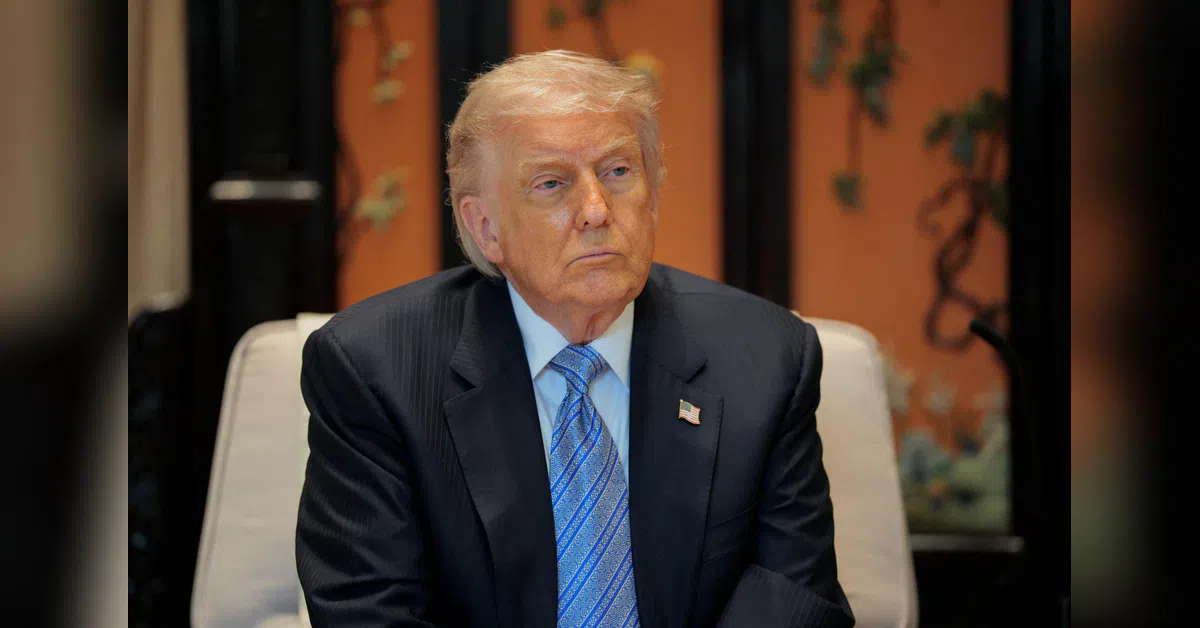
Washington D.C. / Tehran – October 28, [Year] – US President Donald Trump delivered a stark ultimatum on Monday regarding ongoing negotiations with Iran, declaring that any eventual agreement must be "a great and meaningful deal" or "there will be no deal at all." This uncompromising stance comes as hopes for an imminent breakthrough to end the three-month-old US-Iran conflict and the crippling naval blockade of the Strait of Hormuz were significantly tempered by both sides.
The top US diplomat, Secretary of State Marco Rubio, echoed President Trump’s sentiment, stating that Washington would either secure "a good agreement or deal with the country in ‘another way’," a phrase that has been interpreted by many as a veiled reference to potential military alternatives. Meanwhile, Iran, while acknowledging progress on numerous fronts, cautioned against premature optimism, asserting that a final agreement was not yet "close to signing."
The high-stakes diplomacy unfolds against the backdrop of a conflict that began on February 28, plunging the region into instability and triggering a global energy crisis. With the vital Strait of Hormuz largely shut down, the world watches anxiously as negotiators grapple with a complex array of issues, from strategic waterways to Iran’s nuclear ambitions and the broader regional power struggles involving proxies like Hezbollah.
Chronology of Conflict and Cautious Diplomacy
The current crisis, widely dubbed the "three-month war," erupted with a series of aggressive actions that swiftly escalated tensions between the United States and Iran. The conflict commenced on February 28, marked by an initial wave of US-Israeli bombing raids targeting Iranian infrastructure and military assets. These strikes reportedly resulted in thousands of casualties within Iran, dramatically escalating a long-simmering proxy rivalry into overt warfare.
In swift retaliation and as part of its broader regional strategy, Israel concurrently launched an invasion of Lebanon, aiming to dismantle the Iranian-backed Hezbollah militia. This offensive led to thousands more deaths and displaced hundreds of thousands from their homes, further destabilizing an already volatile region. Iran responded to these actions with its own missile and drone strikes against Israel and neighboring Gulf states, causing dozens of fatalities and highlighting the widening scope of the conflict.
Crucially, in response to perceived Iranian threats and to exert maximum pressure, the United States imposed a stringent naval blockade on the Strait of Hormuz. This strategic choke point, through which a significant portion of the world’s oil transits, was effectively sealed off, transforming the regional conflict into a global economic crisis.
A "tenuous ceasefire" has largely held since early April, offering a fragile window for diplomatic engagement. However, the blockade remains in full force, underscoring the precarious nature of the peace efforts. President Trump, increasingly under pressure domestically due to the war’s impact on US energy prices and facing congressional efforts to curb his executive war powers, has repeatedly championed the prospect of a deal.
Recent days have seen a flurry of pronouncements that have whipsawed global markets. On Saturday, Trump raised expectations significantly by announcing on social media that Washington and Tehran had "largely negotiated" a memorandum of understanding (MOU) for a peace agreement that would facilitate the reopening of the Strait. However, by Sunday, his tone had hardened, with a post on Truth Social reaffirming that the US blockade on Iranian ships in the Strait of Hormuz would "remain in full force and effect until an agreement is reached, certified, and signed." Monday’s statements from both sides continued this pattern of cautious optimism tempered by firm demands.
Supporting Data and Global Ramifications
The "three-month war" and particularly the US naval blockade of the Strait of Hormuz have unleashed unprecedented economic and humanitarian consequences, providing a powerful impetus for the current diplomatic push.
Economic Fallout of the Strait Closure
The closure of the Strait of Hormuz, a critical maritime artery responsible for approximately a fifth of the world’s oil and liquefied natural gas flows, has had a catastrophic impact on global markets. Prior to the conflict, an average of 125 to 140 vessels traversed the strait daily. Since February 28, this number has dwindled to a mere trickle, effectively strangling global energy supplies.
The immediate consequence was a dramatic spike in oil prices, contributing to a widespread energy crisis. This crisis has, in turn, driven up the costs of essential commodities such as fuel, fertilizer, and food worldwide, fueling inflation and stoking fears of a global recession. Monday, however, saw a 5% fall in oil prices to two-week lows, reflecting growing, albeit fragile, optimism that a peace deal might be within reach, offering a glimmer of hope for market stabilization.
The Proposed Memorandum of Understanding (MOU)
At the heart of the current negotiations is a potential memorandum of understanding, a framework agreement aimed at de-escalating the conflict. Iran’s foreign ministry spokesperson, Esmaeil Baghaei, revealed in a weekly briefing on Monday that this MOU comprises 14 points, primarily focused on ending the war and lifting the US naval blockade. In return, Iran would commit to taking concrete steps to ensure safe transit through the strategic waterway, a key demand from the US and international community.
US Secretary of State Marco Rubio, speaking to reporters in New Delhi, described the proposed accord as a "pretty solid thing on the table." He indicated that it includes provisions for Iran to "open up the strait, get the strait (of Hormuz) open," and to "enter into a very real, significant, time-limited negotiation on the nuclear matter." Rubio expressed cautious optimism, stating, "hopefully we can pull it off."
The Enduring Nuclear Question
While the immediate focus of the MOU is on ending the conventional conflict and reopening the Strait, the issue of Iran’s nuclear program remains a foundational concern for the United States. President Trump has consistently reiterated that his primary objective in the war is to prevent Iran from developing a nuclear weapon, particularly through its highly enriched uranium stockpile. Tehran has steadfastly denied any such ambitions, maintaining its nuclear program is solely for peaceful purposes.
Crucially, Baghaei confirmed that the current talks are not directly addressing the nuclear issue. Instead, he stated that nuclear negotiations would commence over a separate 60-day period, but only after the framework accord on the war and the Strait is successfully agreed upon. This sequencing highlights the complexity and layering of the diplomatic challenges. Despite the current separation, Iranian sources, speaking anonymously to Reuters, suggested that "feasible formulas" could be explored in future stages to resolve the dispute over its highly enriched uranium stockpile, including potential dilution of the material under the supervision of the U.N. nuclear watchdog, signaling a possible pathway forward on this critical issue.
Humanitarian and Geopolitical Toll
Beyond the economic devastation, the human cost of the three-month war has been immense. The initial US-Israeli bombing of Iran reportedly killed thousands of people. Concurrently, Israel’s invasion of Lebanon, targeting Hezbollah, has resulted in thousands more fatalities and driven hundreds of thousands from their homes, creating a severe humanitarian crisis. Iranian retaliatory strikes on Israel and neighboring Gulf states, though smaller in scale, have also claimed dozens of lives. The displacement, destruction, and loss of life underscore the urgent need for a lasting peace agreement and highlight the profound geopolitical ramifications of the protracted conflict.
Official Responses and Persistent Sticking Points
The divergent public statements from Washington and Tehran on Monday underscore the deep chasms that still separate the two adversaries, even as they engage in the most significant diplomatic efforts since the war began.
President Trump’s Unyielding Stance
President Trump’s rhetoric has consistently oscillated between projecting confidence in a potential deal and issuing stern warnings. His Monday pronouncement of "a great and meaningful deal or no deal at all" encapsulates his transactional approach to foreign policy. He has explicitly linked the lifting of the Strait of Hormuz blockade to a certified and signed agreement, maintaining maximum leverage.
Facing domestic criticism for the war’s economic fallout and challenges to his executive authority, Trump has vociferously defended his negotiating strategy. On Sunday, he lashed out at detractors, posting, "If I make a deal with Iran, it will be a good and proper one… So don’t listen to the losers, who are critical about something they know nothing about." This statement reveals a president keenly aware of his political vulnerabilities but determined to frame any outcome as a victory. His core demand remains the prevention of Iran acquiring nuclear weapons, framing this as a non-negotiable red line.
Secretary of State Marco Rubio’s Diplomatic Balancing Act
US Secretary of State Marco Rubio, currently on a diplomatic tour that included New Delhi, has been tasked with translating Trump’s directives into actionable diplomacy. Rubio confirmed that the US would "give diplomacy every chance to succeed" before exploring "alternatives." While less overtly confrontational than Trump, Rubio’s reference to "another way" if a "good agreement" isn’t reached, carries the weight of potential military action.
Rubio emphasized the "pretty solid thing on the table" regarding the Strait of Hormuz and the subsequent nuclear negotiations, suggesting a structured approach to resolving the complex issues. His role involves reassuring allies, managing expectations, and attempting to steer the delicate talks towards a favorable outcome, all while maintaining the credible threat of escalation.
Iran’s Foreign Ministry Spokesperson Esmaeil Baghaei’s Measured Optimism
From Tehran, Iranian Foreign Ministry Spokesperson Esmaeil Baghaei offered a more nuanced assessment. While acknowledging that "a conclusion had been reached on many topics," he was quick to temper enthusiasm, stating, "that does not mean that we’re close to signing an agreement." This cautious approach likely reflects internal political dynamics within Iran and a desire to avoid appearing overly eager or compromising.
Baghaei provided specific details about the potential MOU, confirming its 14 points and its focus on ending the war and the US naval blockade. He clarified that while Iran would not charge tolls for ships passing through the Strait, there would be a "cost for services" such as navigation and environmental protection, to be agreed upon in a protocol with Oman, which shares the opposite shore of the waterway. This distinction highlights Iran’s assertion of sovereignty and its intent to monetize services in the strategic waterway, a potential point of contention. His confirmation that nuclear issues would be negotiated later underscores Iran’s desire to compartmentalize the discussions and address immediate security and economic concerns first.
The Enduring Sticking Points
Despite the progress reported on the framework accord, several deeply entrenched issues continue to pose significant hurdles:
- Iran’s Nuclear Ambitions: The fundamental disagreement over the scope and nature of Iran’s nuclear program remains paramount. While a 60-day negotiation window is proposed, bridging the trust deficit and ensuring verifiable compliance will be immensely challenging.
- Israel’s War in Lebanon and Hezbollah: The ongoing conflict between Israel and the Iranian-backed Hezbollah militia in Lebanon is a major regional flashpoint directly impacting US-Iran relations. Tehran’s continued support for Hezbollah is a key sticking point for Washington and its allies, and its resolution is inextricably linked to broader regional security.
- Sanctions Relief and Frozen Assets: Iran’s unequivocal demand for the lifting of all US sanctions and the release of tens of billions of dollars of Iranian oil revenues currently frozen in foreign banks is a core economic and sovereignty issue. The US, conversely, sees sanctions as a primary tool of leverage.
- Strait of Hormuz Management: While both sides appear to agree on reopening the Strait, the specifics of its long-term management, particularly Iran’s proposed "cost for services" versus outright tolls, could still prove contentious. Issues of international oversight and sovereignty in this critical waterway are complex.
Implications and Future Outlook
The current diplomatic efforts represent a pivotal moment in the volatile relationship between the United States and Iran, carrying profound implications for regional stability, global economics, and the future of international relations.
Geopolitical Ramifications
The success or failure of these negotiations will redefine the geopolitical landscape of the Middle East. A comprehensive deal could pave the way for de-escalation, potentially leading to a broader regional dialogue and a reduction in proxy conflicts. Conversely, a collapse of talks risks a rapid re-escalation of the "three-month war," potentially drawing in more regional and international actors. The role of Oman, already identified for a protocol on the Strait, highlights the importance of regional mediators in navigating these complex dynamics. The future of US alliances in the region, particularly with Israel and Gulf states, will also be heavily influenced by the outcome, as will Iran’s standing among its regional partners.
Economic Forecasts
The global economy is holding its breath. A successful agreement that reopens the Strait of Hormuz could rapidly stabilize oil prices, alleviate the energy crisis, and dampen inflationary pressures worldwide. This would provide a much-needed boost to global trade and supply chains, potentially averting a deeper recession. However, a failure to reach a deal would likely send oil prices soaring once more, exacerbating the energy crisis and prolonging the economic pain for consumers and businesses globally. The volatility in energy markets will persist until a definitive resolution is achieved.
Humanitarian Concerns
For the populations directly affected by the conflict, particularly in Iran and Lebanon, the implications are stark. A peace deal would bring an end to the ongoing violence, facilitate humanitarian aid, and allow for the arduous process of rebuilding. The long-term recovery for regions devastated by bombings and displacement will require sustained international support. Conversely, a resumption of hostilities would deepen the humanitarian crisis, exacerbate suffering, and further destabilize societies already on the brink.
Pathways Forward and Risks
The immediate pathway forward hinges on the successful conclusion of the 14-point framework accord. If this initial agreement is reached, the subsequent 60-day window for nuclear negotiations will test the limits of diplomatic ingenuity. The "feasible formulas" suggested by Iranian sources, such as diluting uranium stockpiles under UN supervision, offer a potential compromise, but significant hurdles remain in verifying compliance and building trust.
However, the risks of failure are substantial. President Trump’s reference to "another way" looms large, hinting at the possibility of renewed military action should diplomacy falter. The fragility of the current ceasefire means that any breakdown in talks could quickly trigger a return to open conflict, potentially with even greater intensity. The stakes for both sides, and for the international community, could not be higher. The coming weeks will determine whether a path to peace can be forged from the ashes of a three-month war, or if the region is condemned to further instability and conflict.
