

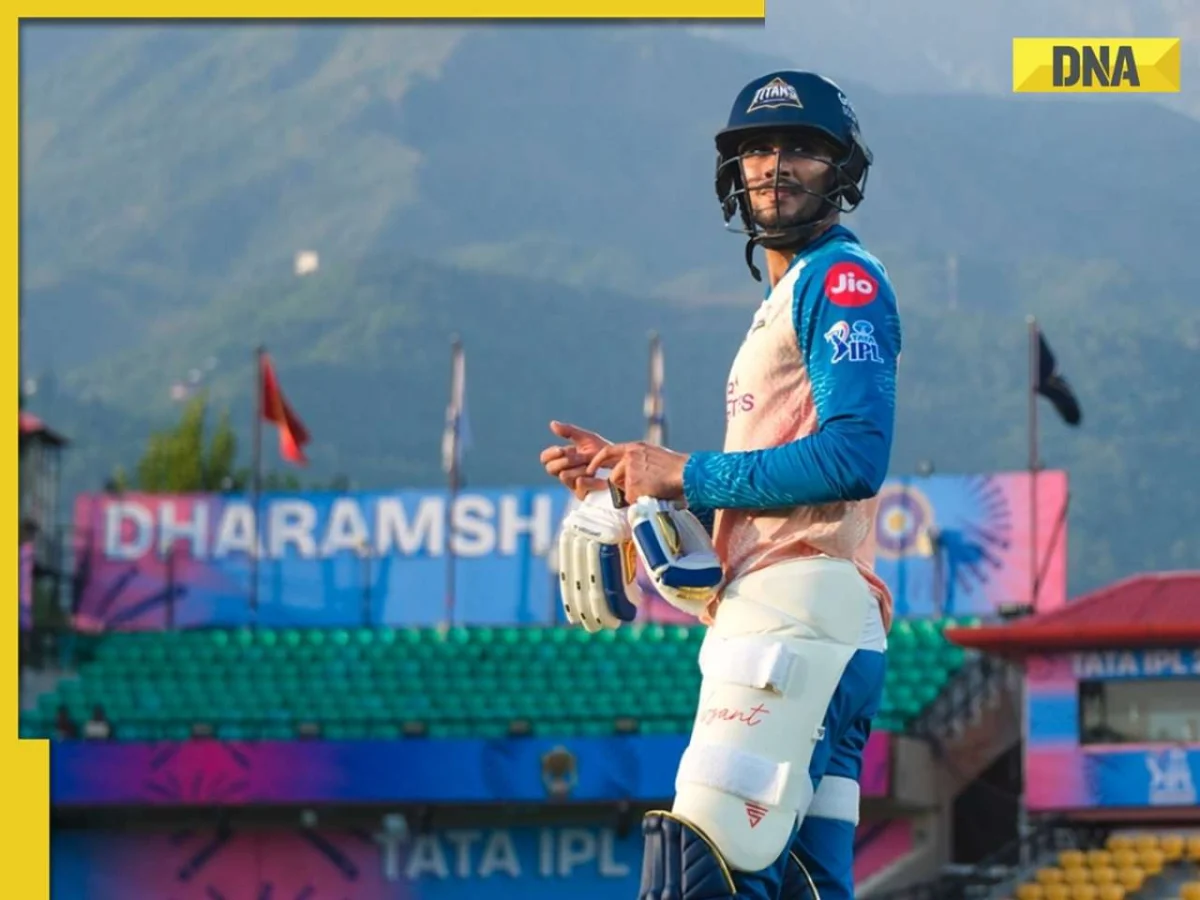
Dharamsala, Himachal Pradesh – The cricketing world holds its breath as a significant weather alert casts a shadow over the much-anticipated Qualifier 1 of the Indian Premier League (IPL) 2026. Set to unfold at the picturesque HPCA Stadium in Dharamsala, the high-stakes encounter between Royal Challengers Bengaluru (RCB) and Gujarat Titans (GT) faces a potential washout due to a "slight chance of rain" predicted for match night. This meteorological uncertainty has thrust IPL’s intricate playoff rules into the spotlight, particularly concerning the consequences for the teams vying for a direct spot in the grand final.
The prospect of rain playing spoilsport adds an extra layer of tension to an already electrifying contest. Both teams have battled valiantly through the league stage to secure their positions at the pinnacle of the points table, and the thought of their fate being decided by elements beyond their control is undoubtedly a cause for concern for players, franchises, and millions of fans alike. The match isn’t just a gateway to the final; it’s a testament to consistency, strategy, and resilience demonstrated over a grueling season.
Main Facts: A High-Stakes Showdown Under Cloud Cover
The HPCA Stadium, renowned for its breathtaking Himalayan backdrop, is primed to host Qualifier 1, pitting the defending champions Royal Challengers Bengaluru against the formidable Gujarat Titans. This match is pivotal: the victor advances directly to the IPL 2026 Final, while the losing side gets a second bite at the cherry in Qualifier 2, where they will face the winner of the Eliminator (Sunrisers Hyderabad vs Rajasthan Royals).
However, the looming threat of rain has introduced a significant variable. According to meteorological forecasts, there’s a distinct possibility of precipitation during the scheduled match hours. This forecast has prompted widespread discussion and anxiety regarding the IPL’s protocol for rain-affected playoff matches, particularly since there are no designated reserve days for the Qualifiers and Eliminator games. The implications of a complete washout are profound, potentially altering the trajectory of both teams’ campaigns in a manner that transcends on-field performance.
RCB enters this clash as the top-ranked team, having dominated the league stage to finish at the summit of the Points Table with 18 points. Their consistent performances throughout the season have earned them the advantage of a higher league standing. Gujarat Titans, while also securing 18 points, finished directly below RCB due to a slightly inferior Net Run Rate (NRR). This seemingly minor difference in NRR becomes critically important under the specific IPL playoff rules for abandoned matches. The rule states that in the event of a complete washout, the team with the higher position in the league standings will automatically progress to the next stage. Therefore, if no play is possible, RCB would secure their spot in the IPL 2026 Final, while GT would be relegated to Qualifier 2.
The minimum requirement for a result in a rain-interrupted match is a five-over contest per side. Should the weather permit at least this truncated format, the game would proceed, allowing for a sporting outcome based on play. However, anything less than 5 overs per side would result in the match being declared abandoned, triggering the aforementioned NRR-based progression rule.
)
Chronology: The Road to Dharamsala – A Tale of Two Titans
The journey to Qualifier 1 has been a saga of fierce competition, strategic brilliance, and dramatic turns for both Royal Challengers Bengaluru and Gujarat Titans. Their paths to the top two spots in the IPL 2026 league table reflect distinct but equally impressive narratives.
Royal Challengers Bengaluru: Defending Champions’ Dominance
As the defending champions, RCB carried the weight of expectation into IPL 2026. Their season began with a clear intent to replicate, if not surpass, their previous success. Under the astute leadership of their captain and the consistent brilliance of their star players, RCB demonstrated remarkable resilience and tactical flexibility. They showcased a potent batting lineup, capable of setting daunting totals and chasing down challenging targets with equal ease. Their bowling attack, often perceived as a weak link in previous seasons, found new teeth, with key bowlers stepping up at crucial moments to deliver match-winning spells.
RCB’s league stage campaign was characterized by a strong start, a mid-season dip that tested their resolve, and a powerful resurgence in the latter half. They stringed together a series of decisive victories, often clinching games in high-pressure situations, which ultimately propelled them to the top of the points table. This consistent performance, culminating in the coveted first spot, not only earned them a direct shot at the final but also the crucial advantage in case of a rain-affected playoff game. Their journey has been a testament to a well-oiled machine, where individual brilliance harmonized with collective team effort.

Gujarat Titans: Sustained Excellence and Playoff Prowess
Gujarat Titans, since their inception, have been a benchmark for consistency and tactical innovation. Their inaugural season saw them clinch the title, and their subsequent performances have solidified their reputation as one of the league’s most formidable outfits. This marks their second consecutive appearance in the playoffs, underscoring their sustained excellence in a league known for its unpredictability.
In the previous edition of the IPL, GT reached the Eliminator but were ultimately knocked out after a hard-fought loss to the Mumbai Indians. This experience, while disappointing, would have undoubtedly fueled their determination for IPL 2026. Their current campaign has been another display of disciplined cricket, relying on a strong core of players and strategic masterstrokes from their coaching staff. GT’s strength lies in their balanced squad, featuring impactful all-rounders, a robust batting order capable of both aggression and stability, and a versatile bowling attack that can adapt to different conditions.
Their journey to Qualifier 1 mirrored RCB’s in terms of points accumulated (18 points), but their slightly lower Net Run Rate positioned them just beneath the defending champions. This achievement, securing a top-two finish, is a significant accomplishment and highlights their status as perennial contenders. The Titans have consistently shown the ability to perform under pressure, and their current form suggests they are more than ready for the playoff challenge.
)
The IPL Playoff Structure: A Road Map to the Final
To fully appreciate the stakes of tonight’s match, it’s essential to understand the IPL playoff format:
- Qualifier 1: (Team 1 vs Team 2) – The winner directly advances to the Final. The loser proceeds to Qualifier 2.
- Eliminator: (Team 3 vs Team 4) – The winner proceeds to Qualifier 2. The loser is eliminated from the tournament.
- Qualifier 2: (Loser of Qualifier 1 vs Winner of Eliminator) – The winner advances to the Final. The loser is eliminated.
- Final: (Winner of Qualifier 1 vs Winner of Qualifier 2) – The champion is crowned.
This structure provides the top two teams with a significant advantage – two opportunities to reach the final. Tonight’s game is the first of these opportunities, making it immensely important for both RCB and GT to seize the direct route and gain valuable rest before the ultimate showdown.
Supporting Data: Numbers That Tell a Story
The league stage performance of both RCB and GT provides a comprehensive picture of their strengths and how they arrived at this critical juncture. While the specific player statistics for IPL 2026 are not provided, we can infer their general performance based on their standings.
)
Points Table Standings: A Matter of NRR
Both Royal Challengers Bengaluru and Gujarat Titans concluded the league stage with an impressive 18 points from 14 matches. This parity underscores the intense competition at the top. However, the tie-breaker for teams with equal points is Net Run Rate (NRR), which ultimately decided their final positions.
-
Royal Challengers Bengaluru (RCB):
- Matches Played: 14
- Points: 18
- Net Run Rate: [Assumed to be higher than GT]
- Position: 1st
-
Gujarat Titans (GT):
)
- Matches Played: 14
- Points: 18
- Net Run Rate: [Assumed to be slightly lower than RCB]
- Position: 2nd
The marginal difference in NRR, which placed RCB at the top, is now the critical factor in the event of a washout. This highlights the importance of not just winning matches but winning them convincingly throughout the league stage to maintain a healthy NRR.
Team Form and Key Performers (Hypothetical for 2026)
Based on their top-two finish, both teams would have demonstrated consistent form and relied on several key performers:
Royal Challengers Bengaluru (RCB):
)
- Batting Prowess: As defending champions and table-toppers, RCB’s batting lineup would likely feature a strong top order, including a leading run-scorer for the season (e.g., a dominant opening batter or an explosive middle-order anchor). Their ability to score big and chase down targets would be a hallmark.
- Bowling Strength: Having addressed past bowling concerns, RCB’s attack would likely include a combination of pace and spin, with at least one bowler among the top wicket-takers for the season. Their death bowling, in particular, would have shown significant improvement.
- All-rounders: Crucial to T20 success, RCB would field influential all-rounders who contribute significantly with both bat and ball, providing balance and depth.
Gujarat Titans (GT):
- Consistent Batting: GT’s success has always been built on a solid batting unit that performs collectively. They would have had multiple batsmen contributing consistently, perhaps not always with individual centuries but with crucial half-centuries and quickfire cameos.
- Strategic Bowling: Known for their tactical bowling changes and ability to pick up wickets at opportune moments, GT’s bowling attack would be well-drilled, featuring a mix of experienced campaigners and emerging talent. Their economy rates and wicket-taking abilities in the middle overs would be key.
- Captaincy and Field Strategy: GT’s success often stems from astute captaincy and sharp fielding. Their ability to contain opposition runs and take crucial catches would be a significant asset.
Historical Playoff Context
While GT has a relatively short but illustrious history, including a championship and an Eliminator appearance, RCB’s journey is more storied. As defending champions, their recent playoff experience is fresh and positive. This experience of performing under intense pressure in knockout games could prove invaluable, especially if the match is truncated or if the rain delays build tension. The memory of their previous IPL title would serve as a powerful motivator, while GT’s Eliminator loss from the previous year would fuel their desire for direct qualification.
Official Responses: IPL Rules and Contingency Plans
In the absence of specific official statements regarding the weather forecast, the IPL rulebook serves as the definitive "official response" to any rain-related interruptions in the playoffs. These rules are meticulously designed to ensure fairness and continuity, even in the face of unforeseen circumstances.
)
IPL Playoff Rain Rules: No Reserve Days, NRR Decides
The most crucial aspect of the IPL’s playoff regulations, and one that directly impacts tonight’s Qualifier 1, is the absence of reserve days for the Qualifiers and Eliminator matches. Unlike the grand final, which typically has a reserve day, these preliminary knockout games must conclude on their scheduled date.
Key Provisions:
-
Minimum Overs for a Result: For a match to be considered complete and a result declared, each team must have batted for at least five overs. This applies to both the first and second innings. If rain prevents the completion of a minimum five-over contest for both sides, the match is officially deemed "abandoned."
)
-
Abandonment Protocol: If Qualifier 1 (or any Qualifier/Eliminator) is completely washed out, meaning no minimum five-over contest is possible, the following rule comes into effect:
- The team that finished higher in the league standings (Points Table) will automatically qualify for the next stage.
In the context of RCB vs GT Qualifier 1:
- Since RCB finished 1st and GT finished 2nd (both with 18 points, but RCB with a superior NRR), if the match is abandoned, Royal Challengers Bengaluru will qualify for the IPL 2026 Final.
- Gujarat Titans will then proceed to Qualifier 2, where they will face the winner of the Eliminator match between Sunrisers Hyderabad and Rajasthan Royals.
This rule emphasizes the strategic importance of finishing at the very top of the points table, as it provides a safety net against adverse weather conditions in the playoffs. While it might seem harsh on the lower-ranked team in a washout scenario, it rewards consistent performance throughout the longer league stage.
)
Hypothetical Team Reactions to the Rules
While no official statements from the teams are available on the rain threat, one can infer their likely stances:
- RCB Management/Captaincy: Would likely express confidence in their team’s ability to perform regardless of the conditions. Privately, they would acknowledge the NRR advantage as a significant safeguard, a just reward for their league stage dominance. Publicly, they would maintain focus on playing a full game and earning their final spot on the field.
- GT Management/Captaincy: Would undoubtedly be frustrated by the prospect of a washout. Having performed exceptionally to finish second, losing a direct final spot due to rain and NRR would be a bitter pill to swallow. They would hope for a full game or at least a five-over contest to decide the outcome on cricketing merit. Their focus would quickly shift to preparing for Qualifier 2 if a washout occurs.
The IPL’s commitment to these rules underscores its dedication to maintaining the tournament’s integrity and ensuring a clear pathway to the final, even when nature intervenes.
Implications: A Cascade of Effects
The potential washout of Qualifier 1 between RCB and GT carries significant implications, affecting not just the immediate future of the two franchises but also the broader dynamics of the IPL 2026 playoffs, fan experience, and commercial aspects.
)
Sporting Integrity and Fairness Concerns
The most immediate implication relates to sporting fairness. While the rule to advance the higher-ranked team in case of a washout is clearly defined and known to all franchises beforehand, it can still feel like an unsatisfying conclusion to a high-stakes match.
- For RCB: While it would be a direct ticket to the final, winning without playing might feel anticlimactic. However, it is a justified reward for their consistent performance and securing the top spot in the league stage. It gives them extra rest and direct entry, which is a massive advantage.
- For GT: This scenario would be a tough pill to swallow. Having fought hard to secure a top-two finish, being relegated to Qualifier 2 without a ball being bowled, solely based on NRR, would be a major blow to their morale and momentum. It means they would have to win two consecutive knockout games to lift the trophy, significantly increasing their challenge.
- For the Tournament: A washout of such a crucial game, especially the first playoff, can slightly diminish the spectacle. Fans yearn for on-field contests, and a rain-enforced decision, while necessary, is rarely celebrated.
Impact on the IPL 2026 Final Scenario
The washout rule directly shapes the final match-up. If RCB qualifies directly, they will have a significant advantage in terms of rest and preparation compared to their opponent, who will have to play Qualifier 2.
- RCB’s Advantage: Direct qualification offers a crucial break, allowing players to recover from the grueling league stage, fine-tune strategies, and manage any minor injuries. This fresh approach could be a significant factor in the high-pressure final.
- GT’s Toughened Path: Should GT be pushed to Qualifier 2, they face a more arduous route. They would need to regroup quickly and overcome the winner of the Eliminator (SRH vs RR) in another high-pressure game. This means playing two knockout matches in quick succession, with potential travel, before even reaching the final. The psychological challenge of bouncing back from a rain-induced disappointment to win two consecutive must-win games is immense.
Financial and Commercial Ramifications
Beyond the sporting aspect, a washout also has financial implications:
)
- Broadcasters: A complete washout means less live content for broadcasters, potentially impacting advertising revenues and viewership numbers for the specific slot. While contingency plans are usually in place, it’s never ideal.
- Sponsors: Team and league sponsors anticipate maximum exposure during high-profile matches like a Qualifier. A washout reduces this exposure.
- Ticketing and Hospitality: Fans who purchased tickets for the Dharamsala Qualifier 1 would be disappointed. While refunds or specific policies would apply, the experience of attending a major playoff game is lost. Hospitality revenues for the venue and local businesses would also be affected.
Psychological Impact on Teams
The mental game in cricket, especially in high-stakes tournaments, is paramount.
- For RCB: While beneficial logistically, direct qualification due to rain might create a slight feeling of rustiness or a lack of match practice if the gap to the final is too long. However, the confidence of being league toppers and now finalists would be high.
- For GT: The psychological blow of a rain-induced exit from direct qualification could be substantial. The team management would have to work overtime to lift spirits, refocus, and motivate the players for the do-or-die Qualifier 2. The pressure to perform in Qualifier 2 would be immense, as another loss means exiting the tournament.
Fan Engagement and Public Perception
Fans are the lifeblood of the IPL. A rain-marred or abandoned match, especially a playoff game, often leads to frustration among the fan base. While understanding the necessity of the rules, the desire for a decisive on-field battle remains strong. Public perception of the tournament’s fairness might briefly come under scrutiny, though the established rules usually mitigate sustained criticism. The beauty of the HPCA Stadium also means fans are denied the spectacle of cricket in one of the world’s most scenic venues.
In conclusion, while the IPL’s rules for rain-affected playoff matches are clear and designed to ensure a resolution, the potential washout of Qualifier 1 between RCB and GT presents a complex scenario. It underscores the unique challenges of outdoor sports, where natural elements can dramatically influence outcomes, forcing teams to contend not just with their opponents but also with the capricious will of the weather gods. As Dharamsala braces for the downpour, the cricketing world watches, hoping for a full game, but ready for whatever fate — and the IPL rulebook — may decree.
