

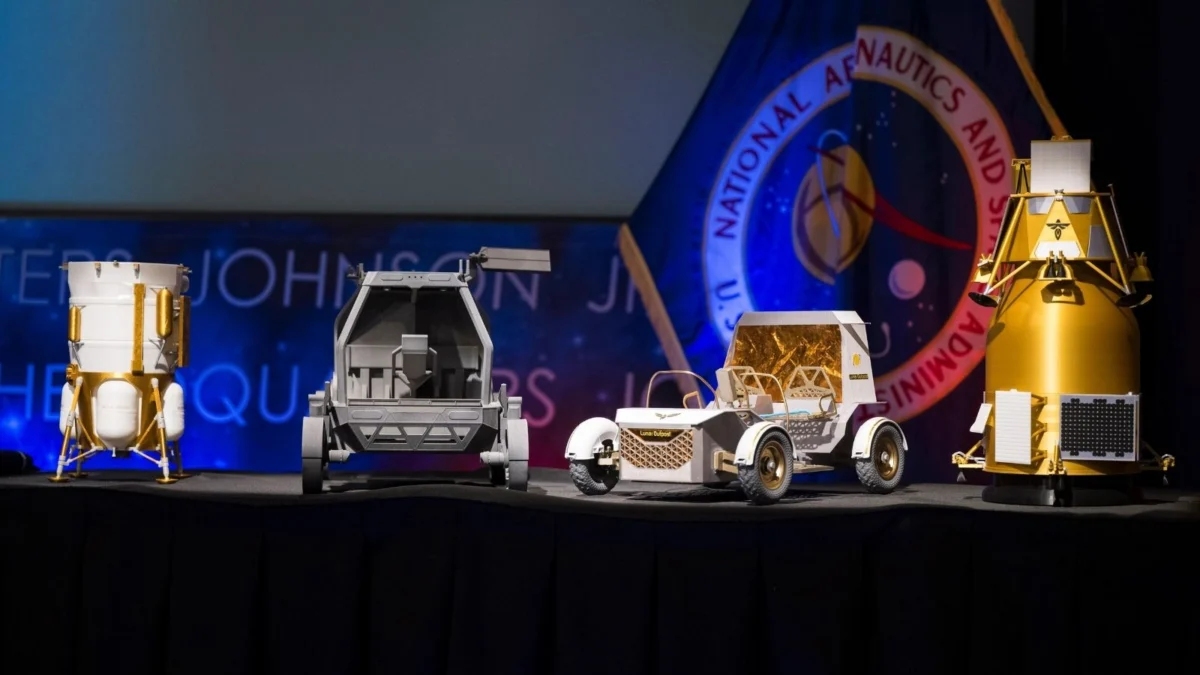
WASHINGTON D.C. — In a landmark presentation at NASA Headquarters on May 26, 2026, the American space agency signaled the end of the era of "flags and footprints" and the beginning of a permanent human presence on another world. NASA Administrator Jared Isaacman officially unveiled the "Moon Base" initiative, a multi-decade strategic framework designed to establish humanity’s first permanent outpost near the lunar South Pole.
The announcement, which included a flurry of new contracts, mission manifests, and technological demonstrations, represents the most significant shift in lunar policy since the inception of the Artemis program. By leveraging a robust network of commercial partnerships and international alliances, NASA aims to transform the Moon from a destination of exploration into a functional hub for scientific research, resource extraction, and deep-space staging.
Main Facts: The Architecture of an Outpost
The Moon Base initiative is built upon three pillars: sustainable infrastructure, commercial integration, and international cooperation. Unlike the Apollo missions of the 20th century, which were short-duration sorties, Moon Base is designed for longevity.
Key highlights of the announcement include:
- The Launch of the Moon Base Mission Series: A phased rollout of robotic and crewed missions starting as early as late 2026.
- Massive Investment in Mobility: Over $400 million in new contracts awarded to Astrolab and Lunar Outpost for the development of Lunar Terrain Vehicles (LTVs).
- Advanced Delivery Systems: Expanded roles for Blue Origin, Astrobotic, and Intuitive Machines to serve as the "delivery trucks" of the lunar economy.
- The MoonFall Project: A specialized mission to deploy "hopping" drones to scout the treacherous terrain of the lunar South Pole.
- Strategic Location: A concentrated focus on the Shackleton Connecting Ridge, a region prized for its "peaks of eternal light" and proximity to water-ice deposits in permanently shadowed regions (PSRs).
NASA’s strategy relies heavily on the Commercial Lunar Payload Services (CLPS) program, which allows the agency to purchase transport services from private companies rather than owning and operating the launch vehicles and landers themselves. This model is intended to drive down costs and foster a competitive lunar marketplace.
Chronology: The Path to 2028 and Beyond
The roadmap for Moon Base is divided into immediate technology demonstrations and long-term infrastructure builds.
Late 2026: Moon Base II and Initial Mobility
In a surprise update to the manifest, Moon Base II is scheduled to lead the charge later this year. Utilizing Astrobotic’s Griffin lander, the mission will deliver over 1,100 pounds of cargo to the lunar surface. The primary objective is the deployment of Astrolab’s FLIP rover, a precursor vehicle designed to test the limits of lunar mobility, suspension, and battery life in the extreme cold of the South Pole.
Fall 2026: Moon Base I and High-Precision Landing
Targeted for launch no earlier than Autumn 2026, Moon Base I will utilize Blue Origin’s Blue Moon Mark 1 Endurance lander. This mission is critical for engineering data; it will specifically study "plume-surface interaction"—how rocket thrusters disturb lunar regolith (dust). This data is vital for building permanent landing pads. The mission will also test the autonomous navigation systems required for the crewed Artemis landings currently slated for 2028.
2027: Moon Base III and Scientific Inquiry
Moon Base III will see the deployment of Intuitive Machines’ Nova-C Trinity lander. This mission shifts the focus toward pure science with the "Lunar Vertex" investigation. By studying "lunar swirls"—mysterious, high-contrast patterns on the Moon’s surface—scientists hope to understand the interaction between the Moon’s localized magnetic fields and solar radiation.
2028: MoonFall and the Scout Drones
By 2028, the focus will turn to the "MoonFall" mission. Managed by the Jet Propulsion Laboratory (JPL) and launched via Firefly Aerospace, this mission will deploy four autonomous hopping drones. These drones are designed to navigate craters and ridges too steep for traditional wheeled rovers, identifying the precise locations for the first permanent lunar habitats.
Supporting Data: The Next Generation of Lunar Hardware
The success of the Moon Base initiative hinges on the performance of a new generation of robotic systems. NASA provided detailed specifications for the vehicles that will become the workhorses of the lunar South Pole.
The Lunar Terrain Vehicles (LTV)
NASA has allocated significant funding to two primary competitors to ensure redundancy and innovation:
- Astrolab’s CLV-1 (FLEX Architecture): Awarded approximately $219 million, the FLEX (Flexible Logistics and Exploration) rover is a modular platform. It is designed to be "uncrewed-first" but can be quickly retrofitted for two-astronaut operation. Its unique "modular cargo" system allows it to pick up and drop off scientific pallets, much like a terrestrial forklift.
- Lunar Outpost’s Pegasus Rover: Awarded $220 million, the Pegasus focuses on speed and autonomy. Capable of speeds exceeding 9 mph (14.5 km/h), Pegasus is designed for long-range reconnaissance. It features advanced teleoperation capabilities, allowing controllers on Earth to "drive" the rover with minimal latency issues.
Heavy Cargo Delivery
To move these massive rovers, NASA has turned to Jeff Bezos’s Blue Origin. A new $188 million task order was announced for the delivery of heavy-class payloads. An optional extension valued at over $280 million suggests that Blue Origin’s "Blue Moon" lander will become a staple of the lunar logistics chain, capable of carrying several tons of equipment in a single descent.
International Payloads
Moon Base III will not be a purely American endeavor. The mission manifest includes:
- European Space Agency (ESA): High-resolution multispectral cameras.
- Korea Astronomy and Space Science Institute (KASI): Radiation monitoring sensors to assess the safety of long-term human habitation.
Official Responses: A Vision for the "Mars Forward" Strategy
During the event, NASA Administrator Jared Isaacman emphasized that the Moon is not the final destination, but rather a laboratory for the future.
"Moon Base is more than just a series of missions; it is the foundation of a multi-planetary future," Isaacman stated. "By establishing a permanent outpost on another celestial body, we are solving the fundamental challenges of deep-space survival. Every kilogram of oxygen we extract from lunar regolith and every liter of water we harvest from the poles brings us one step closer to the sands of Mars."
Isaacman, a veteran of private spaceflight who now leads the agency, has been a vocal proponent of integrating commercial speed with NASA’s rigorous safety standards. "We are no longer just exploring space; we are expanding the sphere of human economic activity. The contracts awarded today to Astrolab, Lunar Outpost, and Blue Origin represent our commitment to a sustainable, commercially-led lunar ecosystem."
Chief Scientist for the Artemis program, Dr. Sarah Holloway, added, "The data we gather from Moon Base I and II regarding dust mitigation and thermal management is the ‘boring’ engineering that makes the ‘exciting’ science possible. Without a stable, dust-free environment and reliable power, we cannot conduct the long-term experiments required to understand our place in the solar system."
Implications: Geopolitics, Economy, and the Future of Humanity
The unveiling of the Moon Base roadmap carries profound implications that extend far beyond the vacuum of space.
1. The New Lunar Economy
By awarding nearly half a billion dollars in rover and lander contracts, NASA is effectively "priming the pump" for a private lunar economy. Companies like Astrolab and Firefly Aerospace are now incentivized to seek non-NASA customers—ranging from international space agencies to private mining interests—thereby reducing the financial burden on the American taxpayer.
2. Geopolitical Leadership
The Moon Base initiative serves as a cornerstone of the Artemis Accords, a set of principles for cooperation in the civil exploration and use of outer space. By involving ESA and South Korea in the Moon Base III mission, the United States is solidifying its role as the leader of a democratic coalition for space exploration, contrasting with the independent lunar plans of other global powers.
3. The "Mars Forward" Pipeline
The Moon serves as the ultimate "sandbox" for Mars. The hopping drones of the MoonFall mission and the autonomous driving of the Pegasus rover are direct prototypes for the technologies needed to explore the Martian surface. Furthermore, the infrastructure built at the Shackleton Connecting Ridge—power grids, communications arrays, and landing pads—will serve as the blueprint for the first Martian colonies.
4. Scientific Breakthroughs
The study of lunar swirls and magnetic anomalies is expected to rewrite our understanding of planetary formation. Furthermore, the permanent presence of telescopes on the lunar far side (facilitated by Moon Base infrastructure) could provide a view of the early universe unshielded by Earth’s atmosphere and radio interference.
As NASA prepares for the launch of Moon Base II later this year, the world watches. The transition from a visitor to a resident of the Moon is a threshold humanity has waited decades to cross. With the roadmap now clear, the lunar South Pole is no longer a distant light in the sky, but the next frontier of human civilization.
