Bengaluru, India – May 28, 2026 – Karnataka’s political landscape was dramatically reshaped today as Chief Minister Siddaramaiah formally announced his resignation, bowing to the directives of the Congress high command. The move, long anticipated within political circles, immediately triggered a sharp rebuke from the opposition Bharatiya Janata Party (BJP), which lambasted the Congress for what it termed a "syndrome of chief ministers resigning" and "zero governance" stemming from internal power struggles. Deputy Chief Minister D.K. Shivakumar is widely expected to assume the top post, with an oath-taking ceremony potentially scheduled for Saturday, May 30.
The announcement came during a somber yet pivotal breakfast meeting with his Cabinet colleagues on Thursday morning. Siddaramaiah, a veteran politician known for his fiscal prudence and mass appeal, confirmed the leadership transition, stating unequivocally that the decision was made "as instructed by the high command" and that the party leadership would determine his successor. He further pledged his "full cooperation" to whoever is chosen, attempting to project an image of party unity in the face of significant internal shifts.
The resignation brings to a head months, if not years, of speculation surrounding a purported rotational chief ministership agreement within the Karnataka Congress. From the moment the party swept to power in the 2023 assembly elections, the question of who would lead the state and for how long has been a persistent undercurrent, occasionally erupting into open discussion and often fueled by carefully orchestrated political maneuvers.
Main Facts of the Political Upheaval
The abrupt announcement by Chief Minister Siddaramaiah today marks a significant turning point in Karnataka politics, confirming the long-standing rumors of a power-sharing arrangement within the Congress party. This development is not merely a change of guard but a potent symbol of the Congress high command’s enduring influence over its state units and the intricate dance of ambition and loyalty that defines Indian coalition politics.
During a breakfast meeting with his Cabinet on Thursday, May 28, 2026, a visibly composed Siddaramaiah informed his ministerial colleagues that he would step down from his position, citing direct instructions from the party’s central leadership. He stated, "I am resigning as instructed by the high command. The high command will decide the next chief minister." This declaration effectively formalized the much-speculated leadership transition, opening the door for his deputy, D.K. Shivakumar, to ascend to the state’s highest executive office.
The news was met with immediate and scathing criticism from the opposition BJP. Former Chief Minister and senior BJP leader Basavaraj Bommai wasted no time in attacking the Congress, asserting that the party was afflicted by a "syndrome of chief ministers resigning." Bommai alleged that the constant infighting over the top post had led to "zero governance" in Karnataka, causing immense suffering to the state’s populace. His remarks underscored the BJP’s strategy to paint the Congress as an internally fractured and governance-averse entity.
All eyes are now on D.K. Shivakumar, currently the Deputy Chief Minister, who was also present at the pivotal breakfast meeting. Widely considered the frontrunner for the Chief Minister’s role, sources close to the party indicate that Shivakumar is poised to take the oath of office as early as Saturday, May 30. This transition, if it occurs as anticipated, would bring to fruition a political ambition that Shivakumar has openly harbored and strategically pursued since the Congress’s resounding victory in the 2023 state elections.
The immediate implications of this leadership change are vast, ranging from potential shifts in policy priorities to a renewed emphasis on internal party cohesion as the Congress navigates future electoral challenges, both at the state and national levels. The coming days will undoubtedly reveal the full scope of this significant political development in one of South India’s most crucial states.
Chronology of a Power Tussle
The current leadership change in Karnataka is not an isolated event but the culmination of a protracted power struggle and a series of strategic political maneuvers that began even before the Congress party secured its impressive mandate in the May 2023 Assembly elections.
The 2023 Mandate and Initial Standoff
The Congress’s victory in 2023, securing 135 out of 224 seats, was largely attributed to its five "guarantees" and the collective leadership of Siddaramaiah and D.K. Shivakumar. However, the euphoria of victory was quickly overshadowed by intense lobbying for the Chief Minister’s post. Both Siddaramaiah, a seasoned administrator with a strong rural base, and Shivakumar, the party’s dynamic state unit chief and formidable fundraiser, staked their claims. The standoff lasted for several days, requiring the direct intervention of the Congress high command in Delhi, including party president Mallikarjun Kharge, Rahul Gandhi, and then-AICC General Secretary K.C. Venugopal.
Ultimately, a compromise was announced: Siddaramaiah would become Chief Minister, and Shivakumar would be his Deputy, also retaining the crucial Karnataka Pradesh Congress Committee (KPCC) President post. While officially presented as a harmonious decision, whispers of a "2.5-year formula" – where Siddaramaiah would lead for the first half of the term and Shivakumar for the second – began circulating immediately. Though never publicly confirmed by the party, this unwritten pact became the backdrop for every subsequent political development.
Persistent Rumours and High Command Engagements
Throughout 2024 and 2025, the "2.5-year CM formula" continued to fuel speculation. Every visit by Karnataka’s top leaders to Delhi, every closed-door meeting with the high command, and every public statement was scrutinized for clues. Shivakumar, in particular, was often seen making statements that subtly or overtly hinted at his future aspirations, while Siddaramaiah maintained a stance of continuity, emphasizing his focus on governance and implementing the party’s guarantees.
The high command, keen to avoid any public display of disunity, consistently downplayed the rumors, reiterating that the leadership was stable and united. However, the political grapevine remained abuzz, with various factions within the state Congress aligning themselves with either leader.
The "Breakfast Diplomacy" of December 2025
A significant event that reignited the leadership debate was the much-publicized "breakfast diplomacy" meeting in December 2025. Siddaramaiah and Shivakumar, along with a few key cabinet ministers, met over breakfast, ostensibly to discuss governance and party strategy. However, the timing and the political optics suggested more. Media reports at the time hinted that this meeting was a crucial step in formalizing the transition timeline, possibly under renewed pressure from the high command to honor the initial understanding.
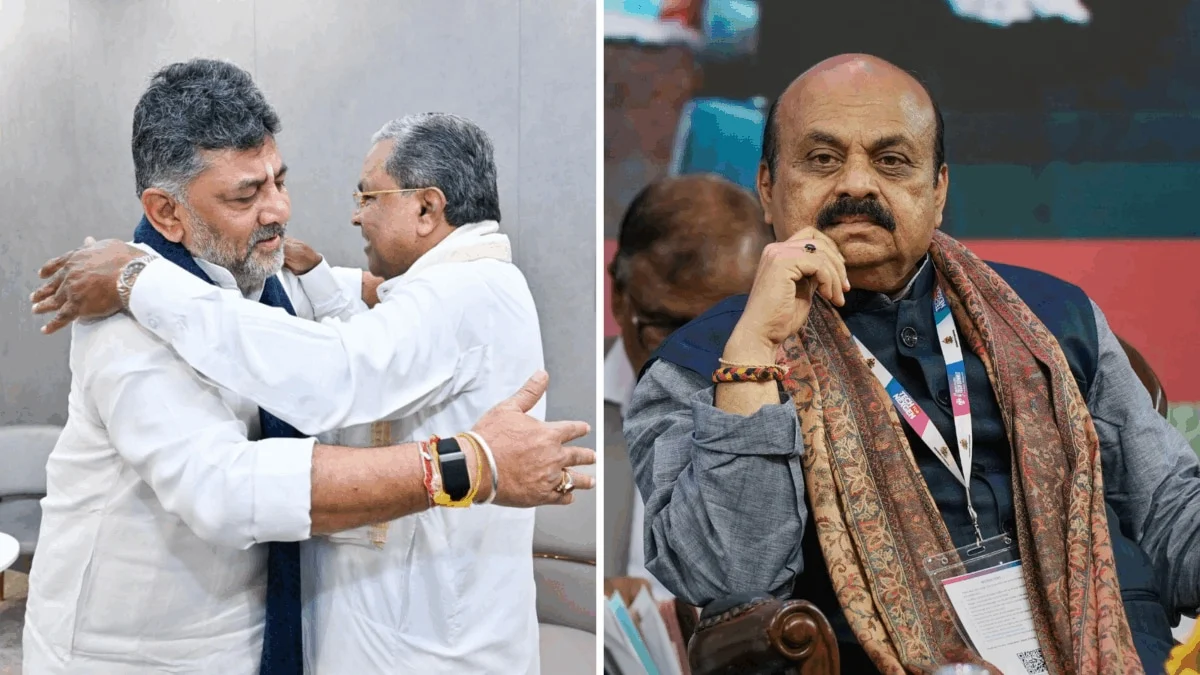
This meeting was seen as an attempt to manage the transition smoothly and present a united front, even as the internal clock for the 2.5-year mark was ticking. The visual of Shivakumar hugging Siddaramaiah and seeking his blessings, as captured by news photographers, became an iconic image symbolizing a complex relationship of rivalry and political pragmatism.
The Final Push: May 2026
Leading up to the current week, reports intensified that the high command had begun serious consultations regarding the impending transition. Sources suggested that the leadership was keen to execute the change before the state budget session or any major administrative reshuffle, ensuring minimal disruption. Meetings reportedly took place in Delhi involving senior Congress strategists and representatives from Karnataka, culminating in the high command’s definitive instruction to Siddaramaiah.
May 28, 2026: The Announcement
On Thursday morning, May 28, 2026, the protracted narrative of a power-sharing pact culminated in Siddaramaiah’s announcement. The breakfast meeting, initially framed as a routine Cabinet interaction, became the platform for the outgoing Chief Minister to convey the high command’s decision. His words, "I am resigning as instructed by the high command," officially closed one chapter of Congress leadership in Karnataka and opened another, signaling a new era under D.K. Shivakumar.
This chronology underscores not just a change in leadership but a deeply entrenched political dynamic within the Congress, where central directives often supersede regional autonomy, and personal ambitions are meticulously balanced to maintain party cohesion.
Supporting Data and Analysis: Unpacking the Karnataka Conundrum
The decision by the Congress high command to orchestrate a leadership change in Karnataka, culminating in Siddaramaiah’s resignation, is rooted in a complex interplay of political promises, internal party dynamics, and strategic considerations.
The Congress’s High Command Culture
Historically, the Indian National Congress has been characterized by its "high command culture," where the central leadership, primarily the Gandhi family, exerts significant control over state units. This tradition, while ensuring party discipline and a unified national narrative, often comes at the cost of fostering strong, independent regional leaders. The Karnataka situation is a classic example: despite Siddaramaiah and Shivakumar being formidable regional figures, the ultimate decision on their roles rests with Delhi. This reinforces the perception that state leaders serve at the pleasure of the central leadership, a point often leveraged by opposition parties like the BJP to highlight a lack of internal democracy within the Congress.
Performance of Siddaramaiah’s Government (2023-2026)
Siddaramaiah’s second tenure as Chief Minister, from May 2023 to May 2026, was largely focused on implementing the "five guarantees" that formed the bedrock of the Congress’s electoral victory. Schemes like ‘Shakti’ (free bus travel for women), ‘Gruha Jyothi’ (free electricity), ‘Anna Bhagya’ (additional rice for BPL families), ‘Yuva Nidhi’ (unemployment allowance), and ‘Gruha Lakshmi’ (financial assistance to women heads of households) were rolled out, albeit with initial challenges in execution and funding.
Economically, Karnataka, under Siddaramaiah, continued its trajectory as a leading tech and industrial hub. However, the government faced criticism on several fronts:
- Fiscal Strain: The implementation of guarantees put significant pressure on state finances, leading to concerns about resource allocation for development projects.
- Infrastructure: Bengaluru, in particular, continued to grapple with perennial issues of traffic congestion and urban infrastructure, despite government efforts.
- Allegations of Corruption: While not as prominent as in previous administrations, the opposition frequently raised allegations of corruption in various departments, though none led to major scandals.
- Internal Dissension: Beyond the CM’s post, there were persistent reports of factionalism within the cabinet and the larger party, impacting governance efficiency.
The BJP’s claim of "zero governance" is an oversimplification, but it taps into public frustration over specific issues and the perceived instability caused by the leadership uncertainty.
The Political Profile of D.K. Shivakumar
D.K. Shivakumar is a political heavyweight with a formidable reputation.
- Organisational Prowess: As KPCC President, he played a crucial role in rejuvenating the party organization and mobilizing cadres, which was instrumental in the 2023 victory. He is known for his strategic planning and meticulous execution.
- Financial Acumen & Resource Mobilizer: Shivakumar is widely regarded as the party’s chief fundraiser in Karnataka, a critical asset for any political organization. His business interests and financial strength provide him with significant influence.
- "Troubleshooter" Image: He has earned the moniker of "troubleshooter" for his ability to manage crises and keep the party flock together, often during periods of political instability or poaching attempts by rival parties.
- Vokkaliga Strongman: Shivakumar hails from the influential Vokkaliga community, a dominant caste in southern Karnataka. His ascension to CM could consolidate this crucial vote bank for the Congress, potentially offsetting any perceived alienation of other communities.
- Legal Challenges: Shivakumar has also faced scrutiny from central investigative agencies, including the Enforcement Directorate (ED) and Income Tax department, leading to arrests and ongoing legal battles. While these have been politically challenging, they have also, paradoxically, enhanced his image as a leader willing to fight against perceived political persecution.
His strong organizational base, financial muscle, and community leadership make him an undeniable force, and his claim to the Chief Minister’s chair was always going to be difficult for the high command to ignore indefinitely.
Siddaramaiah’s Legacy and Future Role
Siddaramaiah, a former Janata Dal (Secular) leader who joined the Congress, is renowned for his administrative experience and his appeal among AHINDA (minorities, backward classes, and Dalits) communities. His first term (2013-2018) was marked by progressive social welfare schemes and a robust administrative style. His second term, though shorter, solidified his image as a champion of the poor and marginalized.
His resignation, while dictated by party directives, doesn’t diminish his political stature. He is likely to remain a significant mentor and advisor within the party, potentially playing a crucial role in strategizing for upcoming elections. His influence over the AHINDA vote bank will be vital for the Congress, and his public pledge of "full cooperation" to his successor suggests a commitment to party unity, at least outwardly.
The leadership change, therefore, is not merely a bureaucratic handover but a strategic recalibration aimed at balancing community representation, rewarding organizational loyalty, and projecting an image of proactive governance, all while navigating the inherent challenges of internal power dynamics.
Official Responses and Political Fallout
The news of Chief Minister Siddaramaiah’s resignation has elicited a predictable flurry of responses from across the political spectrum, particularly from the opposition Bharatiya Janata Party (BJP), which has seized the opportunity to launch a scathing attack on the Congress.
BJP’s Vehement Criticism
Basavaraj Bommai, the former BJP Chief Minister of Karnataka, led the charge against the Congress, articulating the opposition’s viewpoint with sharp rhetoric. "This syndrome of Congress CM resigning continues. From day one, DK Shivakumar had made it clear that he would take over after 2.5 years. The governance of Congress was totally zero in Karnataka. The state has suffered because of the infighting of the Congress over the post of chief minister," Bommai stated to the media.
Bommai’s comments are part of a broader BJP strategy to portray the Congress as a party consumed by internal squabbles rather than public service. By calling it a "syndrome," he links the Karnataka situation to past instances of leadership changes within Congress-ruled states, attempting to establish a pattern of instability and a lack of decisive leadership. The accusation of "zero governance" directly challenges the Congress’s claims of successful implementation of its guarantee schemes and aims to erode public trust in the state administration. The BJP will undoubtedly use this narrative in upcoming local body elections and the next state assembly elections, projecting itself as a more stable and unified alternative. Other BJP leaders echoed Bommai’s sentiments, with some calling for immediate elections, arguing that the Congress government has lost its moral mandate due to internal conflicts.
Congress High Command’s Stance (Implied)
While the Congress high command has not issued a direct, detailed public statement beyond the implicit "direction" to Siddaramaiah, their actions speak volumes. The decision to enforce the leadership transition, reportedly based on a "2.5-year formula," suggests several motivations:
- Honouring a Pact: It indicates a commitment, however informal, to the power-sharing arrangement made during the initial post-election negotiations. This could be seen as an effort to maintain credibility within the party and prevent a more acrimonious split later.
- Balancing Ambitions: The high command is clearly attempting to manage the ambitions of two powerful regional leaders, preventing either from feeling sidelined or disrespected, which could lead to severe internal rifts.
- Strategic Rejuvenation: Bringing in D.K. Shivakumar, a dynamic and assertive leader, could be a strategic move to infuse new energy into the administration, particularly with an eye on the upcoming Lok Sabha elections and the next state assembly elections.
- Maintaining Control: The ultimate control exerted by the central leadership underscores its authority and ability to dictate terms to state units, reinforcing the party’s centralized structure.
Sources within the Congress party, speaking anonymously, indicated that the decision was made after extensive consultations and was deemed necessary for the long-term stability and unity of the party in Karnataka. They emphasized that both leaders had agreed to the arrangement and that the transition was part of a planned process, not a sudden crisis.
Siddaramaiah’s Graceful Exit
Siddaramaiah’s public declaration of full cooperation with his successor is crucial for maintaining party cohesion. His statement, "Whoever gets picked as the next chief minister, they will have my full cooperation," is designed to quell any immediate speculation of dissent or a fractured party. His political stature means that his endorsement of the new leader will be vital for a smooth transition and for rallying his loyalists behind the new administration. This dignified exit helps to present a united front against the BJP’s attacks.
D.K. Shivakumar’s Position
Deputy Chief Minister D.K. Shivakumar’s presence at the breakfast meeting and his subsequent muted but expectant demeanor signal his readiness to assume the top post. While he has not made a direct statement confirming his imminent elevation, his actions and the pronouncements from party sources confirm his frontrunner status. His focus will now be on consolidating power, forming his cabinet, and demonstrating a decisive leadership style that can counter the BJP’s narrative of instability. The public hug he shared with Siddaramaiah earlier, and his consistent expression of respect for the outgoing CM, are part of a carefully crafted image to project unity and mutual regard, despite their underlying rivalry.
The official responses and the immediate political fallout highlight the high stakes involved in this leadership change. The Congress must now work to present a unified and effective government, while the BJP will relentlessly exploit any perceived cracks to gain political mileage.
Implications for Karnataka and the Congress Party
The leadership transition in Karnataka, marked by Siddaramaiah’s resignation and the anticipated ascent of D.K. Shivakumar, carries profound implications not just for the state but also for the broader national narrative of the Indian National Congress.
Impact on Karnataka Governance and Policy
The immediate impact on Karnataka’s governance will be closely watched. A change in Chief Minister often brings with it shifts in administrative priorities, bureaucratic reshuffles, and potentially, policy adjustments.
- Continuity vs. Change: While Shivakumar has been an integral part of the outgoing government as Deputy CM, his leadership style and focus might differ from Siddaramaiah’s. He is known for his dynamism and pro-development stance, potentially prioritizing infrastructure projects and attracting investment, alongside continuing the welfare guarantees.
- Bureaucratic Stability: Senior bureaucrats and police officials will be keenly observing the new Chief Minister’s choices for key positions. Frequent transfers could temporarily affect administrative efficiency.
- Legislative Agenda: The new government will need to quickly establish its legislative agenda, especially with upcoming budget sessions and the need to address state-specific challenges like drought relief, urban planning for Bengaluru, and industrial growth.
- Factional Management: Shivakumar’s biggest challenge will be to unite the various factions within the Congress that were loyal to Siddaramaiah. Failure to do so could lead to internal sabotage and hinder effective governance.
Impact on the Congress Party: Internal Unity and National Perception
The way this transition is managed will be critical for the Congress party, both internally and in its national standing.
- Internal Unity: The success of the "2.5-year formula" and its smooth execution (or at least the appearance of it) could be a template for managing ambitions in other states where the Congress faces similar dilemmas. However, any visible dissent or resentment from Siddaramaiah’s camp could quickly unravel the perceived unity. The Congress leadership will need to ensure that Siddaramaiah and his supporters feel valued and included in the new power structure.
- National Perception: For a party that has often been criticized for its "high command culture" and perceived inability to manage strong regional leaders, a smooth transition could project an image of strategic foresight and disciplined leadership. Conversely, if the BJP’s narrative of "infighting" and "zero governance" gains traction, it could further damage the Congress’s image nationally, especially as it seeks to rebuild its presence in various states. It reinforces the idea that important decisions are made in Delhi, not by elected state representatives, which could be a double-edged sword.
- Electoral Outlook: Karnataka is one of the few large states where the Congress holds power independently. The performance of the new Shivakumar-led government will directly influence the party’s prospects in the next Lok Sabha elections (due in 2029) and the subsequent Karnataka Assembly elections (due in 2028). A strong, stable government could be a morale booster, while instability could lead to electoral setbacks. Shivakumar’s ability to consolidate the Vokkaliga vote alongside other communities will be crucial for the party’s long-term electoral strategy.
Future of Siddaramaiah and Shivakumar
- Siddaramaiah: Despite stepping down, Siddaramaiah remains a formidable figure. He could assume a role as a senior mentor, party strategist, or even a national-level advisor. His experience and rapport with various communities will be invaluable, and the Congress will likely leverage his wisdom for future electoral campaigns. His graceful exit suggests he might be aiming for a elder statesman role rather than active opposition from within.
- D.K. Shivakumar: The Chief Ministership will be the ultimate test of Shivakumar’s political acumen. He will need to transition from a powerful party organizer and troubleshooter to an effective administrator and leader of the state. His ability to manage the state’s finances, deliver on welfare promises, drive development, and maintain party unity will define his legacy. He will also need to navigate the ongoing legal challenges he faces, ensuring they do not impede his administrative duties or cast a shadow over his government.
In conclusion, Siddaramaiah’s resignation marks a significant political juncture, demonstrating the Congress’s attempt to balance internal power dynamics with the imperatives of governance. The coming months will reveal whether this carefully orchestrated transition will usher in a period of stability and effective administration in Karnataka or if the underlying tensions will continue to simmer, providing fodder for the opposition and challenges for the Congress’s future. The stakes are high, not just for Karnataka, but for the Congress party’s national resurgence.