The Mumbai Metropolitan Region (MMR) is currently witnessing one of the most significant infrastructure overhauls in its history. At the heart of this transformation is the Mumbai Metro Line 5, also known as the Orange Line. Originally envisioned as a link between Thane and Kalyan, the project has recently undergone a massive expansion in scope and scale. With the approval of the Metro Line 5A extension, the corridor has now ballooned into a 34.21 km arterial route, reaching deep into the industrial and residential heartlands of Bhiwandi and Ulhasnagar.
This expansion marks a pivotal moment for millions of commuters who have long grappled with the limitations of the Central Railway’s suburban network and the perennial congestion of the Mumbai-Nashik Highway. With an estimated investment of ₹18,130 crore, Metro Line 5 is no longer just a local transit project; it is a regional economic engine designed to redefine the "Mumbai in Minutes" philosophy.
Main Facts: The Scope of the Expanded Corridor
The Mumbai Metropolitan Region Development Authority (MMRDA) recently confirmed that the total length of Metro Line 5 has been extended to 34.21 km. This makes it one of the longest continuous metro corridors in the MMR, surpassing several other lines currently under construction in the city proper.
The project is strategically divided into three distinct segments to manage construction complexities and ensure early operationalization of completed sections:
- Phase 1 (Thane to Dhamankar Naka): Stretching 11.9 km, this segment is the most advanced. It features six stations: Balkhum, Kasheli, Kalher, Purna, Anjurphata, and Dhamankar Naka. It serves as the vital link between the residential hubs of Thane and the outskirts of the Bhiwandi logistics zone.
- Phase 2 (Dhamankar Naka to Durgadi): Spanning 10.48 km, this phase includes six stations and navigates the dense, industrially sensitive terrain of Bhiwandi. Notably, this section includes an underground station at Bhiwandi to mitigate the impact on existing high-density structures and narrow roadways.
- Metro Line 5A (Durgadi to Kalyan & Ulhasnagar): The newest addition to the project, this 11.83 km extension adds seven stations to the map. It connects Durgadi to Kalyan Junction and includes a strategic "spur" or branch line to Ulhasnagar, bringing rapid transit to a city previously dependent entirely on the aging suburban rail line.
The total financial outlay for this massive undertaking is pegged at ₹18,130 crore, reflecting the high costs of land acquisition, advanced engineering for the underground portions, and the construction of state-of-the-art depots and rolling stock.
Chronology: From Conception to the 2026 Deadline
The journey of Metro Line 5 has been one of evolving ambitions.
- Initial Approval: The project was initially conceived as a 24.9 km corridor connecting Thane to Kalyan via Bhiwandi. It was designed to provide a much-needed east-west alternative to the congested road routes.
- Engineering Challenges and Redesign: As the MMRDA moved into the execution phase, it faced significant hurdles in Bhiwandi. The dense urban fabric of the textile hub necessitated a redesign of Phase 2, leading to the inclusion of underground sections to avoid large-scale displacement of residents and businesses.
- The 5A Expansion (2024-2025): Recognizing the rapid population growth in the Kalyan-Dombivli and Ulhasnagar belts, the state government approved the extension of the line beyond Kalyan. This turned the project from a linear route into a branched network, specifically targeting the high-density residential zones of Ulhasnagar.
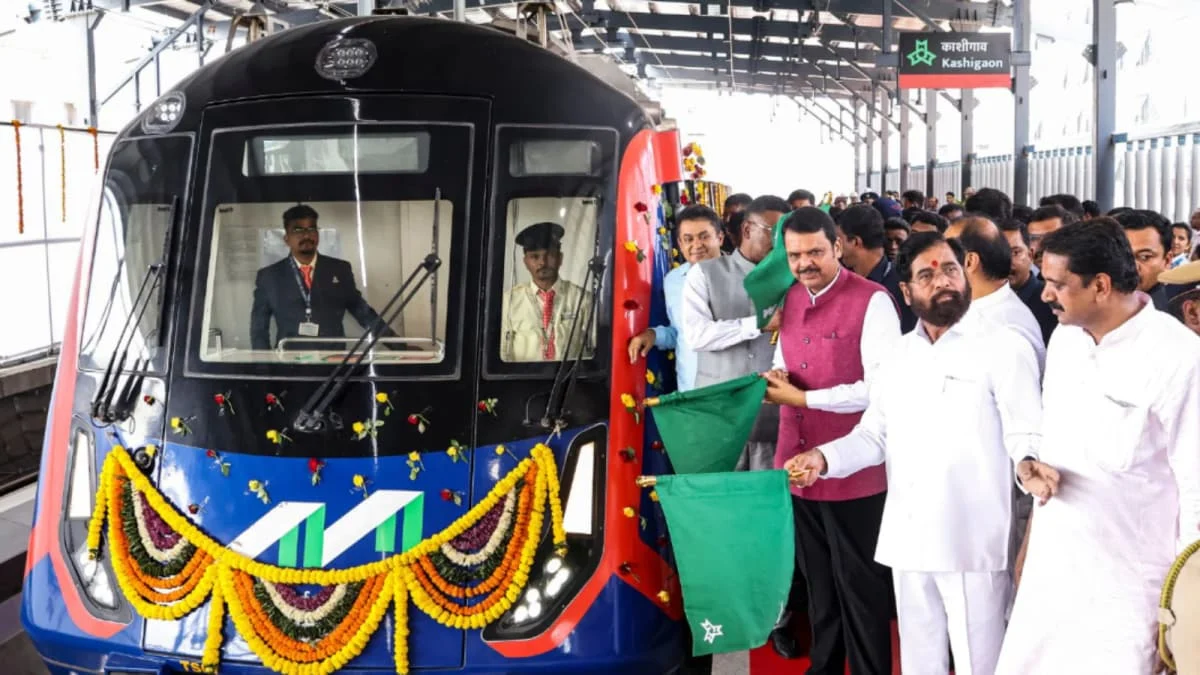
- Current Status (May 2026): Phase 1 is now physically complete. The MMRDA has announced that it is currently preparing for the Commissioner of Metro Rail Safety (CMRS) inspection. This is the final and most rigorous safety hurdle, involving high-speed trials, station safety audits, and signaling checks.
- Opening Timeline: Chief Minister Devendra Fadnavis has officially stated that Phase 1 (Thane to Bhiwandi) is slated to open for public use by the end of 2026. While Phase 2 and Line 5A are still under development, work on these sections is being fast-tracked to ensure a phased roll-out over the coming years.
Supporting Data: Enhancing the Daily Commute
The primary objective of Metro Line 5 is to offer a "faster, cooler, and more reliable" alternative to existing transport modes. The data suggests a dramatic shift in how people will move across the eastern MMR.
Travel Time Efficiency
Currently, traveling from Thane to Kalyan during peak hours via road can take anywhere from 75 to 90 minutes due to heavy truck traffic and bottlenecked junctions at Majiwada and Bhiwandi. Metro Line 5 is projected to reduce this travel time by 40% to 50%. Once fully operational, the journey from Thane to Ulhasnagar is expected to take less than 45 minutes, a feat currently impossible by any other mode of transport.
Multimodal Connectivity
A key strength of Line 5 is its integration with the existing and future transport network:
- Rail Interchanges: The line will offer direct interchanges with Indian Railways at Thane, Kalyan, Vitthalwadi, and Ulhasnagar stations. This allows commuters to switch from the Metro to the Central Railway suburban trains seamlessly.
- Metro Interchanges: At Balkhum, Line 5 will connect with Metro Line 4 (Wadala-Kasarvadavali), providing a direct link to the heart of Mumbai. At Kalyan Junction, it will meet Metro Line 12 (Kalyan-Taloja), effectively connecting the eastern suburbs to Navi Mumbai.
- Highway Integration: The corridor runs parallel to or intersects with major national highways, including NH-160 (Mumbai-Nashik), NH-61 (Kalyan-Ahmednagar), and NH-848.
Environmental and Social Impact
By providing a high-capacity alternative to private vehicles and shared autos, the MMRDA anticipates a significant reduction in carbon emissions. The Kalyan-Dombivli region alone houses a population of over 35 lakh people. Line 5 is designed to cater to a daily ridership that could eventually exceed 3 lakh passengers, significantly easing the burden on the "super-dense crush load" of the Central Railway.
Official Responses: A Vision for the Future
The leadership of the Maharashtra government and the MMRDA have been vocal about the strategic importance of this corridor.
Chief Minister Devendra Fadnavis characterized the project as a "critical intervention." He noted, "Bhiwandi and the Kalyan-Dombivli belt have been the engines of our industrial and residential growth, but their infrastructure has lagged behind. Metro Line 5 corrects this historical imbalance, providing fast, high-capacity connectivity to a population that has been underserved for too long."
Deputy Chief Minister Eknath Shinde, who also serves as the Chairman of the MMRDA, described the corridor as a "powerful mobility link." Having been a long-term advocate for Thane’s development, Shinde emphasized that the project serves more than just commuters. "This is a lifeline for workers in the textile mills of Bhiwandi, for traders in the markets of Kalyan, and for the lakhs of citizens who travel to Mumbai for work every day. It is about dignity and ease of living."
Dr. Sanjay Mukherjee, MMRDA Metropolitan Commissioner, highlighted the technical and planning aspects. "Metro Line 5 is central to our ‘Mumbai in Minutes’ initiative. We aren’t just building a rail line; we are building a network. The integration of Line 5 with Lines 4 and 12 creates a web of connectivity that ensures no part of the MMR is isolated."
Implications: Economic and Urban Transformation
The completion of Metro Line 5 will have far-reaching implications that extend beyond simple transit.
1. The Logistics Revolution in Bhiwandi
Bhiwandi is often called "the warehouse of India." However, its roads are perpetually choked with heavy vehicles. By providing a metro link for workers and residents, the project will reduce the number of small vehicles and buses on the road, allowing for smoother freight movement. Furthermore, the improved connectivity is expected to attract higher-value industries and corporate offices to an area previously dominated by traditional warehousing.
2. Real Estate and Urban Sprawl
Historically, real estate prices in the MMR have been dictated by proximity to railway stations. The introduction of 19 new metro stations along the 34 km route will lead to a "transit-oriented development" (TOD) surge. Areas like Kalher, Kasheli, and the outskirts of Kalyan are already seeing a rise in residential projects. The metro makes these "far-flung" suburbs viable for middle-class families working in Mumbai or Thane.
3. De-congesting the Central Railway
The Central Railway’s suburban line is one of the most crowded in the world. Metro Line 5 acts as a parallel bypass for local travel between Thane and Kalyan. By siphoning off commuters who only need to travel within the eastern belt, it will free up capacity on the "Local" trains for those traveling longer distances to South Mumbai.
4. Integration of Ulhasnagar
The decision to add the Ulhasnagar spur (Line 5A) is a masterstroke in urban planning. Ulhasnagar is one of the most densely populated cities in India. Its narrow streets make road-based public transport difficult. A metro line offers a vertical solution to a horizontal problem, providing the city’s business community with a modern gateway to the rest of the MMR.
Conclusion: The Road Ahead
As the MMRDA prepares for the CMRS inspection of Phase 1, the anticipation in Thane and Bhiwandi is palpable. The expansion of Metro Line 5 to 34.21 km represents a bold statement of intent by the state government. It acknowledges that the future of Mumbai lies in its satellite cities.
While challenges remain—particularly in the construction of the underground sections in Phase 2 and the land acquisition for the new 5A extension—the trajectory is clear. By the end of 2026, the first trains will likely be humming between Thane and Bhiwandi, marking the beginning of a new era for the eastern corridor. For the millions who call this region home, the promise of "Thane to Ulhasnagar in minutes" is finally moving from a blueprint to a reality.