BENGALURU, India – In a political landscape defined by swift transitions and strategic maneuvering, Karnataka is once again at the epicentre of intense speculation. As Deputy Chief Minister D.K. Shivakumar prepares to assume the mantle of Chief Minister, replacing the outgoing Siddaramaiah, all eyes have turned to Satish Jarkiholi, a prominent Congress leader from North Karnataka. Subtle yet highly symbolic actions at his residence and with his official vehicle have ignited a fervent debate: Is Jarkiholi poised for a significant elevation, potentially to the coveted post of Karnataka Pradesh Congress Committee (KPCC) President?
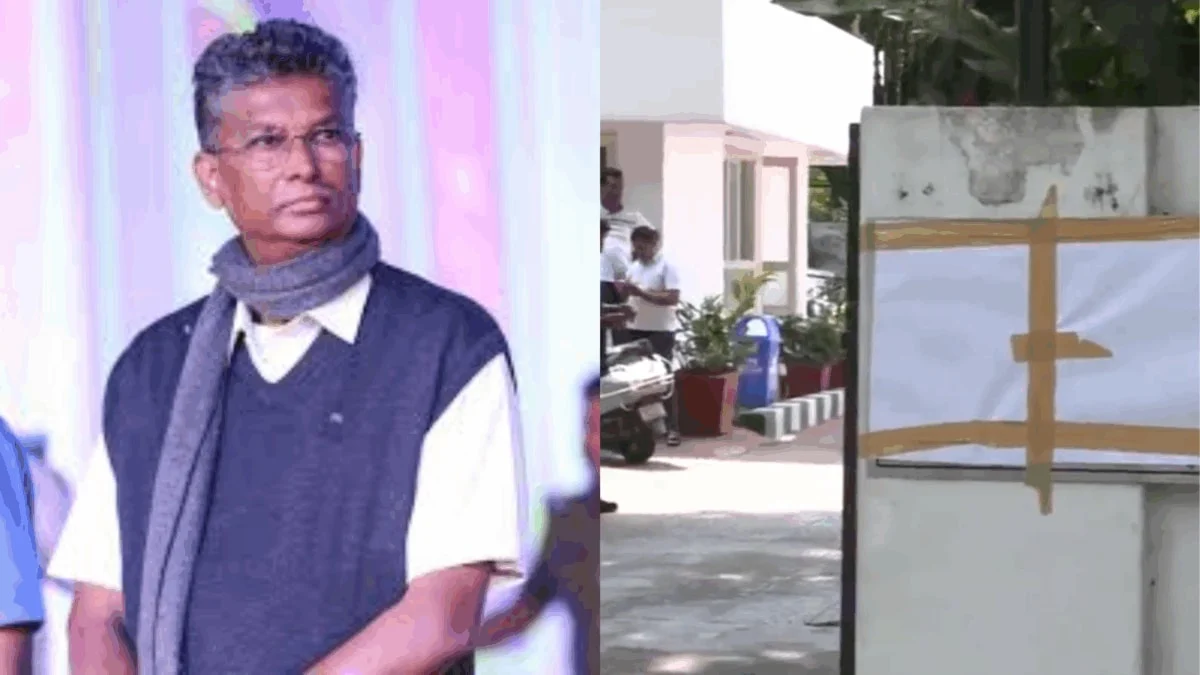
The signs emerged just hours after Siddaramaiah tendered his resignation, dissolving the state cabinet and paving the way for a new leadership structure within the Congress government. Outside Satish Jarkiholi’s Bengaluru residence, his official nameplate, which prominently displayed his ministerial designation, was found deliberately covered with paper. Simultaneously, the distinctive Karnataka government emblem, typically affixed to official vehicles, was conspicuously absent from his car. These actions, seemingly minor, carry profound weight in the intricate world of Indian politics, often serving as coded messages about impending changes in power and portfolio.
Jarkiholi, who served as the Public Works Minister in the recently dissolved Siddaramaiah cabinet, has long been recognized as a formidable force within the party. His current moves, whether pre-emptive or carefully orchestrated, suggest a keen awareness of the unfolding political dynamics and a clear ambition for a more central role in the state’s ruling party. Sources within the Congress party, speaking anonymously due to the sensitivity of the discussions, indicate that Jarkiholi has conveyed to the party high command his desire for a dual role: a cabinet berth in the new government coupled with the powerful position of KPCC president. While those close to the Belagavi-based leader have reportedly downplayed active discussions, the public display of detachment from his previous office speaks volumes.
A Chronology of Karnataka’s Leadership Transition
The current political fluidity in Karnataka is the culmination of a series of events, some anticipated, others unfolding with unexpected rapidity.
May 28, 2026: Siddaramaiah Steps Down, Cabinet Dissolved
The preceding day marked a pivotal moment in Karnataka politics. Chief Minister Siddaramaiah officially submitted his resignation to the Governor, bringing an end to his tenure. While the exact reasons for his departure remain subject to internal party discussions, it is widely understood that this transition was part of a pre-agreed power-sharing arrangement within the Congress leadership. The arrangement, reportedly brokered by the party’s central high command, aimed to ensure equitable distribution of power and leadership opportunities between Siddaramaiah and D.K. Shivakumar. Following the Chief Minister’s resignation, the entire state cabinet was dissolved, a standard procedural step ahead of the formation of a new government. This move effectively rendered all ministers, including Satish Jarkiholi, divested of their official portfolios and attendant privileges.
May 29, 2026: The Symbolic Unveiling
It was in the immediate aftermath of this dissolution that the public witnessed the symbolic gestures surrounding Satish Jarkiholi. The covering of his nameplate and the removal of the government emblem from his car were not merely administrative actions; they were political signals. For a seasoned politician like Jarkiholi, such moves are rarely accidental. They suggest a deliberate intention to signify a break from the past role and an anticipation of a new one. This timing is critical, indicating that Jarkiholi and his camp are actively positioning him for the upcoming reshuffle, rather than passively awaiting a decision. The viral nature of images and videos shared by news agencies like ANI underscored the public and political interest in these subtle cues.
The Road to Shivakumar’s Chief Ministership
D.K. Shivakumar’s ascent to the Chief Minister’s office has been a journey marked by resilience, strategic acumen, and a formidable grassroots presence. Having served as Deputy Chief Minister under Siddaramaiah, Shivakumar has long been seen as a strong contender for the top post. His robust organizational skills, fundraising capabilities, and deep connections across various communities within Karnataka have cemented his position as a powerful figure in the Congress. The power-sharing agreement, which reportedly stipulated a rotational Chief Ministership, was a testament to his influence and the party’s need to balance the aspirations of its two most prominent leaders. As Shivakumar prepares to take the oath, the focus now shifts to how he will consolidate his power and who he will choose to lead the party’s organizational machinery, a role crucial for his long-term stability and the party’s electoral future.
Supporting Data and Strategic Considerations for the KPCC Presidency
The KPCC President’s role is not merely ceremonial; it is the organizational backbone of the Congress party in Karnataka. This position is responsible for mobilizing party workers, executing electoral strategies, managing internal dissent, and acting as a crucial bridge between the state unit and the national high command. In a state as politically complex and diverse as Karnataka, the choice of KPCC President is paramount, particularly for a new Chief Minister seeking to establish his authority and prepare the party for future electoral battles, including upcoming local body elections and the next Lok Sabha polls.
Satish Jarkiholi: A Deep Dive into a Grassroots Leader
Satish Jarkiholi’s profile makes him a compelling candidate for the KPCC presidency.
- Grassroots Connect and North Karnataka Influence: Hailing from Belagavi district, Jarkiholi is a towering figure in North Karnataka, a region critical for any party aspiring to govern the state. He, along with his brothers Ramesh and Balachandra, constitute a powerful political family, often referred to as the "Jarkiholi brothers," who wield significant influence over multiple constituencies. His ability to connect with ordinary citizens, understand local issues, and mobilize support at the village level is a key asset. This grassroots strength is particularly vital for the KPCC President, whose primary task is to invigorate the party’s base.
- Seasoned Organizational Hand: Beyond his ministerial roles, Jarkiholi is known for his adeptness in organizational matters. While specific instances of his organizational prowess are often played out behind the scenes, his sustained electoral success from the Yemakanmardi constituency since 2008, combined with his long tenure in various cabinets (Excise, Forest and Environment, Public Works), speaks to a leader who understands both governance and party management. He is reputed for his patient networking and ability to maintain relevance across different political phases.
- Caste Dynamics and Social Engineering: Satish Jarkiholi belongs to the Valmiki Nayaka community, classified as a Scheduled Tribe (ST). This caste identity is a significant factor in Karnataka’s identity politics. Appointing an ST leader to a prominent position like the KPCC presidency would align with the Congress party’s broader strategy of social engineering, aiming to consolidate support from various marginalized communities. It would send a strong message of inclusivity and representation, potentially strengthening the party’s appeal beyond its traditional vote banks.
- Factional Balancing Act: Karnataka Congress is no stranger to factionalism. Jarkiholi’s ability to "maintain ties across different factions" is a crucial attribute. He is generally perceived as a pragmatic leader, less prone to extreme ideological posturing, which allows him to bridge divides and foster unity within the often-fractured state unit. This skill would be invaluable for a KPCC president tasked with ensuring a cohesive party structure under a new Chief Minister.
- The Dual Demand: Cabinet Berth and KPCC President: Jarkiholi’s reported demand for both a cabinet position and the KPCC presidency is ambitious but not unprecedented in Indian politics, though often fraught with challenges. Such a dual role would grant him significant executive power within the government and unparalleled control over the party machinery. This concentration of power could either lead to highly effective coordination between the government and the party or, conversely, create potential conflicts of interest and an over-reliance on one individual. The party high command will weigh these pros and cons carefully. The "sources close to Jarkiholi" denying active discussions could be a tactical move to avoid pre-empting the high command’s decision or to keep negotiations flexible.
The Importance of North Karnataka:
North Karnataka has historically been a challenging region for the Congress, often leaning towards the BJP, particularly among Lingayat and Veerashaiva communities. However, it is also home to significant populations of other communities, including STs, which the Congress aims to consolidate. Jarkiholi’s strong base in Belagavi, a gateway district to North Karnataka, makes him an indispensable asset. His elevation would send a powerful signal to the region, potentially bolstering the party’s prospects in an area where it needs to make inroads.
Official Responses and Internal Party Dynamics
As of the latest reports, there has been no official confirmation or denial from the Congress high command regarding Satish Jarkiholi’s potential appointment as KPCC President or his specific demands. The party leadership, particularly the central observers and the newly designated Chief Minister D.K. Shivakumar, are engaged in intricate deliberations to finalize the cabinet and key organizational roles.
The High Command’s Deliberations:
The Congress high command, including figures like Mallikarjun Kharge, Rahul Gandhi, and K.C. Venugopal, faces a complex balancing act. Their decision on the KPCC president will need to consider:
- Caste Representation: Ensuring representation for various dominant and marginalized communities.
- Regional Balance: Balancing power between North and South Karnataka.
- Factional Harmony: Appointing a leader who can unite disparate factions within the state unit.
- Loyalty and Efficiency: Choosing someone loyal to the new CM and capable of effectively running the party organization.
- Future Electoral Strategy: Selecting a president who can gear up the party for upcoming electoral challenges.
D.K. Shivakumar’s Perspective:
For the incoming Chief Minister D.K. Shivakumar, the choice of KPCC President is paramount. He will need a party chief who can work in tandem with the government, reinforce his leadership, and effectively manage party affairs without creating parallel power centers. While Jarkiholi is a powerful figure, Shivakumar will assess whether his dual demand for a cabinet berth and the KPCC presidency aligns with his vision for a stable and cohesive administration. A strong, independent KPCC chief can be a boon for the party but also a potential challenge for the Chief Minister if not managed carefully. The relationship between the CM and the PCC President is often a barometer of a state unit’s health.
Silence as Strategy:
The lack of explicit public statements from Jarkiholi himself, or from the party high command, is typical of high-stakes political negotiations. Such silence allows for backchannel discussions, prevents premature commitments, and maintains an aura of suspense until a final decision is announced. The ANI tweet, which widely circulated the images of the covered nameplate and missing emblem, served as an unofficial but potent confirmation of the ongoing shifts and Jarkiholi’s proactive stance.
Implications for Karnataka Congress and State Politics
The imminent appointment of a new KPCC President, alongside the installation of D.K. Shivakumar as Chief Minister, will usher in a new era for the Karnataka Congress and have significant implications for the state’s political landscape.
For Karnataka Congress:
- New Leadership Dynamic: The combination of a new Chief Minister and a new KPCC President will redefine the power structure within the party. A harmonious relationship between these two figures is crucial for effective governance and party management.
- Unity and Stability: The challenge for the new leadership will be to maintain unity within the party, especially after a period of intense internal negotiations and the perceived power-sharing arrangement. Any lingering resentment or factionalism could undermine the new government’s stability.
- Electoral Preparedness: The KPCC President will immediately face the task of galvanizing the party for upcoming elections, including local body polls and the crucial 2029 Lok Sabha elections. A strong organizational setup is vital to counter the formidable opposition posed by the BJP and JD(S).
- Policy Implementation: A well-coordinated party organization can effectively communicate government policies and achievements to the grassroots, ensuring that the benefits reach the target beneficiaries and enhancing the government’s public image.
For Satish Jarkiholi:
- Political Trajectory: If appointed KPCC President, it would mark the biggest organizational elevation of his political career. This role would place him at the very heart of Congress strategy in Karnataka, making him a central power broker and a key decision-maker in state politics.
- Increased Influence: A dual role (cabinet minister + KPCC president) would significantly amplify his influence, allowing him to shape both government policy and party direction. This would also solidify his position as a dominant leader from North Karnataka.
- Risks and Rewards: Such a high-profile role comes with immense responsibilities and scrutiny. Jarkiholi would be tasked with uniting a diverse party, managing internal dissent, and delivering electoral results. Failure to do so could impact his political standing.
For Karnataka Politics:
- Government Stability: The stability of the new D.K. Shivakumar government will hinge on how successfully the party manages this leadership transition and consolidates its internal power structure.
- Governance and Development: A stable government, backed by a strong and unified party organization, is better positioned to focus on governance, implement its electoral promises, and address the developmental needs of the state.
- Opposition Strategy: The opposition parties, particularly the BJP, will closely observe these developments, looking for any cracks or discontent within the Congress to exploit. A strong Congress leadership, however, would present a more formidable challenge.
In conclusion, the covered nameplate and the missing government emblem outside Satish Jarkiholi’s residence are more than mere administrative adjustments; they are potent symbols of the shifting political landscape in Karnataka. As D.K. Shivakumar prepares to lead the state, the internal dynamics of the Congress party are reaching a critical juncture. Satish Jarkiholi, with his strong grassroots base, organizational acumen, and strategic positioning, appears to be on the cusp of a significant elevation, potentially securing a dual role that would cement his place as one of Karnataka’s most influential political figures. The coming days will reveal the final contours of this new leadership, but the signals are clear: a new chapter is beginning for the Karnataka Congress.
(With inputs from agencies)