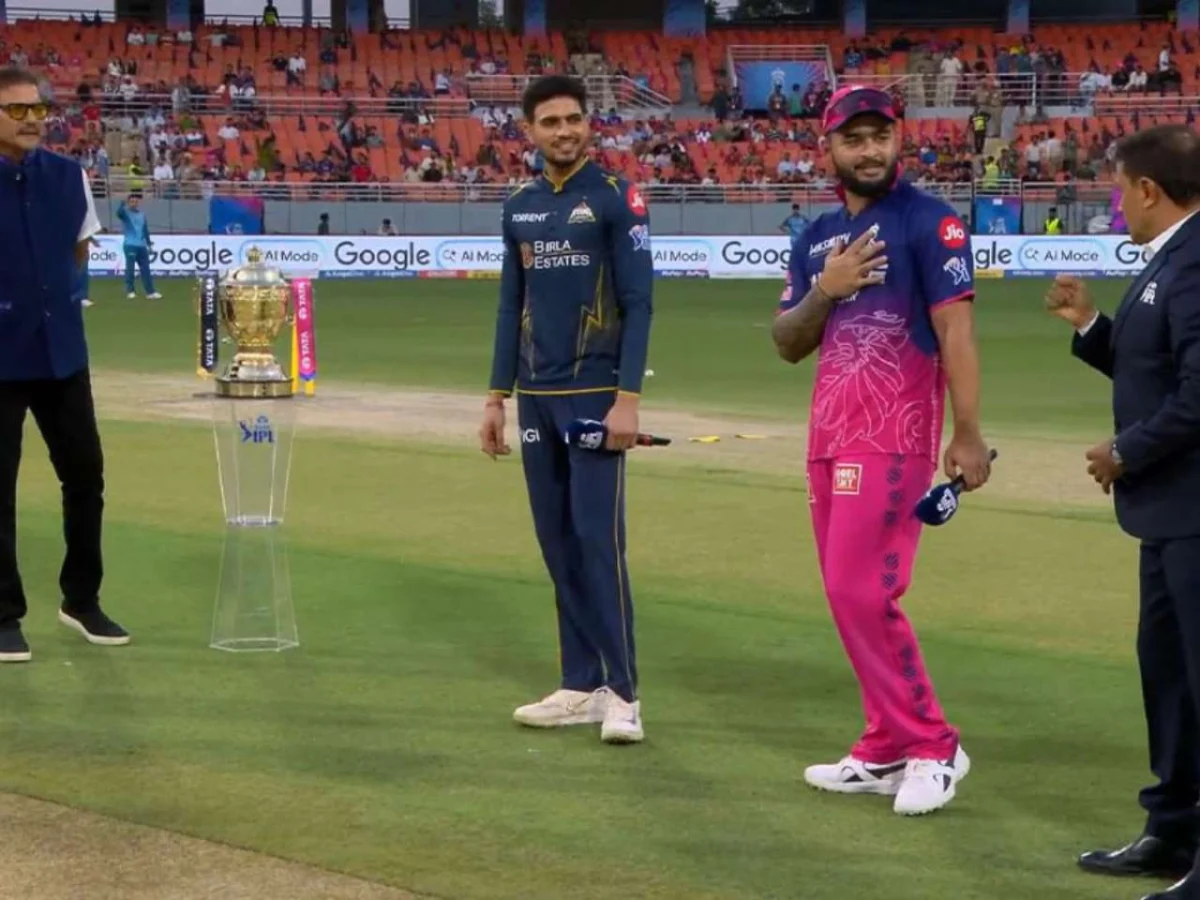
New Chandigarh, India – May 29, 2026 – A major pre-match controversy has cast a shadow over the high-stakes IPL 2026 Qualifier 2 clash between the Gujarat Titans (GT) and Rajasthan Royals (RR) at the Maharaja Yadavindra Singh International Cricket Stadium. In a bizarre sequence of events that sent ripples of déjà vu through the cricketing world, the crucial coin toss was conducted twice, reportedly due to the match referee’s inability to hear the initial call. This unprecedented incident immediately drew parallels to the infamous 2011 ODI World Cup final, where a similar confusion surrounding the toss had occurred.
The spectacle unfolded moments before the scheduled start of play, leaving players, officials, and fans bewildered. Gujarat Titans captain Shubman Gill, visibly frustrated, found himself at the centre of the storm, while Rajasthan Royals captain Riyan Parag ultimately won the re-toss, opting to bat first. The episode has ignited a fierce debate about the protocols governing one of cricket’s most fundamental rituals, especially in a league as globally scrutinised as the IPL.
Main Facts: A Toss for the Ages, Twice Over
The stage was set for an exhilarating encounter between two formidable teams vying for a spot in the IPL 2026 final. The Qualifier 2 fixture carries immense pressure, with the winner progressing to face the already qualified finalist, and the loser bowing out of the tournament. It was against this backdrop of heightened anticipation that the pre-match coin toss took a perplexing turn.
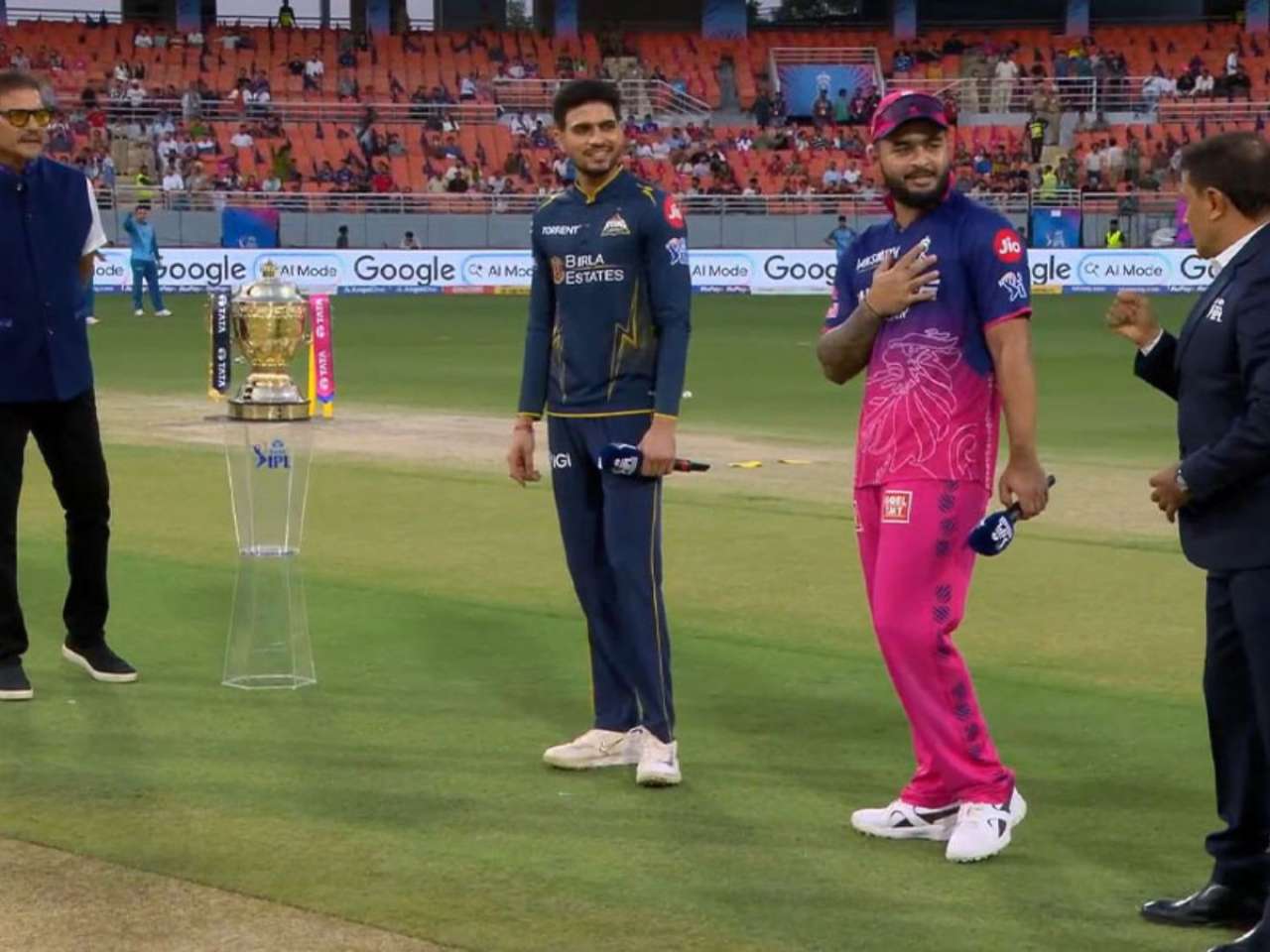
Gujarat Titans captain Shubman Gill and Rajasthan Royals captain Riyan Parag walked out to the centre, accompanied by match referee and commentator Ravi Shastri, for the customary coin flip. Gill, in accordance with the rules for the team designated as ‘home’ in the fixture, performed the flip. As the coin spun in the air, Parag made his call – reportedly ‘heads’ – though it was largely inaudible amidst the stadium’s atmosphere. The coin landed, displaying ‘tails’.
)
Initially, it appeared Gill had won the toss, and he even began to walk towards Ravi Shastri, seemingly preparing for the post-toss interview. However, the match referee swiftly intervened, signalling that he had not clearly heard Parag’s call. This prompted an immediate order for a re-toss. Gill’s reaction was one of palpable annoyance, his gestures clearly indicating his disbelief and frustration at the unfolding situation.
On the second attempt, with renewed focus on audibility, Parag confidently called ‘heads’ into the microphone. This time, the coin landed decisively on ‘heads’, awarding the toss to Rajasthan Royals. Parag, without hesitation, chose to bat first. The incident immediately became the dominant talking point, overshadowing the strategic decisions of the captains and the initial team announcements. The revelation by Gill shortly after, stating that GT would also have chosen to bat first had they won the initial toss, added another layer of intrigue, suggesting that the re-toss might not have dramatically altered the initial batting preference of either side, but certainly affected the psychological equilibrium.

Chronology of the Double Toss
The sequence of events at the Maharaja Yadavindra Singh International Cricket Stadium unfolded rapidly, creating a moment of high drama and confusion that will likely be remembered as one of the most bizarre in IPL history.
The First Attempt and Ambiguity
At approximately 7:00 PM IST, the two captains, Shubman Gill and Riyan Parag, along with the match referee and television presenter Ravi Shastri, convened at the centre pitch for the official toss. The atmosphere was electric, with the roar of the crowd anticipating the crucial decision that often dictates the flow of a T20 game.
)
- Gill Flips the Coin: As per protocol, Shubman Gill, captain of the Gujarat Titans, took the coin and tossed it high into the air.
- Parag’s Muted Call: As the coin reached its apex and began its descent, Riyan Parag, the Rajasthan Royals skipper, made his call. Eyewitness accounts and initial broadcast replays suggested he called ‘heads’, but his voice was reportedly muffled or obscured by the surrounding noise, making it difficult for the match referee to clearly ascertain the call.
- Coin Lands on ‘Tails’: The coin settled, displaying ‘tails’ as its face.
- Gill’s Initial Assumption: Based on the outcome, Shubman Gill, believing he had won the toss (as Parag’s alleged ‘heads’ call would have been incorrect against ‘tails’), started to turn and walk towards Ravi Shastri for the customary post-toss interview. His body language suggested he was ready to announce his team’s decision.
- Referee’s Intervention: At this critical juncture, the match referee, whose primary responsibility includes overseeing fair play and ensuring all protocols are followed, stepped in. He explicitly stated that he had not heard Parag’s call clearly enough to make a definitive judgment.
- Gill’s Visible Annoyance: Gill’s reaction was instantaneous and transparent. He stopped mid-stride, his face etched with frustration and disbelief. He gesticulated, seemingly questioning the referee’s decision, clearly perturbed by the sudden turn of events that nullified what he perceived as a valid toss win.
The Second Attempt and Decisive Outcome
Following the referee’s directive, an air of heightened tension descended upon the pitch. The players and officials regrouped for the unprecedented re-toss.
- Re-toss Ordered: The match referee formally declared the first toss void and ordered a second attempt.
- Parag’s Confident Call: As Gill flipped the coin once more, Parag, now keenly aware of the need for audibility, leaned into the microphone and emphatically called ‘heads’. There was no ambiguity this time; his voice was clear and distinct.
- Coin Lands on ‘Heads’: To the surprise of some and the delight of others, the coin landed displaying ‘heads’.
- Parag Wins and Opts to Bat: With the toss now definitively in his favour, Riyan Parag wasted no time in confirming Rajasthan Royals’ decision: they would bat first.
Captains’ Reactions and Strategic Insights
The moments immediately following the re-toss offered a glimpse into the psychological impact of the incident.
)
- Gill’s Lingering Frustration: Despite the match proceeding, Gill’s visible irritation persisted. The psychological blow of "winning" the toss only to have it annulled, followed by a loss on the re-toss, could not be understated, especially in a high-pressure knockout game. His initial plan, as he later confirmed, was to bat first, a strategy he was denied the chance to implement directly.
- Parag’s Resolute Decision: Parag, having secured the toss on the second attempt, appeared composed and confident in his decision to bat first. This aligned with what many analysts predicted would be the preferred choice given the conditions and the pressure of setting a target in a Qualifier.
The drama of the double toss set a unique tone for the match, forcing both teams to confront an unforeseen variable even before the first ball was bowled.
Supporting Data and Historical Precedents
The IPL 2026 Qualifier 2 toss controversy did not occur in a vacuum. It immediately invoked memories of past cricketing anomalies, particularly the much-debated toss of the 2011 ICC Cricket World Cup final, and highlighted broader discussions about cricketing protocols and their interpretation.
)
The Ghost of 2011: India vs. Sri Lanka World Cup Final
The incident served as an uncanny echo of the 2011 Cricket World Cup final between India and Sri Lanka at the iconic Wankhede Stadium in Mumbai. That day, the captains, MS Dhoni (India) and Kumar Sangakkara (Sri Lanka), along with match referee Jeff Crowe, gathered for the toss.
- First Toss Confusion: Dhoni flipped the coin, and Sangakkara made his call. However, amidst the deafening roar of the Mumbai crowd, match referee Jeff Crowe failed to hear Sangakkara’s call clearly.
- Crowe’s Intervention: Similar to the IPL 2026 incident, Crowe intervened, stating he couldn’t hear the call, and ordered a re-toss.
- Re-toss Outcome: On the second attempt, Sangakkara won the toss and elected to bat first. Sri Lanka went on to score 274/6, a competitive total.
- Lingering Debate: To this day, there remains a debate among fans and pundits about who actually won the initial toss. Some maintain Sangakkara had won the first one as well, but the crowd noise made it impossible for the referee to confirm. The psychological impact on both teams, particularly Sangakkara’s Sri Lankan side, was a point of discussion.
- India’s Triumph: Despite the controversy and Sri Lanka batting first, India famously chased down the target, with MS Dhoni hitting the winning six, lifting the World Cup trophy after 28 years. This victory, while not directly affected by the toss outcome, cemented the incident in cricketing lore as a prime example of pre-match confusion.
- Kumar Sangakkara’s Unique Position: Interestingly, Kumar Sangakkara, the then-captain of Sri Lanka, is now the head coach of the Rajasthan Royals. His presence in the dugout during the IPL 2026 re-toss added a layer of historical irony and personal connection to the unfolding drama, making him uniquely positioned to understand the emotions involved.
Rules and Regulations Governing the Toss
The coin toss, while seemingly a simple formality, is governed by specific rules to ensure fairness and transparency. The Laws of Cricket (MCC) and tournament-specific playing conditions (ICC, IPL) outline the procedure.
)
- Responsibility of the Match Referee: The match referee holds ultimate authority in ensuring the toss is conducted fairly and correctly. Their primary duty is to ensure that the captains clearly communicate their call.
- Audibility of the Call: The most critical aspect is that the captain’s call must be clearly audible to the match referee and the opposing captain. If there is any doubt or ambiguity, the referee has the discretion to declare the toss void and order a re-toss. This rule exists precisely to prevent disputes and maintain the integrity of the process.
- No Appeal Necessary: Unlike many other cricketing decisions, the referee’s decision regarding the audibility of the call does not require an appeal from either captain. It is an independent judgment made in the interest of fair play.
- Technological Aids: The recurring nature of such incidents (2011, 2026) raises questions about the use of technology. While traditional, the toss could potentially benefit from dedicated microphones for the captains’ calls, ensuring indisputable audibility, especially in large, noisy stadiums. This would remove the element of human judgment regarding audibility.
The Strategic Importance of the Toss in T20 Cricket
In T20 cricket, particularly in high-stakes knockout games like Qualifier 2, the toss can be a significant strategic advantage.
- Pitch Conditions: The nature of the pitch often dictates the preferred option. A fresh pitch might favour batting first, while a dry, worn pitch might encourage bowling first to exploit turn later.
- Dew Factor: In evening matches, especially in India, dew can become a major factor in the second innings, making it difficult for bowlers to grip the ball and aiding the chasing team. Winning the toss and opting to chase to take advantage of dew is a common strategy.
- Pressure of Chasing vs. Setting: In knockout matches, the pressure of chasing a target can be immense. Some teams prefer to bat first, put a score on the board, and then put pressure on the opposition. Others prefer to chase, knowing exactly what they need to score.
- Team Strengths: Teams often tailor their toss decisions to their strengths. A team with a strong batting line-up might prefer to set a target, while a team with good death bowlers might prefer to chase.
- GT’s Revealed Preference: Shubman Gill’s post-toss revelation that GT would have also chosen to bat first, despite their historical prowess in chasing, highlights the evolving strategic thinking in T20 cricket. It suggests that on this particular pitch and under these conditions, setting a target was deemed the more advantageous approach by both teams.
Other Notable Pre-Match Controversies
While toss controversies are rare, unusual pre-match events are not entirely unprecedented in cricket history. These can range from pitch doctoring accusations, delayed starts due to unforeseen circumstances (like sight screen issues or power failures), to equipment non-compliance. Such incidents, while diverse in nature, all underscore the importance of strict adherence to rules and the potential for disruption when unforeseen elements arise. The IPL 2026 toss, however, stands out for its direct impact on a fundamental pre-game ritual.
)
Team Line-ups and Initial Strategies
Despite the toss drama, both teams had made their strategic adjustments for the crucial encounter.
- Rajasthan Royals: RR opted for an unchanged XI, signalling confidence in their established team combination. This stability likely allowed them to focus purely on executing their game plan, irrespective of the toss outcome.
- Gujarat Titans: GT made one change, bringing in the left-arm orthodox spinner Sai Kishore in place of fast bowler Kulwant Khejroliya. This substitution indicated GT’s assessment of the pitch conditions, likely anticipating some turn or wanting more variety in their bowling attack.
These team selections, made hours before the toss, represent the culmination of tactical planning that was then put to the test by the unexpected toss controversy.
)
Official Responses and Expert Commentary
The immediate aftermath of the double toss saw a flurry of reactions from officials, players, and pundits, highlighting the significance of the incident within the cricketing fraternity.
The Match Referee’s Stance
The match referee’s decision to order a re-toss was based squarely on the principle of clear communication and fair play. While the specific match referee’s name was not immediately publicised, their actions would have been guided by the established ICC and IPL playing conditions.
)
- Justification: The primary justification for the re-toss would have been the "inaudibility" of the call. This is a crucial aspect of the toss protocol, ensuring that there is no ambiguity about who called what.
- Duty of Care: The referee has a duty to ensure that all pre-match procedures are conducted without doubt. Erring on the side of caution by ordering a re-toss, rather than making an assumption, is seen as upholding the integrity of the game.
- Potential for Report: It is highly probable that the match referee will submit a detailed report on the incident to the IPL governing body and the BCCI, outlining the sequence of events and the rationale behind the decision. Such reports can sometimes lead to reviews of existing protocols.
Captains’ Post-Match Statements (Anticipatory)
While official statements would typically follow the match, one can anticipate the captains’ perspectives.
- Shubman Gill: Gill is likely to express his disappointment and frustration, not necessarily with the referee’s decision itself, but with the unfortunate circumstances. His visible annoyance at the time of the toss indicated the psychological impact. He might reiterate that GT’s strategy would have remained consistent (batting first), but the manner of the toss loss could still weigh on the team.
- Riyan Parag: Parag, having ultimately won the toss, would likely acknowledge the unusual nature of the event but focus on the eventual outcome. His confidence during the second call suggests he maintained composure, and his team benefited from the re-toss.
- Kumar Sangakkara (RR Head Coach): Given his personal experience in the 2011 World Cup final, Sangakkara’s insights would be particularly poignant. He might offer a unique perspective on the psychological resilience required in such moments and the importance of focusing on the game despite pre-match distractions. His presence adds a layer of historical context to the controversy.
Pundit and Media Reactions
The incident immediately became a hot topic across social media and traditional sports media outlets.
)
- Social Media Buzz: #IPLTossControversy and #DoubleToss likely trended, with fans expressing a mix of amusement, frustration, and calls for rule clarification. Memes and comparisons to the 2011 final proliferated rapidly.
- Former Cricketers’ Opinions: Expert commentators and former players weighed in, with many discussing the rarity of such events and the importance of clear protocols. Some might advocate for technological solutions (like a dedicated mic for the call) to eliminate human error or ambiguity. Others might defend the traditional method, arguing that human judgment is part of the game.
- Broadcast Quality: The incident also prompted discussion on the role of broadcast sound engineering in capturing such crucial moments. Ensuring the captain’s call is audible to the referee and the audience is a shared responsibility.
IPL Management’s Role
The IPL governing council and the BCCI will undoubtedly take note of the incident.
- Review of Protocols: While the existing rules allow for a re-toss in such situations, the recurrence of the issue might prompt a review of the toss protocols. This could involve stricter guidelines for audibility, mandatory use of specific microphones, or even a re-evaluation of the role of the match referee in such instances.
- Reinforcing Fair Play: The IPL prides itself on its professional conduct and adherence to fair play. Any incident that even subtly questions this will be addressed to maintain the league’s reputation.
Implications and Future Outlook
The IPL 2026 Qualifier 2 toss controversy carries significant implications, not just for the immediate match but also for the broader governance and perception of cricket.
)
Immediate Match Impact
While both captains stated they would have opted to bat first, the manner of the toss decision could still have had an intangible impact.
- Psychological Edge for RR: Winning the re-toss, especially after the initial confusion, might have given Rajasthan Royals a subtle psychological boost. It felt like a "second chance" that they capitalised on.
- Disruption for GT: For the Gujarat Titans, the initial belief of winning the toss, followed by its annulment and subsequent loss on the re-toss, could have been mentally disruptive. It forces a momentary shift in focus from game strategy to an external, frustrating event.
- Early Game Dynamics: The first few overs of the match, particularly in RR’s batting innings, would be watched with heightened scrutiny to see if the toss drama had any discernible effect on player performance or tactical execution.
Scrutiny on Toss Protocols
This incident will undoubtedly lead to increased scrutiny of the coin toss procedure in both the IPL and international cricket.
)
- Call for Technological Aids: The most prominent suggestion likely to emerge is the mandatory use of a dedicated, high-quality microphone for the captain making the call. This would ensure absolute clarity and remove any ambiguity regarding audibility, thereby eliminating the need for a match referee’s subjective judgment on whether a call was heard.
- Balancing Tradition with Accuracy: Cricket is a game steeped in tradition, and the coin toss is one of its oldest rituals. However, in an era of advanced technology and immense commercial stakes, there’s a growing push to minimise human error and ensure absolute fairness in all aspects of the game. This incident will intensify the debate on how to balance tradition with the pursuit of maximum accuracy.
- Rule Clarification: While the current rules allow for a re-toss, the frequency of such occurrences, however rare, might prompt the ICC and IPL to issue clearer guidelines or even specific clauses detailing the precise conditions under which a re-toss is permissible.
Integrity of the Game
Any controversy, even an unintentional one, can raise questions about the integrity of the game.
- Reassurance of Officiating: It is crucial for cricketing bodies to reassure fans that robust officiating mechanisms are in place to uphold the integrity of the sport. The referee’s decision, though controversial, was made in adherence to the rules to ensure fairness.
- Transparency: Transparency in decision-making and clear communication from officials post-incident are vital to maintain public trust.
Fan Engagement and Controversy
While controversies can be frustrating, they also undeniably fuel fan engagement and discussion.
)
- Amplified Discourse: The incident became an instant talking point, dominating social media and sports discussions. This amplified discourse, while sometimes critical, also demonstrates the passionate engagement of cricket fans globally.
- Memorable Moments: Like the 2011 World Cup final toss, the IPL 2026 Qualifier 2 toss will likely be etched into the memories of fans as a bizarre yet unforgettable moment in cricketing history.
Looking Ahead to the Final
Regardless of the toss controversy, the ultimate goal for both teams remained the same: securing a spot in the IPL 2026 final.
- Impact on Losing Team: For the team that eventually loses Qualifier 2, the toss controversy might serve as a lingering "what if," potentially adding to their disappointment.
- Focus for Winning Team: The winning team, however, will quickly shift focus to the grand finale, with the toss incident fading into the background as they chase the ultimate prize.
The IPL 2026 Qualifier 2 double toss served as a potent reminder that even the simplest of cricketing rituals can become a source of profound drama and debate. It highlighted the human element in officiating, the strategic depth of T20 cricket, and the enduring passion of fans who scrutinise every detail of the beautiful game. The question now remains whether this incident will be a catalyst for change in how cricket’s fundamental coin flip is conducted in the future.