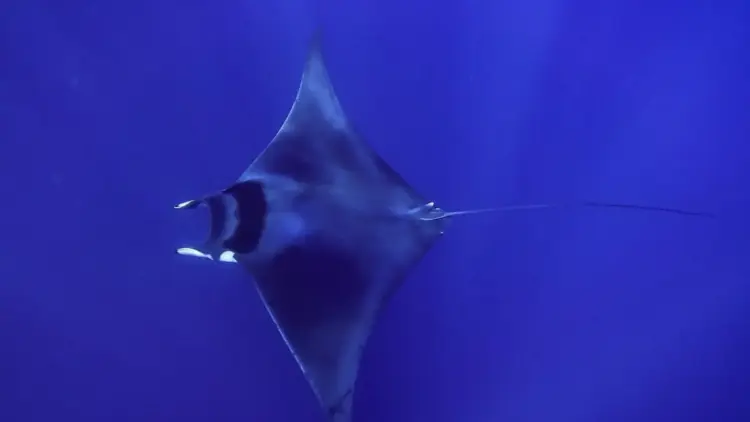
THOOTHUKUDI, India — In the turquoise depths of the Indian Ocean, the mobulid rays—manta and devil rays—glide with a prehistoric grace. Often described as the "underwater birds" of the sea, these cartilaginous fish are defined by their expansive, wing-like pectoral fins and a gentle filter-feeding nature. Yet, beneath the surface, a silent crisis is unfolding. New research spanning a decade indicates that these iconic species are hurtling toward a population collapse, driven by a combination of technological "progress" in fishing and a lack of harmonized domestic protection.
India, a nation with a vast coastline and a deep reliance on marine resources, now finds itself at a conservation crossroads. According to recent data, the country is the world’s leading contributor to mobulid mortality, accounting for more than a quarter of all global deaths. As populations of these slow-growing giants dwindle, scientists and conservationists are sounding the alarm: without immediate policy intervention, the wings of the ocean may soon disappear from Indian waters altogether.
Main Facts: India’s Role in a Global Crisis
Mobulid rays, which include both the majestic oceanic manta rays and several species of devil rays, are uniquely vulnerable to overexploitation. Unlike many bony fish that produce thousands of eggs, rays are "K-strategists." They grow slowly, mature late, and produce only one pup every two to three years. This low reproductive rate means that even moderate fishing pressure can lead to irreversible population declines.

Globally, an estimated 259,000 mobulids are killed annually. A staggering 87% of these deaths occur in just five countries: India, Indonesia, Sri Lanka, Myanmar, and Peru. India sits at the top of this list, responsible for 28.2% of the global catch. Most of these captures are attributed to small-scale fisheries—vessels that, while smaller than industrial trawlers, operate in high numbers and often overlap with the rays’ critical coastal habitats.
A seminal study recently published in Conservation Science and Practice has brought the scale of this decline into sharp focus. Researchers tracking bycatch in Thoothukudi, Tamil Nadu, between 2013 and 2023, found evidence of precipitous declines in four key species:
- Spinetail Devil Ray (Mobula mobular)
- Sicklefin Devil Ray (Mobula tarapacana)
- Oceanic Manta Ray (Mobula birostris)
- Bentfin Devil Ray (Mobula thurstoni)
The findings suggest that while more boats are in the water and more rays are being landed in total, the individual health and density of these populations are in freefall.
Chronology: A Decade of Escalating Pressure (2013–2023)
The researchers’ journey began in 2012, setting up a baseline at two primary landing sites in the Thoothukudi district: Threspuram and Tharuvaikulam. At the time, the mobulid trade was driven largely by international demand for gill plates—the feathery structures rays use to filter plankton—which are highly prized in traditional Chinese medicine.

- 2012–2014: The Baseline Period. During the initial phase of the study, researchers recorded thousands of landings. The spinetail devil ray emerged as the most frequently caught species, often entangled in drift gill nets set for tuna.
- The Technological Shift: Between 2014 and 2022, the nature of small-scale fishing in India underwent a quiet revolution. Traditional boats were replaced or retrofitted with more powerful engines and GPS technology. This allowed fishers to travel further offshore and stay at sea longer, intensifying the pressure on pelagic species.
- April 2023: Legislative Upgrades. India updated its Wildlife (Protection) Act, elevating manta rays to Schedule I status. This provided the highest level of legal protection, effectively banning the hunting or trading of the species. However, devil rays—which are biologically similar and face the same threats—were left with significantly weaker protections.
- 2023: The Comparison Study. Researchers returned to the same landing sites to compare the current state of fisheries with the 2013 data. The results were stark: while the fishing fleet had become more "efficient," the rays being caught were smaller, younger, and fewer in number per vessel.
- November 2025: International Action. All ten species of manta and devil rays were added to CITES Appendix I, a global move to prohibit commercial international trade. While a milestone for conservation, experts warned that this could inadvertently drive the trade underground or into local food markets.
Supporting Data: The Anatomy of a Collapse
The study utilized three primary metrics to assess the health of the mobulid populations: mean disc width, the ratio of adults to juveniles, and Catch Per Unit Effort (CPUE).
1. Shrinking Giants
The "mean disc width"—the distance from wingtip to wingtip—serves as a proxy for the age and health of a population. For the spinetail devil ray, the average width of landed individuals shrank by 10 centimeters over the decade. While 10cm might seem negligible in a large animal, researchers explain that this indicates a "truncation" of the population. The large, old, breeding adults are being removed, leaving behind a population dominated by smaller, immature juveniles.
2. The Juvenile Trap
The demographic shift is perhaps the most concerning data point. In 2013, adults made up 64% of the spinetail devil ray landings. By 2023, that number had plummeted to just 26%. "The age-class truncated population leaves fewer viable recovery pathways," noted Mayuri Chopra, the study’s lead author and a researcher at Oxford University. Without enough adults to produce the next generation, the population enters a "death spiral."
3. The "Efficiency" Paradox
At first glance, total ray landings in Thoothukudi actually increased by 4% over the decade. However, this figure is deceptive. When researchers looked at the Catch Per Unit Effort (CPUE)—how many rays each individual boat caught—the reality emerged. At Threspuram, landings per vessel for the spinetail devil ray fell by 86%, and for the sicklefin devil ray by a staggering 92%.

"More efficient technology or more boats will get a higher catch, but that does not mean that there are more fish in the sea," explained Divya Karnad, a senior lecturer at the University of Exeter and co-author of the study. The increase in total landings is merely a result of more boats scouring the ocean more intensely to find the few remaining rays.
Official Responses and Policy Gaps
The Indian government has made strides in marine conservation, but critics argue that policy remains "misaligned" with biology.
The Wildlife (Protection) Act (WPA) Disparity:
Under the current Indian law, there is a hierarchy of protection that scientists find baffling:
- Manta Rays: Schedule I (Maximum protection, similar to tigers).
- Sicklefin Devil Rays: Schedule II (High protection).
- Spinetail and other Devil Rays: Schedule IV (Weak protection, primarily focused on regulating international trade rather than preventing domestic catch).
This disparity creates a loophole. Because different species of devil rays look remarkably similar when processed or de-winged on a crowded pier, enforcement becomes a nightmare for overstretched forest and fisheries departments.

The CITES Limitation:
While the CITES Appendix I listing in 2025 effectively ended the legal international trade of gill plates, it does not regulate domestic consumption. Peter Kyne, a fish biologist at Charles Darwin University, points out that CITES "has no control over domestic catches or trade." In many coastal communities in India, ray meat is a source of protein, and without compensation for fishers to release bycatch, the animals are sold locally regardless of their international trade status.
Implications: A Roadmap for Recovery
The decline of mobulid rays is not just an environmental loss; it is a signal of the broader instability of India’s marine ecosystems. As apex filter feeders, rays play a crucial role in nutrient cycling. Their disappearance could trigger unforeseen "trophic cascades" that affect the very tuna fisheries the boats are trying to target.
Proposed Solutions:
The research team and conservationists have proposed several urgent measures to stem the tide:
- Uniform Protection: Upgrading all devil ray species to Schedule I of the WPA to eliminate confusion and provide a total "no-take" mandate.
- Gear Modification: Reducing the "soak time" (how long nets stay in the water) and experimenting with mesh sizes to allow rays to escape while still capturing target fish like tuna.
- Bycatch Compensation: Implementing a system where fishers are financially rewarded for cutting their nets to release live rays. Currently, a damaged net is a financial loss, incentivizing fishers to kill and keep the entangled ray to recoup costs.
- Spatial Management: Identifying "hotspots" where rays congregate for feeding or cleaning and declaring them seasonal no-fishing zones.
The Long Road Ahead:
"Population recovery of mobula rays will be on a timescale of decades rather than years," says Karnad. There is a glimmer of hope, however. The study points to the recovery of the smalltooth sawfish in the United States, which saw a significant population rebound after twenty years of strict, science-based conservation.

For India, the challenge lies in balancing the livelihoods of millions of small-scale fishers with the survival of a species that has swam the oceans for millions of years. The data from Thoothukudi is a clear warning: the wings of the sea are folding, and once they are gone, the ocean will be a much emptier place.