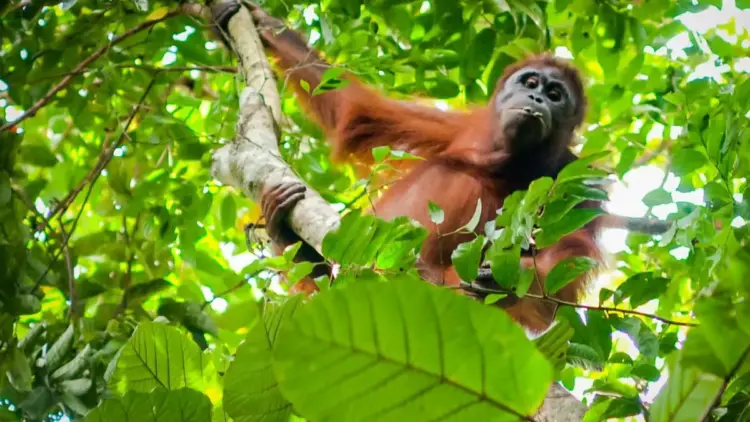
In a milestone for international wildlife conservation and diplomatic cooperation, an infant orangutan seized from a private residence in Mumbai two years ago is finally set to return to his ancestral home. On October 19, 2026, the juvenile primate will board a flight from India to Indonesia, marking the first successful repatriation of a seized CITES-listed (Convention on International Trade in Endangered Species of Wild Fauna and Flora) animal from Indian soil.
The journey of this young orangutan—from the confined spaces of a suburban apartment to the sophisticated rehabilitation centers of Sumatra—serves as a stark reminder of the burgeoning illegal trade in exotic species and the grueling procedural path required to undo the damage caused by wildlife traffickers.
The Journey Home: Main Facts of the Repatriation
The repatriation is the culmination of two years of intense bilateral negotiations, health assessments, and logistical planning. According to Yogesh Nilkand Warkad, the Assistant Management Authority of CITES in Mumbai, the operation represents a significant victory for the Indian government’s commitment to international wildlife treaties.
"This is the first successful repatriation of a seized CITES animal from India," Warkad stated. "My office did everything in our capacity to make it happen, navigating the complex legal and biological requirements necessary to ensure the animal’s safe return."
The infant, whose age was estimated at just one year when he was discovered, has spent his formative years in a state of flux. His return to Indonesia is not merely a transport operation but a handoff to the Sumatra Rescue Alliance (SRA), an organization equipped to provide the specialized care required to transition a captive-raised primate back into the wild.
A Chronology of Captivity and Recovery
The story began in late 2024 when authorities conducted a raid on a 3-BHK flat in the Palava area of Dombivli, a suburb of Mumbai. The discovery of a critically endangered orangutan alongside various exotic reptiles sent shockwaves through the local conservation community. The infant was found in an environment entirely unsuitable for a species that, in the wild, spends the first seven to nine years of its life in constant contact with its mother.
From Seizure to Zoo Care
Following the seizure, the animal was initially moved to the Gorewada Zoo in Nagpur, Maharashtra. The decision was made in consultation with Vivek Khandekar, the then Chief Wildlife Warden. However, the trauma of trafficking and the lack of maternal care soon took a toll. At approximately 18 months of age, the infant developed a severe respiratory infection—a common and often fatal ailment for young primates exposed to human pathogens and the stresses of the illegal trade.

The Vantara Interim
Recognizing the need for advanced medical intervention, authorities transferred the juvenile to Vantara, a large-scale wildlife rehabilitation and clinical facility in Jamnagar, Gujarat. Managed by the Reliance Group, Vantara provided the specialized veterinary infrastructure necessary to stabilize the infant’s health. While his stay there was criticized by some Indonesian activists as a delay in the repatriation process, Indian authorities maintained that the animal was too fragile to survive an international flight until his respiratory issues were fully resolved.
Final Clearances
By late 2026, after a series of health clearances and the finalization of CITES export-import permits between New Delhi and Jakarta, the date for his departure was set for October 19.
Supporting Data: The Dark Reality of the Primate Trade
The case of the Mumbai orangutan is not an isolated incident but a symptom of a growing trend. Conservationists have noted a sharp increase in the smuggling of non-human primates, particularly Great Apes, into India.
Trafficking Routes and Methods
Most exotic primates enter India via air routes from Southeast Asian hubs like Malaysia and Thailand. Traffickers often exploit loopholes in regional transit points. Beyond the legal violations, the biological cost is devastating. To capture a single infant orangutan, poachers almost invariably kill the mother, as female orangutans are fiercely protective and will not relinquish their young willingly.
Conservation Status
Orangutans are found only on the islands of Borneo and Sumatra. All three species—the Bornean, Sumatran, and the recently discovered Tapanuli orangutan—are classified as Critically Endangered by the IUCN. The removal of even a single individual from the wild population has long-term impacts on the genetic diversity and survival of the species.
The "Exotic Pet" Demand
The demand in India is driven by a wealthy demographic seeking "status symbols." Primates, with their human-like expressions and high intelligence, are particularly coveted. However, as these animals reach puberty, they become immensely strong, unpredictable, and often aggressive, leading owners to abandon them or keep them in increasingly cruel conditions.
Official Responses and Diplomatic Friction
The repatriation process has not been without its tensions. Panut Hadisiswoyo, the founder of the Orangutan Information Centre (OIC) in Indonesia, expressed a mixture of relief and frustration.

"We have been preparing for this moment for the last two years," Hadisiswoyo said. He noted that while the health of the animal was paramount, the move to Vantara in Gujarat was viewed by some Indonesian stakeholders as an unnecessary complication that extended the animal’s time in India.
However, Hadisiswoyo acknowledged that a turning point in the negotiations occurred following a separate incident in Odisha. The abandonment of five baby orangutans at the Nandankanan Zoological Park garnered international headlines, putting pressure on Indian authorities to streamline the repatriation of all trafficked orangutans.
"The international media blow-up following the Odisha incident changed the course of the repatriation efforts," Hadisiswoyo added. "We approached the Indian authorities again, and the dialogue became much more focused on getting these animals back to their rightful habitat."
Currently, a seven-member delegation from Indonesia, including veterinarians and primate specialists, is expected to visit India to assess the five infants in Odisha, with the hope that they will follow the Mumbai juvenile back to Sumatra in the near future.
Implications: The Path to Rewilding and Legal Reform
The successful return of the Mumbai orangutan is only the beginning of a long journey toward freedom. Upon arrival in Indonesia, the juvenile will not be immediately released into the forest.
The Jungle School Curriculum
Sinan Serhadli, a conservation scientist and adviser to the Yayasan Orangutan Sumatera Lestari (YOSL-OIC), explained the rehabilitation process. The infant will first undergo a mandatory quarantine period to ensure he carries no diseases that could infect wild populations.
Following quarantine, he will be enrolled in a "Forest School." Here, under the guidance of human surrogate mothers and alongside other rescued orangutans, he will learn the essential skills his mother would have taught him:

- Brachiation: Learning to swing and navigate the high canopy.
- Foraging: Identifying seasonal fruits, bark, and insects.
- Nest Building: Constructing a fresh sleeping platform every night.
- Socialization: Learning the complex social cues of his species.
"If all goes to plan, he can be released in the wild in about four years," Serhadli said.
Legal and Policy Shifts in India
This case has also highlighted the need for more robust domestic laws. In 2022, India amended its Wildlife Protection Act (WPA) to better align with CITES regulations, granting authorities more power to seize exotic species and prosecute those in possession of them without proper documentation. Prior to these amendments, the legal status of "non-native" wildlife was often a grey area, making it difficult for law enforcement to act.
Setting a Precedent
The Indonesian authorities hope this repatriation sets a permanent precedent. "We demand processes are in place to combat international illegal wildlife trade that facilitate the transport and trade of animals to other countries," Hadisiswoyo emphasized.
The successful return of this one juvenile is a victory for the rule of law and conservation ethics. However, as he prepares to board his flight on October 19, the message from the global conservation community is clear: the focus must shift from reactive repatriations to proactive prevention, ensuring that no more orangutan mothers are killed to satisfy the demands of the illegal pet trade.
For the infant from the Mumbai apartment, the concrete walls of the Palava flat are now a distant memory. Ahead lies the humid, verdant expanse of the Sumatran rainforest—the only place where an orangutan truly belongs.