

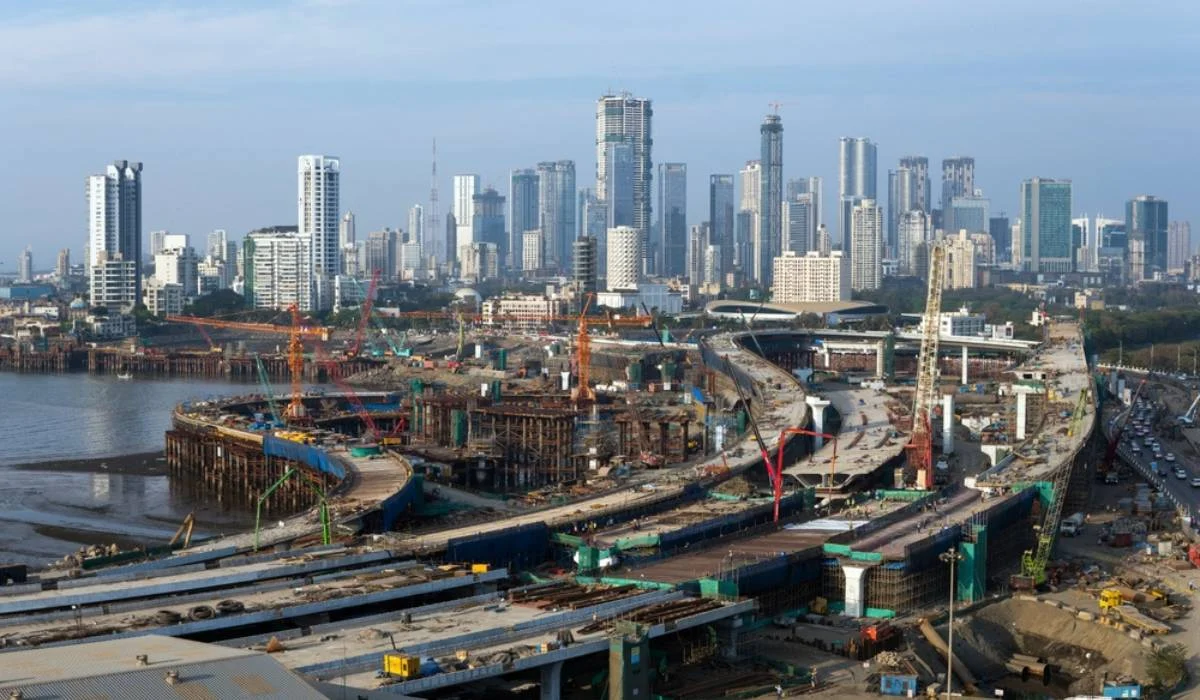
MUMBAI – For decades, the narrative of Mumbai’s real estate market was one of geographic scarcity and historical prestige. The "Island City," anchored by the elite enclaves of South Mumbai, held an undisputed monopoly on luxury. However, a seismic shift is underway. Driven by an unprecedented blitz of infrastructure projects—ranging from sprawling Metro networks to trans-harbour links and coastal freeways—the city’s real estate story is being rewritten.
In today’s Mumbai, infrastructure is no longer merely a utility designed to ease congestion; it has become the primary architect of capital appreciation and the chief arbiter of where the next "premium" addresses will emerge. As travel times collapse and connectivity expands, the very definition of "prime" real estate is evolving, favoring suburban micro-markets that offer a blend of modern lifestyle and rapid accessibility.
1. Main Facts: The Infrastructure-Led Paradigm Shift
The fundamental driver of Mumbai’s current real estate cycle is the "infrastructure-first" approach to urban development. Historically, real estate prices in Mumbai were dictated by proximity to the Central Business Districts (CBDs) of Nariman Point and later, Bandra-Kurla Complex (BKC). Today, that logic is being replaced by "proximity to connectivity."
According to recent market analytics, including the Mumbai Property Exchange infra-impact tracker, infrastructure developments are now the single most significant catalyst for property value spikes. The data suggests that residential markets within a 1-kilometer radius of a newly operational Metro station typically experience a 20% to 35% price appreciation within just 24 months of the line opening.
This phenomenon is most visible in the Western Suburbs and Navi Mumbai. The traditional barriers—long commute times and "suburban" stigmas—are evaporating. High-Net-Worth Individuals (HNIs) and the upwardly mobile middle class are increasingly looking at areas like Borivali, Kandivali, and Ulwe not as distant outposts, but as strategic residential hubs. The shift is characterized by a move away from the structural constraints of South Mumbai toward integrated townships that offer space, air, and modern amenities.
2. Chronology: From Gridlock to Grand Projects
To understand the current boom, one must look at the timeline of Mumbai’s infrastructure evolution, which has accelerated significantly over the last five years.
- The Pre-2014 Era (The Constraint Phase): For years, Mumbai relied almost exclusively on its overstretched Suburban Railway network (the "Lifeline"). Real estate growth followed the north-south axis of the trains, leading to extreme density and skyrocketing prices in the south.
- 2014–2020 (The Metro Seedling Phase): The launch of Metro Line 1 (Versova-Andheri-Ghatkopar) served as a proof of concept. It demonstrated how east-west connectivity could transform property values in previously neglected pockets of Andheri and Ghatkopar.
- 2022–2023 (The Western Awakening): The commissioning of Metro Lines 2A and 7 marked a turning point for the Western Suburbs. By connecting Dahisar to Andheri on both the Link Road and Western Express Highway sides, these lines brought "predictability" to commutes. This period saw a 15–20% surge in prices in the Borivali-Kandivali belt.
- 2024 (The Connectivity Explosion): The inauguration of the Atal Setu (Mumbai Trans Harbour Link – MTHL) and the partial opening of the Mumbai Coastal Road have fundamentally altered the city’s geography. The MTHL has slashed the commute from Sewri to Navi Mumbai from 90 minutes to 20, while the Coastal Road has brought the Western Suburbs within a 15-minute drive of South Mumbai.
- 2025 and Beyond (The Airport & Beyond): The upcoming Navi Mumbai International Airport (NMIA) is expected to be the next major milestone, transitioning Navi Mumbai from a residential satellite into a global commercial and logistics hub.
3. Micro-Market Analysis: The Rise of the New Luxury Corridors
The Western Suburbs: Goregaon to Borivali
The western corridor is the primary beneficiary of the Metro-Coastal Road synergy. Traditionally viewed as upper-middle-class residential zones, micro-markets like Goregaon, Malad, Kandivali, and Borivali have officially entered the luxury bracket.
Developers in these areas are no longer just building apartments; they are building "lifestyle ecosystems." Because these suburbs offer larger land parcels than the land-locked South Mumbai, projects here feature wellness zones, private amenity decks, and sprawling gated communities. The demand is driven by a new generation of buyers who prioritize "living better" over "living in a legacy zip code."
Navi Mumbai: The MTHL and Ulwe-Panvel Effect
The Mumbai Trans Harbour Link (Atal Setu) has been a game-changer for the eastern seaboard. By providing a direct link to South Mumbai, it has unlocked the potential of Navi Mumbai’s "Golden Triangle"—Ulwe, Panvel, and Dronagiri.
The Mumbai Property Exchange tool estimates a staggering 30–40% price uplift in these emerging markets. What was once considered "the outskirts" is now being viewed as a viable alternative for professionals working in South Mumbai who desire modern infrastructure at a fraction of the cost of the Island City.
4. Supporting Data: The Mathematics of Capital Appreciation
Data from the Mumbai Property Exchange infra-impact tracker provides a quantitative look at how these projects influence the market:
| Infrastructure Project | Impacted Micro-Markets | Travel Time Reduction | Estimated Price Impact |
|---|---|---|---|
| Metro Lines 2A & 7 | Borivali, Kandivali, Dahisar | 30–45 Minutes | 15% – 20% |
| Mumbai Coastal Road | Worli, Bandra, Goregaon | 60 mins to 15 mins | 15% – 25% |
| Atal Setu (MTHL) | Ulwe, Panvel, Navi Mumbai | 90 mins to 20 mins | 30% – 40% |
| Upcoming NMIA | Panvel, Kharghar | N/A (New Hub) | High (Long-term) |
Beyond price appreciation, the data shows a significant uptick in "absorption rates" (the speed at which new units are sold) in projects located within 500 meters of Metro stations. In the last fiscal year, premium projects in the Western Suburbs saw a 25% faster turnaround compared to similar projects in areas with poor transit connectivity.
5. The Shift to Integrated Developments
A critical component of this real estate evolution is the rise of the "Integrated Development" or "Township" model. In the legacy markets of South Mumbai, luxury is often vertical—standalone towers with limited ground-level space. In the expanding suburban markets, luxury is horizontal and holistic.
High-income buyers are increasingly leaning toward environments that offer:
- Security and Privacy: Gated communities with multi-tier security.
- Open Spaces: Large landscaped gardens, jogging tracks, and pet parks.
- Social Infrastructure: In-house clubhouses, mini-theatres, and sports academies.
- Convenience: Retail kiosks and co-working spaces within the development.
As the Director of CCI Projects notes, the conversation has shifted from "living closer to the city" to "living better within the city." For a growing segment of buyers, the ability to have a 5-acre garden and a world-class gym at their doorstep in Borivali outweighs the prestige of a cramped apartment in a heritage building in Colaba.
6. Official and Expert Perspectives
Industry experts and developers agree that Mumbai is entering a "Golden Age" of urban planning.
"Infrastructure is no longer a supporting layer; it is the direct driver of capital appreciation," says a leading industry analyst. "We are seeing a compounding effect. When you open a Metro line and a Coastal Road simultaneously, you aren’t just easing traffic; you are shifting the economic center of gravity of the entire metropolitan region."
Urban planners point out that the Navi Mumbai International Airport will create a "secondary ecosystem" similar to what was seen around international airports in cities like Dubai or Singapore. This includes hospitality hubs, warehousing, logistics, and Grade-A office clusters. This commercial expansion will, in turn, create a secondary wave of residential demand, particularly for integrated developments that can support the lifestyle needs of a global workforce.
The consensus among developers is that the "island city" mentality is fading. The focus is now on the "Mumbai Metropolitan Region" (MMR) as a single, interconnected economic unit.
7. Implications: The Future of the Mumbai Skyline
The implications of this infrastructure-led growth are profound and long-lasting:
Decentralization of Luxury
Luxury is no longer a geographic term in Mumbai; it is a qualitative one. As infrastructure bridges the gap between the suburbs and the CBDs, the premium for South Mumbai addresses may stabilize, while the "undervalued" suburbs see continued aggressive growth. This democratizes luxury housing, making high-end living accessible to a broader range of successful professionals.
The Rise of the "15-Minute City"
The goal of the current infrastructure blitz is to create a "15-minute city" where work, home, and leisure are all within a short commute. The Metro and Coastal Road are making this a reality for the Western Suburbs, while the MTHL is doing the same for Navi Mumbai.
Institutional Investment
The predictability brought by infrastructure is attracting institutional investors and Real Estate Investment Trusts (REITs). When connectivity is guaranteed, the risk associated with suburban projects drops significantly, leading to more stable and sustained capital growth.
Conclusion
Mumbai’s real estate market is in the midst of a historic transformation. The city is shedding its reputation for crippling congestion and embracing a future defined by fluid movement and integrated living. For investors and homebuyers alike, the message is clear: follow the tracks, the roads, and the flight paths. The luxury housing market is no longer confined to a few narrow streets in the south; it is spreading across the city’s new infrastructure corridors, where the quality of life finally matches the ambition of its residents.
As the multiple large-scale projects unfolding today reach full completion, the compounding effect on sentiment and property value will likely cement this decade as the most transformative in the history of Mumbai’s built environment.
