

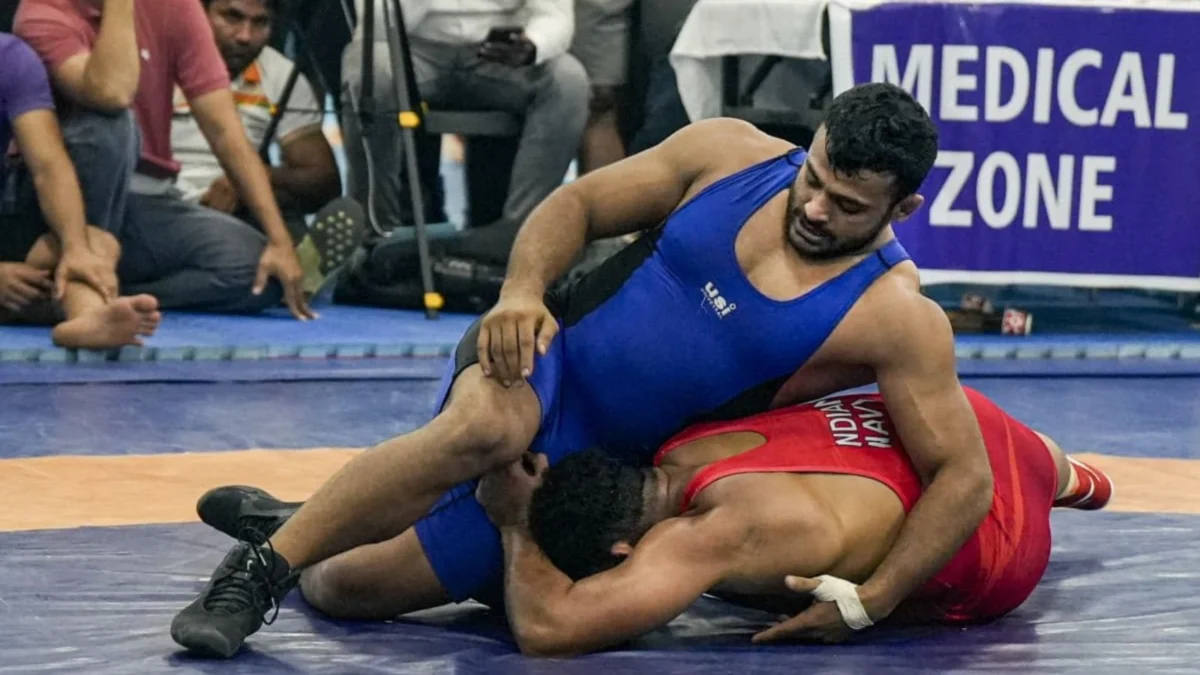
Lucknow, India – May 31, 2026 – In a remarkable display of grit and unwavering determination, Tokyo Olympian wrestler Deepak Punia has defied a challenging two-year period marred by a series of misfortunes, securing his coveted spot in the Indian contingent for the upcoming Asian Games. Competing in an unfamiliar 97kg weight category due to a recent muscle injury, Punia dominated the fiercely contested trials held in Lucknow on Sunday, culminating in a decisive pinfall victory in the final. His triumph not only marks a personal comeback but also injects a potent dose of experience and resilience into the Indian wrestling squad.
Punia’s journey to this qualification has been anything but straightforward. From a heartbreaking missed flight that cost him a potential Olympic berth in 2024, to a debilitating injury post-World Championships in 2025, and now a last-minute weight category change in 2026, the celebrated grappler has faced a relentless barrage of setbacks. Yet, on the hallowed mats of Lucknow, he transformed adversity into advantage, showcasing an adaptable strategy and an unyielding spirit that saw him conquer younger, formidable opponents. This hard-won qualification is not merely a ticket to the Asian Games; it is a testament to the enduring power of perseverance in the face of monumental odds.
A Chronology of Challenges and Triumphs
Deepak Punia’s career, while decorated, has recently been a crucible of trials, testing his physical and mental fortitude to their limits. His journey to the 2026 Asian Games trials is best understood through the lens of these sequential challenges and his ultimate, inspiring resurgence.
A Fateful Series of Misfortunes
The period between 2024 and 2026 has been particularly trying for Punia, a time marked by unexpected twists of fate that threatened to derail his illustrious career.
The 2024 Olympic Qualifiers Debacle: The most stinging setback occurred in 2024, when a logistical mishap—a missed flight—prevented him from participating in a crucial Olympic qualifier. This incident wasn’t just a minor travel inconvenience; it was a profound blow to an athlete who had dedicated years to the pursuit of Olympic glory. The emotional toll of missing a potential berth due to circumstances outside the wrestling arena was immense. Reports at the time spoke of Punia’s utter dejection, as the meticulous preparation, the grueling training camps, and the sacrifices made seemed to vanish in the face of a bureaucratic or travel misstep. Missing such a critical opportunity can often lead to a crisis of confidence, questioning the very path an athlete has chosen. For Punia, it became a harsh lesson in external variables dictating athletic destiny.
The 2025 Post-World Championships Injury: Just as Punia was striving to regain his rhythm and put the 2024 disappointment behind him, another major hurdle emerged in 2025. Following the intensity of the World Championships, he suffered an injury that sidelined him for a significant period. While the specific nature of the injury wasn’t detailed, such setbacks often involve muscle tears, ligament damage, or joint issues common in high-impact sports like wrestling. The recovery process is not just physical; it involves overcoming the psychological frustration of being unable to train, watching competitors advance, and battling the fear of never returning to peak form. This period of forced inactivity disrupted his competitive calendar, affecting his rankings and his ability to participate in crucial preparatory tournaments. It added another layer of doubt to his journey, making a comeback seem increasingly arduous.
The 2026 Weight Category Shift: A Forced Adaptation: The most recent challenge, and perhaps the most immediate catalyst for his Asian Games trials performance, was a muscle injury sustained just days before the Lucknow trials. Punia revealed, "I didn’t want to change the weight category. I was prepared for the 86 kg category, but for six days, due to a muscle tear, I couldn’t train. My weight was around 92 kg. As I had no option apart from recovery, I decided to go for the 97 kg category." This sudden pivot from his preferred 86kg (or even the 92kg he had competed in previously) to the heavier 97kg category was a desperate measure. It signified a strategic gamble, a forced adaptation driven by the immediate necessity of competing despite an injury that hampered his ability to cut weight for his usual class. This decision underscored his profound commitment to wrestling and his refusal to yield, even when dealt a difficult hand.
Resurgence in Lucknow: The Asian Games Trials
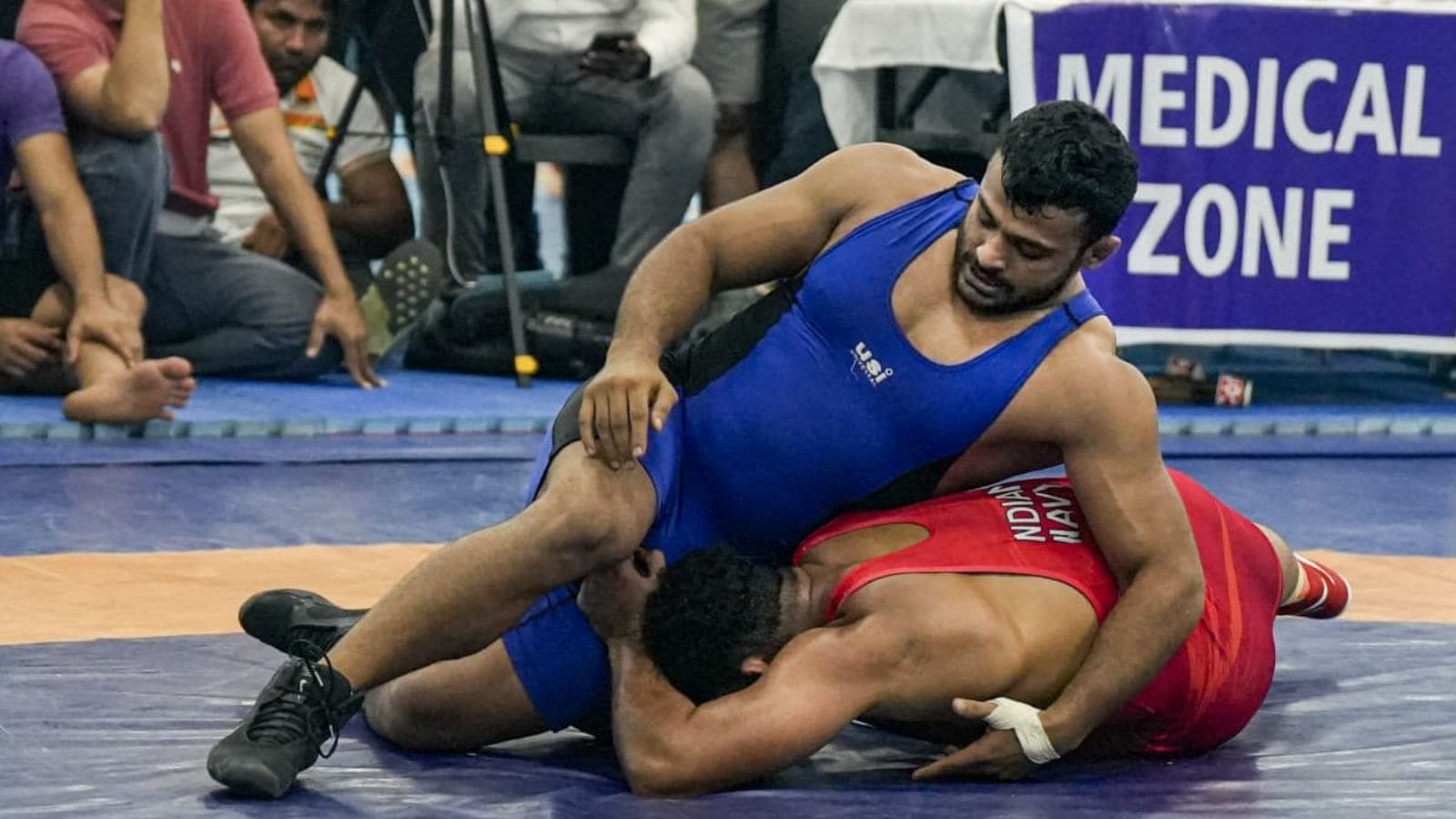
Against this backdrop of continuous adversity, Deepak Punia arrived in Lucknow for the Asian Games trials, not in his ideal condition or weight class, but with an unwavering resolve. His performance was a narrative of strategic wrestling, mental fortitude, and a gradual assertion of dominance.
A Rusty Start, Quick Adaptation: Punia’s first bout against Sahil Jaglan in the 97kg category showed signs of the recent challenges. He admitted to being "a little rusty," understandable given the injury and the unfamiliar weight. However, his experience shone through, as he secured a 4-0 victory, taking it "one bout at a time" as per his plan. This initial win was crucial, allowing him to shake off the rust and find his rhythm.
Gaining Momentum: In his second bout, Punia showcased his returning form, pinning his namesake, Deepak Chahal. A pinfall victory is a decisive statement in wrestling, demonstrating not just technical superiority but also raw power and control. This win propelled him into the semi-finals, building his confidence with each passing round.
Experience Over Youth: The Semi-final Against Vicky Hooda: The semi-final pitted Punia against Vicky Hooda, the recently crowned U-23 Asian Champion and one of the rising stars in the category. This was a critical test, pitting Punia’s veteran experience against Hooda’s youthful exuberance and emerging talent. Punia, looking much sharper, utilized his seasoned understanding of the sport, expertly countering Hooda’s multiple takedown attempts. He secured a commendable 7-3 victory, reversing two crucial pushouts and demonstrating superior tactical awareness. This bout was a masterclass in how an experienced wrestler can control the tempo and negate an opponent’s strengths, even when transitioning to a new weight class.
The Decisive Pin: Securing the Berth: The final match saw Punia facing Jointy Kumar. By this point, Punia had fully acclimatized to the demands of the 97kg category and the intensity of the trials. He delivered a dominant performance, culminating in a decisive pinfall victory. This triumph was not just a win; it was a powerful declaration of his return to form and his unwavering commitment to representing India. The pinfall was a fitting conclusion to a day that began with uncertainty but ended in resounding success, booking his ticket to the Asian Games.
Supporting Data and Technical Insights
Deepak Punia’s successful transition to the 97kg category, even under duress, offers valuable insights into the technical and strategic nuances of wrestling, as well as the critical role of expert guidance.
The Tactical Switch: Adapting to 97kg
The decision to move from 86kg or 92kg to 97kg is not a trivial one in competitive wrestling. Each weight category demands a specific blend of strength, speed, endurance, and technique.
- Physiological Adjustments: Competing in a heavier category means facing larger, inherently stronger opponents. Punia, typically accustomed to the agility and explosiveness required in 86kg, had to quickly adapt his body mechanics. While he had trained at around 92kg, the jump to 97kg meant he couldn’t rely solely on superior conditioning developed for a lighter class. Instead, he had to leverage his natural strength and find new ways to generate power and maintain stability against heavier frames. The "muscle tear" that prevented weight cutting also meant he was competing with a body that wasn’t fully optimized for the new category, making his performance even more commendable.
- Technical Refinements: Punia’s own admission of needing "small changes" is indicative of the tactical adjustments required. In heavier categories, wrestlers often employ more fundamental, power-based techniques rather than rapid, intricate maneuvers. This might involve:
- Lowering his center of gravity: To better resist takedowns and maintain balance against stronger pushes.
- Focusing on foundational holds: Emphasizing control from the clinch, underhooks, and overhooks, which are more effective in mitigating brute strength.
- Strategic engagement: Avoiding prolonged scrambling situations where a heavier opponent might have an advantage, and instead focusing on decisive, high-percentage attacks.
- Increased core strength and stability: Essential for managing the force of heavier opponents and executing throws or lifts.
- Expert Opinion on Weight Transitions: Wrestling coaches often highlight that while moving up a weight class can sometimes relieve the stress of severe weight cutting, it introduces the challenge of competing against physically larger and often slower but more powerful opponents. A successful transition, as Punia demonstrated, requires exceptional adaptability, a deep understanding of wrestling fundamentals, and the mental fortitude to trust one’s technique against unfamiliar physical profiles. His ability to reverse pushouts and defend against takedowns, especially against a powerful youngster like Vicky Hooda, showcased his inherent wrestling IQ translating across categories.
The Role of Coaching and Mentorship
Punia’s success was not a solitary effort; the guidance from his coaching team, particularly Russian coach Azamat, played a pivotal role.
- Azamat’s Strategic Input: Azamat, hired by the Services Sports Control Board, provided crucial guidance during the trials. While Punia primarily trains at Chhatrasal, the relationship with Azamat highlights the value of continuous consultation and strategic input from diverse coaching backgrounds. During the semi-final against Vicky Hooda, Azamat’s advice was specific and impactful: "He asked me to not give him any chance to push me out or attack my legs." This demonstrates an acute understanding of Hooda’s style and a clear strategy to neutralize his strengths. By denying leg attacks and preventing pushouts, Punia was able to control the scoring opportunities and dictate the flow of the bout, leveraging his experience.
- Synergy in Training: The planned training sessions with Azamat ahead of the Asian Games signify a more formalized collaboration. Azamat’s observation, "I haven’t trained Deepak yet but he is a good wrestler," indicates a fresh perspective that can be highly beneficial. Combining Azamat’s strategic insights with Punia’s proven abilities and the potential addition of freestyle coach Bentindis Shako, who "knows my game," promises a comprehensive and tailored preparation strategy. Shako’s prior experience with Punia means a shorter acclimatization period and a quicker path to refining techniques specific to his style, now adapted for the 97kg category. This multi-coach approach suggests a concerted effort to maximize Punia’s potential for the Asian Games.
Official Responses and Regulatory Context
Deepak Punia’s participation in the Asian Games trials was not guaranteed until a crucial decision by the Wrestling Federation of India (WFI), highlighting the importance of regulatory frameworks in athlete pathways.
Navigating Eligibility Hurdles
Initially, Punia faced an eligibility challenge that could have prevented him from even competing in the trials.
- The Eligibility Conundrum: Punia’s absence from the Federation Cup and the National Championships, key events for WFI eligibility, made him initially ineligible for the Asian Games trials. His only recent competitive outing was in the 92kg category at the National Ranking Series. This rule is typically in place to ensure consistent participation and fair selection processes, rewarding athletes who consistently compete at the national level.
- WFI’s Crucial Intervention: A pivotal decision by the Wrestling Federation of India on May 27 changed the landscape for Punia and others. The WFI announced that medalists at the National Ranking Series would be eligible for the trials. This ruling proved to be a lifeline for Punia, whose performance at the Ranking Series allowed him to bypass the previous eligibility requirements. This demonstrates the WFI’s flexibility and willingness to adapt rules to ensure top talent, particularly those who might have faced injury or other unforeseen circumstances, still get a fair chance to compete for national representation. It prevents potentially strong contenders from being excluded on technicalities, especially in a dynamic sport like wrestling where injuries can frequently disrupt competitive schedules.
Federation’s Stance and Future Support
While specific quotes from WFI officials regarding Punia’s situation were not provided, the decision to amend the eligibility criteria implicitly signals the federation’s support for elite athletes.
- Support for Elite Talent: The WFI’s decision reflects an understanding that experienced athletes like Punia, despite recent setbacks, remain valuable assets for India on the international stage. Ensuring their participation in trials, where they can prove their current form, is vital for fielding the strongest possible team. This pragmatic approach benefits not only the individual athlete but also the national contingent aiming for medals.
- Upholding Fair Play and Opportunity: The rule amendment, while seemingly tailored, likely aims to strike a balance between maintaining competitive integrity (through participation in national events) and providing opportunities for proven performers who might have legitimate reasons for missing certain tournaments. Such decisions are crucial for maintaining athlete morale and fostering a competitive yet supportive environment within the national wrestling ecosystem. The WFI’s continued engagement and provision of coaching resources, such as the Services Sports Control Board’s hiring of Azamat, further underscore their commitment to athlete development and success.
Implications and Future Outlook
Deepak Punia’s triumph at the Asian Games trials carries significant implications, not only for his personal career trajectory but also for the broader landscape of Indian wrestling.
The Road Ahead: Asian Games and Beyond
Punia’s qualification for the 97kg category at the Asian Games sets the stage for a formidable challenge, but also presents a unique opportunity.
- A New Arena of Competition: The 97kg category at the Asian Games is fiercely competitive, boasting world-class talent. Punia will likely face established powerhouses such as Arash Yoshida of Japan and Akhmed Tazhudinov, representing Bahrain. Tazhudinov, in particular, is a formidable opponent, known for his aggressive style and world-championship pedigree. Yoshida also brings strong technique and international experience. Punia’s ability to adapt to the higher weight class and counter these elite wrestlers will be a true test of his strategic acumen and physical conditioning. His confidence, despite acknowledging these strong competitors, is a positive sign.
- Strategic Coaching Integration: The planned collaboration with freestyle coach Bentindis Shako, who "knows my game," combined with Azamat’s guidance, suggests a tailored approach to maximize Punia’s performance. This integrated coaching strategy will be crucial in refining his technique, building specific strength for the 97kg class, and devising bout-specific tactics against his Asian Games rivals. The short lead-time to the Games means intense, focused training will be paramount.
- Olympic Aspirations: While the immediate focus is the Asian Games, this performance has significant implications for Punia’s Olympic aspirations. The 97kg category is an Olympic weight class in men’s freestyle wrestling. A strong showing at the Asian Games could potentially pave a clearer path to the next Olympic cycle, offering him crucial ranking points, competitive exposure, and renewed confidence to challenge for an Olympic berth in this new category, potentially mitigating the disappointment of 2024. This could be a strategic, long-term move rather than just a temporary adjustment.
A Beacon of Resilience for Indian Wrestling
Deepak Punia’s journey from a series of misfortunes to a triumphant qualification serves as a powerful narrative of resilience, inspiring not only his teammates but also the next generation of Indian wrestlers.
- Inspiration for the Squad: His ability to overcome injuries, eligibility issues, and a last-minute weight change speaks volumes about his character and dedication. This narrative of perseverance can galvanize the entire Indian wrestling contingent, instilling a belief that challenges can be overcome through sheer will and strategic adaptation.
- Strong Indian Contingent: Punia is not alone in his qualification. The inclusion of Paris Olympic medallist Aman Sehrawat in the 57kg category and U23 World Champion Sujeet Kalkal (despite a knee injury) in the 65kg category indicates a strong and talented freestyle squad. Their individual achievements, coupled with Punia’s experienced presence, promise a competitive showing for India at the Asian Games. The full squad for both Freestyle and Greco-Roman categories reflects a broad base of talent, with athletes like Sagar Jaglan (74kg), Mukul Dahiya (86kg), and Rajat Ruhal (125kg) completing the freestyle lineup, alongside a robust Greco-roman team.
- Forward Momentum for the Sport: Punia’s comeback story, alongside the success of other qualifiers, underscores the depth and potential within Indian wrestling. It highlights the importance of robust support systems, flexible federation policies, and dedicated coaching in nurturing and sustaining elite athletic careers. As Punia looks forward to the Asian Games, his journey is a testament to the enduring spirit of sport—a reminder that even after stumbling, with courage and determination, one can always rise again to pursue glory. His quest for an Asian Games medal in this new chapter of his career will undoubtedly be watched with great anticipation.
