

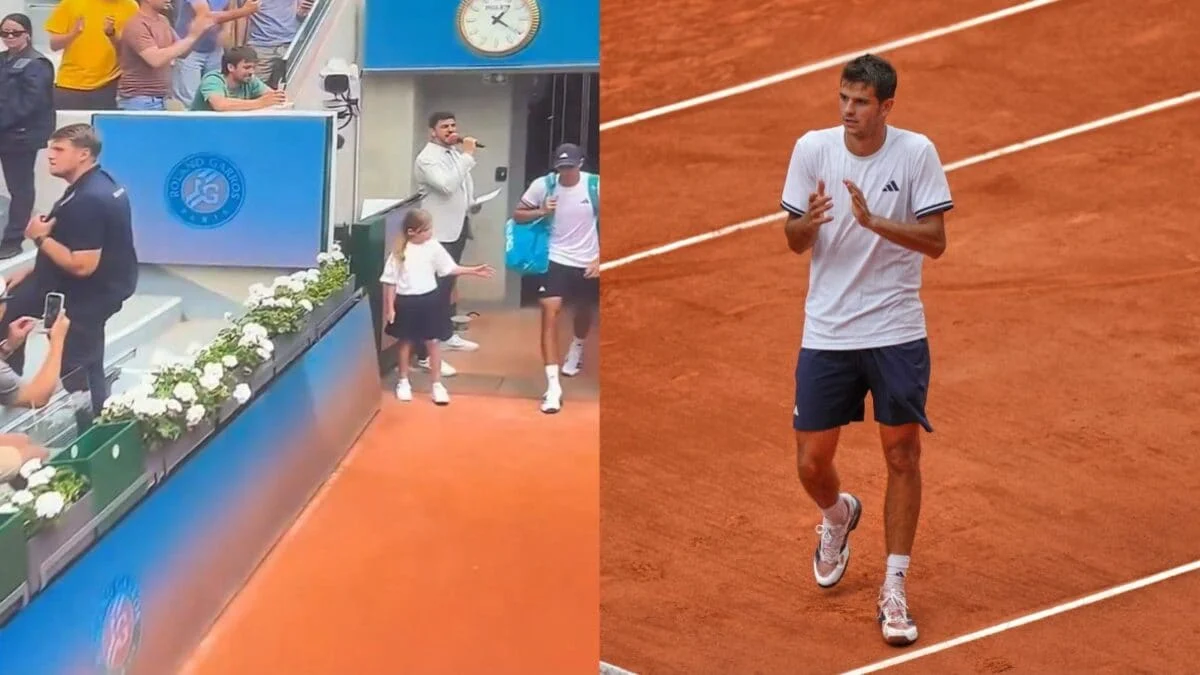
Paris, France – May 31, 2026 – Spanish tennis sensation Rafael Jodar finds himself at the epicenter of a burgeoning controversy at Roland Garros, following a widely circulated video depicting him apparently ignoring a young mascot during a recent walk-out. This incident has ignited a fervent online debate, intensifying scrutiny on Jodar, who was already under fire for a similar, albeit more ambiguous, interaction with a ball girl just days prior. The successive viral clips have thrust the rising star into an unwelcome spotlight, raising questions about player conduct, the intense pressures of Grand Slam tennis, and the unforgiving lens of modern media.
The Mascot Incident: A Viral Moment
The latest episode, which occurred before a key match on Court Philippe Chatrier, has quickly become a flashpoint. Videos, disseminated across social media platforms like wildfire, show Jodar striding onto the court, head down, seemingly oblivious to the outstretched hand of a young female mascot. The child, visibly enthusiastic and holding a small French Open flag, extended her hand in anticipation of a customary greeting from the player she was accompanying. Jodar, however, continued his focused walk, his gaze fixed forward, leaving the young girl’s hand hanging in the air.
The immediate aftermath captured on camera showed a fleeting moment of disappointment on the mascot’s face, quickly masked by her professional demeanor. While some viewers posited that Jodar’s intense focus, a hallmark of elite athletes preparing for competition, might have rendered him genuinely unaware of the gesture, the optics were undeniably poor. Within hours, the clip had garnered millions of views, with commentators and fans alike weighing in on the perceived snub. Hashtags related to Jodar’s conduct began trending, eclipsing discussions about his impressive on-court performance.
A Pattern Emerges: The Ball Kid Encounter
This recent incident gained magnified traction precisely because it followed another widely discussed interaction involving Jodar and a ball kid earlier in the tournament. In that previous episode, a video circulated showing Jodar brushing past a ball girl as he exited the court, seemingly moving her aside. The initial reaction was one of condemnation, with many interpreting the action as dismissive or even aggressive.
However, subsequent analysis of alternative camera angles presented a more nuanced picture. These angles suggested that Jidar, frustrated after a challenging point or game, had tossed a water bottle towards his support team, perhaps without full awareness of his immediate surroundings. Simultaneously, the ball girl, performing her duties, appeared to slip on the court’s tarp as she moved to her designated position near the backboard fence. The confluence of these events created an impression of deliberate contact, which, upon closer inspection, seemed more accidental than intentional. Despite the clarifying footage, the initial impression lingered, fueling the narrative of a player potentially lacking in decorum.
Chronology of Controversy
The timeline of these events underscores the rapid escalation of public sentiment and media scrutiny:
- May 26, 2026: The first incident involving Jodar and a ball girl goes viral following his first-round match. Initial public outcry is significant, leading to widespread debate.
- May 27, 2026: Alternative camera angles emerge, offering a different perspective on the ball girl incident, suggesting accidental contact rather than deliberate action. Jodar addresses the media, vehemently denying any intentional misconduct and expressing his respect for ball kids and officials.
- May 30, 2026: The second incident occurs, where Jodar appears to ignore a child mascot during his walk-out for a subsequent match. This video quickly goes viral, reigniting and intensifying the previous controversy.
- May 31, 2026: The dual controversies dominate sports news cycles and social media. Calls for clarification from Jodar and tournament organizers grow louder, overshadowing his progress in the French Open.
The Scrutiny of the Digital Age: Social Media’s Verdict
The power of social media to amplify and accelerate controversies is undeniable, and Jodar’s situation serves as a stark example. The initial ball girl clip, viewed over 15 million times in its first 24 hours, set the stage. The mascot video, quickly surpassing similar metrics, poured fuel on an already smoldering fire. Platforms like X (formerly Twitter), Instagram, and TikTok became digital battlegrounds, with users dividing into camps of criticism and defense.
Critics argued that regardless of intent, Jodar’s actions demonstrated a lack of awareness and empathy, particularly towards young, enthusiastic participants for whom these interactions are often a dream come true. Many called for a formal apology or even a fine, citing the importance of sportsmanship and setting a positive example. Conversely, Jodar’s defenders pointed to the immense pressure of Grand Slam tennis, the intense focus required before a match, and the possibility of genuine oversight. They argued against the "cancel culture" mentality, urging for context and understanding rather than snap judgments based on short, decontextualized clips. The debate transcended the immediate incidents, delving into broader discussions about athlete behavior, the nature of celebrity, and the ethics of online judgment.
Supporting Data and Expert Perspectives
To truly understand the complexities of these incidents, it’s essential to consider various factors, from athlete psychology to the established traditions of Grand Slams.
The Psychology of the Elite Athlete
Dr. Elena Petrov, a renowned sports psychologist who has worked with several top-tier tennis players, offered insight into the mental state of athletes before a major match. "The level of focus required to compete at a Grand Slam is almost unfathomable to the average person," Dr. Petrov explained in an interview. "Players enter what we call a ‘performance tunnel.’ Every sensory input is filtered through the lens of the upcoming competition. Their minds are strategizing, visualizing, and managing adrenaline. In such a heightened state, external stimuli that aren’t directly related to their performance can genuinely go unnoticed, not out of disrespect, but out of an extreme, almost primal, instinct to prepare."
She emphasized that while an oversight is never ideal, it rarely stems from malicious intent. "It’s about optimizing their mental state for peak performance. Sometimes, this can inadvertently lead to social missteps. The expectation that an athlete must be perfectly ‘on’ both socially and athletically at all times is incredibly demanding."
Tradition and Respect: The Role of Ball Kids and Mascots
The roles of ball kids and mascots at major tennis tournaments are deeply entrenched traditions, designed to enhance the spectacle and provide unique opportunities for young enthusiasts. These children often undergo rigorous training, demonstrating discipline, agility, and a profound love for the sport. For many, walking onto a Grand Slam court with a professional player is a once-in-a-lifetime experience, a dream realized.
Historically, interactions between players and these young participants have ranged from warm gestures like high-fives and words of encouragement to playful banter. These moments often become cherished memories for the children and contribute to the positive image of the sport. The French Open, in particular, prides itself on fostering a family-friendly atmosphere, making incidents that appear to deviate from this tradition particularly jarring for some spectators. Tournament director Amélie Mauresmo, while not commenting directly on Jodar, has previously spoken about the invaluable contribution of the ball kids and mascots, referring to them as "the heart of our event."
Historical Precedents in Player Conduct
While Jodar’s recent incidents have sparked intense debate, the history of tennis is replete with examples of player conduct, both commendable and controversial, towards officials and young helpers. In 2018, Argentinian player Diego Schwartzman famously paused his match at the US Open to console a ball boy hit by a stray serve, earning widespread praise. Conversely, players like John McEnroe in the 1980s were legendary for their fiery temperaments and occasional outbursts towards officials, though these were rarely directed at ball kids.
More recently, Nick Kyrgios has faced criticism for perceived disrespect towards line judges and umpires. These examples highlight the ongoing tension between the passion and intensity required for elite competition and the expectations of sportsmanship and respect. The current era, with ubiquitous cameras and instant global dissemination of footage, simply magnifies these moments, making every gesture and expression subject to unprecedented scrutiny.
Official Responses and Player’s Defense
Following the initial ball girl incident, Rafael Jodar addressed the media directly, expressing his dismay at the misinterpretation of his actions. "I would never intentionally disrespect anyone, especially a child," Jodar stated firmly. "My focus on court is absolute, and sometimes, in the heat of the moment, things can happen that are not intentional. I have the utmost respect for all the ball kids and mascots; they are crucial to our sport." His team later released a more formal statement, reiterating Jodar’s commitment to sportsmanship and highlighting his previous charitable work with youth sports organizations, aiming to paint a more complete picture of his character.
As of the latest update, official responses from the French Open organizers or the ATP have been measured. While no specific disciplinary action against Jodar has been announced, sources within the French Tennis Federation indicate that player conduct is a matter consistently reviewed. "The well-being and positive experience of our ball kids and mascots are paramount," an unnamed tournament official commented. "We routinely remind players of the importance of these interactions, and any incidents are reviewed internally to ensure our standards of sportsmanship are upheld." The ATP, the governing body of men’s professional tennis, typically reserves public comment for more severe infractions, often preferring to handle such matters through private channels or educational initiatives.
Jodar’s Roland Garros Campaign: Pressure Cooker Environment
These controversies unfold against the backdrop of Rafael Jodar’s challenging maiden Roland Garros campaign. The original article notes his "marathon encounters," including a grueling five-set victory against fellow Spaniard Pablo Carreño Busta. This match was further complicated by an unseasonal heatwave in the opening week, followed by intermittent rain delays, creating a physically and mentally draining environment for all competitors.
Such conditions amplify the inherent pressures of a Grand Slam. Players are not only battling opponents but also extreme weather, scheduling disruptions, and the relentless demands of a multi-week tournament. The mental fortitude required to navigate these challenges often leads to a highly internalized and focused state, particularly before and during matches. It is plausible that Jodar’s laser-like focus, a quality essential for his competitive success in these arduous circumstances, inadvertently contributed to the perceived oversights. The energy expended in these lengthy battles could leave a player with little mental bandwidth for anything beyond the immediate task of winning.
Implications: Beyond the Court
The Rafael Jodar controversy extends beyond the immediate incidents, touching upon broader implications for player image, the definition of sportsmanship, and the future of athlete-public interactions.
Impact on Jodar’s Public Image
For a rising star like Jodar, public perception is crucial. While his on-court talent is undeniable, these incidents risk overshadowing his athletic achievements and potentially impacting his marketability. Endorsement deals, fan loyalty, and general public appeal are all influenced by a player’s perceived character. Repairing a damaged public image, even if based on misinterpretation, can be a long and arduous process in the digital age. His team will likely need to strategically manage his media interactions and potentially engage in proactive outreach to mend any perceived rifts.
Redefining Sportsmanship in Modern Tennis
The debate around Jodar’s actions prompts a reevaluation of what constitutes "sportsmanship" in contemporary tennis. Is it solely about fair play on court, or does it extend to every interaction, intentional or not, with every individual associated with the tournament? The discussion highlights the evolving expectations placed on athletes, who are increasingly seen not just as competitors but as role models and ambassadors for their sport. This incident could contribute to a broader conversation within the tennis community about player conduct guidelines and the importance of fostering positive interactions at all levels.
The Future of Player-Official Interactions
These viral moments may lead to subtle but significant changes in how player-official interactions are managed. Tournament organizers might consider more explicit pre-match briefings for players regarding their interaction with mascots and ball kids. There could be a greater emphasis on media training for young athletes, not just on how to handle interviews but also on the constant visibility they face from cameras and smartphones. The incidents could also prompt a more nuanced public discourse, encouraging viewers to consider the full context before delivering harsh judgments based on isolated clips.
A Call for Empathy and Understanding
Ultimately, the Rafael Jodar saga underscores the complex interplay between athletic ambition, human fallibility, and the relentless scrutiny of the modern world. While the importance of respect and sportsmanship cannot be overstated, there is also a call for empathy and understanding towards athletes who operate under immense pressure. Distinguishing between genuine disrespect and unintentional oversight, particularly in high-stakes environments, remains a challenge. The controversy serves as a poignant reminder that in the arena of public opinion, perception often becomes reality, and navigating this landscape requires not just skill on the court, but also astute awareness off it.
As Rafael Jodar continues his French Open journey, the shadow of these viral incidents will undoubtedly follow him. How he responds, both on and off the court, will not only define his performance at Roland Garros but also shape the narrative of his burgeoning career. The tennis world watches, eager to see if this talented Spaniard can transcend the controversy and refocus on the game that has brought him to this grand stage.
