

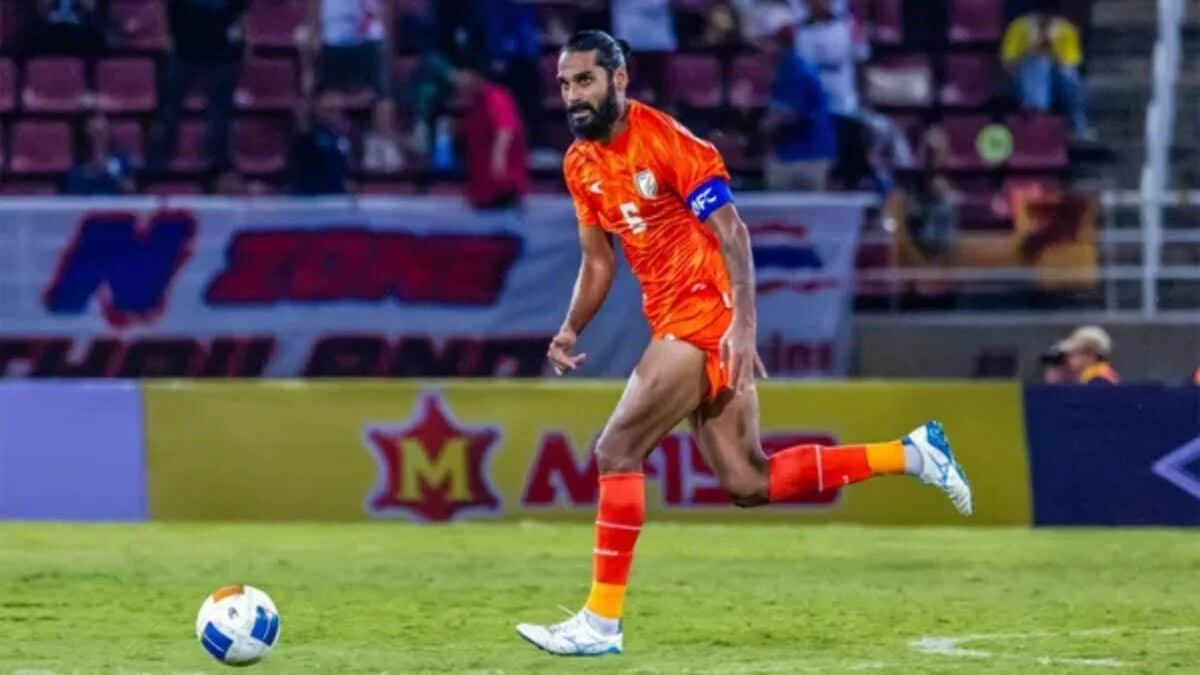
NEW DELHI, India – Indian football finds itself engulfed in a profound crisis, barely eleven days after the conclusion of a truncated 2025-26 Indian Super League (ISL) season. A staggering 150 professional footballers, a significant portion of the league’s talent pool and including several stalwarts of the national team, have been rendered contract-less as their agreements expired on Sunday, May 31, 2026. This mass expiration of contracts has plunged the lives and careers of these athletes into immediate uncertainty, casting a long, ominous shadow over the upcoming 2026-27 season and indeed, the very fabric of professional football in India.
The widespread anxiety among players, clubs, and fans stems from an unresolved and increasingly bitter standoff between the All India Football Federation (AIFF) – the sport’s governing body in the country – and the ISL clubs. This dispute, primarily revolving around the structure, commercial rights, and operational framework of the league, has brought the nation’s premier football competition to a grinding halt. With no clear pathway or official pronouncements regarding the format, schedule, or financial modalities of the next season, clubs are unable to plan, budget, or sign new players, leaving a vast number of talented individuals adrift in an unprecedented state of limbo.
Main Facts: A Sport in Stasis
The core of the current predicament is the simultaneous expiration of nearly 150 player contracts across various ISL clubs. These athletes, who represent the backbone of Indian professional football, suddenly find themselves without employment or a clear prospect of future engagement. The severity of the situation is compounded by the fact that this figure includes some of India’s most celebrated footballers, integral members of the national team whose performances are crucial for international success and domestic inspiration.
Prominent figures like Sandesh Jhingan, a towering presence in India’s defence and a symbol of resilience, are reportedly among those whose contracts have run out. While individual clubs have yet to officially release full lists, the sheer volume of affected players underscores the systemic nature of the problem. For these athletes, the end of May typically marks a period of negotiation, potential transfers, or contract renewals. This year, however, it has brought only a vacuum of information and a chilling silence from the authorities.
The immediate impact is profoundly personal. Many footballers are the sole breadwinners for their families, and the abrupt cessation of their income streams, coupled with the lack of clarity on future earnings, creates immense financial and psychological stress. Housing, education for children, and daily expenses become immediate concerns, overshadowing their athletic ambitions.
At the heart of this turmoil is the protracted disagreement between the AIFF and the ISL clubs. This dispute, which escalated following the expiration of the Master Rights Agreement (MRA) in December 2025, has left the operational framework of the ISL in disarray. Without a renewed or redefined agreement, the fundamental questions of who runs the league, how it is funded, and what its format will be, remain unanswered. This paralysis directly impacts clubs’ ability to make strategic decisions, including the crucial task of squad building. Consequently, players are caught in the crossfire, victims of a governance and commercial battle they have no control over.
Chronology of the Crisis: A Cascade of Events
The current crisis is not a sudden eruption but the culmination of several months of escalating tension and unresolved issues. To understand the gravity of the situation, a look back at the sequence of events is crucial:
The Golden Era and the Seeds of Discord (Pre-December 2025)
The Indian Super League, launched in 2014, was initially heralded as a revolutionary force for Indian football. With significant investment, glitzy marketing, and the allure of foreign stars, it rapidly professionalised the sport, attracted new fans, and provided a platform for Indian talent. The league operated under a comprehensive Master Rights Agreement (MRA) with Football Sports Development Limited (FSDL), a joint venture between Reliance Industries and IMG. This MRA granted FSDL exclusive commercial rights and significant operational control over the ISL, while the AIFF maintained regulatory oversight. For years, this partnership, though not without its critics regarding its exclusivity, provided a stable framework.
However, beneath the surface, tensions simmered. Clubs often expressed concerns over financial models, revenue distribution, and a perceived lack of voice in decision-making. The AIFF, on its part, faced pressure from other stakeholders and existing I-League clubs regarding the hierarchical structure of Indian football and the pathway to the ISL. These undercurrents hinted at potential friction once the foundational MRA neared its end.
December 2025: The MRA Expires and Uncertainty Begins
The pivotal moment arrived in December 2025 when the Master Rights Agreement between the AIFF and FSDL officially expired. This expiration was not entirely unexpected, but the lack of a clear, pre-negotiated successor agreement or a new operational blueprint immediately raised red flags. The MRA had been the bedrock upon which the ISL operated, defining everything from broadcasting rights and sponsorship deals to marketing and league management. Its expiration created a legal and commercial vacuum.
Without a renewed agreement, the financial guarantees, operational responsibilities, and decision-making powers became nebulous. This immediately cast doubt on the structure and funding for the then-upcoming 2025-26 season.
Early 2026: A Season Salvaged, But Shortened
The immediate aftermath of the MRA’s expiration saw intense negotiations and a scramble to salvage the 2025-26 season. With time running out and commercial partners hesitant due to the uncertainty, a compromise was eventually reached, albeit a significantly diminished one. The 2025-26 season was both delayed and drastically shortened. Instead of the traditional home-and-away round-robin format, which ensures maximum matches and fan engagement, each of the 14 teams competed in a single round-robin format. This meant fewer games, reduced revenue opportunities for clubs, and a less competitive league, but it prevented a complete cancellation.
This abbreviated season, while providing some football, was widely seen as a stop-gap measure, a temporary bandage on a much deeper wound. It bought time, but crucially, it did not resolve the underlying dispute between the AIFF and the clubs regarding the future structure and governance of the league.
May 31, 2026: The Contractual Cliff-Edge
The most immediate and painful consequence of this unresolved standoff materialized on Sunday, May 31, 2026. For most professional footballers in India, contracts are typically structured to end on this date, aligning with the end of the traditional footballing year. With no clarity on the 2026-27 season’s format, financial viability, or even its existence, clubs were in no position to offer renewals or new contracts.
The result was the simultaneous expiration of contracts for approximately 150 players, turning them into "free agents" in the most precarious sense. Unlike a typical transfer window where free agents actively seek new clubs, these players are now in a market where the very existence of the "market" itself is in question. This collective contractual expiration represents a critical juncture, transforming a bureaucratic dispute into a very real human crisis.
June 1, 2026: The Aftermath and Deafening Silence
As of June 1, 2026, the silence from official channels is deafening. Players are anxious, agents are frustrated, and clubs are operating in a strategic vacuum. The initial reports highlight the widespread shock and disbelief, particularly among those directly affected. The hope that a resolution would emerge after the 2025-26 season has been dashed, replaced by growing fear and frustration across the Indian football community.
Supporting Data and Context: The Broader Impact
The figures of 150 players and the unresolved MRA dispute provide a stark snapshot of the crisis. However, the ripple effects extend far beyond these immediate data points, threatening the foundational pillars of Indian football.
Player Demographics and Vulnerability
The 150 players affected represent a diverse cross-section of Indian football talent. They include:
- Established National Team Stars: Veterans like Sandesh Jhingan, who command significant salaries and are vital for the national team’s performance. Their prolonged uncertainty can impact national team morale and preparation.
- Mid-Career Professionals: Players in their prime, who have built careers in the ISL, often with families to support. Their financial stability is directly threatened.
- Young Talents: Emerging players who saw the ISL as a clear pathway to professional success. This crisis could shatter their dreams and force them to reconsider their careers, potentially leading to a significant brain drain from the sport.
- Squad Players: Those who provide depth and competition within clubs. While perhaps not always in the spotlight, their collective absence or lack of security weakens the overall league structure.
For all these groups, the absence of contractual security is devastating. Their "free agent" status, in normal circumstances, offers bargaining power. However, in the current scenario, with clubs unable to commit, this power is severely diminished. As a former official highlighted, "Since they are free agents, their negotiating power is less and clubs are likely to quote a lower fee for them when they sign contracts… The players are at a disadvantage and there is a chance of their exploitation." This opens the door to potential wage cuts, reduced benefits, and a precarious future for many.
Financial Ramifications Beyond the Pitch
The financial implications of this crisis are multi-layered:
- Players’ Livelihoods: The most direct impact is on player income. Beyond basic salaries, many contracts include performance bonuses, appearance fees, and other incentives, all of which are now suspended. This directly affects their ability to meet financial commitments.
- Clubs’ Budgeting Paralysis: ISL clubs, many of whom are already operating on tight margins, are in an impossible position. Without clarity on the league’s format (e.g., number of matches, broadcasting revenue), they cannot finalize their budgets for the 2026-27 season. This prevents them from signing new players, retaining key talent, or even planning pre-season activities. Mohun Bagan Super Giant’s explicit demand for clarity on the "full-fledged format or a shortened competition" before making budget calls exemplifies this predicament.
- Sponsors and Broadcasters: The uncertainty surrounding the ISL makes it an incredibly risky proposition for potential sponsors and broadcasters. Without a clear league structure, schedule, and guaranteed viewership, commercial partners will be hesitant to invest, further choking the financial pipeline that sustains the league.
- Ecosystem Impact: The crisis also affects the broader ecosystem – agents, support staff (coaches, physios, medical teams), vendors, and even local economies that benefit from match days.
The Master Rights Agreement: A Commercial Anchor Lost
The expiration of the Master Rights Agreement (MRA) is not just a technicality; it’s the removal of the central commercial and operational anchor for the ISL. The MRA typically covers:
- Commercial Rights: Broadcasting, sponsorship, merchandising, and advertising rights, which are the primary revenue streams for the league and, by extension, the clubs.
- League Operations: Scheduling, logistics, refereeing, disciplinary matters, and overall governance.
- Financial Distribution: How revenues generated are shared between the league, clubs, and potentially the AIFF.
The AIFF’s inability or unwillingness to swiftly renew or replace this agreement with a new, mutually acceptable framework has left a gaping hole. The dispute appears to be centered on power dynamics and financial control – who gets to make decisions, and how are the generated revenues distributed? Both parties likely believe they are advocating for the long-term good of Indian football, but their inability to find common ground is actively harming it.
AIFF’s Stance and Challenges
The AIFF, as the supreme governing body, is under immense pressure. Its stated objectives typically include promoting football at all levels, ensuring player welfare, and upholding the integrity of the sport. However, in this crisis, its actions (or lack thereof) are being scrutinised. While they might be engaged in complex negotiations to secure what they perceive as the best long-term deal for Indian football, the immediate fallout for players and clubs is undeniable. The AIFF faces the challenge of balancing commercial interests with the human element of the sport and demonstrating effective leadership during this turbulent period.
Official Responses and the Echo of Silence
In times of crisis, clear communication from governing bodies is paramount. However, the current situation is characterized by a conspicuous lack of decisive official responses, leading to widespread frustration and speculation.
The AIFF’s Stance: Negotiations Behind Closed Doors
While no explicit public statement has been issued directly addressing the contract expirations or the 2026-27 season’s format, sources close to the AIFF suggest that the federation is engaged in "complex and sensitive negotiations" to restructure the commercial and operational aspects of the ISL. The AIFF’s position is reportedly focused on establishing a more equitable distribution of revenues, ensuring greater regulatory oversight, and aligning the ISL’s structure with AFC (Asian Football Confederation) guidelines and a broader vision for Indian football’s pyramid.
However, the lack of transparency regarding these negotiations and the absence of a public timeline or interim measures have exacerbated the anxiety. The football community is left to speculate, fueling rumors and distrust. "The AIFF needs to understand that silence is not a strategy when livelihoods are at stake," commented a prominent sports analyst, requesting anonymity. "A simple assurance, a roadmap, anything, would be better than this vacuum."
Clubs Demand Clarity: Mohun Bagan Super Giant Leads the Call
Amidst the silence, Mohun Bagan Super Giant, one of the ISL’s most successful and storied clubs, has emerged as a vocal proponent for clarity. As quoted in the original article, a club source emphatically stated: "We will ask the AIFF how they will conduct ISL and make our budget accordingly." This statement underscores the fundamental issue faced by all clubs. Without knowing the format of the 2026-27 season – whether it will be a full home-and-away schedule (implying more matches, higher revenues, and larger squads) or another shortened, single round-robin affair (implying fewer matches, reduced revenues, and leaner squads) – clubs cannot possibly formulate viable budgets.
This budgetary paralysis directly impacts player recruitment and retention. Clubs cannot offer contracts if they don’t know their projected income or expenditure. Other major ISL clubs are reportedly in similar positions, though perhaps less vocal publicly. Their collective frustration points to a systemic breakdown in communication and trust between the league’s stakeholders.
The Players’ Plight: Voiceless in the Crossfire
Perhaps the most distressing aspect is the relatively voiceless position of the players themselves. While individual players and their agents are undoubtedly scrambling behind the scenes, there has been no unified, strong collective voice from the players’ side. India does have a players’ association, FIFPRO India, which often advocates for player rights. However, the scale and suddenness of this crisis appear to have overwhelmed even such bodies.
The former official’s poignant observation, "The players will be the worst sufferers," resonates deeply. They are the essential component of the sport, yet they are largely powerless in this high-stakes battle between the federation and the commercial entities/clubs. Their welfare, which should be paramount, appears to be an unfortunate casualty in the ongoing power struggle.
Implications for Indian Football: A Looming Existential Threat
The current crisis extends far beyond the immediate concerns of 150 players. It poses a significant, potentially existential, threat to the long-term growth and credibility of Indian football.
Player Welfare and the Future of Talent Development
The most immediate and severe implication is on player welfare. Prolonged unemployment and financial instability could force talented individuals, particularly younger players, to abandon football for more secure careers. This "brain drain" of talent would be catastrophic for the sport, undoing years of effort in scouting, training, and nurturing professional footballers. Why would parents encourage their children to pursue football professionally if the industry itself is so volatile and insecure? The crisis threatens to erode the very foundation of aspiring talent, leading to a generational loss for Indian football.
Furthermore, the psychological toll on players cannot be overstated. The mental stress of uncertainty can severely impact performance, morale, and overall well-being, even if a resolution eventually emerges.
Impact on the National Team
The Indian national football team, which has been making gradual strides on the international stage, relies heavily on players from the ISL. An unsettled, financially insecure, and mentally stressed pool of players will inevitably impact national team performance. How can players focus on crucial international fixtures, such as World Cup Qualifiers or the Asian Cup, if their professional futures are hanging by a thread? Team cohesion, fitness levels, and tactical preparation could all suffer, potentially setting back years of progress.
League Credibility and International Standing
The ISL, once lauded as a model for professional football leagues in emerging markets, now faces a severe blow to its credibility. International players and coaches will think twice before considering offers from Indian clubs if the league’s operational stability is in question. This will hamper the league’s ability to attract quality foreign talent, which has historically been crucial for raising standards and drawing crowds.
Moreover, such public disputes and widespread contractual uncertainty damage India’s standing within the Asian Football Confederation (AFC) and FIFA. It portrays Indian football as unstable and poorly governed, potentially impacting its ability to host major tournaments or gain influence within global football bodies.
Fan Engagement and Sponsorship Erosion
The abbreviated 2025-26 season, followed by the current turmoil, risks alienating the passionate Indian football fanbase. Fans invest emotionally and financially in their clubs and players. A league marred by uncertainty, internal disputes, and a lack of transparency will struggle to maintain fan interest, leading to declining attendance, viewership figures, and overall engagement. This, in turn, creates a vicious cycle, making it even harder to attract and retain sponsors, who are crucial for the league’s financial health.
Derailment of Long-Term Vision
The AIFF has often articulated ambitious long-term visions for Indian football, including improving grassroots development, strengthening youth academies, and elevating the national team’s global ranking. This current crisis threatens to derail these strategic objectives entirely. Resources and attention that should be focused on development are now consumed by damage control and crisis management. Without a stable, well-governed, and financially viable top-tier league, the entire pyramid of Indian football – from grassroots to the national team – stands on shaky ground.
The Path Forward: Urgent Dialogue and Comprehensive Reform
The situation demands immediate and decisive action. The AIFF and ISL clubs must engage in urgent, transparent, and constructive dialogue to find a resolution. This cannot be merely a temporary fix but requires a comprehensive re-evaluation of the governance, commercial model, and operational structure of Indian professional football.
Key areas for resolution include:
- A New Commercial Agreement: A robust, equitable, and long-term commercial agreement that clarifies revenue distribution and operational responsibilities for the ISL.
- Player Welfare Protocols: Implementing clear protocols and mechanisms to protect player interests during contractual disputes or league uncertainties.
- Transparent Communication: Establishing clear and consistent communication channels with all stakeholders, especially players and fans.
- Long-Term Vision: Crafting a unified, long-term vision for Indian football that ensures stability, growth, and sustainability across all leagues and levels, rather than allowing commercial disputes to repeatedly bring the sport to its knees.
Failure to address these issues swiftly and decisively will not only prolong the suffering of 150 footballers but could inflict irreparable damage on the aspirations and future of Indian football as a whole. The clock is ticking, and the very soul of the sport in the nation hangs precariously in the balance.
