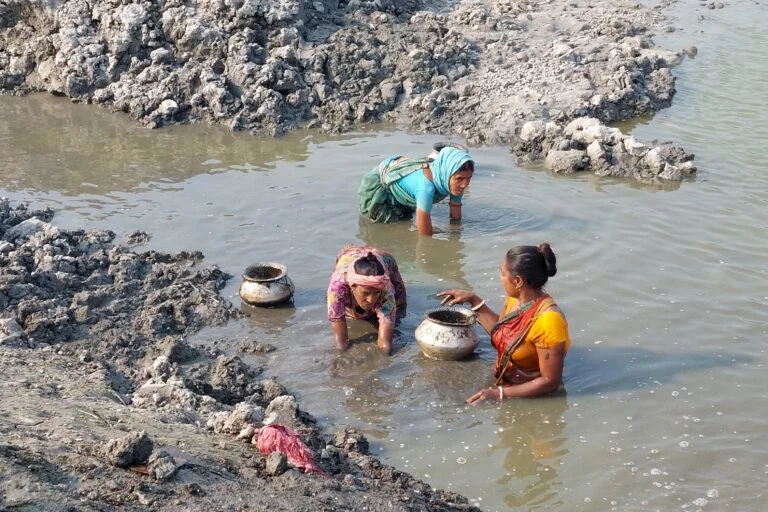
At 4:00 a.m., while the high-rise apartments of Kolkata are still shrouded in silence, the East Kolkata Wetlands are alive with quiet movement. A woman wades into the murky periphery of the lake, her movements practiced and fluid. She is not there for leisure; she is harvesting. By sunrise, she will have collected a haul of crabs, mussels, and small fish. After a quick change into dry clothes, she will head to her primary job as domestic help in one of the very lake-view buildings that overlook her morning "supermarket."
This scene, captured by researcher Sukanya Basu, is not an anomaly. It is a fundamental, yet largely unacknowledged, component of urban survival in India. A groundbreaking study published in the journal Nature Cities reveals that for a significant portion of India’s urban population, "blue spaces"—lakes, rivers, and wetlands—are far more than ecological assets or recreational parks; they are vital food systems.
Main Facts: The Hidden Economy of Urban Foraging
The study, titled Widespread Practices and Sustainability Benefits of Foraging in Urban Blue Spaces of India, was conducted by Sukanya Basu (Azim Premji University) alongside colleagues Brenda Maria Zoderer, Harini Nagendra, Peter H. Verburg, and Tobias Plieninger. The research spanned four major Indian metropolises: Kolkata, Kochi, Bengaluru, and Mumbai.
Through a survey of over 1,200 individuals (799 women and 391 men) conducted between March and September 2023, the researchers uncovered a startling reality: more than half of the users of these water bodies frequently forage for edibles. These items are used for personal consumption, sold in local markets, or shared within communities to bolster nutritional security.
Despite its prevalence, the practice of foraging is almost entirely absent from urban policy and city planning. While municipal authorities value water bodies for flood management, biodiversity, and aesthetics, the "edible landscape" remains invisible to the institutional eye. This oversight, the study argues, threatens the food security of the city’s most vulnerable residents.

The Evolution of Urban Water Bodies: From Commons to Fenced Assets
The history of India’s urban blue spaces is one of transition from communal resources to "beautified" urban amenities. Historically, lakes and wetlands were the "commons"—spaces where local communities had traditional rights to fish, graze cattle, and gather wild plants.
The Shift in Bengaluru
Bengaluru provides a stark example of this evolution. Once known as the "City of Lakes," the city has seen aggressive restoration projects over the last two decades. However, the study found that 67% of Bengaluru’s blue space users are now "rare foragers."
The reason lies in the nature of "restoration." In the quest to make lakes "clean" and "visitor-friendly," the muddy, biodiverse edges where land meets water have been replaced by stone bunds and concrete walkways. Harini Nagendra, Director of the School of Climate Change and Sustainability at Azim Premji University, notes that these "manicured" spaces often feature ornamental, non-native plants that provide no food for humans or insects. Furthermore, the installation of "Plucking Prohibited" signs effectively criminalizes a traditional survival strategy.
The Resilience of Mumbai and Kolkata
In contrast, Mumbai and Kolkata retain a higher percentage of frequent foragers. In Mumbai, 65% of blue space users engage in foraging, driven largely by Adivasi communities for whom the city’s seasonal streams and marshes are essential sources of protein (crabs and snails) and fiber. In Kolkata, the vast East Kolkata Wetlands continue to function as a working landscape where sewage-fed aquaculture and wild foraging coexist with the city’s expansion.
Supporting Data: The Demographics of the Forager
The study categorized participants into three distinct tiers based on the frequency and intent of their foraging activities:

1. Frequent Foragers (The Lifeline Group)
This group is overwhelmingly composed of women, the elderly, and members of Scheduled Castes and Scheduled Tribes. Most come from households with an annual income below ₹7 lakh. For them, foraging is not a hobby; it is a nutritional necessity.
- Gender Split: 63% of women surveyed were frequent foragers, compared to only 26% of men.
- Purpose: Consumption, local sale, and communal cooking.
2. Occasional Foragers
These are typically better-educated, middle-income individuals. They forage for specific seasonal delicacies or for the "experience" of connecting with nature, but they do not rely on these items for daily sustenance.
3. Rare Foragers
Mostly men under the age of 31 with university educations and the highest income levels. This group views water bodies almost exclusively as spaces for exercise or photography.
Nutritional Gold
The nutritional data suggests that wild foraging provides micronutrients that are entirely absent from the commercial market. While urban markets offer "generic" greens like spinach or fenugreek, foragers seek out bitter, seasonal species like ponnangante keerai (water amaranth), taro, and various edible weeds. Harini Nagendra emphasizes that these wild plants are often more nutrient-dense than their farmed counterparts, acting as a "natural pharmacy" for the urban poor.
Official Responses and Ecological Perspectives
The research highlights a significant "knowledge gap" between those who use the land and those who manage it.

The Policy Blind Spot
Currently, urban planning in India treats foraging as either a non-existent activity or a nuisance. Shalini Dhyani, Principal Scientist at CSIR-NEERI and editor of Urban Foraging in the Changing World, has documented 130 plant species and 16 fungal species being foraged across 15 Indian cities. She argues that foraging keeps people connected to their local ecosystems. "Humans will not cut down a forest that gives them something tangible," adds Sanjiv Valsan, founder of the Waghoba Habitat Foundation.
The Contamination Paradox
However, official caution is not entirely without merit. Dhyani raises a critical concern regarding the health of these water bodies. Many urban lakes are receptacles for untreated sewage and industrial waste.
- Bioaccumulation: Species like water hyacinth, which some communities have started using for curry in Assam, are hyper-accumulators of heavy metals.
- The Risk: The communities most dependent on these foraged foods are the ones least equipped to handle the long-term health consequences of consuming contaminated fish or greens.
The official response from many municipal bodies has been to fence off these areas to "protect" the public, but researchers argue this is a blunt instrument that ignores the underlying issue of water quality and social equity.
Implications: Toward an "Edible City" Model
The findings of Basu and her colleagues suggest that India needs a paradigm shift in how it designs and manages its urban blue spaces.
1. Inclusive Restoration
Future lake restoration projects should move away from the "concrete and ornamentals" model. Instead, they should incorporate "edible buffers"—areas where native, edible species are encouraged to grow, and where traditional harvesting rights are recognized and regulated rather than banned.

2. Food Security as Infrastructure
If more than half of a city’s blue space users are foraging for food, then these wetlands must be classified as "food infrastructure." This would mandate that water quality be maintained not just for ecological "health," but for human consumption standards.
3. Preserving Traditional Ecological Knowledge (TEK)
The study underscores that foraging is a social act. Women often forage in groups, sharing knowledge about which plants are safe and how to prepare them. As "beautification" pushes these women out, centuries of traditional ecological knowledge are being lost. Suresh Kumar, founder of Sarjapur Curries, warns that as we lose the plants, we lose the language and the culture associated with them.
4. The Economic Opportunity
The economic value of urban foraging is significant. When a kilo of Jamun (Indian blackberry) sells for ₹600 in an upscale market while rotting on the pavements of public parks because no one knows who has the right to pick them, it represents a failure of urban resource management.
Conclusion: Claiming the Edible Abundance
The study by Basu et al. serves as a wake-up call for urban planners. The "smart cities" of India’s future cannot be truly smart if they ignore the fundamental ways in which their residents feed themselves.
By recognizing urban blue spaces as food systems, cities can achieve a double win: protecting vital ecosystems while simultaneously addressing the nutritional deficiencies of the urban poor. As Harini Nagendra poignantly asks, "Why not make foraging the hero ingredient of a water body?"

Until that shift happens, thousands of women will continue to wade into the shadows of the wetlands at 4 a.m.—feeding the city from its fringes, invisible and uncounted, yet essential to the urban fabric.