In the dense scrub forests of Uttarakhand and the high alpine meadows of the Himalayas, conservation does not always wear a uniform or carry a badge. Instead, it often takes the form of a nomadic pastoralist walking alongside a massive, dark-furred beast. For the Van Gujjar community, a group of nomadic forest-dwellers, the forest is not a resource to be extracted or a wilderness to be fenced off; it is a living partner. At the heart of this ancient partnership is the Gojri buffalo, a breed that serves as both a cultural anchor and an ecological engineer.
Recent years have brought both recognition and crisis to this way of life. While the Gojri buffalo was officially recognized as India’s 17th registered buffalo breed in 2023, the migratory routes that sustain it are under unprecedented threat. As "fortress conservation" models—which prioritize human-free protected areas—gain ground, the delicate balance between the Van Gujjars, their herds, and the Himalayan ecosystem faces a precarious future.
Main Facts: A Keystone Relationship
The Gojri buffalo is more than livestock; it is a specialized mountain breed shaped by centuries of selective breeding and seasonal movement. Unlike industrial cattle, these animals are adapted to traverse steep terrains, endure extreme temperature shifts, and thrive on forest fodder.
The Role of the ‘Maee’
Central to the management of these herds is the Maee—a traditional herder identified by each family. The relationship between a Maee and their buffaloes is deeply intimate and communicative. The buffaloes often refuse to be milked by anyone else and respond to specific calls that echo across the valleys. This bond ensures that the herd moves as a cohesive unit, minimizing the impact on the forest floor.
Ecological Engineering
The Gojri buffalo performs several critical functions that maintain forest health:
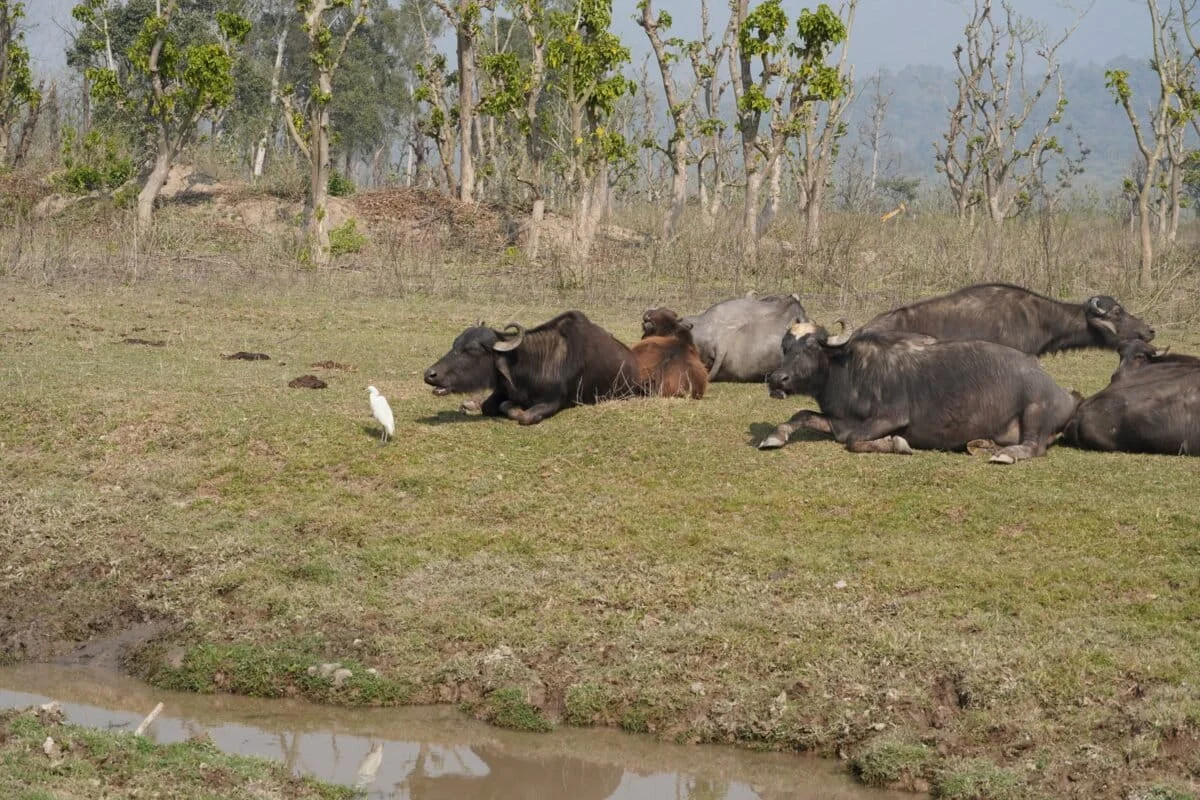
![How nomadic herders sustain forests [Commentary]](https://imgs.mongabay.com/wp-content/uploads/sites/30/2026/06/01112508/An-egret-walks-among-resting-Gojri-buffalo-reflecting-the-close-relationship-between-the-herds-and-other-species-1200x800.jpg)
- Regenerative Grazing: The Van Gujjars emphasize that their buffaloes "eat from the top, not the root." This method of grazing allows grass to regenerate within days, maintaining the vitality of the forest floor.
- Fire Management: As the buffaloes walk in single file, their heavy hooves clear away dry grass and leaf litter, creating natural fire lines. In an era of intensifying wildfires due to climate change, these "costless" firebreaks are vital for protecting biodiversity.
- Seed Dispersal: By moving across vast distances, the buffaloes transport seeds in their dung and fur, facilitating the growth of trees and plants across different altitudes.
- Habitat Creation: In the marshy Terai regions, the buffaloes’ habit of wallowing in ponds helps maintain water levels and creates micro-habitats. Community members have noted the return of the Barasingha (swamp deer) to areas where Gojri buffaloes graze, as the buffaloes help maintain the "khaddar" (marshy grassland) habitat.
Chronology: From Ancestral Paths to Legal Recognition
The story of the Van Gujjars is one of movement. Their history is etched into the seasonal rhythm of the Indian landscape, but the modern era has introduced a series of legal and environmental hurdles.
The Pre-Modern Era: For generations, the Van Gujjars have practiced transhumance. In the winter, they descend to the plains and the Shivalik forests of Uttarakhand and Uttar Pradesh, where water and fodder are accessible. In the summer, as the heat intensifies, they migrate to the bugyals (alpine meadows) where the grass is fresh and nutrient-rich. This movement prevents the overgrazing of any single area.
2006 – The Legislative Turning Point: The Indian Parliament passed the Scheduled Tribes and Other Traditional Forest Dwellers (Recognition of Forest Rights) Act, known as the Forest Rights Act (FRA). This landmark law was designed to undo "historical injustice" by recognizing the rights of forest-dwelling communities to live in, manage, and use forest resources.
2010–2020 – The Conflict of Relocation: During this decade, the expansion of Tiger Reserves (such as Rajaji and Corbett) led to increased pressure on the Van Gujjars to settle. Many families were relocated to colonies outside the forest. Deprived of their migratory routes, many Gojri buffaloes—unable to adapt to a sedentary life—fell ill or died, forcing families to switch to less hardy, industrial breeds.
2023 – Official Breed Recognition: After years of advocacy by the Van Gujjar Tribal Yuva Sangathan (a youth-led community collective) and organizations like Kalpavriksh, the Gojri buffalo was officially registered by the National Bureau of Animal Genetic Resources (NBAGR). This gave the breed legal status and recognized the community’s role as the primary conservators of this genetic heritage.
![How nomadic herders sustain forests [Commentary]](https://imgs.mongabay.com/wp-content/uploads/sites/30/2026/06/01112753/Nomads_of_the_Bugyals_in_Uttarakhand_02-768x512.jpg)
Supporting Data: The Impact of Sedentary Living
While approximately 50,000 Gojri buffaloes remain in Uttarakhand, the population is under strain. Data from community surveys and ecological observations suggest a direct correlation between the health of the buffalo and the freedom to migrate.
In areas where migration has been blocked, the results have been devastating. Md. Shamshad, a resident of Gendikhatta, notes that in rehabilitation settlements where families are forced into small patches of forest, the Gojri buffalo cannot survive. "Our buffaloes must migrate; otherwise, they cannot survive," he explains. Where migration continues, livelihoods remain sustainable. Where it stops, the buffaloes die, and the community’s economic independence collapses.
Furthermore, the absence of buffaloes has ecological consequences. In regions of the Shivaliks where pastoralists have been removed, there has been an observed increase in the density of invasive species like Lantana camara. When Van Gujjars are present, they actively clear Lantana around fodder trees to prevent fire spread, a service that is lost when the community is relocated.
Official Context and Challenges: The Gap in Implementation
Despite the legal protections offered by the FRA 2006, the implementation of these rights remains a primary challenge. The tension between the Forest Department and the pastoralists stems from two conflicting views of conservation.
The "Fortress" vs. "Community" Debate
Official forest management often views nomadic grazing as a threat to wildlife and forest regeneration. This "fortress conservation" approach seeks to exclude humans from protected areas. However, the Van Gujjars argue that their presence actually protects wildlife. Mustafa ji of Mundhal observes that smaller herbivores like chital and peacock often congregate near Van Gujjar huts at night, using the presence of the buffaloes as a shield against predators like leopards.
![How nomadic herders sustain forests [Commentary]](https://imgs.mongabay.com/wp-content/uploads/sites/30/2026/06/01112907/Gojri-buffalo-rest-in-a-pond-during-warm-weather-using-water-bodies-to-cool-themselves-and-recover-after-grazing-768x512.jpg)
Legal Hurdles
The recognition of Individual Forest Rights (IFR) and Community Forest Resource (CFR) rights is slow. While some progress has been made—such as in Govind Pashu Vihar Wildlife Sanctuary, where some families have received CFR titles—most Van Gujjars still face harassment during migration. Agencies responsible for implementing the FRA often lack awareness of the specific rights of pastoralists, leading to the disruption of traditional routes and the denial of grazing permits.
Implications: The Future of the Himalayan Landscape
The decline of the Van Gujjar lifestyle carries implications that extend far beyond the community itself. It represents a potential loss of biodiversity, traditional knowledge, and climate resilience.
Loss of Genetic Diversity
If the Gojri buffalo population continues to decline due to forced settlement, India loses a unique genetic resource. This breed’s ability to survive in high-altitude environments with minimal external inputs is a crucial asset for food security in a changing climate.
Increased Vulnerability to Wildfires
As the buffaloes are removed from the forest, the natural fire lines created by their migration paths disappear. This leaves forests more vulnerable to catastrophic summer fires, which threaten not only the trees but the very wildlife that "human-free" conservation seeks to protect.
A Model for Coexistence
The experience of the Van Gujjars suggests a different path for 21st-century conservation. Rather than viewing humans and nature as separate, the Gojri buffalo model demonstrates that carefully regulated, traditional use of resources can actually enhance ecosystem health.
![How nomadic herders sustain forests [Commentary]](https://imgs.mongabay.com/wp-content/uploads/sites/30/2026/06/01112555/A-herd-of-Gojri-buffalo-graze-together.-The-breed-is-known-for-its-endurance-and-adaptation-to-migratory-pastoral-life-768x512.jpg)
As the world grapples with the twin crises of climate change and biodiversity loss, the "unspoken connection" between the Maee, the buffalo, and the forest offers a vital lesson. Forests do not always thrive because people are kept out; often, they have survived precisely because communities have lived within them with care, knowledge, and a deep sense of reciprocity.
For the Van Gujjars, the future is tied to the movement of the herd. As long as the buffaloes continue to walk the paths between the plains and the high meadows, the forest remains a living, breathing entity. If the movement stops, a centuries-old heartbeat of the Himalayas may finally go silent.