

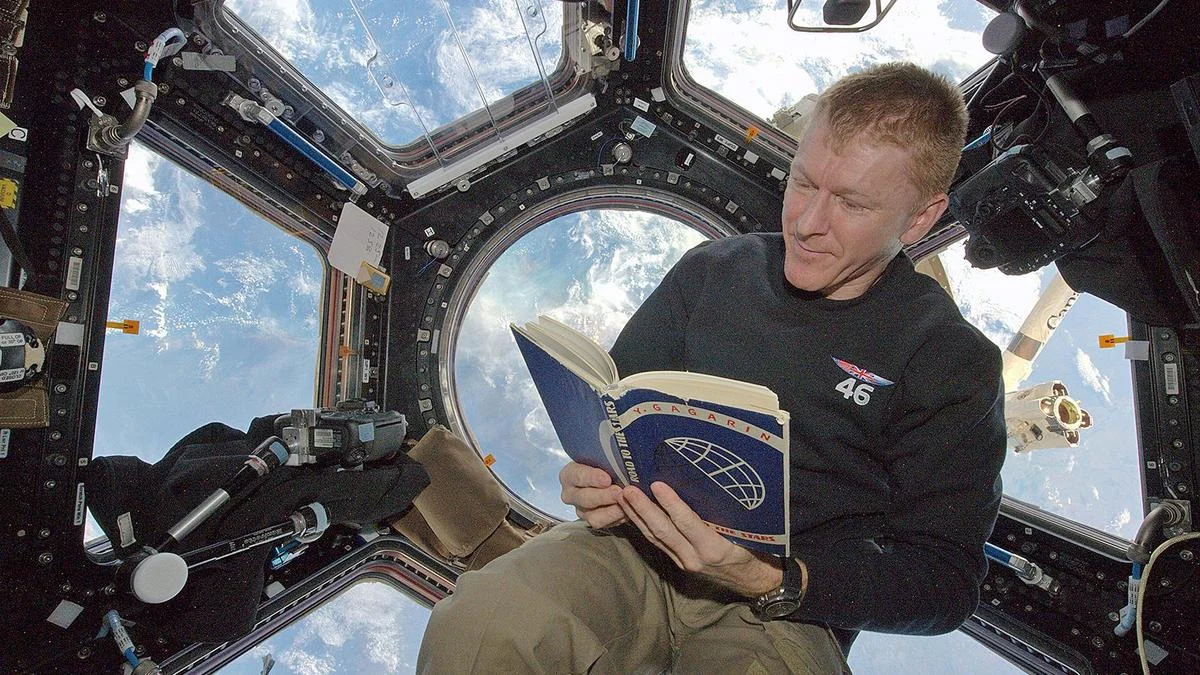
The International Space Station (ISS) stands as a testament to human ingenuity and international collaboration, a sprawling laboratory in low Earth orbit where scientists from diverse nations push the boundaries of knowledge. For over two decades, this remarkable feat of engineering has served as a unique platform for scientific research, technological advancement, and a profound symbol of global unity in the pursuit of understanding our universe and our place within it.
The Genesis of a Collaborative Endeavor
The story of the International Space Station is one of ambitious vision and persistent diplomacy. Its origins trace back to the post-Cold War era, a period ripe for redefining international partnerships in space. What began as a convergence of separate national aspirations – the United States’ Space Station Freedom, Russia’s Mir-2, Europe’s Columbus, and Japan’s Kibo modules – evolved into a unified project, solidifying the commitment of the United States, Russia, the European Space Agency (ESA), Japan Aerospace Exploration Agency (JAXA), and the Canadian Space Agency (CSA).

This monumental undertaking officially commenced with the groundbreaking ceremony in 1998. The first module, Russia’s Zarya control module, was launched on November 20, 1998. This was swiftly followed by the American Unity node, launched by the Space Shuttle Endeavour a few weeks later. The arduous process of assembly, module by module, has continued intermittently over the years, transforming a collection of individual components into the largest artificial structure in space. The ISS is not merely a collection of metal and wires; it represents a shared dream and a tangible manifestation of what can be achieved when nations pool their resources and expertise towards a common, noble goal. To date, the ISS has welcomed over 290 visitors from 26 countries, a diverse crew that underscores its truly global character.
A Crucible of Scientific Discovery: Unlocking the Secrets of Microgravity
The primary raison d’être of the ISS lies in its unparalleled capability to conduct scientific research in a microgravity environment. The absence of significant gravitational forces on Earth presents a unique set of challenges and opportunities for scientific inquiry. The ISS offers researchers a platform to explore phenomena that are either impossible or incredibly difficult to replicate on our planet.

Physiological Adaptations to Space: One of the most critical areas of research aboard the ISS focuses on understanding the effects of long-duration spaceflight on the human body. Astronauts serve as invaluable subjects in experiments designed to monitor changes in bone density, muscle mass, cardiovascular health, immune system function, and even vision. This research is not only vital for ensuring the safety and well-being of future spacefarers on extended missions to the Moon, Mars, and beyond, but it also yields profound insights into human physiology that can benefit terrestrial medicine. For instance, studies on bone loss in space have direct implications for osteoporosis research on Earth, offering new avenues for treatment and prevention.
Materials Science in Microgravity: The behavior of materials in microgravity differs significantly from their terrestrial counterparts. Experiments on the ISS explore how alloys, crystals, and biological materials form and behave in the absence of gravity. This can lead to the development of novel materials with enhanced properties for use in various industries, from aerospace to medicine. Understanding fluid dynamics and combustion in microgravity, for example, can contribute to improved fire safety systems and more efficient combustion processes.

Fundamental Physics and Earth Observation: The ISS also serves as a platform for fundamental physics experiments, allowing scientists to test theories and explore phenomena in conditions unobtainable elsewhere. Furthermore, its vantage point provides an extraordinary perspective for observing Earth. Instruments aboard the ISS continuously monitor our planet’s atmosphere, oceans, climate patterns, and natural disasters, providing invaluable data for environmental research, climate modeling, and disaster response efforts.
Powering the Orbit: The ISS’s Solar Heartbeat
The International Space Station operates almost entirely on solar power, a testament to its energy efficiency and the ingenuity of its design. The station is equipped with vast solar arrays, spanning over an acre, that convert sunlight into electricity. However, the ISS’s rapid orbit, completing a full revolution around Earth approximately every 90 minutes, presents a dynamic power cycle.

For roughly 45 minutes of each orbit, the ISS basks in the direct sunlight, allowing its solar panels to generate a substantial amount of electricity. The remaining 45 minutes are spent in Earth’s shadow, where the station relies on a sophisticated battery system to maintain power for its critical life support, scientific equipment, and operational functions. This constant interplay between light and shadow necessitates a robust power management system, ensuring a continuous and reliable energy supply for the station’s complex operations. The efficiency and reliability of these solar arrays have been crucial to the ISS’s long-term sustainability and its ability to support continuous human presence in space.
A Day in the Life: The Unique Rhythm of Orbital Living
Life aboard the International Space Station is a carefully orchestrated ballet of scientific endeavor, routine maintenance, and personal well-being, all conducted within the confines of a unique, weightless environment. The station is meticulously designed to accommodate its inhabitants, featuring seven crew cabins for sleeping, two specialized bathrooms, a dedicated gym, and the awe-inspiring Cupola – a seven-windowed observation module offering breathtaking 360-degree views of Earth.

Astronauts and cosmonauts adhere to a rigorous daily schedule that typically spans 16 hours. This schedule is packed with a diverse range of activities:
- Scientific Experiments: The core of ISS operations involves conducting a multitude of experiments, meticulously planned and executed by ground control and the on-orbit crew.
- Station Maintenance: The ISS is a complex machine that requires constant upkeep. Astronauts dedicate significant time to inspecting, repairing, and upgrading various systems, ensuring the station’s continued operational integrity.
- Communication with Earth: Regular communication with mission control centers around the globe is essential for coordinating activities, receiving instructions, and sharing scientific findings.
- Spacewalks (Extravehicular Activities – EVAs): When necessary for external repairs, upgrades, or scientific deployments, astronauts undertake daring spacewalks, tethered to the station as they venture into the vacuum of space. These EVAs are among the most demanding and visually spectacular aspects of space missions.
- Physical Fitness: To combat the detrimental effects of microgravity on muscles and bones, astronauts must engage in at least two hours of exercise daily. This includes using specialized treadmills, stationary bikes, and resistance exercise devices designed to simulate the forces of gravity.
- Photography and Earth Observation: Many astronauts dedicate time to capturing stunning photographs and videos of Earth from orbit. These images not only serve scientific purposes but also provide the public with unparalleled perspectives of our home planet, fostering a deeper appreciation for its beauty and fragility.
The daily routine, while demanding, is essential for maintaining the health and operational efficiency of both the crew and the station. It is a life of precision, purpose, and unparalleled perspective.

The Cutting Edge of Research: Selected ISS Experiments
The diverse research conducted on the ISS spans a wide array of scientific disciplines, each contributing to our understanding of space and its implications for life on Earth. Some of the key experimental areas include:
- Human Physiology in Microgravity: Beyond the general effects on bones and muscles, specific research delves into the intricate workings of the immune system, the cardiovascular system’s adaptation to a lack of gravity, and neurological changes that occur during spaceflight. Understanding these subtle yet significant alterations is paramount for future deep-space exploration.
- Sustainable Food Production: For extended missions, the ability to grow food in space is a critical requirement. Experiments on the ISS focus on cultivating various plant species, such as lettuce, in controlled environments to assess growth rates, nutritional content, and resource utilization. This research is paving the way for self-sustaining food systems on long-duration space voyages.
- Combustion and Fire Safety: The behavior of flames and combustion in microgravity is a complex phenomenon. Experiments on the ISS aim to understand these processes to improve fire detection and suppression systems in spacecraft. This knowledge also has direct applications for enhancing fire safety technologies on Earth, particularly in enclosed environments.
- Advanced Water Recycling: Water is a precious resource in space. The ISS employs sophisticated water recycling systems that can reclaim water from moisture in the air, urine, and even wastewater. Research continues to refine these systems, making them more efficient and sustainable for future long-duration missions, reducing the reliance on resupply missions.
- Earth and Space Observation: The ISS serves as a vital platform for observing our planet and the cosmos. Instruments continuously monitor atmospheric conditions, ocean currents, weather patterns, and the impacts of climate change. Furthermore, the station provides a unique vantage point for astronomical observations, studying phenomena in space without the interference of Earth’s atmosphere.
A Legacy of Collaboration and the Future of Space Exploration
The International Space Station is more than just a scientific laboratory; it is a profound symbol of international cooperation. In a world often marked by division, the ISS stands as a beacon of what can be achieved when nations work together towards common goals. Its continued operation demonstrates the enduring power of diplomacy and shared ambition in advancing humanity’s reach beyond Earth.

As the ISS nears the end of its operational life, discussions are already underway for its successor and the future of human presence in low Earth orbit. The knowledge gained, the technologies developed, and the international partnerships forged aboard the ISS will undoubtedly serve as the foundation for future endeavors, propelling us further into the cosmos and continuing to inspire generations to come. The legacy of the ISS is not just in its scientific discoveries, but in its powerful message of unity and its unwavering testament to the boundless potential of human exploration.
