

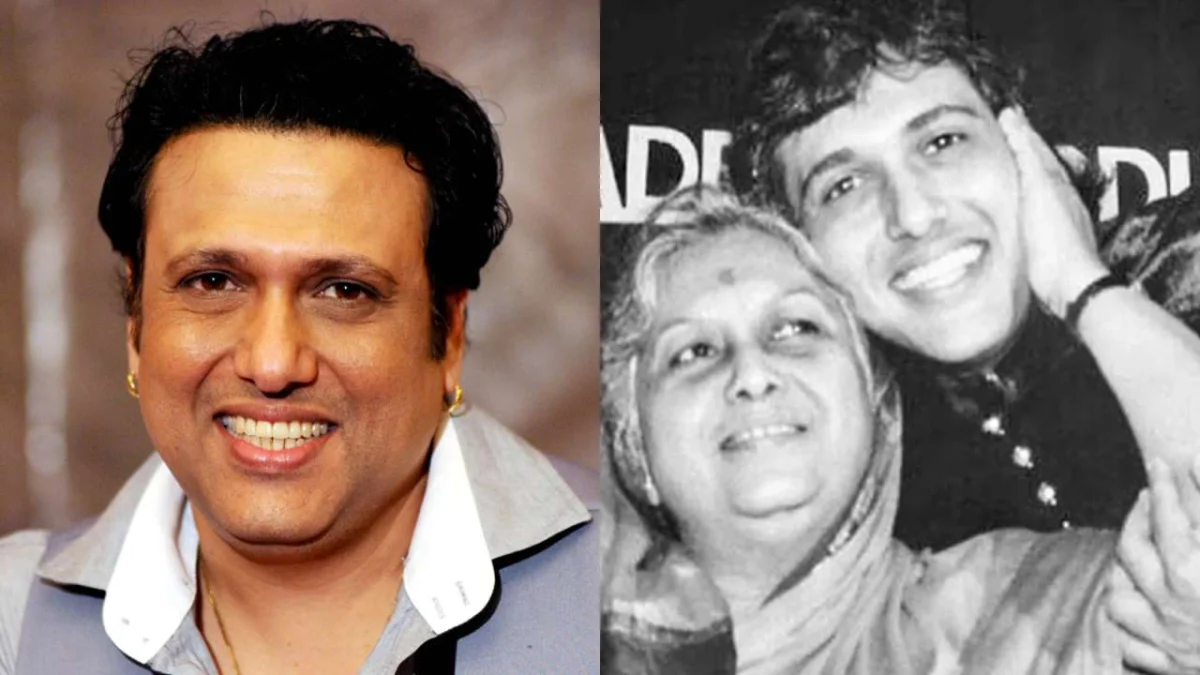
Mumbai, India – In a candid and deeply personal revelation, Bollywood icon Govinda has shared the profound grief and despair that consumed him following the death of his beloved mother, Nirmala Devi. The actor, known for his effervescent on-screen persona, recounted a harrowing incident where, in the depths of his sorrow, he walked into the sacred Narmada River, believing it was a path to reunite with his departed mother. This startling admission sheds light on the immense emotional toll of loss and the complex journey of healing for even the most celebrated figures.
The incident, which occurred in 1996 shortly after his mother’s passing, saw Govinda, then at the zenith of his career, grapple with a pain so overwhelming that it led him to contemplate ending his life. "I was in tremendous pain. At that point, I felt that everything was over. That was it," Govinda disclosed in an interview with ANI, his voice heavy with the weight of memory. The revelation offers a stark contrast to his public image, revealing a man pushed to his absolute emotional limit by the void left by his mother.
)
Nirmala Devi, a respected Hindustani classical vocalist and actress herself, was not just a parent but a guiding force in Govinda’s life. The actor has consistently attributed his success and spiritual grounding to her influence. Her death on June 15, 1996, at the age of 69, therefore, represented an irreplaceable loss, triggering a period of intense darkness that threatened to engulf him entirely.

The Abyss of Grief: A Mother’s Loss and a Son’s Despair
Govinda’s emotional narrative paints a poignant picture of his struggle. He described the immediate aftermath of his mother’s death as a period of profound emptiness. "I was in a lot of pain. I was in tremendous pain," he reiterated, emphasizing the all-consuming nature of his grief. The vibrant world of cinema, which he had conquered with his unique brand of comedy and dance, suddenly felt hollow and insignificant.
)
It was within this bleak landscape that the Narmada River became a focal point of his despair. "So, I was at the Narmada River, I thought I would go a little farther into the river and that I would meet my mother again. So, I went into the river," he recounted, detailing the chilling rationale behind his actions. This wasn’t a sudden impulse but a desperate yearning to reconnect with the woman who had shaped his world.
)
When directly questioned about whether this was an attempt at suicide, Govinda offered a nuanced response, acknowledging the societal interpretation while hinting at a deeper existential struggle. "Kind of. I was deeply attached to my mother. I was too much in love with her," he admitted. However, he quickly qualified this by stating, "That’s what the world calls it. People use suicide type of words. We don’t really have anything like that. Life never ends. It takes on new faces; It takes on new forms." This philosophical perspective suggests that while he may have been driven by a suicidal impulse, his underlying belief in the continuity of life offered a glimmer of hope, even in his darkest hour.
)
A Divine Intervention: The Sadhu’s Saving Grace
The narrative takes a turn towards hope with the timely intervention of a wise sadhu, whom Govinda now remembers as Ram Kundal. In the midst of his self-destructive act, the sadhu recognized the actor’s distress and reached out. "He called out to me and came toward me. I came out of the river and he asked, ‘What happened, Govind?’" Govinda recounted, his voice filled with gratitude.
)
This encounter proved to be a pivotal moment, forcing Govinda to confront his actions and the gravity of his grief. The sadhu’s presence and perhaps his words offered a much-needed anchor, pulling Govinda back from the precipice. The realization that he was "doing something wrong" and the subsequent lesson learned were profound. "And I learned a lesson, I realised that I have to live for my children," he stated, underscoring the transformative power of the experience. The responsibility towards his family, particularly his children, became a beacon, guiding him away from the abyss of despair.
)
The actor revealed that it took him approximately ten to fifteen days to fully emerge from the deep melancholic state. However, the experience in the Narmada River instilled in him a renewed sense of purpose. He began to perceive "something else in this world" that he was meant to experience and that he needed to move forward. This marked a significant shift in his perspective, a move from surrender to survival and eventually, to a re-engagement with life.
)
A Transformed Perspective: Films, Stardom, and the True Meaning of Achievement
The profound impact of his mother’s death extended beyond his personal life, significantly altering Govinda’s outlook on his career and the world of Bollywood. He confessed to feeling "completely empty" after losing his mother, and this emptiness seeped into his perception of films and stardom.
)
"Films is just like toys for me," he declared, a statement that, while potentially controversial, reflects his re-evaluation of priorities. He expressed a sense of humility, stating, "I shouldn’t say this, I am saying it out of fear of God. Forgive me if I shouldn’t be saying this, and if I am offending anyone…But I believe that films, acting, stardom, heroism, all of it, is a manifestation of God. Whatever we have received, we have received from God, and we are simply acting in it. We have seen all of this, and we were able to experience it." This view elevates his profession from mere entertainment to a divine assignment, a performance orchestrated by a higher power.
)
For Govinda, the true measure of success shifted dramatically. The accolades, the fan following, and the box-office records, while acknowledged, paled in comparison to a deeper, more personal form of achievement. "But the real achievement for me was that I could serve my family and my mother. I could fulfil all the wishes she had imagined for me, what she had thought my son Govinda would achieve when he turned 21. That was her dream. And I was able to fulfill it," he explained. This personal fulfillment, rooted in honoring his mother’s aspirations, became his ultimate heroism. It represented a profound connection to his roots and a testament to the enduring power of familial love.
)
The Enduring Legacy of a Mother’s Love
Govinda’s journey through grief, culminating in his near-tragic encounter at the Narmada River, serves as a powerful reminder of the human capacity for both profound sorrow and resilient hope. His willingness to share such a deeply personal and vulnerable experience offers a window into the emotional complexities that lie beneath the glittering surface of celebrity.
)
His mother, Nirmala Devi, was more than just a mother; she was a source of strength, inspiration, and unwavering support. Her influence permeated his life, shaping his values and guiding his path. The pain of her absence was so acute that it nearly led him to a tragic end. However, through a twist of fate and the intervention of a compassionate soul, Govinda found his way back to life, forever changed and with a renewed appreciation for the true meaning of achievement and the enduring power of love. His story is a testament to the fact that even in the darkest of times, hope can be found, and the legacy of loved ones can provide the strength to persevere.
