

Bengaluru, India – For many, the mention of comics conjures images of Western superheroes or the globally dominant influence of Japanese manga. However, a groundbreaking exhibition at the Museum of Art and Photography (MAP) in Bengaluru is poised to shatter these perceptions, revealing the deep, intricate, and often overlooked history of Indian visual storytelling. Titled “A Moving Line: 1,500 Years of Indian Visual Storytelling,” this meticulously curated exhibition, spearheaded by acclaimed painter and graphic novelist Amruta Patil, is a vibrant testament to the subcontinent’s enduring tradition of narrating stories through images, a practice that predates modern comics by millennia.
The exhibition serves as a powerful counterpoint to the prevailing notion that comics are a nascent or secondary form of literature. For the author, a childhood steeped in the familiar narratives of Archie, Nancy Drew, and Hardy Boys, and later, the localized charm of Gardhab Das and Detective Moochwala in Target magazine, the journey through “A Moving Line” is a profound realization of what has been missed. The ingrained belief that comics were merely fleeting entertainment, a gateway to more “serious” reading, is challenged at every turn by the sheer depth and sophistication on display.
The Genesis of an Exhibition: From Angoulême to Bengaluru
The spark for “A Moving Line” ignited during Amruta Patil’s visit to Angoulême, France, a city renowned for its decades-long international comics festival. In a conversation with a friend working at the city’s comics museum, the question arose: “What about the Indian comics scene?” The friend’s surprised, “There’s an Indian comics scene?” mirrored a widespread ignorance, a gap that Patil was determined to bridge. The exhibition is her ambitious answer, a resounding declaration that India possesses a rich and continuous lineage of visual storytelling, a narrative woven through centuries.

With over 250 works on display, “A Moving Line” is not simply a collection of comic books. It is an expansive exploration that stretches from the ancient art of temple friezes and hero stones to contemporary print comics, graphic novels, and even the ephemeral digital cartoons gracing social media platforms. This broad spectrum allows visitors to trace the evolution of Indian visual narratives, demonstrating a remarkable continuity of form and content across vast stretches of time.
A Chronological Journey Through Indian Visual Narratives
The exhibition is thoughtfully organized across two main halls. The first hall offers a broadly chronological overview, guiding visitors through the historical development of Indian visual storytelling. This section aims to establish the deep roots of this art form, showcasing how storytelling through sequential imagery has been an intrinsic part of Indian culture for centuries.
The journey begins with compelling artifacts that underscore this ancient heritage. A hero stone, a weathered monument often erected in memory of fallen warriors, stands as an early example of visual narrative. Nearby, a temple frieze from the Someshwara temple in Bengaluru depicts the celestial wedding of Shiva and Parvati, its carved panels telling a story of divine love and cosmic union. Further on, a painting illustrating Hanuman’s encounter with Sita in the Ashok Vatika garden showcases another instance of visual storytelling, predating the very concept of a comic book by hundreds of years.

These initial displays set the stage for a deeper dive into the diverse traditions that have contributed to India’s visual narrative landscape. The exhibition thoughtfully includes examples of kaavad art, a portable, painted wooden shrine where itinerant storytellers would unfold panels to narrate epics and folklore. Adjacent to these are vibrant pattachitra scrolls from Odisha, their unspooled narratives depicting myths and legends in striking shades of ochre and vermilion.
The exhibition then transitions to more recognizable forms of visual storytelling. A prominent wall displays a captivating collection of Amar Chitra Katha (ACK) covers. These iconic publications, which introduced generations of Indian children to mythology, history, and folklore, are represented by beloved characters and stories of figures like Shivaji, Mirabai, and tales from the Panchatantra. The inclusion of ACK vinyls playing audio stories further enhances the immersive experience, evoking nostalgic memories for many and introducing younger audiences to this important cultural touchstone.
The Rise of the Indian Comic: From Colonial Satire to Modern Masters
The exhibition astutely recognizes the impact of colonial India on the development of its comics scene. This section highlights a burgeoning period of satire and commentary, with Bengal emerging as a significant hub. Contributions from influential families like the Tagores and Rays are acknowledged, alongside publications such as "Basantak."

A particularly poignant moment within this section is the acknowledgment of Sukhalata Rao, Satyajit Ray’s aunt and widely regarded as India’s first female cartoonist. While her presence is noted, the author of the original article expresses a desire for a more in-depth exploration of her work, suggesting that her legacy merits an exhibition in its own right. This observation underscores the exhibition’s success in not only showcasing established figures but also in bringing to light lesser-known pioneers.
The display then moves to a more eclectic presentation, deliberately juxtaposing diverse works to highlight the vast range of styles and themes. This is where the "boggling diversity" that Amruta Patil speaks of truly comes to life. Works featuring the cinematic adventures of Bollywood superstar Amitabh Bachchan are placed alongside futuristic panels from Bishakh Som’s graphic novel “Apsara Engine.” A miniature painting of Sita finds its place next to Orijit Sen’s contemporary work inspired by the grand Mughal narrative of the Hamza Nama. This innovative curation, as Patil explains, is designed to reveal "the boggling diversity of styles, themes, and nuanced points of view."
A Spectrum of Styles and Themes: Thematic Explorations
The second hall of the exhibition shifts its focus to thematic groupings, allowing for a deeper exploration of recurring motifs and artistic approaches in Indian visual storytelling. This section delves into the unique characteristics that define an "Indian idiom" in comics.

Amruta Patil herself elaborates on these traditional inflections: “Traditional inflections in our visual storytelling include a maximalist aesthetic and bias towards bold lines and vibrant palettes. In terms of storylines, we have always loved multiple story tracks running parallel, ‘nested’ stories, the presence of a sutradhar [oral storyteller].” This inherent storytelling tradition, she argues, provided a fertile ground for the development of graphic narratives.
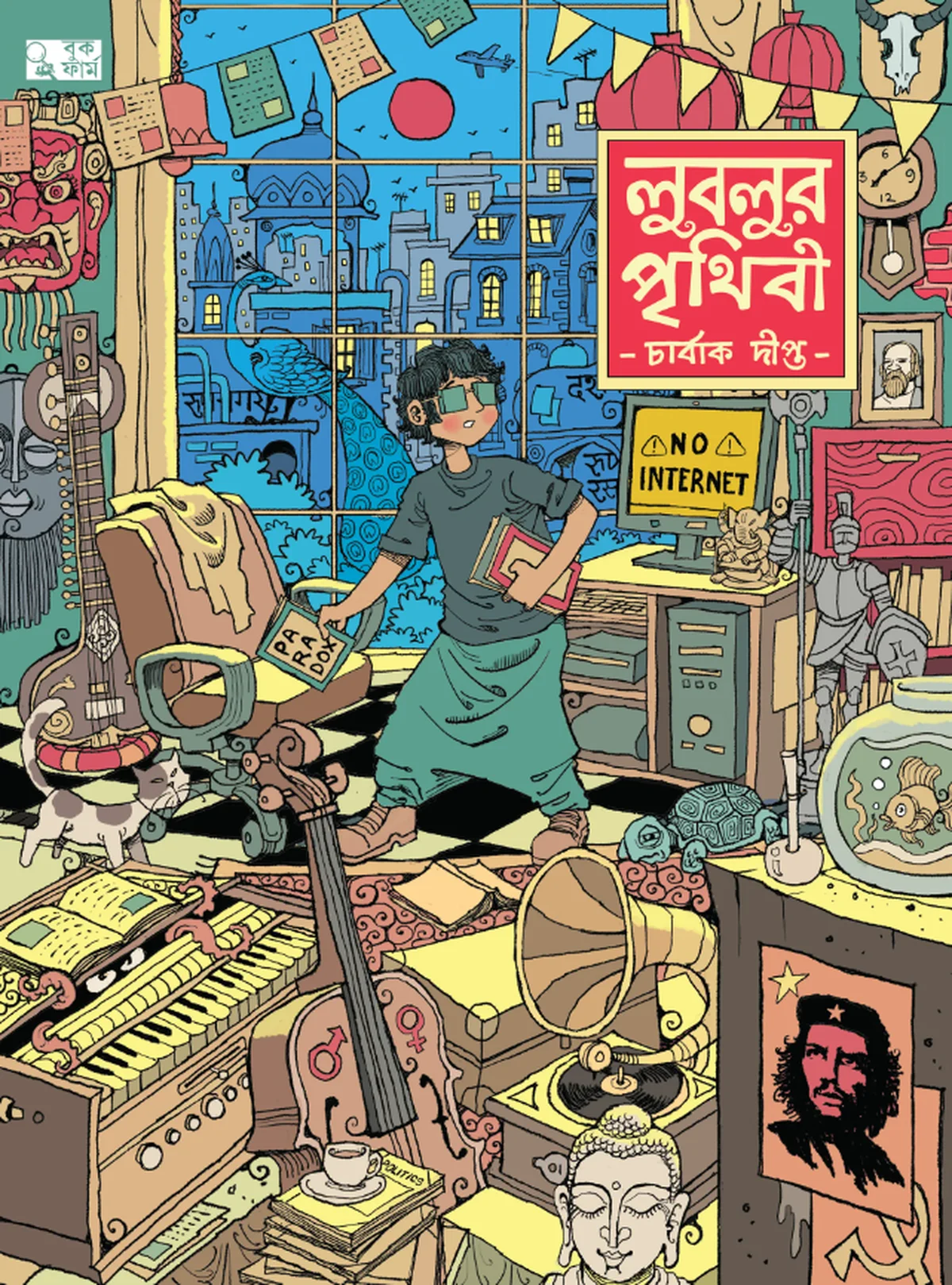
The exhibition showcases how contemporary Indian artists have embraced and reinterpreted these traditions. Works by artists such as Priya Kuriyan, Parismita Singh, Lokesh Khodke, Rajiv Eipe, and Soumya Menon, whose contributions to children’s picture books are well-known, are presented in a new light. Here, they tackle complex themes such as gender, migration, climate change, and caste, demonstrating the versatility of the graphic medium and its capacity for sophisticated social commentary.
For young readers accustomed to the polished narratives of global comic giants, this exhibition offers a crucial alternative. Patil emphasizes, “It is rare that young Indians who consume homogenised narratives from the Global North get to see alternatives: intelligent writing and original visual styles that emerged out of an Indian idiom.” The hope is that visitors will approach these displays with an open mind and a spirit of curiosity, recognizing the unique cultural context and artistic innovation embedded in Indian visual storytelling.

The exhibition also highlights the evolving landscape of Indian comics. The emergence of platforms like Comixense, Orijit Sen’s quarterly for teenagers and young adults, and the Indie Comix Fest, a space for self-published creators, signifies a growing dynamism within the scene. Furthermore, the recent announcement of Lattis, a new imprint by Westland dedicated to comic adaptations of classic Indian stories, indicates a mainstream push towards recognizing and promoting this art form.
Supporting Data and Emerging Trends
The sheer breadth of material presented in “A Moving Line” serves as compelling supporting data for the existence and vitality of the Indian comics scene. Over 250 works, spanning diverse mediums and historical periods, offer a comprehensive overview. The exhibition’s accompanying publication, co-edited by Khushi Bansal, a curator with MAP, further enriches the visitor experience. This publication features an introduction by Amruta Patil, nine essays, and eleven graphic narratives, providing deeper insights into the themes and artists represented.
The exhibition design itself plays a crucial role in its impact. The artful layout, with its chronological and thematic organization, ensures a fluid and engaging experience. The inclusion of central spaces where visitors can sit and browse comic books and anthologies allows for a more personal and interactive engagement with the material. This thoughtful approach to presentation democratizes the experience, making it accessible and enjoyable for a wide audience.

The "boggling diversity of styles" is not merely an aesthetic observation; it reflects the innovative spirit that has characterized Indian visual storytelling. Patil notes that the Indian publishing industry’s initial unfamiliarity with graphic novels proved to be an unexpected advantage for authors. Freed from rigid canonical rules, creators were encouraged to experiment with form and content, leading to the emergence of distinct visual languages. This experimentation is evident in the varied approaches to panel layout, character design, and narrative pacing found throughout the exhibition.
Official Responses and the Future of Indian Comics
While there are no direct "official responses" in the traditional sense of government pronouncements, the very existence of “A Moving Line” at a prestigious institution like the Museum of Art and Photography can be seen as a significant endorsement and a form of institutional validation for Indian visual storytelling. The exhibition’s curator, Amruta Patil, and the MAP team have effectively championed this cause, bringing it to the forefront of cultural discourse.
Patil’s vision extends beyond mere exhibition. Her hope is that visitors will leave with a deeper appreciation for India’s visual narrative legacy. The success of such an exhibition has profound implications for the future of Indian comics. It raises awareness, fosters a sense of pride in indigenous artistic traditions, and potentially inspires a new generation of creators and readers.

The challenges that Patil alludes to – lapsed print runs, language silos, and the lack of archives – highlight the fragility of cultural heritage. The exhibition, therefore, is not just a celebration but also a vital act of preservation and advocacy. By bringing these diverse works together, it creates a temporary archive, a beacon of visibility for an art form that has often struggled for recognition.
The exhibition’s run until November 15th at MAP in Bengaluru offers a timely opportunity for the public to engage with this rich and multifaceted aspect of Indian culture. It is a reminder that stories, in their most fundamental form, have always been told through images, and that India possesses a visual storytelling tradition that is as ancient as it is vibrant, as diverse as it is deeply resonant. “A Moving Line” is more than an exhibition; it is an invitation to rediscover a lost heritage and to fall a little more in love with the boundless creativity of Indian comics.
