

Paris, France – The air in a chic Parisian bar, punctuated by the clinking of crisp Chablis glasses, hummed with a familiar yet evolving question: "Which designers excite you right now?" For many, the immediate thought might drift to the titans of haute couture – the creative directors orchestrating the grand narratives of Balenciaga, Dior, Gucci, or Chanel. However, for those immersed in the heart of fashion’s global epicentre, the answer increasingly lies beyond these established houses. It resides with the burgeoning designers, the "fringe" talents whose innovative visions are not just adding vibrancy to Paris Fashion Week, but are fundamentally reshaping its discourse.
This shift in perspective was particularly potent following a visit to the Rescha showcase at the Musée Guimet, an exhibition by the much-lauded Indo-French designer Charlotte Chowdhury. This experience, set against the backdrop of Paris, crystallized a growing realization: the most electrifying creative energy in fashion today emanates not from the established ateliers, but from a new wave of designers, many with Indian heritage, who are crafting their own narratives on the global stage.

For decades, India’s presence in the Parisian fashion ecosystem was largely defined by its role as a source of exquisite craftsmanship and labor. From the intricate embroidery of couture ateliers to the meticulous artistry of high jewelry houses, French fashion has long drawn upon India’s rich artisanal traditions. However, a profound transformation is underway. No longer is Paris merely borrowing; Indian and Indian-heritage designers are now actively authoring their own stories within the city’s storied fashion narrative, weaving a tapestry of cultural exchange that is both nuanced and revolutionary.
The Established Vanguard: Indian Designers Commanding Parisian Stages
The impact of this new era is undeniably visible within the hallowed halls of Haute Couture Week. Established names like Rahul Mishra, Gaurav Gupta, Vaishali S., and most recently, Manish Malhotra, have made their mark, presenting collections that are both deeply rooted in Indian heritage and universally resonant. Their presence signifies a powerful assertion of Indian creativity, showcasing a sophisticated blend of traditional techniques and contemporary aesthetics that captivates the Parisian elite.

Beyond these haute couture heavyweights, a constellation of contemporary labels and diaspora voices are further enriching the Parisian fashion landscape. Brands such as Kartik Research and Dhruv Kapoor are bringing fresh perspectives, while designers like Ashish Gupta and Priya Ahluwalia, who have long championed a multifaceted understanding of Indianness in fashion, demonstrate its fluid and diasporic nature. Their work masterfully integrates elements from diverse sources – Parisian tailoring, Japanese dyeing techniques, American sportswear influences, Punjabi memories, Kenyan-Gujarati rituals, and the domesticity of Kerala – coalescing into designs that are layered, culturally rich, and profoundly contemporary.
This evolving dynamic is not going unnoticed by the custodians of French fashion. Pascal Morand, Executive President of the Fédération de la Haute Couture et de la Mode, acknowledges this shift, stating, "French designers have been attracted to Indian craftsmanship for a long time, and vice-versa." He further highlights the growing significance of emerging brands, noting that they now represent "a third of the Official Calendars." The Fédération actively supports these nascent talents through calendar services and grants, underscoring a commitment to fostering new voices. This collaborative spirit suggests a Paris that is not only making room for these new interpretations of Indian fashion but is actively embracing them, fostering an environment of mutual growth and innovation.

The Rising Stars: Innovation, Ritual, and a Global Palette
The true excitement, however, lies in the compelling narratives and groundbreaking approaches of the emerging designers. These are individuals who perceive the world through a distinct lens, offering fresh perspectives that challenge conventional fashion paradigms.
Anil Padia of Yoshita 1967: Crafting Connection Through Crochet
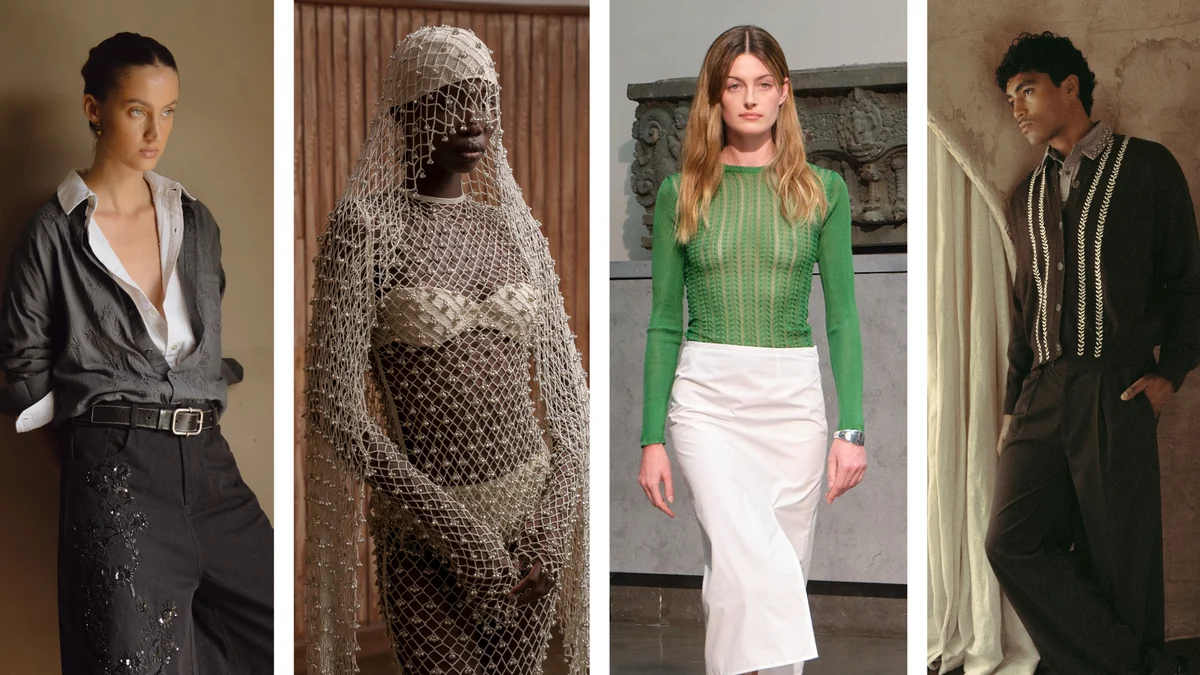
Anil Padia, the Kenyan-Gujarati designer behind Yoshita 1967, exemplifies this new wave. A finalist for the prestigious LVMH Prize for Young Designers, Padia’s work, particularly his striking crochet pieces that cascade from head to ankle, blurs the lines between armor, veil, heirloom, and apparition. His creations, showcased at the State of Fashion Biennale in Arnhem, Netherlands, are more than just garments; they are intricate explorations of identity, heritage, and the very essence of craft.

Padia’s approach is deeply rooted in questioning inherited rituals and traditions. He probes the significance of elements like the sehra at Indian weddings, playfully recontextualizing its application by placing it on women in his brand’s inaugural show in South Africa. He elevates crochet from its traditional domestic association, transforming it into a powerful statement of artistry. He describes his brand’s visual language as "Métiers d’art," artisanal craft, and champions it as a "collaborative craft economy." This model is both socially conscious and logistically ingenious. The garments are meticulously crafted by women in Kenya, many of whom have transitioned from domestic work to become skilled, full-time crochet artisans. The youngest artisan is in her 20s, while the oldest is in her 70s, with Catherine, the first artisan Padia collaborated with, now leading a team of 50 women.
A recurring motif in Padia’s work is the ghungroo, or Indian ankle bells. He traces their origin to his mother’s bangles, recognizing their immediate resonance with an Indian eye. However, his research reveals a far broader significance. Discovering similar silver bell ornaments in Nairobi’s Diamond Plaza, the city’s South Asian hub, solidified their symbolic importance, representing dance, movement, and mysticism. Further exploration uncovered the widespread presence of the silver bell across India, Gujarat, Pakistan, Yemen, Sudan, Ethiopia, and even down to Zanzibar. For Padia, this ubiquitous element serves as potent evidence of "interconnectedness," a testament to shared cultural threads that span continents and millennia.

Natasha Sumant of Gundi Studios: A Parisian Haven for Kerala’s Soul
Natasha Sumant, founder of Gundi Studios, brings a similar boundary-less sensibility to her new store in Paris’s 13th arrondissement. The space itself is a harmonious "Indo-French marriage," conceived in collaboration with her French architect husband. Housed in a former boulangerie, it features mud-colored floors, urlis (traditional Indian decorative vessels) adorning the interiors, and clothing that exudes a New York attitude softened by Parisian effortlessness. Sumant observes a profound resonance between French and Indian appreciation for craft, noting, "The French, much like Indians, really appreciate craft – there’s a huge reverence in that. That’s been the biggest difference moving my brand from America to Paris." Her designs seamlessly blend her Kerala roots with a global outlook, creating a space that feels both deeply personal and universally inviting.
Tamanna Mullen of Arth Atelier: Crafting Objects with Provenance
Tamanna Mullen, the visionary behind Arth Atelier, a U.S.-based brand that chose Paris for its inaugural showcase, approaches fashion with a philosophy of creating "objects with provenance." Her aesthetic is characterized by a quiet restraint, emphasizing traceable textiles, Indian handwork, and genderless tailoring. Mullen’s upbringing in Punjab instilled in her a deep understanding of the intricate relationship between land and cloth. A prime example is her chikankari boyfriend shirt, which juxtaposes Indian embroidery with banana fabric from Myanmar. This deliberate pairing transforms the garment from a mere "craft piece" into a profound narrative of material, labor, and memory, mapping a journey across cultures and resources. Arth Atelier’s presence in Paris signifies a thoughtful integration of global influences, demonstrating a sophisticated understanding of provenance and artisanal excellence.

Charlotte Chowdhury of Rescha: A Tribute to a Global Muse
Charlotte Chowdhury of Rescha, a designer whose evolution has been closely followed, masterfully navigates her Indo-French heritage through her collections. This season, her muse was the late Krishna Roy Riboud, an influential Indian-French scientist, researcher, and textile historian. Riboud dedicated her life to the preservation of Indian textile arts, amassing a remarkable collection of textiles, Chinese antiquities, and Baluchari saris from Bengal. More importantly, she embodied the very essence of the woman Chowdhury seeks to dress: an individual who fluidly moves between India and Europe, between scholarship and society, between the archive and the wardrobe. Rescha’s collection imaginatively reinterprets how these influences might have manifested in Riboud’s personal style, offering a sartorial tribute to her multifaceted life.
These emerging designers, coalescing around Paris’s cultural calendar, are not merely presenting collections; they are offering new ways of seeing and working. Sumant and Padia, for instance, both champion women’s craft clusters, while Mullen draws attention to the critical relationship between agriculture and textiles. Their common thread is an unwavering interest in global connection, weaving a narrative of interconnectedness that transcends geographical and cultural boundaries.

The Evolving Parisian Canvas: A Response to Global Dialogue
The Fédération de la Haute Couture et de la Mode’s acknowledgement of emerging brands as a significant component of the official calendars is a crucial indicator of Paris’s evolving identity. Pascal Morand’s observation that "emerging brands now represent ‘a third of the Official Calendars’" underscores a deliberate effort to embrace new talent and diverse creative expressions. This inclusivity is not merely a matter of demographic representation but a strategic imperative to remain at the forefront of global fashion innovation.
The Fédération’s commitment extends beyond simply offering a platform. Through calendar services and grants, they provide tangible support, enabling young designers to navigate the complexities of the fashion industry and establish a sustainable presence. This proactive approach signals a paradigm shift, where Paris is not just a passive recipient of global talent but an active participant in cultivating it. The city’s readiness to adapt and integrate these new voices is a testament to its enduring relevance as a fashion capital, one that understands that its future lies in embracing a more diverse and dynamic creative landscape.

Implications for the Future of Fashion: A More Layered and Inclusive Aesthetic
The rise of these Indian and Indian-heritage designers in Paris signifies more than just a fleeting trend; it represents a fundamental redefinition of global fashion. Their success highlights the increasing demand for authenticity, provenance, and culturally resonant narratives. As the writer noted after posting a review of a Rahul Mishra couture show, an emerging Indian designer’s DM showcasing beadwork and stone washes in a contemporary athleisure context served as a perfect reminder: the Indian aesthetic is never monolithic. It is a fluid, evolving entity that can be interpreted in myriad ways.
This burgeoning presence promises a future where fashion is more layered, inclusive, and globally interconnected. The emphasis on artisanal craft, ethical production, and the exploration of cultural heritage offers a compelling counterpoint to the often fast-paced and homogenous nature of mainstream fashion. As India Couture Week continues to expand its reach, with shows planned beyond the traditional Delhi-Mumbai axis, we can anticipate an even richer tapestry of traditions and interpretations gracing mood boards and runways. The enduring appeal of these designers lies in their ability to connect the past with the present, the local with the global, and in doing so, to craft a fashion future that is as rich and complex as the world itself. The question of which designers excite us right now finds its most compelling answer in these voices, shaping a new and exhilarating chapter in the global fashion narrative.
