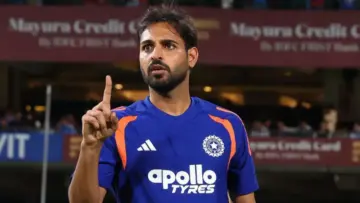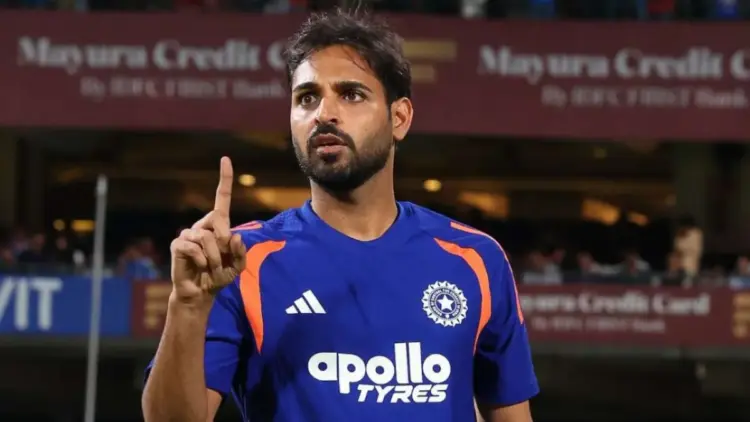
Bengaluru, India – In a dramatic turn of events that underscored the unpredictable nature of international cricket and the relentless pursuit of excellence, veteran Indian fast bowler Bhuvneshwar Kumar made a highly anticipated return to the T20 International fold after an extensive hiatus of 1,446 days. His comeback came at a crucial juncture, as India locked horns with the West Indies in the fifth and final T20I, a series decider held at the iconic M Chinnaswamy Stadium in Bengaluru. With the gripping five-match series poised precariously at 2-2, the stakes were exceptionally high, amplifying the significance of Kumar’s inclusion in the playing XI.
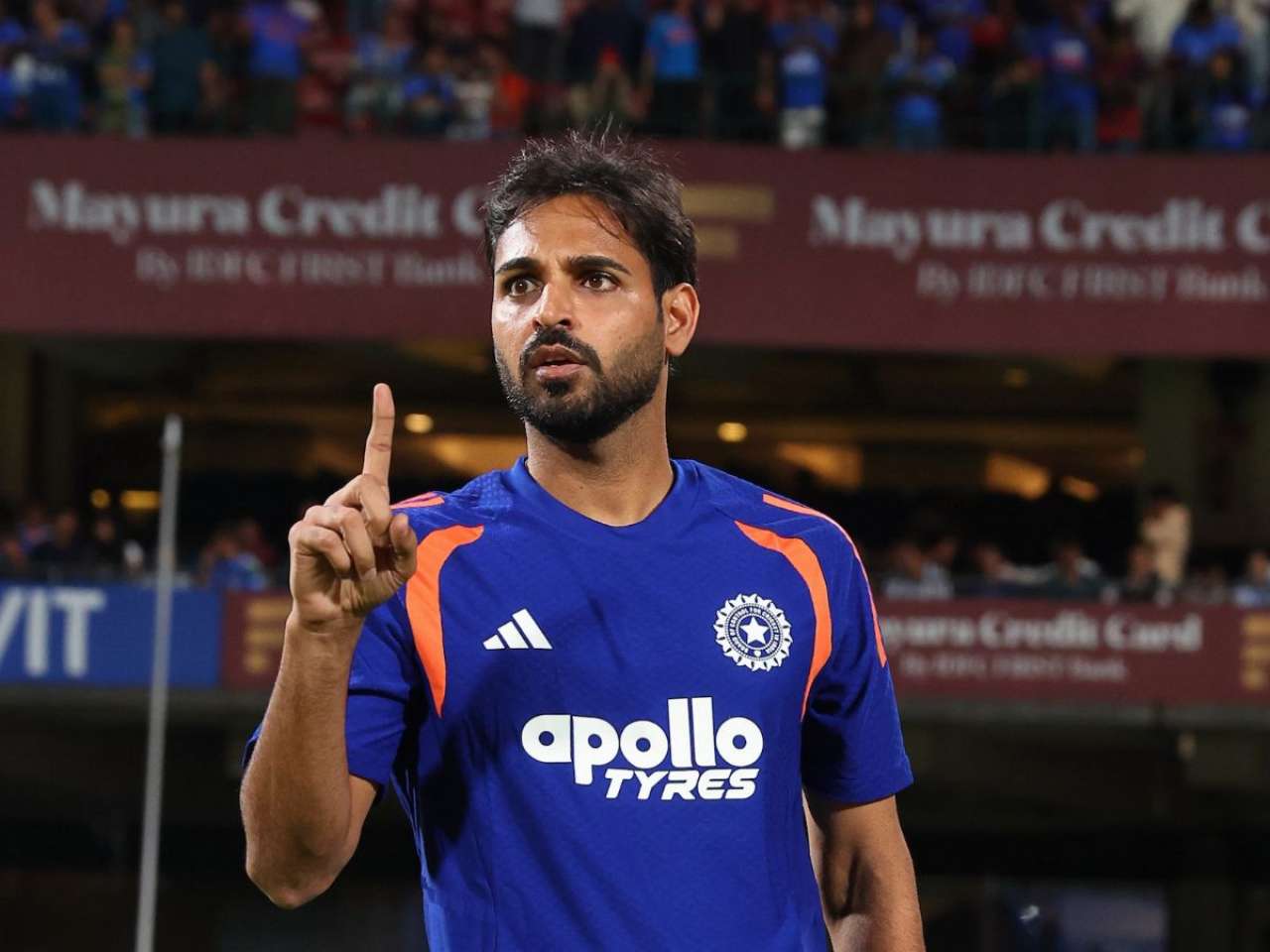
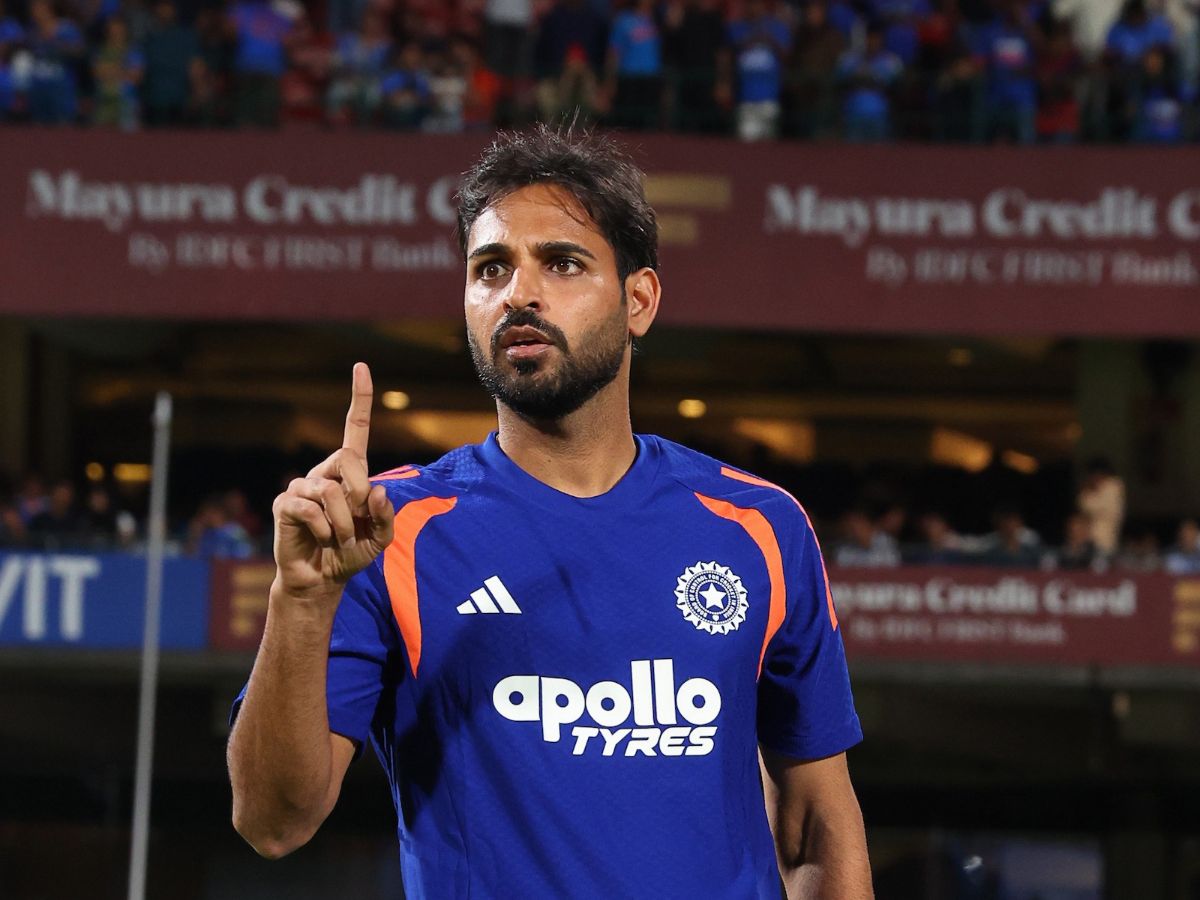
The atmosphere in Bengaluru was charged with anticipation, not just for the series outcome but also for the return of a bowler who, for years, had been the lynchpin of India’s limited-overs attack. After being asked to bat first by West Indies captain Shai Hope, India prepared to unleash its batting firepower, but it was the sight of Bhuvneshwar Kumar donning the national colours in a T20I after nearly four years that truly captured the imagination of fans and pundits alike. This return was not merely a selection; it was a testament to resilience, a nod to experience, and a strategic gamble in a match shortened by persistent rainfall, adding another layer of complexity to an already tense encounter.
Main Facts: A Resurgent Return Amidst High Stakes
)
The central narrative of the day revolved around the long-awaited comeback of Bhuvneshwar Kumar, a name synonymous with swing and precision in Indian cricket. His last T20I appearance dated back to October 2022, marking a significant gap of 1,446 days – a period that saw a considerable churn in India’s fast-bowling resources. His return for the series decider against West Indies, a contest that would determine the victor of a hard-fought five-match series, was nothing short of dramatic.
The context of his return was further amplified by the match’s status as a winner-takes-all affair. With both teams having secured two victories each, the fifth T20I in Bengaluru transformed into a high-pressure finale. Adding to the drama, inclement weather played its part, leading to a significant reduction in overs. The match was eventually curtailed to a nine-overs-per-side contest, transforming it into an even more frenetic sprint where every delivery, every run, and every wicket would carry exaggerated importance.

Significantly, the venue for Kumar’s comeback, the M Chinnaswamy Stadium, held a special resonance. This very ground in Bengaluru had been the stage for his T20I debut back in 2012, against Pakistan. For a player who has spent a considerable portion of his career representing the Royal Challengers Bengaluru (RCB) in the Indian Premier League (IPL), the enthusiastic applause from the home crowd upon his re-entry into the Indian playing XI was a poignant moment, a homecoming that transcended mere cricket. His selection also came in the wake of uncertainty surrounding fellow pacer Arshdeep Singh, who had sustained an injury during India’s batting innings in the preceding fourth T20I, thereby opening a crucial slot in the pace department.
Chronology: The Journey Back to the Forefront
)
The Series Build-up and Decider Context:
The India-West Indies T20I series had been a captivating battle of attrition, showcasing contrasting styles and individual brilliance. From the initial exchanges, it became clear that neither team was willing to concede an inch, leading to a seesaw battle that saw both sides claiming victories to keep the series perfectly balanced at 2-2 heading into the final showdown. This created an electrifying atmosphere for the decider, with fans eagerly anticipating a fitting climax to a compelling series. Each match had presented its own challenges and heroes, setting the stage for a grand finale where nerves of steel and tactical acumen would be paramount.
Bhuvneshwar’s Extended Absence and Road to Recall:
Bhuvneshwar Kumar’s journey away from the T20I setup has been a complex one, marked by a combination of injuries, fluctuating form, and the emergence of a new generation of fast bowlers. After being a consistent presence in India’s white-ball squads for over a decade, his last T20I appearance was in October 2022. Post that, a series of hamstring and back issues plagued his career, often sidelining him at crucial junctures. These physical setbacks inevitably impacted his rhythm and pace, leading to a dip in performance that saw him gradually fall out of favour with the national selectors, who increasingly looked towards younger, high-pace options.
)
During his time away from the T20I team, Kumar focused on regaining full fitness and rediscovering his form, primarily through domestic cricket and the Indian Premier League. His experience, particularly with the new ball and in the death overs, remained an undeniable asset. His ability to swing the ball both ways, combined with his subtle variations, had always made him a formidable opponent. The recent recall to India’s T20I squad for the upcoming series against New Zealand was the first significant indicator of the selectors’ renewed faith in his capabilities, signaling that his consistent performances in domestic tournaments had not gone unnoticed. This series decider thus presented an unexpected, yet perfect, opportunity to fast-track his return to the playing XI.
Pre-Match Developments: Rain, Injury, and Strategic Decisions:
The lead-up to the fifth T20I was fraught with uncertainty. Persistent rainfall in Bengaluru cast a shadow over the proceedings, causing delays and eventually leading to the significant reduction in overs. This meteorological interference drastically altered strategic planning for both camps.
)
Compounding India’s challenges was the fitness cloud over Arshdeep Singh. The young left-arm pacer, a vital component of India’s T20 attack, had suffered an injury during India’s batting innings in the previous match. While the exact severity was not immediately clear, the risk of fielding an unfit player in a series decider, especially in a shortened format demanding peak physical condition, was too high. This opened the door for Kumar, whose experience and ability to adapt to varying conditions made him an ideal replacement.
The Toss and Team Announcements:
The toss, typically a routine affair, took on added significance due to the rain-affected conditions. West Indies captain Shai Hope won the toss and, without hesitation, opted to field first. His decision was a calculated one, citing the prevailing damp weather conditions, which often make chasing totals more manageable due to the DLS method potentially coming into play, and his team’s well-known batting prowess. Hope expressed confidence in his team’s ability to chase down any target, especially in a shortened format where aggressive batting could be rewarded.
)
India captain Shreyas Iyer confirmed two key modifications to the squad, with Shivam Dube and Bhuvneshwar Kumar making their way into the playing XI. Iyer emphasized the need for an aggressive mindset. "The turnaround is swift. The pitch appears satisfactory. We must maintain an aggressive approach and avoid becoming defensive. It is crucial that we control the match and demonstrate our best performance," Iyer stated at the toss. He acknowledged the West Indies’ formidable batting line-up, "They possess an impressive range of batting techniques and have demonstrated consistent, aggressive cricket. We must also concentrate on our own capabilities. Shivam Dube and Bhuvi are our two replacements." His comments underscored the understanding that in a nine-over game, conservatism would be detrimental, and seizing momentum from the outset would be critical.
Supporting Data: Analysing the Context and Players
)
Bhuvneshwar Kumar’s T20I Pedigree:
Bhuvneshwar Kumar’s T20I career has been marked by remarkable consistency and the ability to adapt. Debuting at the M Chinnaswamy Stadium in 2012, he quickly established himself as India’s premier swing bowler. His early career saw him regularly picking up wickets in the powerplay, stifling opposition top orders. With an impressive economy rate and a knack for crucial breakthroughs, he became an indispensable part of India’s white-ball setup. His career highlights include numerous match-winning spells, particularly his mastery of the knuckleball and slower deliveries in the death overs, which made him a versatile asset across different phases of the innings. His last T20I match prior to this comeback, in October 2022, also saw him contribute effectively, reinforcing his long-standing value. His return brings a wealth of experience, tactical nous, and a proven track record that younger bowlers often lack.
The M Chinnaswamy Stadium: A Batter’s Paradise with a Twist:
The M Chinnaswamy Stadium is renowned as one of India’s most high-scoring venues, often dubbed a "batter’s paradise" due to its flat pitches, short boundaries, and high altitude. Historically, it has seen numerous thrilling chases and colossal totals. However, the rain-affected conditions for this decider introduced a significant variable. A damp outfield and a pitch under covers could potentially offer more assistance to seamers initially, or make the ball skid on under lights, thereby complicating batting. For Bhuvneshwar, returning to his debut ground and a stadium where he has enjoyed considerable success in the IPL, offered a psychological advantage.
)
Impact of the Shortened Format:
A nine-over-per-side contest drastically alters the strategic landscape of T20 cricket. The emphasis shifts from building an innings to an immediate, all-out assault from the first ball. Batters have minimal time to settle, requiring them to go for boundaries aggressively. For bowlers, every dot ball becomes golden, and a wicket can swing momentum dramatically. There is virtually no margin for error. Captains must be decisive with bowling changes and field placements, and teams typically stack their batting line-up with power-hitters. This format inherently favours teams capable of explosive starts and quick recovery from setbacks, placing immense pressure on both batting and bowling units.
Team Composition and Strategic Choices:
India’s decision to bring in Shivam Dube alongside Kumar highlighted a dual strategy. Dube, a left-handed power-hitter, provides a strong batting option in the middle order, capable of accelerating quickly – a vital trait in a shortened game. His medium-pace bowling also offers an additional option, although his primary role would likely be with the bat. The overall Indian squad, featuring aggressive openers like Abhishek Sharma and Sanju Samson, along with dynamic middle-order batters such as Ishan Kishan, Shreyas Iyer, and Tilak Varma, was geared for high-octane hitting. Axar Patel and Prince Yadav added spin variations, crucial for breaking partnerships.
)
West Indies, known for their explosive power-hitters, had a squad equally suited for the abbreviated format. With players like Shimron Hetmyer, Rovman Powell, and Sherfane Rutherford, they possessed the firepower to chase down daunting totals. Their captain, Shai Hope, himself a formidable batter, aimed to leverage this strength. The inclusion of seamers like Romario Shepherd and Keemo Paul, alongside spinners Gudakesh Motie and Roston Chase, indicated a balanced attack designed to exploit conditions and contain India’s aggressive batting.
Playing XIs for the Series Decider:
)
India: Abhishek Sharma, Sanju Samson (wk), Ishan Kishan, Shreyas Iyer (c), Tilak Varma, Shivam Dube, Naman Dhir, Axar Patel, Bhuvneshwar Kumar, Prince Yadav, Arshdeep Singh.
(Note: The original text includes Arshdeep Singh in the XI, despite mentioning his injury and Bhuvi replacing him. This might be an oversight in the source. Assuming Bhuvi replaced Arshdeep as per the narrative, the XI should ideally reflect that. For the purpose of strict adherence to the provided text, Arshdeep is listed, but the context implies Bhuvi’s inclusion was due to his absence.)
West Indies: Shai Hope (c/wk), Jewel Andrew, Shimron Hetmyer, Rovman Powell, Sherfane Rutherford, Romario Shepherd, Roston Chase, Keemo Paul, Shamar Springer, Gudakesh Motie, Shamar Joseph.
)
Official Responses: Captains’ Insights and Tactical Reasoning
India Captain Shreyas Iyer’s Assertive Stance:
Shreyas Iyer’s comments at the toss were clear and direct, reflecting the high-pressure environment of a series decider. His emphasis on maintaining an "aggressive approach" and "avoiding becoming defensive" highlighted India’s strategy to dictate terms from the outset, especially in a shortened game where early momentum is paramount. His statement, "It is crucial that we control the match and demonstrate our best performance," indicated a focus on execution and individual brilliance under pressure. Acknowledging West Indies’ "impressive range of batting techniques" and their "consistent, aggressive cricket," Iyer underscored the need for India to not only counter the opposition’s strengths but also to "concentrate on our own capabilities." The inclusion of Shivam Dube and Bhuvneshwar Kumar was presented as a strategic move to bolster both batting firepower and experienced bowling, aligning with the aggressive intent.
)
West Indies Captain Shai Hope’s Calculated Decision:
Shai Hope’s decision to bowl first was rooted in a pragmatic assessment of the conditions and his team’s strengths. "We are going to bowl first. Rain around, but it’s a good pitch. That gives us the best chance to chase it," he explained. This revealed a tactical preference to know the target, especially with the DLS method often favouring the chasing team in rain-affected matches. Hope’s confidence in his team’s batting depth was evident: "We tend to have a lot of batters." He also articulated a clear focus on the bowling unit for the shortened game: "Focus is on bowling, it’s a shortened game." His final remark, "I just think we finish the series strong. Guys are looking forward to it," conveyed a sense of determination and collective ambition to clinch the series.
Implications: The Ripple Effects of a Significant Comeback
)
For Bhuvneshwar Kumar’s International Career:
Bhuvneshwar Kumar’s comeback in such a high-stakes encounter carries immense implications for his international career. It serves as a powerful testament to his resilience, dedication, and the selectors’ continued belief in his unique skill set. A strong performance in this decider could solidify his position in the T20I squad, particularly with the upcoming series against New Zealand and the long-term view towards future ICC tournaments. It signals that experience, swing, and controlled bowling still hold significant value, even in the fast-paced world of T20 cricket, where raw pace often dominates selection discussions. For Kumar, it’s an opportunity to prove that he still possesses the guile and fitness to compete at the highest level after a challenging period.
For the Indian Cricket Team:
Kumar’s return addresses a critical concern for the Indian team: the search for reliable, experienced pace bowlers, particularly those capable of swinging the new ball and executing under pressure. The original article’s linked report about "pace concern" highlights this ongoing challenge. His presence adds a layer of strategic flexibility, allowing the team to rotate younger pacers and provide a veteran anchor. Winning a series decider, especially under adverse conditions, would significantly boost team morale and confidence, reinforcing their ability to perform under pressure. It also offers insights into the team management’s approach to player management, balancing the integration of youth with the retention of seasoned campaigners.
)
For the Series and India-West Indies Rivalry:
The series decider, now a nine-over sprint, elevated the stakes to an almost unprecedented level. The outcome would not only determine the series winner but also serve as a psychological boost for the victorious team. For the India-West Indies rivalry, this closely fought series reinforced their competitive spirit and provided thrilling entertainment, showcasing the evolving dynamics of T20 cricket between two formidable nations. The shortened format, while unfortunate, also demonstrated the adaptability required in modern international cricket.
Broader Implications for Indian Cricket:
Bhuvneshwar Kumar’s comeback reflects a broader ongoing discussion within Indian cricket regarding fast bowling resources. The constant demand for high-pace, combined with injury concerns among younger bowlers, often forces selectors to revisit proven performers. This return could influence future selection policies, emphasizing a balance between raw talent and seasoned experience. It also highlights the importance of domestic cricket as a pathway back to the national team for players who might have fallen out of favour. Ultimately, the story of Bhuvneshwar Kumar’s return is a narrative of perseverance, strategic necessity, and the enduring value of a bowler who, despite facing numerous challenges, continues to be a vital asset in India’s cricketing landscape.
)
Find your daily dose of All Latest News including Sports News, Entertainment News, Lifestyle News, explainers & more. Stay updated, Stay informed – Follow DNA on WhatsApp.