The Mumbai Metropolitan Region (MMR) is currently witnessing a massive infrastructural transformation aimed at decentralizing the city’s commercial density and improving the quality of life for millions of commuters. At the heart of this transformation is the Airoli-Katai Naka corridor, a project designed to serve as a vital artery connecting the industrial and residential hubs of Navi Mumbai with the expanding townships of Thane, Kalyan, and beyond. As the first two phases of this ambitious 12.71-kilometer project approach their final stages, the region stands on the cusp of a significant shift in urban mobility and real estate dynamics.
Project Overview: The Strategic Necessity of the Corridor
For years, commuters traveling between Navi Mumbai and the extended suburbs of Thane (such as Mumbra, Shilphata, and Kalyan) have been plagued by chronic traffic congestion. The existing routes, primarily through the Mahape-Shilphata stretch and the Kalyan Phata junction, are notorious for bottlenecks that add nearly an hour to daily travel times. The Airoli-Katai Naka corridor, spearheaded by the Mumbai Metropolitan Region Development Authority (MMRDA), is the strategic solution to this logistical nightmare.
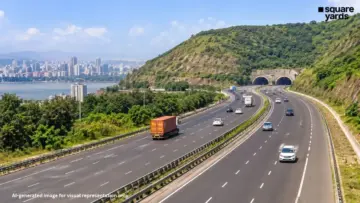
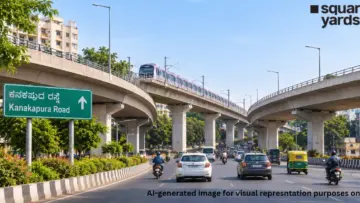
The project is a multi-modal infrastructure marvel involving elevated roads, a sophisticated tunnel through the Parsik Hills, and a series of flyovers. Once fully operational, the corridor will provide a direct, signal-free route, reducing the travel distance between Airoli and Katai Naka by approximately 7 to 8 kilometers and slashing travel time by an estimated 30 to 45 minutes.
Chronology of Development: A Phased Approach to Completion
The MMRDA has adopted a phased execution strategy to ensure that portions of the corridor can be opened to the public as they are completed, rather than waiting for the entire 12.71-km stretch to be finished.
Phases 1 and 2: The December 2026 Milestone
The first two phases represent the most critical "missing link" in the current road network.
- Phase 1: This 2.57-km section connects the Airoli end of the Mulund-Airoli Bridge to the Thane-Belapur Road. It serves as the gateway for commuters coming from Mumbai’s eastern suburbs.
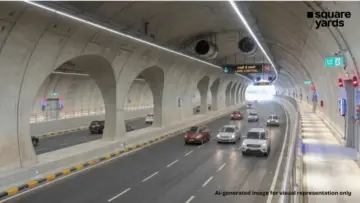
- Phase 2: Spanning 3.43 km, this stretch extends from the Thane-Belapur Road to National Highway 4 (NH-4) near Mumbra. The highlight of this phase is the 1.69-km twin-tube tunnel bored through the Parsik Hills, a project that required precision engineering to navigate the challenging basalt rock topography.
As of late November 2024, these two phases are in their final stages. While the civil work is nearly complete, the MMRDA is focusing on the installation of electromechanical systems within the tunnel, safety barriers, and road surfacing. The official deadline for the commissioning of these two phases is set for December 2026.
Phase 3: The Extension to Katai Naka
The final leg of the project involves a 6.71-km elevated stretch that will carry traffic from NH-4 near Mumbra all the way to Katai Naka. This phase is crucial for residents of Kalyan, Dombivli, and Badlapur, as it bypasses the congested Shilphata area entirely. This section is currently under construction and is slated for completion by late 2028.
Engineering Excellence: The Parsik Hill Tunnel
One of the most significant features of the Airoli-Katai Naka corridor is the 1.69-km tunnel through the Parsik Hills. Historically, the Parsik Hill range has acted as a geographic barrier between the Navi Mumbai plains and the Thane-Kalyan hinterlands. Commuters previously had to circumnavigate the hills, leading to long detours.
The tunnel is designed to accommodate three lanes of traffic in each direction, equipped with advanced fire-fighting systems, high-tech ventilation, and 24/7 CCTV surveillance. By cutting through the hill, the MMRDA has effectively created a "shortcut" that will revolutionize how logistics and passenger vehicles move between the two regions.
Official Oversight and Safety Protocols
The progress of the project is being closely monitored at the highest levels of the metropolitan administration. On November 24, 2024, Metropolitan Commissioner Sanjay Mukherjee conducted a comprehensive site inspection. The visit was aimed at reviewing the structural integrity of the nearly completed sections and ensuring that safety arrangements—particularly within the tunnel sections—meet international standards.
During the inspection, Dr. Mukherjee emphasized the importance of meeting the December 2026 deadline for the first 6 km. He noted that the project is not just about road construction but about creating a safe and efficient transit experience. The MMRDA has integrated "Smart City" features into the corridor, including automated traffic management systems and LED lighting, to ensure commuter safety during night-time travel.
Supporting Data: The Economic and Real Estate Impact
The primary driver of the Airoli-Katai Naka corridor is its potential to unlock the residential markets of the "extended suburbs." For many working professionals in the IT and industrial hubs of Airoli and Mahape, owning a home near their workplace has become financially prohibitive.
The Affordability Gap
Data provided by Square Yards highlights a stark contrast in property prices across the corridor, illustrating why this infrastructure project is a game-changer for middle-income homebuyers.
| Location | Average Property Price (per sq. ft.) |
|---|---|
| Mulund East | Rs 26,650 |
| Airoli | Rs 23,500 |
| Mumbra | Rs 12,250 |
| Shilphata | Rs 12,250 |
| Diva | Rs 10,800 |
| Dombivli East/West | Rs 10,950 |
| Kalyan East | Rs 9,150 |
| Kalyan-Shilphata Road | Rs 8,400 |
| Badlapur | Rs 6,950 |
The "Space vs. Price" Trade-off
The corridor effectively bridges the price gap. For instance, a homebuyer with a fixed budget of Rs 75 lakh currently faces a difficult choice:
- In Airoli, they could afford a modest 319 sq. ft. studio or small one-bedroom apartment.
- In Mumbra, the same budget secures a 612 sq. ft. two-bedroom apartment.
- In Badlapur, that budget could potentially afford a spacious three-bedroom home or a small row house.
By reducing travel time to under 30 minutes, the corridor makes living in Mumbra or Shilphata a viable option for those working in the Airoli Knowledge Park or the Mindspace SEZ. It shifts the focus from "distance in kilometers" to "distance in minutes," which is the true currency of urban living.
Strategic Implications for the MMR
The completion of the Airoli-Katai Naka corridor has far-reaching implications beyond just shorter commutes.
1. Easing the Burden on Existing Arteries
Currently, the Sion-Panvel Highway and the Thane-Belapur Road carry the bulk of the traffic between Mumbai, Navi Mumbai, and Pune. The new corridor will act as a relief valve, diverting heavy traffic and commercial vehicles away from city centers, thereby reducing wear and tear on local roads and lowering pollution levels in residential zones like Mahape.
2. Boosting the Rental Market
As connectivity improves, areas like Mumbra and Diva are expected to see a surge in rental demand. Professionals who were previously deterred by the grueling commute will now look at these areas as affordable rental hubs, providing a boost to local property owners and investors.
3. Integration with Future Projects
The corridor is designed to integrate seamlessly with other upcoming infrastructure projects, including the Virar-Alibaug Multi-Modal Corridor and the Navi Mumbai International Airport (NMIA). It creates a comprehensive network that links the northern parts of the MMR to the new airport, facilitating easier access for travelers from Kalyan and Dombivli.
4. Commercial Decentralization
With better road access, the Kalyan-Shilphata belt is likely to attract more commercial interest. Warehousing, logistics, and back-office operations may migrate to these areas due to lower land costs and improved accessibility for the workforce.
Conclusion: A New Era for Suburban Living
The Airoli-Katai Naka corridor is more than just a road; it is a catalyst for regional equity. By connecting high-value employment centers with affordable housing markets, the MMRDA is addressing one of the most significant challenges of the Mumbai metropolitan area: the housing crisis.
While the full benefits of the 12.71-km stretch will only be realized by late 2028, the opening of the first 6-km link in December 2026 will provide immediate relief to thousands of commuters. For homebuyers in Mumbra, Shilphata, and Diva, the countdown has begun for a future where a high-quality home does not have to come at the cost of a grueling daily commute. As the tunnel through Parsik Hill nears completion, it symbolizes the breaking of barriers—both physical and economic—for the residents of Thane and Navi Mumbai.