

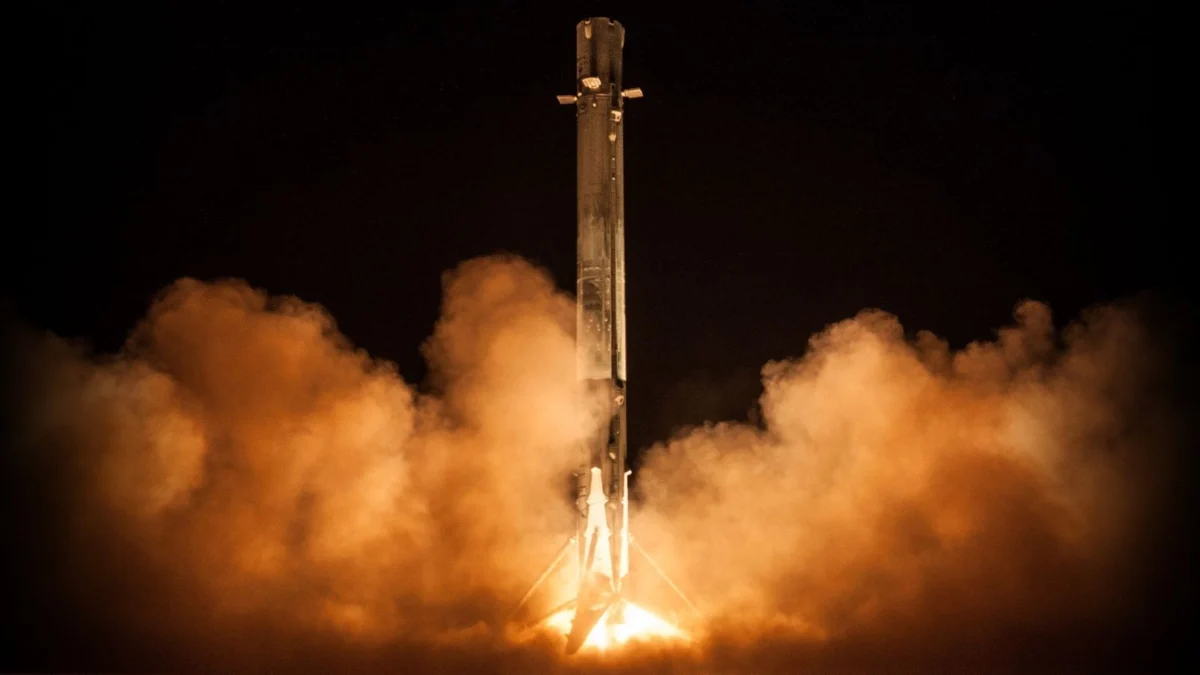
VANDENBERG SPACE FORCE BASE, CA – In the early hours of Saturday morning, the California coastline was illuminated by the familiar glow of a Falcon 9 rocket, marking a historic milestone for the private aerospace sector. As the clock struck 3:25 a.m. EDT, SpaceX successfully launched 27 Starlink internet satellites into low Earth orbit (LEO), officially recording its 100th Falcon family mission of the calendar year 2026.
This achievement, coming just eight months into the year, underscores the unprecedented launch cadence established by Elon Musk’s aerospace firm. The mission, designated Starlink Group 9-5, not only expands the world’s largest satellite constellation but also reinforces SpaceX’s near-monopoly on reliable, high-frequency orbital access.
Main Facts: Breaking Down the 100th Mission
The Saturday launch was a textbook execution of SpaceX’s "rapid-turnaround" philosophy. Lifting off from Space Launch Complex 4 East (SLC-4E) at Vandenberg Space Force Base, the Falcon 9 rocket carried a payload of 27 Starlink v2 Mini satellites. These units, while smaller than the upcoming V3 models, represent the current backbone of the Starlink network, featuring enhanced phased-array antennas and E-band backhaul capabilities.
Key highlights of the mission include:
- Launch Vehicle: Falcon 9 (B1100.9).
- Payload: 27 Starlink satellites.
- Milestone: 100th Falcon mission of 2026 (99 Falcon 9 launches, 1 Falcon Heavy launch).
- Recovery: Successful landing on the drone ship Of Course I Still Love You (OCISLY).
- Deployment: Confirmed approximately 62 minutes post-liftoff.
The booster used in this mission, B1100, completed its ninth successful flight and recovery. Having previously supported various missions ranging from national security payloads to commercial satellite deployments, the booster’s performance Saturday morning further validates the longevity of the Falcon 9’s reusable architecture.
Chronology: The Road to 100 in 2026
The journey to the 100th mission of 2026 began on January 1st, with an aggressive schedule that has seen SpaceX averaging a launch every 2.3 days.
The Early Quarter Surge
The year began with a heavy focus on the Starlink "Direct-to-Cell" capability, with the first twenty missions of the year largely dedicated to ensuring global cellular coverage. By March, SpaceX had already surpassed 40 launches, maintaining a pace that far exceeded any other nation or private entity.
The Falcon Heavy Interlude
While the Falcon 9 remains the workhorse of the fleet, April 2026 saw the year’s only Falcon Heavy mission. The heavy-lift vehicle was utilized to deploy the Viasat-3 F3 telecommunications satellite. This mission was critical as it demonstrated SpaceX’s ability to pivot between its high-volume Starlink launches and high-mass, high-energy orbit requirements for external commercial clients.
The Summer Sprint
Leading up to the August 23 milestone, the company ramped up operations at its three primary launch sites: Kennedy Space Center (KSC) and Cape Canaveral Space Force Station in Florida, and Vandenberg in California. The 99th mission of the year took place just 48 hours prior to Saturday’s launch, illustrating the company’s ability to manage simultaneous launch campaigns across the continental United States.
Supporting Data: The Scale of the Starlink Megaconstellation
To understand the significance of the 100th launch, one must look at the sheer volume of hardware SpaceX has placed in orbit.
Constellation Statistics
As of late August 2026, the Starlink constellation has surpassed 11,000 operational satellites. This represents more than 60% of all active satellites currently orbiting Earth.
- Starlink Dominance: Of the 99 Falcon 9 launches in 2026, 76 (roughly 77%) have been dedicated to Starlink.
- Global Reach: Starlink now serves over 6 million subscribers worldwide, providing high-speed internet to maritime, aviation, and rural terrestrial sectors.
- Launch Record Comparison: While 100 launches by August is staggering, SpaceX is still chasing its 2025 record of 165 total Falcon launches. To break that record, the company will need to maintain or slightly increase its current tempo through the fourth quarter of 2026.
Reusability Metrics
The recovery of B1100 on the drone ship Of Course I Still Love You marks the 335th successful recovery of a Falcon first-stage booster in the company’s history. The refurbishment time for boosters has dropped significantly, with some units now returning to the pad in under 20 days. This industrialization of spaceflight is the primary driver behind the reduced cost-to-orbit, which currently sits at an industry-leading low.
Official Responses and Corporate Vision
SpaceX leadership has remained focused on the broader goals of the company, viewing the 100th launch not as a finish line, but as a progress report.
In a brief statement via social media following the deployment, SpaceX emphasized the role of its workforce: "100 Falcon missions in 2026 is a testament to the hard work and ingenuity of the SpaceX team. We are one step closer to connecting the unconnected and making life multi-planetary."
Elon Musk, CEO of SpaceX, has previously commented on the necessity of this launch frequency. According to Musk, the current Falcon 9 cadence is a "bridge" to the Starship era. "Falcon is doing incredible work," Musk noted in a recent internal town hall, "but to get to 100,000 satellites and eventually Mars, we need the mass-to-orbit capacity that only Starship can provide."
Industry analysts at Space.com and Payload suggest that SpaceX’s internal goal for the "Starlink V3" era involves a constellation of 100,000 satellites. This next generation of spacecraft is expected to be significantly larger and more capable, requiring the Starship launch system—which is currently undergoing advanced orbital testing in Boca Chica, Texas—to reach its full operational potential.
Implications: The Future of Orbital Infrastructure
The success of SpaceX’s 100th mission in 2026 has profound implications for the global economy, international security, and the future of space exploration.
1. The Normalization of Space Access
The frequency of SpaceX launches has effectively "normalized" spaceflight. What was once a once-in-a-decade national event is now a bi-weekly routine. This reliability has encouraged a new wave of startups to develop orbital payloads, knowing that a launch window will almost certainly be available within weeks, rather than years.
2. Geopolitical and Military Significance
The Starlink constellation has become a vital piece of "soft power" and infrastructure. The U.S. Department of Defense, through its "Starshield" program, has increasingly relied on SpaceX’s ability to launch frequently to maintain a resilient orbital layer for secure communications. The 100-launch milestone proves that the U.S. possesses a surge capacity in space that no other nation can currently match.
3. Orbital Traffic and Sustainability
With 11,000 satellites in orbit and 100,000 planned, the issue of space debris and orbital traffic management has moved to the forefront of international policy. SpaceX has implemented automated collision-avoidance systems on all Starlink units, but the sheer density of the LEO environment remains a point of concern for astronomers and rival space agencies. The 100th launch serves as a reminder that the regulatory framework for space traffic may need to evolve as quickly as the launch technology itself.
4. The Economic Shift
Starlink is no longer just a "beta" project; it is a cash-flow engine for SpaceX. The revenue generated from the 11,000+ satellites currently in orbit is directly funding the development of Starship. By hitting 100 launches this early in the year, SpaceX is ensuring a steady stream of capital to fuel its more ambitious goals of lunar exploration and Mars colonization.
5. Closing the Digital Divide
For the millions of users in regions where traditional fiber-optic cables are geographically or economically unfeasible, the 27 satellites launched on Saturday represent improved latency and bandwidth. As the constellation grows, the cost of the user terminal is expected to drop, further democratizing internet access on a global scale.
Conclusion
As the Falcon 9 upper stage successfully deployed its payload on Saturday, the 100th mission of 2026 concluded with a silent drift of satellites into the void. However, the impact of this mission will be felt loudly across the globe. SpaceX has not only set a new bar for operational excellence but has also fundamentally altered the relationship between humanity and the orbital environment. With four months remaining in the year, the aerospace community now watches to see if the company can shatter its own record of 165 launches, further cementing its place as the undisputed leader of the new space age.
