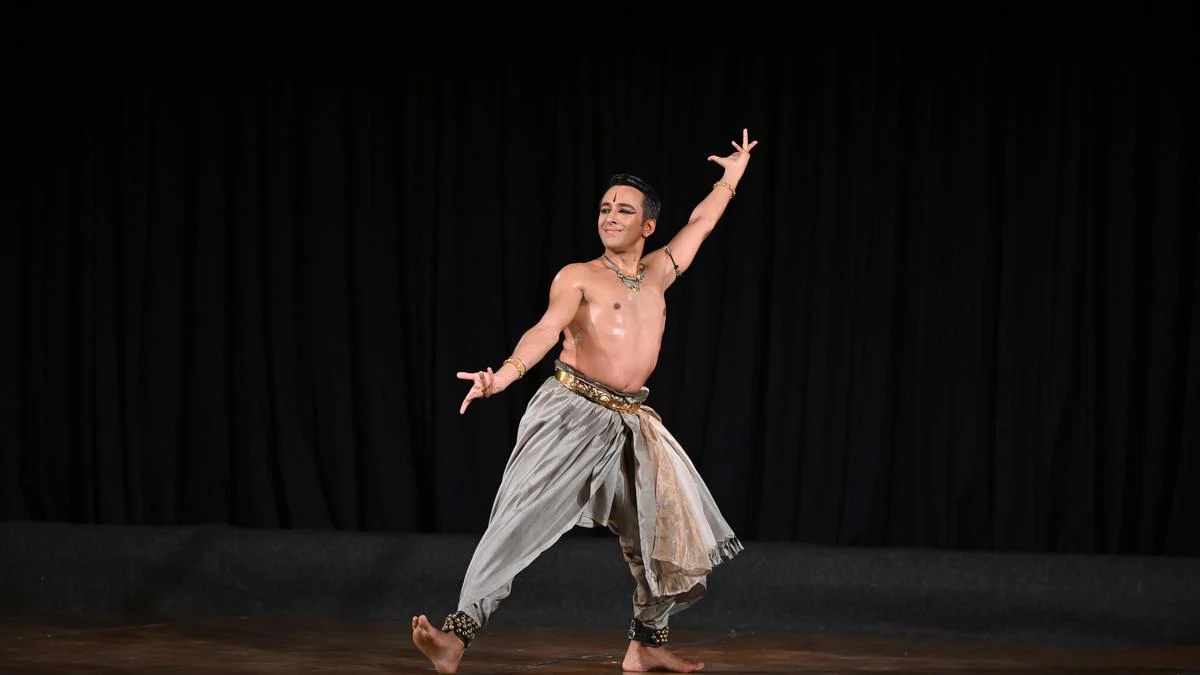
Chennai, India – August 26, 2026 – In a performance that transcended mere movement and resonated with the very essence of the element it represented, Bharatanatyam virtuoso Christopher Guruswamy captivated audiences at Natyarangam’s Pancha Bhootha Bharatham festival. His rendition of "Vayu" (air) was not simply a dance; it was a profound exploration of the invisible yet omnipresent force that sustains life, drives change, and carries emotions across vast distances. Guruswamy’s masterful interpretation, seamlessly interwoven with the evocative musical tapestry woven by Vignesh Ishwar, proved to be a highlight of the festival, underscoring the innovative spirit and artistic depth of the event.
The Pancha Bhootha Bharatham festival, an initiative by Natyarangam, is designed to foster a dynamic creative dialogue between Carnatic vocalists and Bharatanatyam dancers, pushing the boundaries of traditional expression. This year’s focus on the five fundamental elements – earth, water, fire, air, and ether – provided a fertile ground for artists to reimagine classical forms through contemporary lenses. Guruswamy’s "Vayu" performance stood as a testament to the success of this vision, showcasing how a well-conceptualized repertoire, drawing from both classical and modern compositions, can not only sustain but also profoundly expand artistic horizons.
A Performance Etched in Breath and Movement
From his initial entrance onto the stage, Christopher Guruswamy embodied the spirit of "Vayu." Dressed in an elegant silver-grey dhoti, his presence was one of effortless grace and contained energy. The performance commenced with a solemn salutation to the Sun, a symbolic gateway to self-realization through pranayama, the conscious control of breath. Drawing inspiration from the profound verses of Thirumoolar’s Tirumandiram, Guruswamy, guided by Vignesh Ishwar’s musical setting in the ragas Nattakurinji and Saveri, eloquently conveyed the fundamental significance of air for the very existence of life. This opening piece, a powerful invocation of the life-giving breath, set a contemplative and reverent tone for the evening.
Following this introspective beginning, Guruswamy transitioned to a Navasandhi Kavuthuvam in Harikamboji, a traditional dance form often performed at the commencement of major rituals. This segment showcased the technical prowess and rhythmic precision of the dancer, hinting at the versatility and dynamism that would unfold throughout the performance. The juxtaposition of the spiritual and the ritualistic elements established a rich foundation for the thematic exploration of "Vayu."
The Shifting Sands of Emotion: Romance and Transience
The performance took a more lyrical turn with Vignesh Ishwar’s rendition of the ghazal "Hawa Mahal." The soft, melodious notes of raga Durga, rendered with exquisite sensitivity by Ishwar, created an intimate atmosphere that allowed Guruswamy to delve into the multifaceted spectrum of romance. Through nuanced abhinaya (expressive acting) and fluid choreography, he portrayed the delicate anticipation, the intoxicating elation, and the poignant disappointment experienced by a nayika (heroine) whose beloved is envisioned as the wind itself. The dancer masterfully captured the ephemeral nature of this celestial lover, who arrives to unite, embrace, and then vanishes like a fleeting breeze. Guruswamy’s graceful movements and his ability to convey subtle emotional shifts were particularly striking, imbuing the abstract concept of wind with palpable human feeling.
This segment highlighted the collaborative synergy between dancer and musician. Ishwar’s vocalizations were not mere accompaniment but an integral part of the narrative, his voice mirroring the ebb and flow of the nayika‘s emotions. The interplay between the sung word and the danced interpretation created a deeply immersive experience for the audience, drawing them into the intimate world of the ghazal.
The Tempestuous Might of Vayu: Destruction and Resilience
The narrative then shifted dramatically, moving from the gentle caress of the wind to its formidable and destructive power. This potent aspect of "Vayu" was brought to life with electrifying vigour in "Katre vaa meduva vaa," a powerful vachana kavidhai (prose poem) by the renowned Tamil poet Subramania Bharathi. The composition, set to music by K. Arun Prakash and Vignesh Ishwar, pulsed with a fierce rhythm and a power-packed rendition that found its perfect echo in Guruswamy’s dynamic and uninhibited dance.
Here, Guruswamy’s movements became sharp, angular, and expansive, mirroring the force of a tempest. The choreography effectively conveyed the destructive potential of wind – its ability to uproot, to churn, and to unleash chaos. The dancers’ energetic leaps, forceful gestures, and commanding stage presence effectively translated Bharathi’s fiery verses into a visceral visual spectacle. This segment showcased Guruswamy’s versatility, demonstrating his capacity to embody both the subtle and the overwhelmingly powerful manifestations of the elemental force. The contrast between the lyrical romance of the ghazal and the raw power of Bharathi’s poem underscored the multifaceted nature of "Vayu" and Guruswamy’s ability to navigate these diverse emotional landscapes.
A Poignant Testament to Hope in the Face of Adversity
The performance reached its emotional apex with a profoundly moving visualization of "If I must die," a poem by the late Palestinian poet Refaat Alareer. Penned amidst the harrowing realities of the ongoing war in Gaza, the poem is a powerful testament to survival, the enduring nature of memory, and the inextinguishable flame of hope. Guruswamy’s interpretation of this piece was nothing short of breathtaking, transforming abstract verse into a deeply human and universally resonant experience.

The central imagery of a kite, fashioned from white fabric and strings, soaring high in the sky as a symbol of love for a child who has lost her father, was handled with extraordinary sensitivity and grace. The dancer’s movements, imbued with a profound sense of tenderness and resilience, evoked the enduring spirit of love and remembrance in the face of unimaginable loss. The musical accompaniment for this segment was particularly poignant. The plaintive melody of the violin, played with immense skill by L. Ramakrishnan, initially mirrored the sombre mood of grief and despair. This was followed by Vignesh Ishwar’s evocative singing, which served as a powerful prelude to Guruswamy’s deeply felt interpretation of Alareer’s verses.
The piece culminated in a dramatic sonic and visual crescendo. A sudden burst of rhythmic intensity from the mridangam and kanjira, coupled with the melancholic yet stirring notes of the nagaswaram and the judicious use of dramatic lighting, evoked the horror and devastation of bombings. Yet, even amidst this depiction of violence, the enduring image of the kite, a symbol of hope and connection, persisted. This segment lingered in the minds of the audience long after the final note faded, a powerful reminder of the human capacity for love and resilience in the darkest of times. It was a masterful integration of poetry, dance, and music, creating a piece that was both deeply personal and universally significant.
Divine Interventions and the Source of Life
The performance continued with a depiction of Hanuman, drawing inspiration from Adi Shankaracharya’s Hanuman Pancharathna. Presented as a vibrant thillana, a concluding dance piece characterized by its brisk tempo and intricate rhythmic patterns, this segment showcased Guruswamy’s technical virtuosity and his ability to embody divine strength and devotion. The portrayal of Hanuman, the devoted devotee and powerful warrior, offered a moment of energetic upliftment and spiritual reverence.
The festival’s thematic exploration of "Vayu" culminated with a rendition of the Dikshitar kriti, "Sri Kalahastheesa." This composition, deeply rooted in Shaivite tradition, seeks the sublime source of prana (life force), a concept intrinsically linked to the element of air. Through this concluding piece, Guruswamy brought the performance full circle, returning to the fundamental understanding of air as the very essence of existence, the animating principle that connects all living beings.
A Symphony of Support: The Power of the Ensemble
The formidable team of musicians supporting Christopher Guruswamy played an indispensable role in the resounding success of the performance. Sri Sudarsini’s nattuvangam (the rhythmic clapper used by the dance master) remained a steady anchor, guiding the intricate footwork with unwavering control, while her renditions of the jathis (rhythmic syllables) were captivating. Sumesh Narayan’s mridangam and kanjira playing was seamless, effortlessly integrating complex rhythmic patterns into the overall soundscape, adding layers of depth and texture.
The strategic and judicious use of the nagaswaram at pertinent moments enriched the narrative without ever overpowering the ensemble, adding a distinctive regional flavour and gravitas. L. Ramakrishnan’s brilliant violin playing served as a beautiful counterpoint to the orchestra, weaving melodic threads that enhanced the emotional resonance of each piece. And, of course, Vignesh Ishwar’s robust voice and sensitive singing were the melodic soul of the performance, complementing Guruswamy’s dance at every turn and elevating the entire artistic experience. The collective effort of these talented musicians underscored the deeply collaborative nature of Bharatanatyam, where each element is vital to the creation of a cohesive and impactful whole.
Implications and Future Directions
Christopher Guruswamy’s performance at the Pancha Bhootha Bharatham festival is more than just a well-executed dance recital; it is a significant contribution to the evolving landscape of Indian classical dance. By embracing the elemental theme of "Vayu" with such depth and versatility, Guruswamy has demonstrated the boundless potential for innovation within traditional forms. His ability to seamlessly blend classical technique with contemporary sensibilities, to imbue abstract concepts with profound human emotion, and to engage with diverse poetic and musical traditions, marks him as a visionary artist.
The success of this collaborative model, where dancers and musicians engage in a profound creative exchange, offers a compelling blueprint for future artistic endeavors. The festival’s commitment to exploring themes through the lens of the five elements provides a rich source of inspiration for artists seeking to push creative boundaries. As the world grapples with environmental challenges and seeks deeper connections with the natural world, performances like Guruswamy’s "Vayu" serve as powerful reminders of our intrinsic relationship with the elements, urging us to appreciate their beauty, respect their power, and understand their vital role in our existence. The lingering impact of his performance suggests a promising future for Bharatanatyam, one that is both deeply rooted in tradition and boldly forward-looking.