

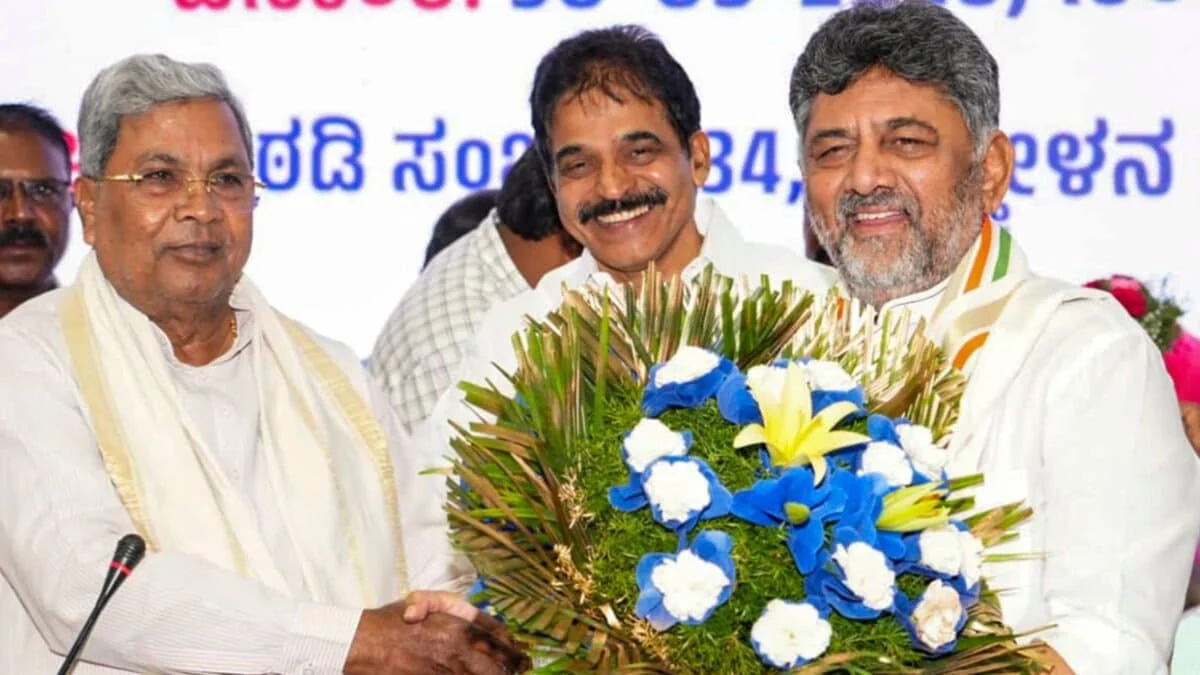
Bengaluru, Karnataka – June 3, 2026 – Amidst palpable excitement and intense political scrutiny, D.K. Shivakumar is set to be sworn in as the 24th Chief Minister of Karnataka today, heralding the commencement of a new Congress government in the state. The grand ceremony, expected to draw a constellation of national political figures, marks the culmination of months of fervent electoral campaigning, a resounding victory, and a subsequent period of intricate power-sharing negotiations within the Congress ranks. As Shivakumar prepares to take the oath of office, the immediate challenge lies in the meticulous crafting of his cabinet, a delicate balancing act designed to appease diverse regional, caste, and generational aspirations within the party.
The oath-taking ceremony, scheduled for Tuesday, will see a lean initial cabinet of approximately 10 to 13 ministers joining Shivakumar. This carefully selected group is anticipated to embody the Congress leadership’s strategic vision: a harmonious blend of seasoned political veterans and dynamic younger faces. The composition of this preliminary council is crucial, as it will set the tone for the new administration and signal the party’s commitment to inclusive governance and rewarding loyalty.
The Immediate Agenda: Cabinet Formation and Governance Promises
The formation of the cabinet is arguably the most immediate and critical task confronting Chief Minister-designate Shivakumar. With a constitutional limit of 34 members, including the Chief Minister, the expansion of the cabinet will be a phased process. The initial tranche of ministers is expected to be a microcosm of the broader political calculations at play. Among the prominent names heavily tipped for ministerial berths are Yathindra Siddaramaiah, son of former Chief Minister Siddaramaiah, and Priyank Kharge, son of Congress President Mallikarjun Kharge. Their inclusion is seen as a strategic move to acknowledge and integrate the influence of two of the party’s most formidable leaders in the state and at the national level.
Other frontrunners for ministerial positions include a roster of experienced legislators and former ministers who have demonstrated loyalty and electoral prowess. These include G Parameshwara, K J George, M B Patil, Satish Jarkiholi, Krishna Byregowda, Ramalinga Reddy, U T Khader, Eshwar Khandre, and Dinesh Gundu Rao. The list reflects an attempt to ensure representation from various dominant communities and regions. Significantly, sources within the party indicate a strong likelihood of at least one woman minister being inducted in this initial phase, a move that would underscore the party’s commitment to gender representation in governance.
A notable decision that has emerged from the high-level consultations is Shivakumar’s disinclination to appoint multiple Deputy Chief Ministers at this juncture. While earlier reports suggested the possibility of such appointments to accommodate competing power centres, Shivakumar is understood to believe that a single Deputy CM (or none at all) would foster greater administrative cohesion and prevent the emergence of parallel authority structures within the government. This stance reflects a desire to consolidate power and ensure a streamlined decision-making process, crucial for a government embarking on an ambitious agenda.
The new administration faces the formidable challenge of delivering on the Congress party’s extensive pre-election guarantees, which include schemes like ‘Shakti’ (free bus travel for women), ‘Gruha Jyothi’ (200 units of free electricity), ‘Anna Bhagya’ (10 kg of free food grains), ‘Yuva Nidhi’ (unemployment allowance), and ‘Gruha Lakshmi’ (Rs 2,000 monthly assistance to women heads of households). The successful implementation of these populist measures, while managing the state’s fiscal health, will be a litmus test for the new government’s efficacy and its ability to meet the high expectations generated during the election campaign.
Chronology: The Congress’s Resurgent Path to Power
The journey to Shivakumar’s chief ministership has been a dramatic narrative, marked by strategic political manoeuvres, an emphatic electoral victory, and an intense internal leadership tussle.
Pre-Election Buildup: For months leading up to the May 2026 assembly elections, the Karnataka Congress mounted an aggressive campaign, effectively capitalizing on public sentiment against the incumbent BJP government. The party meticulously crafted a narrative focusing on local issues, alleged corruption, and the economic hardships faced by ordinary citizens. The five "guarantees" promised by the Congress proved to be a powerful electoral plank, resonating deeply with various demographic segments across the state. D.K. Shivakumar, as the Karnataka Pradesh Congress Committee (KPCC) President, played a pivotal role in galvanizing the party machinery, coordinating campaigns, and managing resources, showcasing his organizational prowess. Siddaramaiah, with his extensive administrative experience and populist appeal, complemented Shivakumar, leading the charge on policy and public outreach.
The Electoral Verdict (May 2026): The election results delivered a stunning mandate for the Congress, surpassing most exit poll predictions. The party secured a comfortable majority, crossing the 113-seat mark decisively and reclaiming its dominance in the crucial South Indian state. This victory was not just a win for Karnataka Congress but a significant morale booster for the national party, which had faced a series of electoral setbacks in recent years.
The Leadership Conundrum: Despite the clear mandate, the period immediately following the election was fraught with suspense over the chief ministerial post. Both D.K. Shivakumar and Siddaramaiah, undeniably the two most powerful leaders within the Karnataka Congress, staked their claims. Shivakumar, as the state party chief, highlighted his organizational efforts and the party’s success under his leadership. Siddaramaiah, a former CM with a strong track record in administration and a broad appeal across various communities, argued for his experience and proven ability to govern.
The intense lobbying from both camps necessitated the intervention of the Congress high command in Delhi. Party President Mallikarjun Kharge, along with senior leaders like Rahul Gandhi and K.C. Venugopal, engaged in extensive consultations. This involved multiple rounds of meetings with both contenders, discussions with party observers sent to Bengaluru, and deliberations with other senior leaders. The process underscored the delicate balance the party had to strike to prevent internal dissent from overshadowing the electoral triumph.
The Resolution (May 30, 2026): After several days of high-stakes negotiations and widespread speculation in the media, the Congress high command announced its decision. D.K. Shivakumar was elected leader of the Congress Legislature Party (CLP), paving his way to the Chief Minister’s office. The decision was presented as a unanimous choice, reflecting party unity, though it was widely understood to be a carefully brokered compromise to ensure both leaders remained integral to the party’s future in Karnataka. Shivakumar’s election as CLP leader set the stage for today’s momentous oath-taking ceremony.
Supporting Data: The Intricacies of Cabinet Crafting
The selection of ministers in Karnataka is never a straightforward affair; it is a complex political calculus that must account for a multitude of factors to ensure stability and broad-based representation.
Caste and Community Representation: Karnataka’s diverse socio-political landscape necessitates meticulous attention to caste and community representation. The state is broadly dominated by two major communities: the Lingayats and the Vokkaligas. While Shivakumar hails from the Vokkaliga community, Siddaramaiah is a prominent leader from the Kuruba community. The cabinet must reflect a fair balance, including representation from Scheduled Castes (SCs), Scheduled Tribes (STs), Other Backward Classes (OBCs), and minority communities. Key leaders like G Parameshwara (Dalit), M B Patil (Lingayat), Satish Jarkiholi (ST/Valmiki), and U T Khader (Muslim) are crucial for ensuring this equilibrium. The Congress’s historical strength has often relied on a coalition of these diverse groups, and the cabinet formation is a critical exercise in reaffirming that social contract.
Regional Balance: Karnataka is geographically diverse, with distinct political and cultural nuances across its regions: Old Mysuru (dominated by Vokkaligas), North Karnataka (Lingayat stronghold), Coastal Karnataka, Central Karnataka, and Hyderabad-Karnataka (Kalyana Karnataka). The cabinet must ensure adequate representation from all these regions to prevent feelings of neglect and foster a sense of collective ownership in the government. For instance, leaders from North Karnataka, which often feels marginalized, will be crucial.
Factional Dynamics and Loyalty Rewards: The Congress in Karnataka, like in many states, is characterized by various internal factions. The cabinet formation is an opportunity to reward loyalists who stood by the party during challenging times and to accommodate leaders who command significant support bases. The inclusion of sons of prominent leaders like Siddaramaiah and Kharge, while potentially attracting criticism of dynastic politics, is also a pragmatic move to secure their respective fathers’ continued support and influence within the government. Shivakumar also needs to reward those who worked tirelessly under his leadership as KPCC chief.
Experience vs. Youth: The dilemma of balancing seasoned administrators with fresh, energetic faces is a perennial challenge. Veteran leaders bring invaluable experience in governance and crisis management, while younger leaders can inject new ideas and connect with a younger electorate. The proposed inclusion of both categories reflects a forward-looking approach, aiming for a robust and dynamic administrative team.
The ‘No Deputy CM’ Strategy: Shivakumar’s reported reluctance to appoint multiple Deputy Chief Ministers is a significant strategic choice. While appointing multiple deputies might appease more leaders, it can also lead to fragmented authority, turf wars, and create multiple power centres that challenge the Chief Minister’s supremacy. By consolidating authority, Shivakumar aims to project a strong, unified leadership, which he believes is essential for effective governance and implementing the party’s ambitious agenda without internal friction. This decision, however, places a greater burden on Shivakumar to manage expectations and potential grievances from those who might have aspired to the deputy’s role.
Official Responses and High-Profile Attendance
The swearing-in ceremony is not merely a state event but a significant political gathering with national ramifications. Congress leader Rahul Gandhi and party president Mallikarjun Kharge are confirmed attendees, signifying the high command’s endorsement and the national importance of this victory. Chief Ministers from Congress-ruled states, including Telangana and Himachal Pradesh, are also expected to be present, showcasing intra-party solidarity.
Beyond Congress, the guest list includes key opposition figures, underscoring the broader implications of the Karnataka result. Tamil Nadu’s Chief Minister (likely M.K. Stalin, though the article mentions C. Joseph Vijay, a likely placeholder), and Jharkhand CM Hemant Soren are among the senior opposition leaders anticipated. Their presence transforms the event into a platform for informal discussions and photo opportunities among leaders aiming to forge a united front against the ruling BJP at the national level ahead of the 2029 general elections. Such gatherings are crucial for building camaraderie and trust among disparate opposition parties.
Speaking to the media ahead of the ceremony, a senior Congress leader, requesting anonymity, emphasized the party’s commitment to "a government that truly listens to the people of Karnataka." He added, "This cabinet will be a reflection of our resolve to deliver on every promise made and to ensure inclusive development across the state." Party sources close to the high command indicated that the leadership has emphasized "unity and disciplined governance" as the cornerstones for the new administration.
Implications: A New Dawn for Karnataka and Congress’s National Ambitions
The swearing-in of D.K. Shivakumar marks a pivotal moment, not just for Karnataka but for the Congress party’s national resurgence and the broader Indian political landscape.
For Karnataka: The immediate implication is the ushering in of a new era of governance. The focus will swiftly shift from political manoeuvring to administration and policy implementation. The Congress government will be under immense pressure to deliver on its five guarantees, which have significantly raised public expectations. The state’s economic health, investment climate, and social welfare programs will be closely watched. A stable and effective government in Karnataka could serve as a model for other states. However, the challenge of managing the state’s finances while fulfilling expensive promises will be considerable.
For the Congress Party: The Karnataka victory is a significant morale booster for the Congress, providing much-needed momentum after a series of electoral defeats. It demonstrates the party’s ability to win a major state independently and counter the BJP’s formidable election machinery. This success could reinvigorate the party cadres nationally and provide a template for electoral strategies in upcoming state elections and the 2029 general elections. The careful handling of the leadership tussle, even if prolonged, ultimately projected an image of a party capable of internal conflict resolution, albeit under high command’s guidance.
Siddaramaiah’s Enduring Influence: Even without the Chief Minister’s mantle, Siddaramaiah’s role remains crucial. Sources indicate that the party leadership has reiterated its suggestion for him to consider a Rajya Sabha berth, though he has expressed a clear preference for remaining active in Karnataka politics. His recent appointment to the Congress Working Committee (CWC), the party’s highest decision-making body, underscores his continued national importance. Furthermore, the leadership is actively considering forming a coordination committee headed by Siddaramaiah. This body would be tasked with ensuring seamless coordination between the government and the party organization, leveraging his vast experience and maintaining his pivotal role in state affairs. His strategic insights and populist appeal will undoubtedly continue to shape the government’s direction.
The Race for KPCC Chief: With Shivakumar vacating the KPCC President’s post, the race for his successor has begun. Senior MLA and former minister Satish Jarkiholi is considered a leading contender. However, the situation is complicated by the fact that Jarkiholi is also vying for a cabinet berth. The party leadership faces another delicate decision: appointing a strong, unifying figure to lead the state unit while also accommodating ministerial aspirations. The KPCC chief plays a critical role in maintaining party discipline, preparing for future elections, and acting as a bridge between the government and the grassroots workers.
National Political Landscape: The convergence of opposition leaders at the swearing-in ceremony carries significant symbolic weight. It transforms a state event into a potential precursor for a broader anti-BJP alliance. The optics of diverse opposition leaders sharing a stage can send a powerful message of unity and collective strength, potentially influencing the narrative leading up to the 2029 general elections. Karnataka’s outcome offers a blueprint for opposition parties to challenge the BJP by focusing on local issues, economic grievances, and robust campaign strategies. However, the challenge of translating such symbolic unity into a cohesive national alliance remains formidable, given the diverse ideologies and ambitions of various regional parties.
In essence, D.K. Shivakumar’s assumption of the Chief Minister’s office is more than just a change of guard; it represents a critical juncture for the Congress party, a moment of renewed hope and daunting challenges. The success of this new government will not only shape the future of Karnataka but also significantly influence the political trajectory of the Congress in India. The eyes of the nation are now firmly fixed on Bengaluru, watching how this new leadership navigates the complexities of governance and fulfills the mandate entrusted to it.
