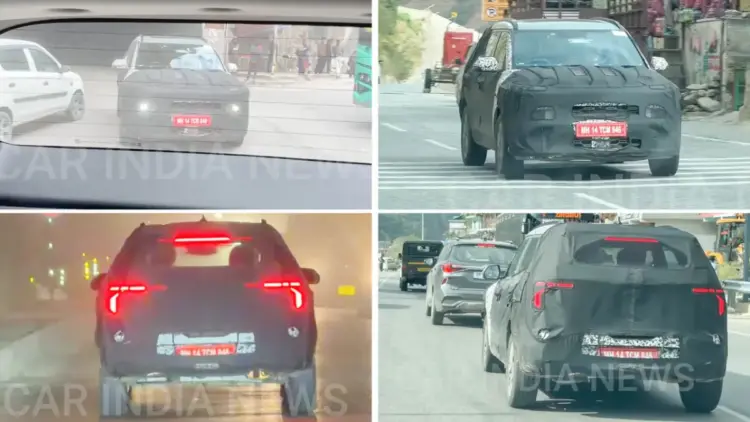
The Indian automotive landscape, particularly the fiercely contested sub-4-meter SUV segment, is bracing for a significant transformation. Recent sightings of a heavily camouflaged test mule in the high-altitude reaches of the Himalayan region have confirmed that Kia India is well into the development phase of the next-generation Kia Sonet. While the current Sonet recently underwent a mid-cycle refresh, these latest spy shots suggest that Kia is skipping the incremental updates in favor of a comprehensive, ground-up generational overhaul slated for a 2027 debut.
The Sonet has been a cornerstone of Kia’s success in India since its inception in 2020. By combining aggressive styling, a plethora of first-in-segment features, and diverse powertrain options, it carved out a niche for itself against established rivals. However, as competitors like the Tata Nexon, Mahindra XUV 3XO, and the Maruti Suzuki Brezza raise the bar, Kia is looking to redefine the segment once again with a vehicle that promises more than just aesthetic changes.
Main Facts: A Generational Leap in Design and Structure
The latest spy shots, captured by Harsh VLOGS, provide a tantalizing glimpse into what is clearly a more mature and structurally different vehicle. Unlike previous facelifts that focused on bumper designs and lighting tweaks, the 2027 Sonet appears to utilize a revised platform or, at the very least, a significant modification of the existing K2 architecture.
Structural and Exterior Overhaul
The most striking observation from the test mules is the change in sheet metal. The doors are entirely new, featuring more angular lines and a revised window line that suggests a departure from the current model’s curvy silhouette. The front fascia is undergoing a total reconstruction. Following the design language seen in the global Kia EV9 and the updated Seltos, the next-gen Sonet will adopt a split-headlamp setup. The LED Daytime Running Lights (DRLs) will likely reside at the top, bordering the hood line, while the primary projector or LED headlamp units will be positioned lower on the bumper.

The "Tiger Nose" grille, a signature Kia element, is expected to become more integrated and slimmer, flanked by a clamshell-style bonnet that adds a sense of width and muscle to the front end. Interestingly, the test mule was seen sporting what appear to be 17-inch or even 18-inch alloy wheels. While 18-inch wheels are rare in the sub-4m segment due to ride quality concerns, they would certainly give the Sonet a class-leading stance.
Advanced Technology Integration
The presence of visible hardware confirms that Kia is doubling down on technology. The spy shots reveal:
- 360-Degree Camera System: Discreetly placed cameras under the ORVMs and on the front grille.
- ADAS Suite: A dedicated radar/camera housing on the windshield and front bumper suggests the inclusion of Level 2 Autonomous Driver Assistance Systems (ADAS), likely mirroring the suite found in the new Hyundai Venue.
- Enhanced Sensors: Front and rear parking sensors are standard, but their placement suggests a more sophisticated park-assist system.
Chronology: The Evolution of a Segment Leader
To understand the importance of the next-gen Sonet, one must look at the rapid pace at which Kia has iterated this product.
- August 2020: The Global Debut. Kia launched the Sonet in India as its third product. It immediately disrupted the market with features like ventilated seats, a 10.25-inch touchscreen, and a Bose audio system—features previously reserved for luxury segments.
- 2021–2022: Incremental Updates. Kia introduced the "iMT" (Intelligent Manual Transmission) and refined the safety kit, making four airbags standard across several trims long before government mandates were discussed.
- January 2024: The Major Facelift. Kia launched the current iteration of the Sonet, introducing Level 1 ADAS, a new LED light bar at the rear, and a refreshed interior. This update was intended to keep the model competitive for another three years.
- Late 2024: Next-Gen Development Begins. High-altitude testing in the Himalayas indicates that Kia has moved past the computer-aided design (CAD) phase and into real-world endurance testing.
- 2027: Expected Launch. Based on typical development cycles, the next-gen Sonet is expected to hit Indian showrooms in the first half of 2027.
Supporting Data: Powertrains and Performance Expectations
While the exterior and interior are undergoing a revolution, Kia is expected to stick with its proven "Power of Choice" strategy regarding engines. The Himalayan testing is crucial for these powertrains, as high-altitude environments test the turbocharger efficiency and cooling systems under low oxygen levels.

Engine Lineup
The next-generation Sonet is likely to carry forward three primary engines, though they will be tuned for better efficiency and lower emissions (potentially meeting future Real Driving Emission or RDE Stage 3 norms):
- 1.2L Naturally Aspirated Petrol: The entry-level choice, primarily for urban commuters. It currently produces 83 PS and 115 Nm of torque.
- 1.0L Turbocharged GDi Petrol: The enthusiast’s choice. This engine is expected to remain the flagship petrol unit, delivering 120 PS and 172 Nm of torque, likely paired with 6-speed iMT and 7-speed DCT (Dual-Clutch Transmission) options.
- 1.5L CRDi Diesel: While many manufacturers like Maruti and Tata (in smaller cars) have moved away from diesel, Kia remains committed. The 1.5L unit, producing 116 PS and 250 Nm, is a massive draw for long-distance drivers in India.
Interior Innovations
Data from Kia’s global parts bin suggests the interior will be a mini-Seltos. Anticipated features include:
- Twin 12.3-inch Screens: A panoramic curved display housing both the instrument cluster and the infotainment system.
- Panoramic Sunroof: While the current model has a single-pane sunroof, the next-gen Sonet might introduce a panoramic unit to rival the Mahindra XUV 3XO.
- Ventilated Rear Seats: A potential segment-first feature that could further cement the Sonet’s "luxury compact" positioning.
Official Responses and Market Strategy
Kia India has remained tight-lipped about the specific launch date of the "Next Gen" model, typically referring to such sightings as routine testing. However, Kia’s corporate strategy highlights a clear shift toward "Premiumization."
In recent sales reports, Kia India recorded a new high in October 2026 (projected timeline), with over 33,462 units sold in a single month. The Seltos continues to be a volume driver, but the Sonet accounts for nearly 40% of Kia’s total Indian footprint.

An official spokesperson for Kia India previously noted, "Our focus remains on bringing global design language to the Indian customer while ensuring the vehicle is rugged enough for local conditions." The Himalayan testing is a testament to this, as engineers calibrate the suspension and braking systems to handle the "rough road" conditions and steep inclines typical of the Indian subcontinent.
Implications: What This Means for the Industry
The arrival of a ground-up new Sonet in 2027 will have several ripple effects across the Indian automotive industry.
1. Pressure on Competitors
The sub-4m SUV segment is the most profitable and crowded space in India. If Kia successfully integrates Level 2 ADAS and a panoramic sunroof while maintaining competitive pricing, it will force rivals like Maruti Suzuki and Tata Motors to accelerate their own generational updates. We are likely to see a "feature war" where tech previously found in 30-lakh-rupee cars becomes standard in 15-lakh-rupee SUVs.
2. The Survival of Diesel
Kia’s continued investment in the 1.5L diesel engine ensures that the "diesel-head" community has a modern, BS7-compliant (future) option. This could help Kia capture market share from brands that have gone petrol-only, especially in rural and semi-urban markets where diesel remains the preferred fuel for its torque and efficiency.

3. Safety as a Standard
With the next-gen Sonet likely aiming for a 5-star Bharat NCAP rating, the structural changes mentioned earlier (new doors, revised platform) are likely aimed at better side-impact and frontal-offset protection. This shift marks the end of the era where compact cars were seen as "budget" compromises in terms of safety.
4. A Bridge to Electrification
While the spy shots show an Internal Combustion Engine (ICE) vehicle, the structural changes are often designed to be "future-proof." It is highly probable that this new platform is being engineered to accommodate a purely electric powertrain (Sonet EV), allowing Kia to compete with the Tata Nexon EV and the upcoming Mahindra XEV 1e.
Conclusion
The next-generation Kia Sonet is more than just a new car; it is a statement of intent. By testing in the harshest terrains of the Himalayas years ahead of the launch, Kia is ensuring that the vehicle meets the durability expectations of Indian buyers while pushing the envelope of design and technology. As the 2027 launch window approaches, the industry will be watching closely to see if Kia can once again redefine what an "entry-level" SUV can be. For the Indian consumer, the result will be a more sophisticated, safer, and feature-rich vehicle that continues to blur the lines between compact SUVs and premium crossovers.