

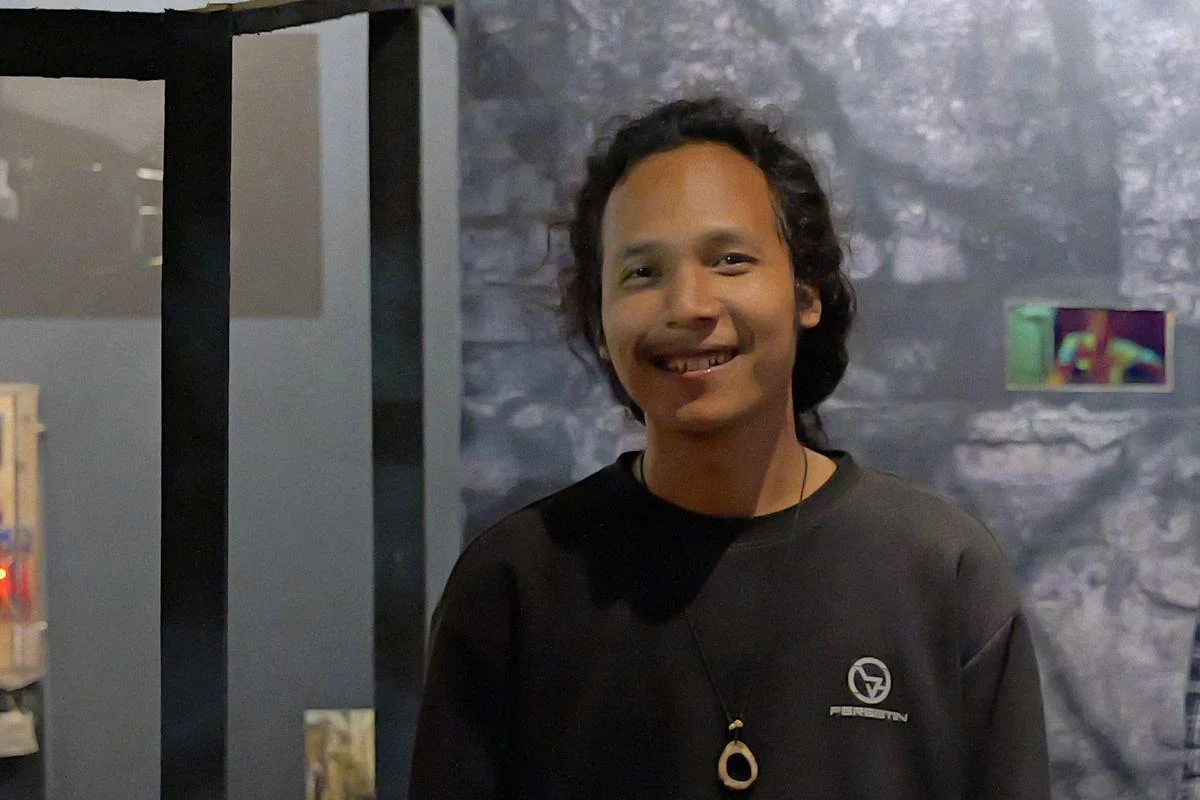
Bengaluru, India – In the heart of Bengaluru, amidst the vibrant art scene, artist Dhiraj Rabha is presenting a deeply personal and profoundly resonant multi-media installation titled Reminiscences of Home. This ambitious project, currently on display at Sabha BLR, delves into the complex and often untold narratives of former members of the United Liberation Front of Asom (ULFA) residing in a camp in Goalpara, Assam. Through a meticulous blend of archival material, intimate interviews, audio-visual elements, and physical structures, Rabha aims to reconstruct the concept of "home" for these individuals, bridging the perceived chasm between those who lived the experience and the wider world.
The genesis of Reminiscences of Home lies not just in Rabha’s artistic vision, but in his lived experience. He grew up in Assam’s Barali Gaon, but his childhood took a significant turn in 1999 when his family moved to a residential camp in Goalpara. This camp housed former ULFA members who had surrendered their arms following peace negotiations with the Indian government. For a young Dhiraj, who was merely four years old at the time, this environment, though under constant surveillance, felt like a normal upbringing. "I never felt that I had a different kind of childhood," he reflects, a testament to the resilience of human adaptation and the power of familial bonds in shaping perception.
Unearthing Dormant Narratives: The Spark of an Idea
Rabha’s journey back to his roots, and to the camp that shaped his early years, was catalyzed by the COVID-19 lockdown in 2021. Returning to his family home in Assam, he found himself with an unprecedented amount of time to reconnect with his loved ones and, crucially, to listen. "At that time, I realised a lot of things about home, and started thinking about how the notion of home is very different for different people," he explains. The lockdown provided a unique window into the past, allowing him to hear the stories of his family and others who had lived through the turbulent era of insurgency and its aftermath. This period of introspection ignited a desire to revisit these narratives, not just as historical accounts, but as deeply human experiences.

The initial impulse was not to create an artwork, but to simply understand. Rabha began engaging in conversations with individuals from the camp, listening without the immediate pressure of an artistic project. "I thought of making a book or documentary at first," he admits. However, as the collection of stories, data, and documents grew, so did his artistic practice, which had already begun to integrate multiple disciplines. This evolution led him to apply for a grant from the India Foundation for the Arts (IFA) under its Arts Practice programme, securing the crucial support needed to transform his research into a tangible, multi-faceted installation.
The Human Cost of Ideals: Malati Rabha’s Story
One of the most poignant narratives woven into Reminiscences of Home belongs to Malati Rabha, a former ULFA member whose early aspirations starkly contrast with her eventual reality. Dhiraj Rabha recounts his conversation with Malati with a palpable sense of empathy. "As a child, she wanted to be a nurse because she would see a nurse wearing a white dress visiting her village, and wanted to wear one too," he shares. This simple childhood dream, inspired by the idealized image of a caregiver, became the unlikely catalyst for her entry into the armed struggle.
Malati, it turns out, joined ULFA not out of ideological conviction, but based on a misinterpretation of the organization’s perceived needs. "She heard the organisation was offering free training for doctors and nurses because they needed medical professionals. So, she didn’t think twice; just ran away from home and joined them. She wasn’t aware of anything about the movement," Rabha explains. The cruel irony of her situation is that her dream of wearing a white nurse’s dress was replaced by the stark reality of camouflage gear. Today, Malati lives a solitary life in a modest house perched on a hill at the edge of a village, a testament to her enduring strength, as Rabha describes her. Her story serves as a powerful microcosm of how individual aspirations can be irrevocably altered by the complex currents of political and social upheaval.

Reconstructing "Home": The Architecture of Memory
Reminiscences of Home is far more than a collection of individual testimonies; it is a carefully constructed environment designed to evoke a sense of belonging and shared experience. The installation, which originally debuted in 2024 at the Goalpara camp itself, aims to "recreate the idea of ‘home’ for the community members through their memories and narratives." This is achieved by employing a diverse range of artistic mediums. Archival photographs and documents provide historical context, while audio-visual elements – including interviews with former ULFA members – offer direct access to their voices and emotions. Physical structures, perhaps symbolic representations of the camp or the homes they left behind, further immerse the viewer in the narrative.
The project’s mission, as supported by the IFA, is to "give voice to the untold stories, bridging the gap between the insiders and the outsiders." This ambition is crucial in a region often characterized by protracted conflict and a subsequent silence surrounding its participants. By presenting these narratives in an artistic and accessible format, Rabha seeks to foster understanding and empathy, challenging preconceived notions and offering a more nuanced perspective on the lives of those who were once on the periphery of mainstream society.
The Journey from Camp Life to Artistic Expression
Dhiraj Rabha’s educational trajectory is as diverse as his artistic practice. After completing his undergraduate degree in Political Science, he pursued both undergraduate and postgraduate studies in Painting from Kala Bhavana, Visva Bharati University, Santiniketan. This academic grounding provided him with the theoretical framework and technical skills to translate his experiences and observations into compelling artistic expressions.

The pivotal moment, as mentioned, was his return to Assam during the COVID-19 lockdown. This period allowed him to deeply engage with his personal history and the collective memories of the camp community. He realized that the concept of "home" was not a monolithic entity but a fluid and deeply personal construct, shaped by unique circumstances and individual journeys. This realization fueled his desire to explore these diverse interpretations of home through his art.
His initial interviews were driven by a pure desire for connection and understanding, not by a pre-ordained artistic outcome. "As the stories piled up, coupled with data and documents, he began thinking of ways to archive them," the article notes. This organic process of research and collection laid the foundation for Reminiscences of Home, allowing the project to evolve organically from personal inquiry to a sophisticated artistic endeavor.
A Transcendent Artistic Vision: Beyond Documentation
The exhibition’s journey has been significant, moving from its intimate debut at the Goalpara camp to prominent platforms such as the Serendipity Arts Festival (2023), the Bengal Biennale (2024), and the upcoming Kochi-Muziris Biennale (2025). In Bengaluru, the installation is on display at Sabha BLR from August 27 to 29, with Rabha himself conducting guided walkthroughs, offering deeper insights into the project’s nuances.

Rabha’s artistic philosophy for Reminiscences of Home is rooted in a desire to transcend mere documentation. "This project is a research project, but I didn’t want it to consist of just documents. I wanted to make it surreal and poetic," he states. This approach allows him to tap into the emotional and psychological dimensions of his subjects’ experiences, moving beyond factual representation to evoke a deeper, more resonant understanding.
While his work is not an endorsement or glorification of ULFA, Rabha emphasizes the importance of understanding the motivations and experiences of all involved. "Many of these people have shared their story for the first time, and, for me, it is important to understand their story, too." This commitment to offering a platform for marginalized voices and challenging dominant narratives is a cornerstone of his artistic practice.
Future Explorations: Cycles of Life and Environmental Loss
Looking ahead, Dhiraj Rabha is embarking on a new artistic venture, exploring the rich tapestry of folk tales from Northeast India. His fascination with the concept of death, particularly in the context of tribal beliefs in reincarnation, has become a central theme. "It is never a final stop, but a loop," he observes, drawing a parallel between the cyclical nature of life and death and the environmental degradation plaguing the region.

This emerging project confronts the "permanent death" of natural landscapes—rivers and forests—in the name of development. Rabha sees this as a profound and irreversible loss, a stark contrast to the cyclical understanding of life and death prevalent in indigenous cultures. He is currently immersed in the research for this new exploration, seeking to articulate these complex ideas through his distinct artistic lens.
Reminiscences of Home stands as a powerful testament to the role of art in excavating buried histories and fostering empathy. Dhiraj Rabha’s dedication to giving voice to the voiceless and his nuanced approach to understanding the human condition continue to shape his impactful contributions to the contemporary art world.
Exhibition Details:
Reminiscences of Home will be held at Sabha BLR between August 27 and 29.
For more information, visit indiaifa.org.
