

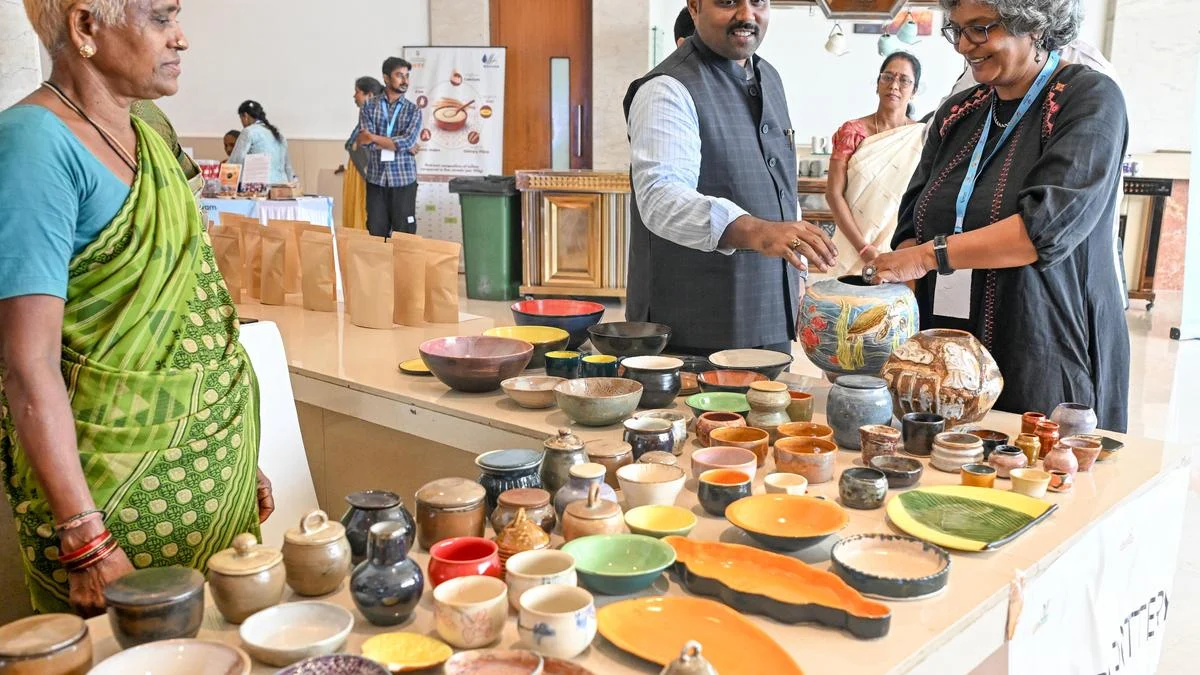
VISAKHAPATNAM – In a significant stride toward bridging the gap between grassroots production and urban market access, the "Celebrating Women Entrepreneurs: Urban Ecosystem and Grassroots Leadership" conference concluded this Tuesday in the port city of Visakhapatnam. The event, which served as both a high-level policy forum and a vibrant marketplace, brought together a diverse cohort of stakeholders to dismantle the barriers preventing women from scaling their business ventures.
Organized through a strategic partnership between the Global Alliance for Mass Entrepreneurship (GAME) and Aspire For Her (AFH), in collaboration with the Women’s Wing of the Visakhapatnam Chamber of Commerce and Industry (VCCI), the day-long event underscored a pivotal shift in the regional economic narrative: the transition of women from subsistence-level work to sustainable, scalable entrepreneurship.
Main Facts: A Convergence of Innovation and Tradition
The conference was structured to address the multifaceted challenges faced by women entrepreneurs in the 21st century. While the exhibition floor buzzed with the tactile beauty of handcrafted ceramics and the aromatic presence of processed dry fish, the seminar halls were filled with rigorous debates on FinTech, digital literacy, and the intricacies of the global supply chain.
Key highlights of the event included:
- The Launch of Collaborative Initiatives: The event served as a platform for the "Hamsafal" programme, a joint initiative by GAME and AFH designed to provide a structured support system for women entrepreneurs across India.
- Diverse Representation: Participants ranged from sophisticated urban startups like Arra Pottery to long-standing grassroots collectives such as the Visakhapatnam Town Fisherwomen Dry Fish Cooperative Society.
- High-Level Advocacy: The presence of Member of Parliament M. Sribharat and VMRDA Commissioner N. Tej Bharath signaled strong political and administrative will to integrate women’s enterprises into the city’s broader infrastructure and economic planning.
- Focus on the "Missing Middle": A central theme of the deliberations was the "missing middle"—the phenomenon where women-led micro-enterprises struggle to grow into small and medium-sized businesses due to a lack of institutional credit and market linkages.
Chronology: A Day of Strategic Deliberation
The proceedings commenced on Tuesday morning with an inaugural ceremony that set a tone of urgent optimism.
Morning Sessions: Policy and Vision
The first half of the day focused on the "Urban Ecosystem." Dignitaries, including MP M. Sribharat, emphasized that Visakhapatnam’s growth as a "Global City" is inextricably linked to the economic participation of its women. Following the keynote addresses, the first panel discussion delved into the "Financing Gap." Experts from the banking sector and venture capital firms discussed why traditional lending models often fail women and how alternative credit scoring and digital footprints could provide a solution.
Mid-Day: The Exhibition Walkthrough
During the lunch break, VMRDA Commissioner N. Tej Bharath officially toured the exhibition zone. This segment was more than a mere showcase; it was a buyer-seller meet in real-time. The Commissioner spent significant time at the Arra Pottery stall, discussing the nuances of handcrafted ceramic production and the potential for such niche products in international markets.
The spotlight then moved to the Visakhapatnam Town Fisherwomen Dry Fish Cooperative Society. As one of the region’s oldest Fishermen Farmer Producer Organisations (FFPOs), their presence provided a historical context to the day’s discussions. Established in 1987, this cooperative has survived for nearly four decades, proving that grassroots leadership is not a new concept, but one that requires modern "up-skilling" to remain competitive.
Afternoon: Spotlight and Scaling
The post-lunch sessions, titled "Spotlight Sessions," allowed individual entrepreneurs to share their "business journeys." These were raw, unfiltered accounts of navigating bureaucratic hurdles, overcoming social stigmas, and mastering digital tools.
The day concluded with an intensive networking session facilitated by Aspire For Her, where mentors were paired with budding entrepreneurs. This was followed by a closing summary that outlined a "Call to Action" for the VCCI and local government bodies to create more permanent "incubation hubs" for women in the city.
Supporting Data: The Economic Landscape of Women’s Entrepreneurship
To understand the significance of this conference, one must look at the data driving these initiatives. In India, women-owned enterprises represent roughly 20% of all Micro, Small, and Medium Enterprises (MSMEs). However, the majority of these are "own-account" enterprises, meaning they do not employ others and often operate at a subsistence level.
The Case of the FFPO
The Visakhapatnam Town Fisherwomen Dry Fish Cooperative Society serves as a vital data point for the success of collective bargaining. With 164 active women members, the cooperative has moved beyond mere fishing to value-added processing and organized marketing. By operating as an FFPO, they have been able to:
- Reduce post-harvest losses through better drying techniques.
- Eliminate predatory middlemen by selling directly to larger vendors.
- Provide a social safety net for members through micro-savings.
The Hamsafal Impact
Aspire For Her, now a community of 1.2 million women, reported that their collaboration with GAME through the Hamsafal programme aims to impact thousands of lives in the Andhra region alone. According to internal metrics shared at the event, women who participate in structured mentorship programs are 3.5 times more likely to seek formal credit and 2 times more likely to adopt digital payment systems within the first six months.

Market Access and the Digital Divide
The conference highlighted a critical data gap: while 80% of urban women entrepreneurs in Vizag have access to a smartphone, less than 30% utilize advanced digital tools for inventory management, GST filing, or targeted social media marketing. The "Digital Opportunities" panel focused on closing this gap as a prerequisite for market access.
Official Responses: Voices of Leadership
The event saw a rare alignment of political, administrative, and NGO leadership, each offering a unique perspective on the path forward.
M. Sribharat, Member of Parliament:
"Our goal is to make Visakhapatnam a beacon for women’s entrepreneurship in India. It is not just about providing subsidies; it is about creating an environment where a woman from a fishing community and a woman running a high-end ceramic studio both feel they have the infrastructure to succeed. We are looking at policy interventions that simplify the ease of doing business for small-scale women entrepreneurs."
N. Tej Bharath, VMRDA Commissioner:
During his visit to the stalls, the Commissioner noted the importance of physical spaces for these businesses. "The VMRDA is committed to integrating commercial spaces for women-led enterprises into our urban planning. Seeing the quality of products from Arra Pottery and the dry fish cooperative today reinforces my belief that these businesses deserve premium visibility in our city’s landscape."
Subhash Kiran, Programme Director, GAME:
"Entrepreneurship flourishes when local ecosystems work together. We are not interested in creating ‘islands of success.’ Through collaborations with community organisations, industry, and market partners, we are working to help women entrepreneurs move beyond subsistence livelihoods. The goal is scale. We want these women to become employers themselves."
Divya Sampath, Aspire For Her:
"With a community of 1.2 million women, we have seen that the biggest hurdle is often a lack of a ‘peer network.’ The Hamsafal programme is designed to be that network. In Visakhapatnam, we see incredible talent; our job is simply to provide the bridge to the opportunities that already exist in the larger Indian economy."
Implications: The Road Ahead for Visakhapatnam
The "Celebrating Women Entrepreneurs" conference is likely to have long-term implications for the regional economy of Andhra Pradesh.
1. Shift from Micro to Small
The emphasis on "scaling" suggests that future government and NGO interventions will move away from "grant-based" models toward "growth-based" models. This means more focus on venture capital, angel investing for women, and sophisticated marketing training.
2. Formalization of the Informal Sector
By bringing grassroots cooperatives like the Fisherwomen’s Society into the same room as VCCI members, the event began the process of formalizing the informal economy. This formalization is crucial for women to access government schemes, insurance, and formal banking.
3. Visakhapatnam as a "Gender-Inclusive" Hub
As the city prepares for further industrial expansion, the integration of women into the supply chain—not just as laborers but as owners—could set a precedent for other Tier-2 cities in India. The collaboration between GAME, AFH, and VCCI provides a template for "Triple Helix" cooperation (Government, Industry, and Civil Society).
4. Cultural Rebranding of Traditional Crafts
The success of stalls like Sankalpa Art Village and Arra Pottery indicates a growing market for "conscious consumerism." There is a clear implication that traditional crafts, when rebranded with modern aesthetics and professional packaging, can command premium prices in urban markets.
In conclusion, the Tuesday conference in Visakhapatnam was more than an event; it was a diagnostic session for the city’s entrepreneurial health. The diagnosis is clear: the talent exists, the products are high-quality, and the leadership is willing. The challenge now lies in the consistent execution of the "Hamsafal" vision—ensuring that the momentum generated in the conference hall translates into measurable economic growth for the 164 women in the fishing cooperative and the thousands like them across the region.
