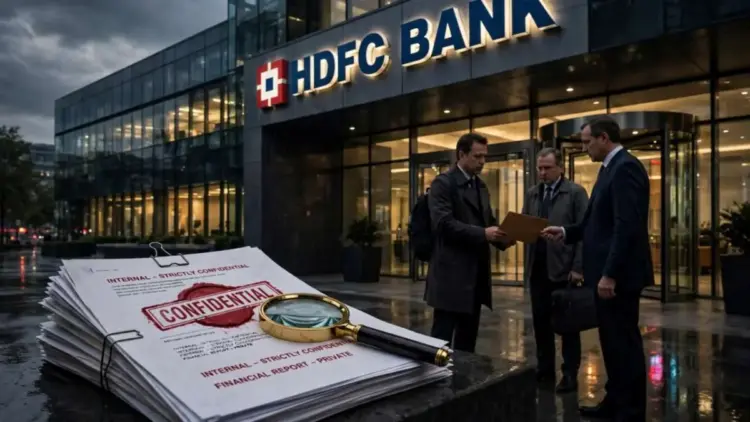
MUMBAI, INDIA – HDFC Bank, India’s largest private sector lender and a titan of the nation’s financial landscape, finds itself at the epicenter of a serious corporate governance crisis. An internal investigation has reportedly unearthed unsettling evidence suggesting that two senior executives allegedly shared highly confidential business information with external parties, plunging the banking behemoth into an unwelcome spotlight. The revelation, first reported by Bloomberg, casts a long shadow over the institution renowned for its robust operations and prudent management, raising critical questions about internal controls and data security at the highest levels.
The alleged breach involves key business plans, the disclosure of which could have significant ramifications for market competition, strategic advantage, and regulatory compliance. This development comes at a particularly sensitive time for HDFC Bank, which is undergoing a significant leadership transition and grappling with a challenging market environment that has seen its share price decline notably over the past year. The banking sector, already under intense scrutiny for data privacy and cybersecurity, will undoubtedly watch HDFC Bank’s handling of this scandal closely.

A Breach of Trust at India’s Banking Giant
The gravity of the situation cannot be overstated. HDFC Bank, with its vast customer base, extensive network, and pivotal role in India’s economy, operates on a foundation of trust and discretion. The alleged actions of two senior executives, who hold important positions and oversee major business operations, represent a profound betrayal of that trust and a potential compromise of the bank’s strategic integrity. While the specific nature of the confidential information remains undisclosed, "business plans" typically encompass sensitive data such as market entry strategies, product development roadmaps, financial projections, client acquisition tactics, and even potential merger or acquisition targets. Any leakage of such data could provide unfair advantages to competitors, facilitate market manipulation, or expose the bank to significant financial and reputational damage.
The report highlights that these executives were not minor players but rather individuals entrusted with substantial responsibilities, overseeing critical aspects of the bank’s day-to-day operations and strategic direction. Their alleged involvement underscores a potential vulnerability at the highest echelons of corporate management, compelling a rigorous examination of the bank’s internal safeguards against insider threats. The financial services industry inherently deals with vast quantities of sensitive data, making robust information security protocols and a culture of confidentiality paramount. A breach originating from within, especially from senior leadership, is often far more damaging than external cyberattacks, as it strikes at the core of an organization’s integrity and control.

Unraveling the Chronology of the Internal Probe
The journey to uncover this alleged misconduct has been a meticulous and undoubtedly tense process within the bank. Understanding the sequence of events leading to this revelation provides crucial context to the unfolding scandal.
Genesis of the Investigation
The internal probe did not materialize out of thin air but rather stemmed from credible concerns raised by other senior officials within HDFC Bank. These whistleblowers, or concerned executives, reportedly flagged potential irregularities, indicating that vital business-related information might have been inappropriately shared outside the company. Such internal vigilance is a cornerstone of effective corporate governance, demonstrating that despite the alleged actions of a few, there were mechanisms and individuals committed to upholding the bank’s ethical standards. The decision to initiate a full-scale internal investigation suggests that the initial concerns were deemed serious and substantiated enough to warrant a deep dive into the matter. This typically involves forensic IT investigations, analysis of communication records, and scrutiny of access logs to confidential systems.

The Investigation Process and Findings
While the bank has refrained from detailing the methodology of its internal review, such investigations in large financial institutions often involve a specialized team, potentially including external forensic experts. This team would meticulously examine digital footprints, communication channels (emails, messaging apps), meeting records, and access permissions to determine the scope and nature of the alleged disclosures. The Bloomberg report indicates that the investigation "found evidence against two senior executives," implying that the probe moved beyond initial suspicions to gather concrete proof of wrongdoing. The discovery of such evidence would have been a critical turning point, transitioning the matter from an inquiry into a confirmed allegation.
Notification to Accused Executives
A crucial step in any internal disciplinary process is informing the individuals against whom allegations have been substantiated. The report confirms that both accused executives have been formally "informed about the findings against them." This step typically precedes any formal disciplinary action, providing the individuals an opportunity to respond to the allegations, though the bank’s spokesperson has not elaborated on their responses or current employment status. The discreet handling of this notification underscores the sensitive nature of the allegations and the bank’s adherence to due process, even amidst a major scandal.

Contextual Timeline: A Period of Transition
The timing of this revelation is particularly poignant, occurring just days before Anup Bagchi is slated to assume the pivotal role of Managing Director and Chief Executive Officer later this month. Bagchi, a former ICICI Group Executive, faces the immediate challenge of navigating this crisis and restoring confidence in the bank’s internal controls. This internal upheaval adds another layer of complexity to his transition, demanding swift and decisive action to address the alleged misconduct and reassure stakeholders. The scandal also surfaces amidst a broader trend of leadership changes at HDFC Bank, with several other senior-level executives having departed recently. This confluence of events – a major internal breach, a CEO transition, and other senior departures – paints a picture of an institution in a significant period of flux, potentially making it more vulnerable to such challenges.
The Gravity of Confidential Information in Banking
The lifeblood of any financial institution is information. From client data to proprietary trading strategies, the confidentiality of this information is paramount not only for competitive advantage but also for regulatory compliance and market stability.

What Constitutes "Confidential Business Plans"?
The term "confidential business plans" in a banking context is expansive and incredibly sensitive. It can encompass a wide array of strategic documents and proprietary data, the unauthorized release of which could lead to severe consequences:
- Merger and Acquisition Strategies: Details of potential targets, valuation models, negotiation tactics, and timelines for M&A activities. Leaking this could trigger speculative trading, drive up acquisition costs, or derail deals entirely.
- New Product Launch Roadmaps: Information about upcoming financial products, digital initiatives, or service offerings. Competitors could preemptively launch similar products or prepare counter-strategies.
- Marketing and Sales Strategies: Proprietary campaigns, target demographics, customer segmentation analyses, and promotional budgets. This data gives competitors an unfair advantage in capturing market share.
- Financial Projections and Internal Forecasts: Detailed revenue, profit, and growth forecasts that are not yet public. This could be used for insider trading or to manipulate market perception.
- Client Acquisition and Retention Strategies: Specific approaches to onboarding high-net-worth individuals, corporate clients, or specific customer segments. This is core to competitive positioning.
- Regulatory Compliance Strategies: Internal assessments of regulatory risks, plans for addressing compliance gaps, or responses to regulatory inquiries. Such leaks could expose the bank to penalties or public scrutiny.
- Technology Infrastructure and Cybersecurity Plans: Details about planned IT upgrades, cybersecurity defenses, or vulnerabilities. This could be exploited by malicious actors.
- Risk Management Frameworks: Proprietary models for credit risk, market risk, or operational risk assessment. Competitors could glean insights into HDFC Bank’s risk appetite or expose its weaknesses.
Risks of Information Leakage
The unauthorized disclosure of such information carries multifaceted risks:

- Competitive Disadvantage: Rivals gain insight into HDFC Bank’s strategic moves, allowing them to anticipate or counter its initiatives, eroding its market edge.
- Market Manipulation: Knowledge of internal financial projections or M&A plans could be used for illegal insider trading, leading to unfair gains for outsiders and damaging market integrity.
- Reputational Damage: Public perception of the bank’s ability to protect sensitive data and uphold ethical standards is severely undermined, leading to a loss of customer and investor trust.
- Regulatory Penalties: Financial regulators (like the Reserve Bank of India or SEBI) could impose hefty fines if the leak is found to be a result of lax internal controls or a breach of data security norms.
- Legal Consequences: The bank could face lawsuits from affected clients or shareholders, while the involved executives could face criminal charges depending on the nature and intent of the disclosure.
Regulatory Framework in India
The Indian financial sector operates under stringent regulatory oversight. The Reserve Bank of India (RBI) mandates robust internal control systems, data security protocols, and corporate governance standards for all banks. Similarly, the Securities and Exchange Board of India (SEBI) has regulations against insider trading and the unfair disclosure of unpublished price-sensitive information (UPSI). A breach of confidential business plans, even if not directly UPSI, could still fall under broader definitions of unethical conduct and a failure of governance, potentially inviting severe regulatory scrutiny and punitive action. This incident will undoubtedly prompt regulators to assess the adequacy of HDFC Bank’s existing safeguards.
HDFC Bank’s Official Stance and Corporate Governance
In response to the Bloomberg report, an HDFC Bank spokesperson acknowledged the ongoing investigation but maintained a guarded stance regarding its specific findings and the identities of the executives involved.

The spokesperson’s statement, as quoted by Bloomberg, read: "In line with our policies, an internal review into this matter is currently underway to gather and evaluate all relevant facts. Appropriate action will be taken based on the findings, once the review is complete."
This statement, while confirming the existence of a probe, is characteristic of a large institution handling a sensitive issue. It emphasizes adherence to internal policies and due process, signaling that the bank is taking the matter seriously without prejudicing the outcome or revealing sensitive details prematurely. The refusal to comment on specific findings or name individuals is standard practice during ongoing investigations, aimed at protecting the integrity of the probe and the privacy of the individuals involved until conclusions are definitive and disciplinary actions are finalized.

However, this diplomatic silence also presents a challenge. In an era demanding transparency, stakeholders, including investors, customers, and regulators, will be seeking more definitive answers and assurances. HDFC Bank has historically prided itself on its strong corporate governance framework, which has been a key factor in its consistent growth and market leadership. This incident, therefore, represents a significant test of that framework. The bank’s ability to demonstrate that it can swiftly and effectively address such breaches, ensure accountability, and strengthen its controls will be crucial in preserving its reputation. A perceived lack of transparency or decisive action could erode confidence, even if the bank is following a strict internal protocol.
Broader Context: Leadership Transition and Market Performance
The information leak scandal doesn’t occur in isolation. It is intricately woven into a broader narrative of significant changes and challenges confronting HDFC Bank.

A Period of Significant Change
HDFC Bank is currently in the midst of a critical leadership transition. The imminent departure of Sashidhar Jagdishan, who decided not to seek another term as CEO, and the arrival of Anup Bagchi, mark a pivotal moment for the institution. Jagdishan’s tenure was characterized by robust growth and the landmark merger with HDFC Ltd., which cemented the bank’s position as India’s largest private lender. Bagchi, with his extensive experience from the ICICI Group, now steps into a role fraught with immediate challenges, the information leak being paramount among them. His leadership will be immediately tested in how he manages this crisis, restores internal discipline, and reassures the market.
Impact of Executive Departures
Beyond the CEO transition, the article notes that "HDFC Bank has also witnessed the departure of several senior-level executives recently." While the reasons for these departures are not specified, a churn at senior levels can sometimes signal internal restructuring, strategic shifts, or even cultural adjustments. However, when combined with allegations of internal misconduct, such a trend can raise questions about organizational stability, talent retention, and the effectiveness of leadership in fostering a cohesive and ethical environment. A period of significant executive turnover, especially at senior levels, can create vulnerabilities if institutional knowledge is lost or if new leadership structures are not yet fully solidified. This could potentially create an environment where oversight might be less stringent, or where internal ethical standards might face greater challenges.

The Share Price Enigma: A Difficult Year
Adding to its internal troubles, 2026 has been a "difficult year for HDFC Bank, with its share price falling nearly 25 per cent so far this year." While the internal investigation findings have only just been reported by Bloomberg, implying that this specific leak is unlikely to be the sole cause of the year-long decline, it certainly exacerbates existing pressures. Several factors could contribute to such a significant drop:
- Post-Merger Integration Challenges: The colossal merger of HDFC Ltd. with HDFC Bank was an unprecedented event in Indian banking. Integrating two massive entities, aligning systems, cultures, and operational processes, is a complex undertaking. The market might be factoring in the time and resources required for successful integration, and potential short-term disruptions.
- Broader Market Sentiment: The performance of banking stocks is often tied to the broader economic outlook, interest rate cycles, and liquidity conditions. General market corrections or sector-specific headwinds could play a role.
- Interest Rate Environment: Fluctuations in interest rates can impact banks’ net interest margins (NIMs), especially for large lenders with diverse portfolios.
- Analyst Downgrades/Concerns: Research analysts might have expressed concerns about valuation, growth prospects post-merger, or specific asset quality trends, leading to downward revisions in target prices.
- Increased Competition: The Indian banking sector is highly competitive, with public and private sector banks constantly vying for market share.
The current information leak scandal will undoubtedly add another layer of uncertainty for investors. It introduces operational risk and governance concerns that could further pressure the stock, even if the 25% decline predates this specific revelation. Investors value stability, predictability, and strong governance, and any perceived lapse in these areas can lead to a re-evaluation of a company’s investment appeal.

Potential Implications and Future Outlook
The ramifications of this alleged information leak extend far beyond the immediate disciplinary actions against the involved executives. They touch upon HDFC Bank’s standing, its operational resilience, and the broader regulatory environment.
Reputational Fallout
Perhaps the most immediate and significant impact will be on HDFC Bank’s reputation. As a leading financial institution, its brand is synonymous with reliability, security, and ethical conduct. Allegations of senior executives sharing confidential information directly contradict this image. This could lead to:

- Loss of Customer Trust: Customers, particularly high-net-worth individuals and corporate clients, rely on the bank’s absolute discretion with their financial data and strategic plans. A breach of trust at this level could make them question the security of their own information.
- Erosion of Investor Confidence: Investors place a premium on strong corporate governance. This incident could lead to a reassessment of HDFC Bank’s risk profile, potentially impacting its valuation and ability to attract future capital.
- Damage to Employee Morale: The alleged misconduct by senior leaders can create an atmosphere of distrust and disillusionment among employees, impacting internal cohesion and productivity.
Regulatory Scrutiny
It is almost inevitable that the Reserve Bank of India (RBI) and potentially SEBI will take a keen interest in this matter. Regulators are tasked with ensuring the stability and integrity of the financial system. They will likely:
- Initiate Their Own Investigations: Beyond the bank’s internal probe, regulators may launch an independent inquiry into the nature of the breach, the adequacy of HDFC Bank’s internal controls, and its overall compliance with data security and corporate governance norms.
- Impose Fines and Penalties: If regulatory investigations reveal systemic failures or serious breaches of mandated guidelines, the bank could face substantial financial penalties.
- Mandate Remedial Actions: Regulators could direct HDFC Bank to implement stricter internal controls, enhance employee training on confidentiality, or overhaul its information security infrastructure.
Internal Control Enhancements
Regardless of external pressure, HDFC Bank will be compelled to conduct a thorough review and significant enhancement of its internal controls. This could include:

- Strengthening Information Security Protocols: Implementing advanced data loss prevention (DLP) systems, stricter access controls, and enhanced monitoring of digital communications.
- Revisiting Employee Confidentiality Agreements: Reinforcing clauses related to non-disclosure and the consequences of breaches.
- Mandatory Ethics and Compliance Training: Regular and more rigorous training for all employees, especially those in senior positions, on data privacy, ethical conduct, and the importance of confidentiality.
- Whistleblower Protection Mechanisms: Ensuring robust and trusted channels for employees to report misconduct without fear of retaliation.
Legal Ramifications
For the executives involved, if the allegations are proven and actions are found to be illegal, the consequences could be severe, ranging from immediate termination and forfeiture of benefits to potential criminal charges depending on the nature of the information shared and the intent behind it. The bank itself could face civil lawsuits from shareholders or other affected parties if it’s demonstrated that the breach caused financial harm due to negligence or inadequate controls.
Investor Reaction and Market Dynamics
In the short term, the news will likely contribute to market volatility for HDFC Bank’s stock. Analysts will be keen to understand the full scope of the breach and the bank’s response. A clear, decisive, and transparent communication strategy from the bank will be critical to mitigate adverse investor reaction. Long-term investor confidence will hinge on the bank’s ability to demonstrate that it has effectively addressed the root causes of the problem and reinforced its governance framework.

The Road Ahead for Anup Bagchi
The incoming MD & CEO, Anup Bagchi, faces an immediate baptism by fire. His initial actions and statements will set the tone for the bank’s response to this crisis. He will need to:
- Lead with Decisiveness: Ensure that the investigation is concluded swiftly and impartially, and that appropriate action is taken against those found culpable.
- Restore Trust: Communicate clearly and convincingly with all stakeholders – employees, customers, investors, and regulators – about the steps being taken to prevent future occurrences.
- Reinforce Ethical Culture: Re-emphasize the bank’s commitment to integrity and ethical conduct from the top down.
- Strengthen Governance: Oversee a comprehensive review and upgrade of internal controls and risk management frameworks.
Conclusion
The alleged information leak at HDFC Bank represents a significant challenge for an institution that has long been a beacon of stability and growth in India’s financial sector. While the internal investigation is ongoing, the mere revelation of such a breach by senior executives signals a critical moment for corporate governance and internal control mechanisms within the bank. The coming weeks and months will be crucial as HDFC Bank navigates this crisis, addresses the allegations, and works to restore confidence among its vast network of stakeholders. The decisive actions taken by its leadership, particularly by the incoming MD & CEO, Anup Bagchi, will not only shape the future trajectory of HDFC Bank but also send a powerful message across the Indian financial industry regarding the inviolability of trust and the paramount importance of safeguarding confidential information. The institution’s response to this internal turmoil will be a definitive test of its resilience, its commitment to ethical standards, and its ability to maintain its preeminent position in a highly competitive and regulated market.