

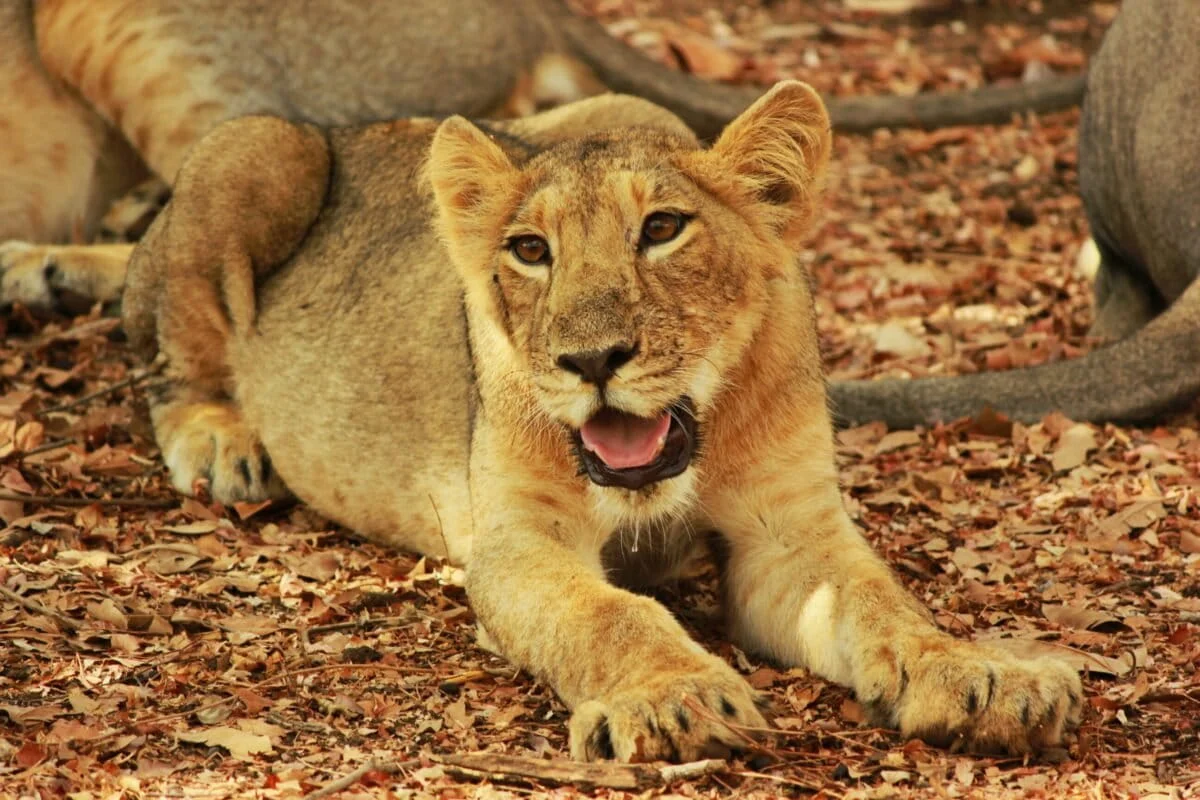
Main Facts: A Silent Killer in the Gir Landscape
The Asiatic lion (Panthera leo leo), a majestic symbol of India’s conservation success and the only population of its kind left in the wild, is once again under siege. In a sobering development from the state of Gujarat, eight Asiatic lions, including several vulnerable cubs, have succumbed to a suspected outbreak of Babesiosis—a life-threatening disease caused by the Babesia parasite.
The deaths, which occurred in the Gir Somnath and Amreli districts, have sent shockwaves through the conservation community. Beyond the immediate fatalities, at least 17 other lions are currently in isolation, showing symptoms of exposure and undergoing intensive treatment by state forest officials and veterinary experts.
Babesiosis is a protozoan infection transmitted primarily through the bites of infected ticks. Once inside the host’s bloodstream, the parasite mimics the behavior of the Plasmodium parasite (the cause of malaria in humans), invading and destroying red blood cells. The resulting clinical manifestations include severe anemia, extreme lethargy, and systemic weakness, often leading to organ failure and death if not treated rapidly.
While the Gujarat forest department maintains that the situation is "under control," the localized nature of the deaths—occurring within a tight 10-kilometer radius—highlights the terrifying speed at which infectious diseases can sweep through a concentrated wildlife population.
Chronology: A History of Viral and Parasitic Recurrence
The current crisis is not an isolated incident but part of a troubling pattern of epidemiological threats facing the Gir lions over the last decade.
- September 2018: The most devastating blow to the population occurred when a combination of Canine Distemper Virus (CDV) and Babesiosis struck the Sarasiya Vidi area of Gir. In a matter of weeks, at least 11 lions were confirmed dead, though unofficial estimates suggested the toll was higher. This prompted the emergency import of CDV vaccines from the United States.
- 2020-2022: Sporadic reports of "unnatural" deaths continued to surface, with officials frequently attributing them to territorial fights or old age, though experts cautioned that underlying infections often weaken lions, making them more susceptible to such conflicts.
- May 21–28, 2024: The first of the current fatalities were recorded. Initial symptoms of lethargy were observed in several prides across the Amreli and Gir Somnath border.
- May 31, 2024: Gujarat’s Forest Minister, Arjun Modhwadia, addressed the media, confirming that eight deaths had occurred but asserting that no new fatalities had been reported since May 28. He confirmed the isolation of 17 symptomatic lions and the commencement of a massive de-ticking operation.
This timeline underscores a critical vulnerability: despite the rising numbers of lions, their health remains precarious due to the environmental and biological pressures of a singular, restricted habitat.
Supporting Data: The Biology of the Outbreak and Population Dynamics
To understand the gravity of the Babesia threat, one must look at the biological and ecological intersection of the Gir landscape.
The Pathogen Profile
The Babesia parasite is prevalent in both wild ungulates (like spotted deer and sambar) and domesticated livestock (cows and buffaloes). In many of these species, the parasite exists in a state of equilibrium; the animals are carriers but do not necessarily manifest symptoms. However, when the parasite jumps to lions—particularly those with compromised immune systems or those under stress due to habitat fragmentation—it becomes lethal. Lion cubs are at the highest risk, as their immune systems are not yet robust enough to handle the rapid destruction of red blood cells.
Population Pressure and Geographic Spread
The latest census data from the Gujarat Forest Department paints a picture of a population that has outgrown its home.
- Current Population: Approximately 891 lions.
- Growth Rate: A nearly 30% increase between 2020 and 2025.
- Habitat Saturation: The core protected area of Gir National Park is no longer large enough to sustain this number. Consequently, a majority of the lions have strayed into "mixed landscape" habitats—areas that include revenue lands, agricultural fields, and human settlements.
This dispersal is a double-edged sword. While it shows the species is expanding, it increases the frequency of "spillover" events. In mixed landscapes, lions live in close proximity to domesticated cattle. Ticks from livestock easily migrate to lions, and vice versa, creating a continuous loop of infection.

Official Responses: Containment and Controversy
In the wake of the deaths, the Gujarat state government has launched a multi-pronged medical intervention.
Medical Intervention
Forest Minister Arjun Modhwadia confirmed that the state has mobilized veterinary teams to conduct a massive "search and treat" operation. To date, approximately 500 lions have been dewormed and treated with anti-tick medication. This involves tracking prides in the wild and, where necessary, darting them or providing medicated baits.
Blood samples and visceral samples from the deceased lions have been dispatched to the Gujarat Biotechnology Research Centre (GBRC). The goal is to sequence the parasite’s genome to determine if this is a more virulent strain than the one encountered in 2018.
Administrative Silence
Despite the Minister’s public statements, there remains a lack of granular data. Efforts by media outlets, including Mongabay-India, to reach the Principal Chief Conservator of Forests (Wildlife), Jaipal Singh, for specific updates on the 17 isolated lions have gone unanswered. This lack of transparency has historically been a point of contention between the state government and wildlife biologists, who argue that open data is essential for preventing a mass extinction event.
Implications: The "All Eggs in One Basket" Dilemma
The recurring outbreaks of Babesiosis and CDV bring a long-standing conservation debate back to the forefront: the translocation of Asiatic lions.
The Kuno Translocation Order
In 2013, the Supreme Court of India issued a landmark ruling ordering the translocation of a small population of Asiatic lions from Gujarat to Kuno National Park in Madhya Pradesh. The rationale was simple: a single localized catastrophe—be it a wildfire, a flood, or a highly contagious plague—could wipe out the entire species if they are all in one place.
However, over a decade later, the move has not happened. The Gujarat government has consistently resisted the plan, citing concerns over the safety of the lions in Madhya Pradesh and asserting that the lions are the "pride of Gujarat." In the interim, Kuno was used as the site for the introduction of African Cheetahs, further complicating the potential for lion translocation.
Genetic Bottlenecking
The Asiatic lions of Gir are descendants of a very small number of individuals (possibly fewer than 20) that survived the hunting binges of the early 20th century. As a result, the population has very low genetic diversity. This "genetic bottleneck" makes them significantly more vulnerable to disease. Unlike a genetically diverse population where some individuals might have a natural resistance to Babesia, the Gir lions are more likely to share the same vulnerabilities.
The Human-Wildlife Interface
As lions continue to move out of the protected forest and into the Amreli and Gir Somnath districts, the risk of zoonotic disease transmission increases. The "satellite" populations living in human-dominated landscapes are now the front line of the species’ survival. Without a secondary, geographically distant home, the success of the Gujarat forest department in growing the population to 891 could ironically become the species’ downfall.
Conclusion: A Call for Scientific Pragmatism
The deaths of the eight lions in Gir are a grim reminder that conservation is not just a numbers game. While the increase in population is a testament to the hard work of local communities and forest guards, the biological reality of disease does not respect state borders or success stories.
The current strategy of "search, isolate, and treat" is a reactive measure—a "band-aid" on a systemic wound. Experts argue that until a second, independent population is established elsewhere in India, the Asiatic lion will remain one mutation away from extinction. As the Gujarat Biotechnology Research Centre analyzes the latest blood samples, the conservation world waits to see if this is a manageable flare-up or the beginning of a larger biological crisis that the current habitat can no longer sustain.
