

Introduction: A Nation Under Siege by Temperature
For hundreds of millions of people across the Indian subcontinent, the concept of a "normal summer" has been permanently altered. In recent years, the seasonal transition from spring to summer has transformed into a grueling battle for survival against record-breaking heatwaves that are increasingly testing the limits of human resilience. From the scorched plains of Rajasthan to the humid corridors of Kerala, India is currently the epicenter of a global climate emergency.
As temperatures in northern and central India consistently breach the 45-50°C mark, and coastal regions grapple with the lethal combination of heat and humidity known as high "wet-bulb" temperatures, the country faces a multi-dimensional crisis. This report explores the drivers of this warming, the cascading patterns within urban and rural ecosystems, and the urgent measures being taken to forecast and mitigate a future where extreme heat is the new baseline.
I. Main Facts: The Anatomy of a Thermal Emergency
The current heat crisis in India is characterized by its intensity, duration, and geographical spread. While India has always been a warm country, the nature of its heatwaves has undergone a fundamental shift.
1. The 50°C Threshold
In the summer of 2024, several stations in Northern India, including areas around Delhi and Rajasthan, recorded temperatures touching or exceeding 50°C (122°F). These are not merely record-breaking figures; they represent the physiological limits of the human body. At such temperatures, the risk of heatstroke, organ failure, and death increases exponentially, particularly for those working outdoors.
2. The Wet-Bulb Phenomenon
In Southern India and coastal regions, the mercury might stay lower (around 35-38°C), but the humidity makes it more dangerous. The "wet-bulb temperature"—a measure that combines heat and humidity—is a critical metric. When the wet-bulb temperature reaches 35°C, the human body can no longer cool itself through perspiration. Coastal India is increasingly seeing wet-bulb readings that hover near this survivability threshold, creating a "silent killer" effect where the air feels like a heavy, hot blanket.
3. The Drivers: Global and Local
Scientists and meteorologists attribute this escalation to a combination of factors:
- Human-Caused Climate Change: The overarching driver, causing a steady rise in baseline temperatures.
- Atmospheric Conditions: The presence of anti-cyclones and the shifting of the Jet Stream, which trap hot air over the landmass.
- Urban Heat Island (UHI) Effect: Rapid urbanization has replaced green cover with concrete and asphalt, which absorb heat during the day and release it at night, preventing cities from cooling down.
II. Chronology: The Evolution of a Warming Trend
To understand the current crisis, one must look at the timeline of how heatwaves have evolved over the last decade, transitioning from occasional anomalies to seasonal certainties.
2010–2015: The Warning Signs
The 2010 Ahmedabad heatwave was a turning point, claiming over 1,300 lives in a single city. This prompted the creation of India’s first Heat Action Plan (HAP). During this period, heatwaves typically occurred in May and June and were largely confined to the "heatwave zone" of Northwest India.
2016–2021: Expanding Boundaries
Heatwaves began starting earlier and lasting longer. In 2016, Phalodi in Rajasthan recorded 51°C. By 2019, the heat started creeping into March, traditionally a spring month. The geographical footprint also expanded, with non-traditional areas like the Himalayan foothills and the Konkan coast reporting heatwave conditions.
2022–2024: The Era of "Permanent Summer"
The year 2022 saw the hottest March in India’s 122-year recorded history. This trend continued into 2023 and 2024, where the "pre-monsoon" period became a months-long endurance test. The year 2024 specifically highlighted the failure of nighttime cooling—a dangerous trend where minimum temperatures stayed above 30°C, depriving the body of the chance to recover from daytime stress.
III. Supporting Data: The Magnitude of the Impact
The scale of the crisis is best understood through the lens of data, which illustrates the toll on health, the economy, and the environment.
1. Mortality and Health
According to the Lancet Countdown on Health and Climate Change, heat-related deaths in India increased by 55% between 2000–2004 and 2017–2021. However, experts believe these figures are vastly underreported, as many heat-related deaths are registered as cardiac arrest or kidney failure.
2. Economic Productivity
India is one of the most vulnerable countries to labor productivity loss due to heat.
- Labor Loss: Approximately 75% of India’s workforce (around 380 million people) depends on heat-exposed labor (agriculture, construction, mining).
- GDP Impact: A World Bank report suggests that by 2030, India could account for 34 million of the projected 80 million global job losses caused by heat stress. The loss in GDP could reach up to 4.5% by the end of the decade.
3. Agricultural Disruptions
The "wheat bowl" of India—Punjab, Haryana, and Uttar Pradesh—has seen significant yield drops. In 2022, the early onset of heat in March caused the wheat grain to shrivel, leading to a 10-15% reduction in yield and forcing the government to ban wheat exports to ensure domestic food security.
4. Energy Demand
As temperatures soar, the demand for cooling has pushed India’s power grid to its limits. Peak power demand hit a record 250 GW in May 2024. This creates a vicious cycle: higher energy demand leads to more coal burning (India’s primary power source), which further accelerates global warming.
IV. Official Responses: Forecasting and Planning
The Indian government and various state agencies have recognized that heat is no longer a temporary weather event but a structural disaster.
1. The India Meteorological Department (IMD)
The IMD has significantly upgraded its forecasting capabilities. It now provides color-coded alerts (Green, Yellow, Orange, Red) and impact-based forecasts that warn specific sectors—like agriculture or power—about the risks. The introduction of "Heat Indices," which factor in humidity, has provided a more accurate picture of "real feel" temperatures.
2. Heat Action Plans (HAPs)
Following the Ahmedabad model, over 23 states and 100 cities in India have implemented Heat Action Plans. These plans include:
- Early Warning Systems: Sending SMS alerts and using local media to warn citizens.
- Infrastructure Adjustments: Painting roofs with reflective white paint ("Cool Roofs"), setting up cooling centers, and adjusting school and office timings.
- Public Health Outreach: Training healthcare workers to recognize heatstroke symptoms and ensuring hospitals have dedicated "heat wards."
3. National Disaster Management Authority (NDMA)
The NDMA has been working to categorize heatwaves as a "notified disaster" under the Disaster Management Act. This would allow states to access dedicated federal funds for heat relief, similar to how they do for cyclones or floods.
V. Implications: The Road Ahead for a Warming Country
The persistence of extreme heat carries profound implications for India’s future, touching every aspect of social and economic life.
1. The "Cooling Gap" and Inequality
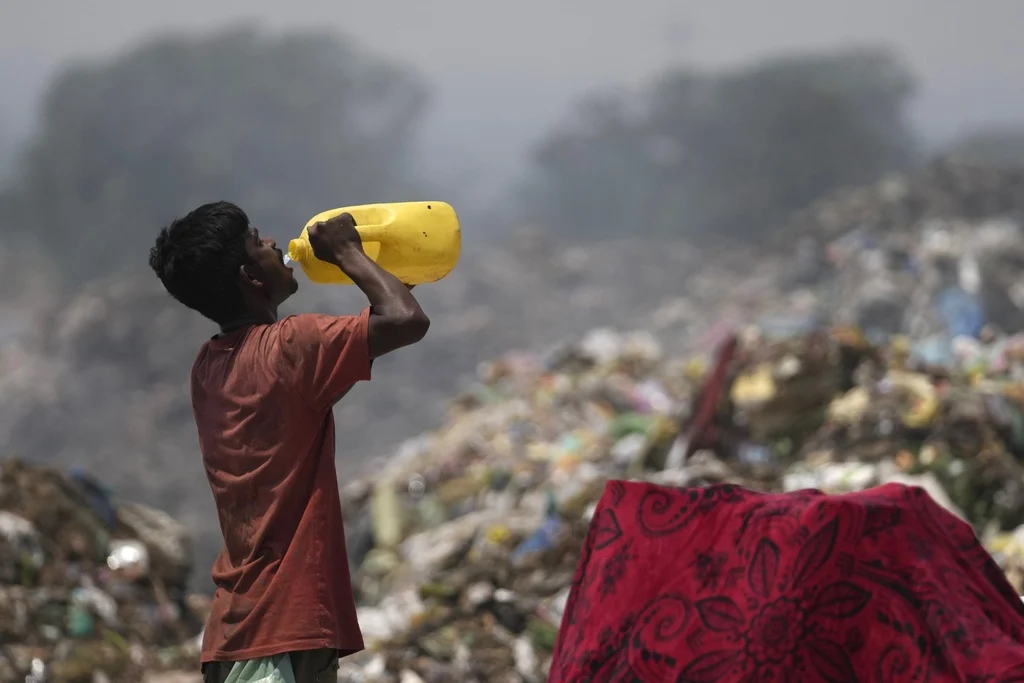
The heat crisis is an amplifier of inequality. While the wealthy can retreat into air-conditioned environments, the "cooling gap" leaves the poor—living in tin-roofed shanties or working on street corners—vulnerable. Access to cooling is becoming a human rights issue. Without equitable access to sustainable cooling technologies, the social fabric of the country could be strained.
2. Urban Planning and "Sponge Cities"
The crisis is forcing a rethink of Indian urbanism. The "Decoding Heat" series emphasizes that cities must move away from glass-and-steel architecture toward "thermal comfort" designs. This includes restoring urban wetlands, increasing tree canopies (which can lower local temperatures by 2-5°C), and using traditional Indian architectural techniques that promote natural ventilation.
3. Water Scarcity
Extreme heat accelerates the evaporation of reservoirs and depletes groundwater. In cities like Bengaluru and Delhi, heatwaves are often accompanied by severe water shortages, creating a "dual-disaster" scenario. Managing the water-energy-heat nexus will be the greatest challenge for Indian policymakers in the coming decades.
4. Ecosystem Shifts
The heat is not just affecting humans. Birds are falling from the sky due to dehydration, and mountain ecosystems are seeing rapid glacial melt. The "cascading patterns" mentioned in recent meteorological studies suggest that these heatwaves are altering the timing of the monsoon, potentially leading to more erratic rainfall and devastating floods later in the year.
Conclusion: A Call for Resilience
India’s experience with 50°C temperatures is a harbinger of things to come for the rest of the world. The country is currently a living laboratory for climate adaptation. While the "Decoding Heat" series highlights the grim reality of a warming country, it also points toward a path of resilience.
The transition from reactive disaster management to proactive climate-resilient development is no longer an option—it is a necessity. India’s ability to innovate in low-carbon cooling, rethink its urban landscapes, and protect its most vulnerable citizens from the thermal onslaught will determine not just its own future, but will provide a blueprint for a planet that is rapidly heating up. The question is no longer if the heat will come, but how a nation of 1.4 billion people will redefine its way of life to survive it.
