

By [Your Name/Journalist Name]
ARUNACHAL PRADESH, INDIA – In the dense, mist-shrouded forests of the Eastern Himalayas, a subtle but relentless migration unfolds every winter. As the mercury drops and the first whispers of frost touch the high-altitude peaks, hundreds of bird species—from the melodious laughingthrushes to the gregarious babblers—begin a downward descent. Unlike the epic transcontinental journeys of Arctic terns or bar-tailed godwits, these mountain residents engage in "elevational migration."
For decades, the scientific community assumed these birds were simply fleeing the biting cold. However, a groundbreaking new study from the Indian Institute of Science (IISc), published in the journal Biology Letters, suggests a more complex motivation. It appears these avian travelers are not merely seeking warmth; they are following a shifting banquet. In the high-stakes game of survival, the birds are tracking the movement of their primary food source: insects.
Main Facts: A Paradigm Shift in Avian Ecology
The research, led by Tarun Menon, a Ph.D. researcher at the Indian Institute of Science, provides a data-driven look at the seasonal dynamics of the Eaglenest Wildlife Sanctuary and the adjoining Singchung Bugun Village Community Reserve in Arunachal Pradesh. The study’s core finding challenges the traditional "temperature-first" view of migration.
Key findings include:
- Food Over Temperature: While temperature plays a role, the availability of specific arthropod (insect and spider) prey is the primary driver for where birds choose to spend their winter.
- Guild-Specific Movement: Birds that hunt in the air (salliers) or on the ground (terrestrial gleaners) are the most likely to migrate downhill, following the dramatic seasonal decline of insects in those niches at high altitudes.
- Stability in the Canopy: Leaf-dwelling insects remain relatively stable across seasons due to the "buffering effect" of foliage, which explains why leaf-gleaning birds often remain at the same elevation year-round.
- The Spider Anomaly: Spiders were found to be more abundant in winter than in summer at lower elevations, potentially serving as a critical "buffer food" for wintering birds.
Roughly 65% of high-elevation birds in the Himalayas engage in some form of elevational movement. Understanding the drivers behind this behavior is critical for conservation in a region that is among the most vulnerable to climate change.
Chronology of the Research: From Observation to Evidence
The genesis of the study began during Tarun Menon’s earlier field expeditions in the region. He observed a recurring pattern: the birds most prone to winter descents were almost exclusively insectivores. This anecdotal observation led to a formal inquiry: Were the birds escaping the cold, or were they following the food?

Phase 1: Setting the Gradient (November 2022 – January 2024)
To test the hypothesis, the research team selected a 2,300-metre forested elevation gradient. The study area ranged from the tropical lowlands at 800 metres to the temperate high-altitude forests at 3,100 metres above sea level. This steep gradient allowed researchers to observe how different "micro-climates" and "micro-habitats" responded to the changing seasons.
Phase 2: The Multi-Method Sampling
Over two summers (April–June) and two winters (November–January), the team conducted an exhaustive census of both the predators and the prey.
- Arthropod Sampling: Researchers used three distinct methods to capture the diversity of insect life. Sticky traps were deployed for flying insects; pitfall traps were buried to catch ground-dwelling bugs; and branch beating (striking branches to catch falling insects) was used for leaf-dwelling species.
- Bird Sampling: Using mist-nets—fine-mesh nets that safely entangle birds—the team sampled 1,971 distinct individuals from 160 species in the summer and 1,721 individuals from 133 species in the winter.
Phase 3: Data Analysis and Publication
After collecting over 16,000 arthropods and recording thousands of bird sightings, the team analyzed the correlation between prey density and bird presence. The results, finalized in early 2024, confirmed that bird populations shifted in lockstep with their specific prey types.
Supporting Data: The Ecology of the "Insect Pulse"
The study’s strength lies in its granular data, which breaks down how different insect groups respond to winter.
The Great Winter Decline
In the summer, the abundance of flying and ground-dwelling insects increases with elevation, peaking in the lush, high-altitude meadows. However, come winter, this pattern reverses. The researchers collected 12,744 arthropods in summer compared to just 4,079 in winter. The high-altitude flying insects essentially vanish, either dying off or entering dormancy, forcing birds that catch insects mid-air to move to lower, warmer elevations where 23 orders of insects—including Diptera (flies) and Hemiptera (true bugs)—remain active.
The Foliage Buffer
One of the most significant data points involved leaf-dwelling insects. Unlike their flying or ground-dwelling counterparts, leaf-dwelling insects showed little seasonal change in abundance.
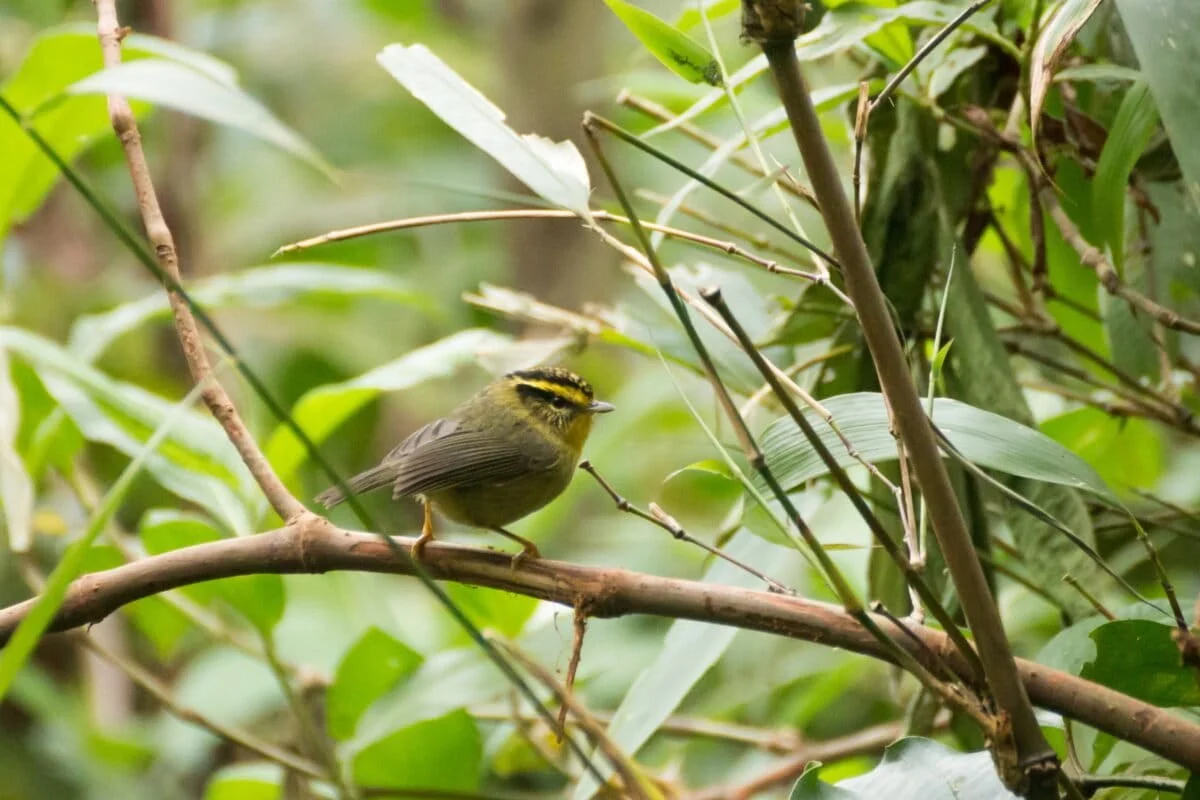
"The leaves create a sheltered microclimate," the study notes. This insulation protects insects from temperature extremes. Consequently, birds like the yellow-throated fulvetta, which glean insects from shrubs and trees, showed no meaningful change in their elevational distribution. If the food stays, the birds stay.
The Spider Factor
The data regarding spiders (Araneae) provided a surprising twist. Spiders were more abundant in winter than in summer, particularly at lower elevations.
"Spiders are known for cold-adaptive traits and their ability to exploit microhabitats," Menon explained. This suggests that for many birds moving down the mountain, spiders may be the primary staple that gets them through the leanest months of the year.

Official Responses and Expert Perspectives
The scientific community has welcomed the study as a vital piece of the Himalayan ecological puzzle.
Tarun Menon, Lead Author and IISc Researcher:
"The theory behind why birds migrate has two major explanations, both connected to temperature," Menon stated. "One is that cold directly affects the bird and it moves to stay warm. The other is that the cold affects the food, and the bird is following the food."
Menon emphasizes that while temperature is the ultimate driver, the birds’ immediate cue is likely the "empty plate" of the high-altitude forest. "Birds are very likely tracking food rather than just going to a place where they have favorable temperatures. They’re mostly looking for where they can find the best amount of food."
Broader Scientific Context:
The findings align with a global analysis released earlier this year involving 34 different mountain ranges. That analysis suggested that elevational migrants do not consistently track temperature. Instead, they are "resource trackers." This IISc study provides the first robust, localized evidence of this phenomenon in the Eastern Himalayas, one of the world’s most biodiverse but least-studied mountain systems.
Implications: The Climate Change Threat
The revelation that birds are "tracking the food" rather than "tracking the thermometer" has serious implications for conservation in the face of global warming.
1. The Phenological Mismatch
The greatest concern for ecologists is the "mismatch" between bird migration and insect emergence. Birds often rely on fixed cues, such as day length (photoperiod), to begin their spring journey back up the mountain. However, insects respond more directly to temperature.
"If spring arrives early but the birds aren’t able to time their migration accurately, they come after that food peak," Menon warned. "Then there’s not enough food to raise their young." This mismatch could lead to a collapse in breeding success for dozens of species.
2. Habitat Connectivity
The study underscores the necessity of protecting entire "elevation corridors." Conservation cannot just happen at the peaks (the summer homes) or the valleys (the winter homes). If the forests between 800m and 3,100m are fragmented by roads, agriculture, or deforestation, the "hopping" journey of these birds becomes impossible. For birds that do not fly long distances but move "branch by branch," a single gap in the forest canopy can be an insurmountable barrier.

3. Biodiversity and the Eastern Himalayas
Arunachal Pradesh is a global biodiversity hotspot. The Eaglenest Wildlife Sanctuary alone is home to species found nowhere else on Earth, such as the Bugun Liocichla. Understanding the delicate timing of their movements is essential for the Singchung Bugun Village Community Reserve and other local initiatives that manage these lands.
Conclusion: The Rhythm of Eaglenest
As the sun sets over the ridges of Eaglenest, the seasonal rhythm remains intact for now. The babblers continue their methodical hop downhill in November, and the forests of the lower valleys hum with the activity of wintering flocks. By April, as the insects begin their high-altitude "bloom," the birds will follow them back toward the clouds.
The IISc study has provided the data to explain this ancient dance. It is a reminder that in the natural world, every movement is a calculated response to the environment. The challenge now lies in ensuring that as the climate shifts, the birds of the Himalayas are still able to find the feast they so diligently follow.
About the Research:
The study, titled "Seasonal variation in arthropod prey as a driver of elevational migration," was authored by Tarun Menon and colleagues and is published in the journal Biology Letters. Fieldwork was supported by the Indian Institute of Science and conducted within the Eaglenest Wildlife Sanctuary and the Singchung Bugun Village Community Reserve.
